
Dear France
This week we lingered in Provence, where the light falls thick as honey over Avignon’s honey-coloured stone and the plane trees rustle above café tables set for the long afternoon. There is a particular music to everyday French life here — the clink of a pastis glass, the vendor’s bonjour, the pause before the espresso is finished — and it is a language all its own. Today we’re listening: to place names, to surnames carried down through the Pyrénées, to the rhythm of ordinary days lived well. Pull up a chair; the terrace is ours.

NEW! THE LOVE FRANCE APP IS HERE! 🇫🇷
We’ve just launched the Love France app on the App Store — everything you love about France, beautifully built for your iPhone. Browse thousands of stories, villages, châteaux and bistros in a clean, fast, made-for-mobile experience!

In Today’s Email
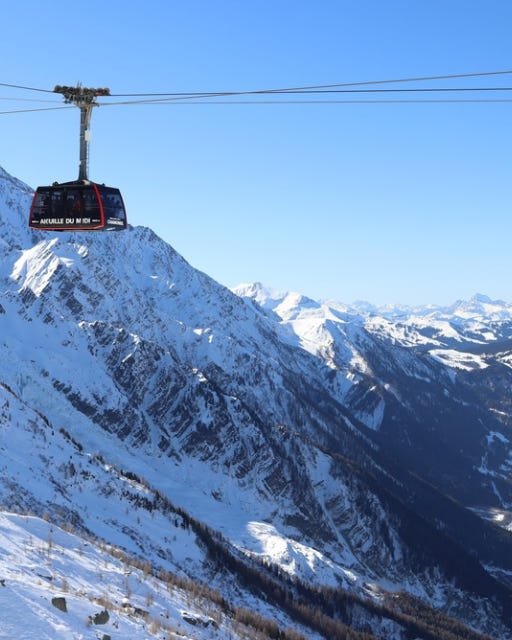
The Best View of Mont Blanc From the French Alps
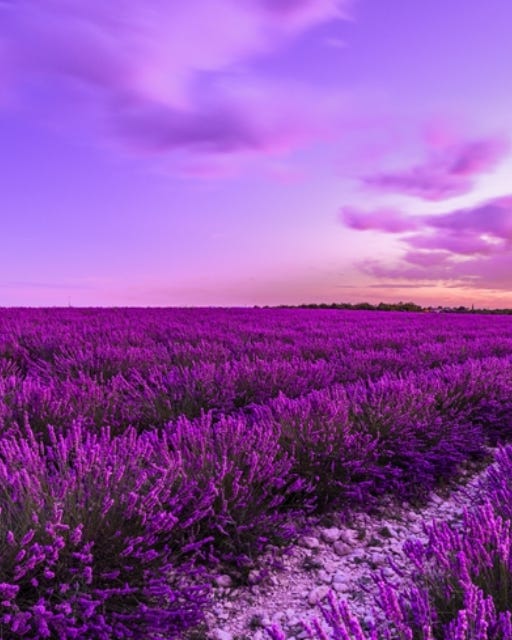
Planning Your Trip: Valensole's Lavender Fields: Getting the Timing Right
Chateaux, Castles & Heritage: French Surnames of Champagne: The Families Behind the Bottles
Around the Web: A Taste of Old Paris, A Taste of La Belle Époque,
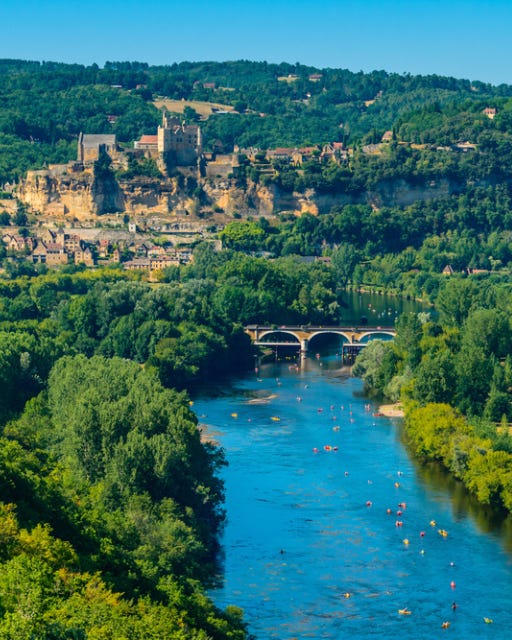
Why Everyone’s Falling in Love with the Dordogne and more
In Case You Missed It: The Cliffs of Étretat: A Complete Visitor’s Guide + Lyon Travel Guide: France’s Gastronomy Capital
A Glass of French Wine: A Glass of Provence Rosé
The Taste of France: The French Market: Why Every Town in France Has One
Say It Like a Local: Ce sera tout, merci ! - suh sur-ah too, mair-see
What’s Your Name in France: French Surnames of Île-de-France: Origins, Meanings and Family Heritage
There is a difference between seeing Mont Blanc and truly beholding it, and it comes down to where you plant your feet. From the right terrace above Chamonix the mountain stops being a postcard and becomes a presence — 4,808 metres of snow and silence, blushing rose at dawn and turning to burnished pewter by dusk. Our guide walks you to the vantage points that locals guard quietly: the roadside belvederes, the cable-car balconies at the Aiguille du Midi, and the humble village lay-bys where the whole massif unfurls without a single lift ticket. Bring a flask, arrive early, and let the giant reveal itself.
Which alpine viewpoint would you set your alarm for — sunrise or sunset?

The lavender of the Valensole plateau is one of the great sensory pleasures of France — a purple tide rolling to the horizon, humming with bees and heavy with scent — but it rewards the well-informed. Bloom typically peaks from late June into the first days of July, though every field marches to its own drum, shifting each year with the rain and the heat, and some rows are cut before mid-month. Our practical guide covers the best plateaux, the gentlest hours for photographs, where to park without blocking a working farm, and how to check the weekly bloom reports so you arrive at the fields at their most magnificent.
Would you plan a whole trip around the lavender — or let it surprise you?
Every glass of Champagne carries a name, and behind those names lie centuries of chalk-cellar toil and vineyard patience. In this heritage piece we trace the surnames rooted in the Champagne region — their origins, their meanings, and the families who shaped the wine trade of Reims and Épernay. Some speak of trades long vanished, some of the villages clinging to the Montagne de Reims, and some may even echo down your own family tree. It is history you can raise a glass to.
Do you carry a Champagne surname — or hope to discover one?
The Cliffs of Étretat: A Complete Visitor’s Guide - Our full walkthrough of Normandy’s most dramatic coastline, arches, viewpoints and all. Plan the walks, the light and the best spots to simply sit and star
Lyon Travel Guide: France’s Gastronomy Capital - Everything you need for a first visit to Lyon, from its Renaissance old town to its legendary tables. A city that eats, drinks and welcomes with equal generosity.
If any wine belongs beside a lavender field, it is a pale Provence rosé — cool, dry and blushing the softest coral. Provence is the birthplace and world capital of fine rosé, its Côtes de Provence, Coteaux d’Aix-en-Provence and Coteaux Varois vineyards producing the elegant, delicately fruited style that has charmed the world. Chilled well and sipped on a shaded terrace as the cicadas start up, it is summer in France distilled into a single glass. The official Vins de Provence guide is the loveliest place to start your tasting journey.
Ask any French town where its soul lives and it will point you to the market square. Beneath striped awnings the week unfolds in colour and clamour — pyramids of peaches, wheels of raw-milk cheese, still-warm baguettes, bundles of thyme and the fishmonger’s silver catch on crushed ice. The marché is more than shopping; it is a ritual of greetings, gossip and the shared conviction that food should be seasonal, local and savoured. Wander one slowly and you will taste the region far better than any restaurant can teach you.
Phrase: Ce sera tout, merci !
Meaning: That'll be all, thank you!
Pronunciation: suh sur-ah too, mair-see
When to use: The natural way to close your order at a market stall or bakery — friendly, tidy and unmistakably local. Say it with a smile as the vendor wraps your last purchase.
Daily Question / Game — What’s Your Name in France?
French Surnames of Île-de-France: Origins, Meanings and Family Heritage
Every French surname is a small piece of heritage carried down the generations, and the names rooted in Île-de-France — the historic region around Paris — carry the fingerprints of trades, villages and long-vanished ancestors. Some point to a forgotten hamlet, some to a great-grandfather’s craft, some to a nickname that simply stuck. Our guide traces where these Île-de-France names come from and what they meant to the families who first bore them — and it may just be the missing chapter in your own story.
Find out here!
This newsletter grows because of you — every time you share it with a friend, a colleague, or that person who keeps saying “I really must go to France one day,” you help build something special: a community of people who genuinely love this wee country. Every subscriber has a unique referral link at the bottom of this email. Share it with your friends.
No posts
Comments
Nothing yet. Say the first thing.
Sign in to join the conversation.