
Dear Scotland,
Scottish graveyards are not sad places — they are libraries. Every stone tells a story: fishermen lost to the Minch, farmers who outlasted seven winters, women who raised ten children and still found time to plant roses. The dates are carved deep, but it is the names that stay with you, because a walk through a Scottish kirkyard is a conversation with everyone who came before.

NEW! THE LOVE SCOTLAND APP IS HERE!
We’ve just launched the Love Scotland app on the App Store — everything you love about Love Scotland, beautifully built for your iPhone. Browse thousands of stories, places, castles and pubs in a clean, fast, made-for-mobile experience!

The ancient forest Scotland nearly lost — and where it's still standing
Planning your trip: When to visit the Highlands — a month-by-month guide
Castles and Heritage: Clan Grant and the making of Strathspey
Around the Web: A Cairngorms nature centre reborn among the pines + Glasgow’s biggest food weekend returns to Rouken Glen plus Seven Days Along Scotland’s West Highland Line and more…
Experiences Likely To Sell Out
In Case You Missed It: What Makes the Cairngorms Different from the Highlands + The Ancient Gaelic Code Hidden Inside Scotland’s Place Names
The Love of Whisky: We raise a glass to Bowmore Distillery
Scottish Food You Will Love: Who doesn’t love Sticky Toffee Pudding?
💙Send a piece of Scotland to someone you love 💙
Your daily dose of #CooWisdom + The Cairngorms National Park: A Special Place
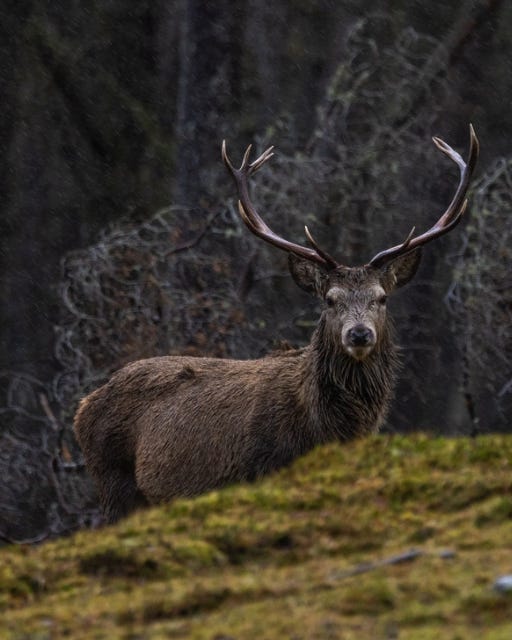
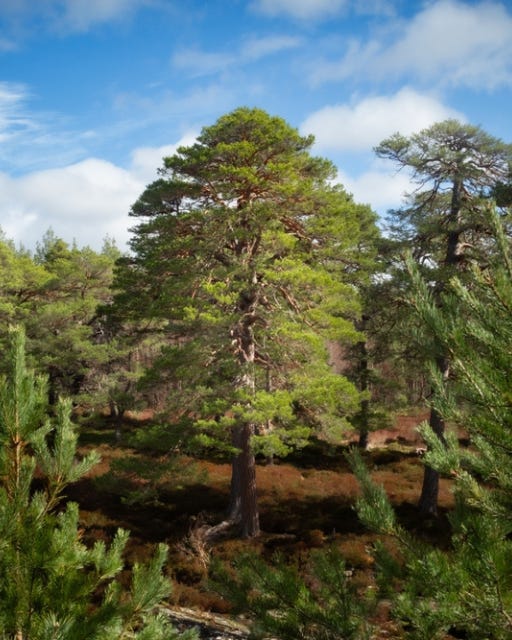
Ten thousand years ago, after the last ice retreated, a great forest of Scots pine, birch and juniper spread across the Highlands — the Caledonian Forest, home to wolves, lynx and bear. Centuries of felling, grazing and clearance reduced it to fragments, until barely one per cent survived. But in the heart of the Cairngorms, at Rothiemurchus near Aviemore, some of the oldest and grandest of those pines still stand — twisted, red-barked “granny trees” three hundred years old, sheltering red squirrels, crested tits and the elusive capercaillie beneath their canopy.
To walk the trail to Loch an Eilein here — a ruined castle marooned on its own island in the loch — is to step into the Scotland that existed before almost anything else did, and to understand why the Cairngorms is still called Britain’s wildest place.
Have you ever stood among trees old enough to remember a wilder Scotland? Hit reply and tell us where.
The Cairngorms is really two parks in one calendar. In winter, Aviemore becomes Scotland’s ski capital, the funicular carrying skiers up Cairn Gorm and the plateau under snow; in summer, the same slopes open into some of the finest hillwalking in Britain, the long northern light stretching well past ten at night.
Knowing which month suits your trip — quiet spring for wildlife and osprey watching, golden September for the rut and the turning birch, deep winter for snow and firelit distilleries — is the difference between a good visit and an unforgettable one. This month-by-month guide lays out the weather, the crowds, the daylight and the highlights across the Highland year.
Which season would you choose for your Cairngorms trip — snow or the long summer gloaming?

No family shaped the heart of the Cairngorms quite like the Grants. From their strongholds along the River Spey they held sway over Strathspey for centuries, and in 1765 Sir James Grant laid out an entire planned town — Grantown-on-Spey — on open moorland, its wide streets and grey granite houses still standing today as the gateway to the eastern Cairngorms.
The clan’s motto, “Stand Fast,” is carved into the region’s story as surely as into its castles, and for the millions who carry Grant, its septs, or a neighbouring Speyside name, this stretch of river valley is ancestral ground. Trace the surname, the tartan and the history, and the map of the Cairngorms starts to read like a family tree.
Does your family name have roots in Speyside or the Cairngorms? We'd love to hear it.

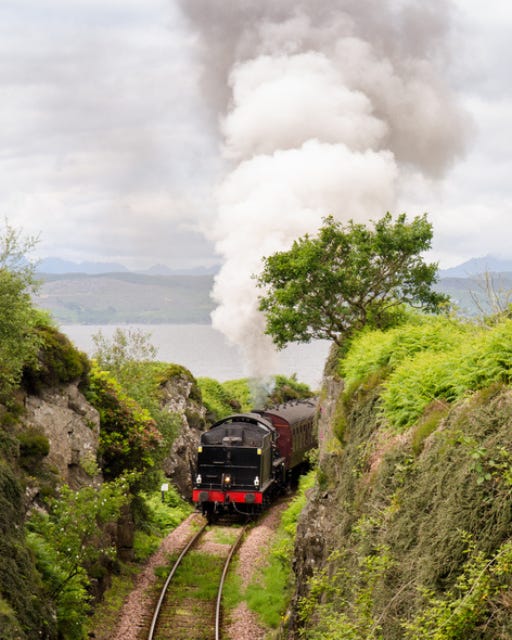
Most visitors experience it as a single long day: Glasgow to Mallaig and back, five hours each way, glass pressed to the window, a sandwich from the buffet trolley, home again by dark. It’s a fine way to spend a day, and plenty of people are glad they did it that way. But the line runs through country that rewards getting off the train — repeatedly. So, here we set out a different way to do it: a full week, travelled entirely by train, bus and ferry, with no car at any point.


VOTE for your Top Places to Visit in Scotland here!
It’s the one question every first-time visitor asks — and the answer is a high, sub-Arctic plateau, ancient pinewoods and five of Britain’s six highest peaks all folded into a single national park. Read more: What Makes the Cairngorms Different from the Highlands?
Every “Aviemore,” “Rothiemurchus” and “Cairn Gorm” is a tiny Gaelic sentence describing the land itself — once you can read it, the whole map of Scotland begins to speak. Read more: The Ancient Gaelic Code Hidden Inside Scotland’s Place Names
Today we raise a glass to Bowmore, the oldest licensed distillery on Islay and one of the oldest in Scotland, established in 1779. Standing on the shores of Loch Indaal in the centre of the island, Bowmore still malts a portion of its own barley on traditional malting floors and produces a whisky that bridges the gap between Islay’s heavy peat monsters and the gentler drams of the mainland. Visit Bowmore Distillery here!
Scottish Food you will love
👉 Vote for your favourite food here!
A Modern Scottish Classic – Sticky Toffee Pudding may feel like it has been around forever, but it’s a surprisingly modern addition to Scotland’s culinary story. The strongest documented origin traces back to post-war hotel kitchens in the Scottish Borders, where two Canadian airmen shared a family date pudding recipe during the 1940s. Local chefs adapted it, refined it, and served the earliest versions of what became known as Sticky Toffee Pudding. From there, it spread to hotels across the country and quickly became one of Scotland’s most comforting desserts.
It’s not an ancient recipe, but it is authentically Scottish—shaped by the people, ingredients, and warm-hearted hospitality that define Scotland’s food traditions. This version stays close to the early Scottish hotel recipes: simple ingredients, soft date sponge, and a buttery toffee sauce that soaks right in.
Get the recipe here: How to make Sticky Toffee Pudding

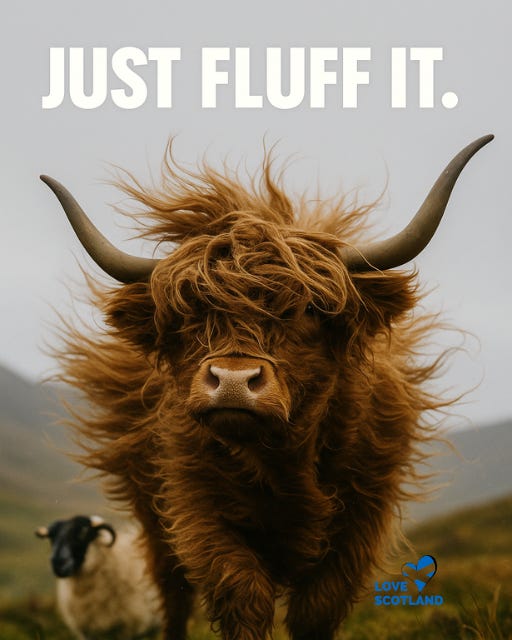
Up in the glens of the Cairngorms, you'll often spot Heilan coos grazing contentedly at altitudes that would send most cattle shivering — their shaggy double coats and famous fringe are perfectly built for a park where snow can linger on the tops well into spring. Unbothered by wind, midge or mountain weather, they carry on chewing while the plateau above them holds the last of the snow. Hardy, patient and endlessly photogenic, they're the perfect emblem of Scotland's wildest corner.
Read more here: The Cairngorms National Park: A Special Place
💙Send a piece of Scotland
to someone you love 💙
Beautiful Scottish-themed digital cards for every occasion. Birthdays, blessings, thank-yous, and more — sent with warmth from the Highlands.
Browse the cards here!
This newsletter grows because of you — every time you share it with a friend, a colleague, or that person who keeps saying “I really must go to Scotland one day,” you help build something special: a community of people who genuinely love this wee country. Every subscriber has a unique referral link at the bottom of this email. Share it with your friends.
Comments
Nothing yet. Say the first thing.
Sign in to join the conversation.