
Good morning, AI enthusiasts!
Coding agents have become good enough that the tool choice barely matters for many tasks.
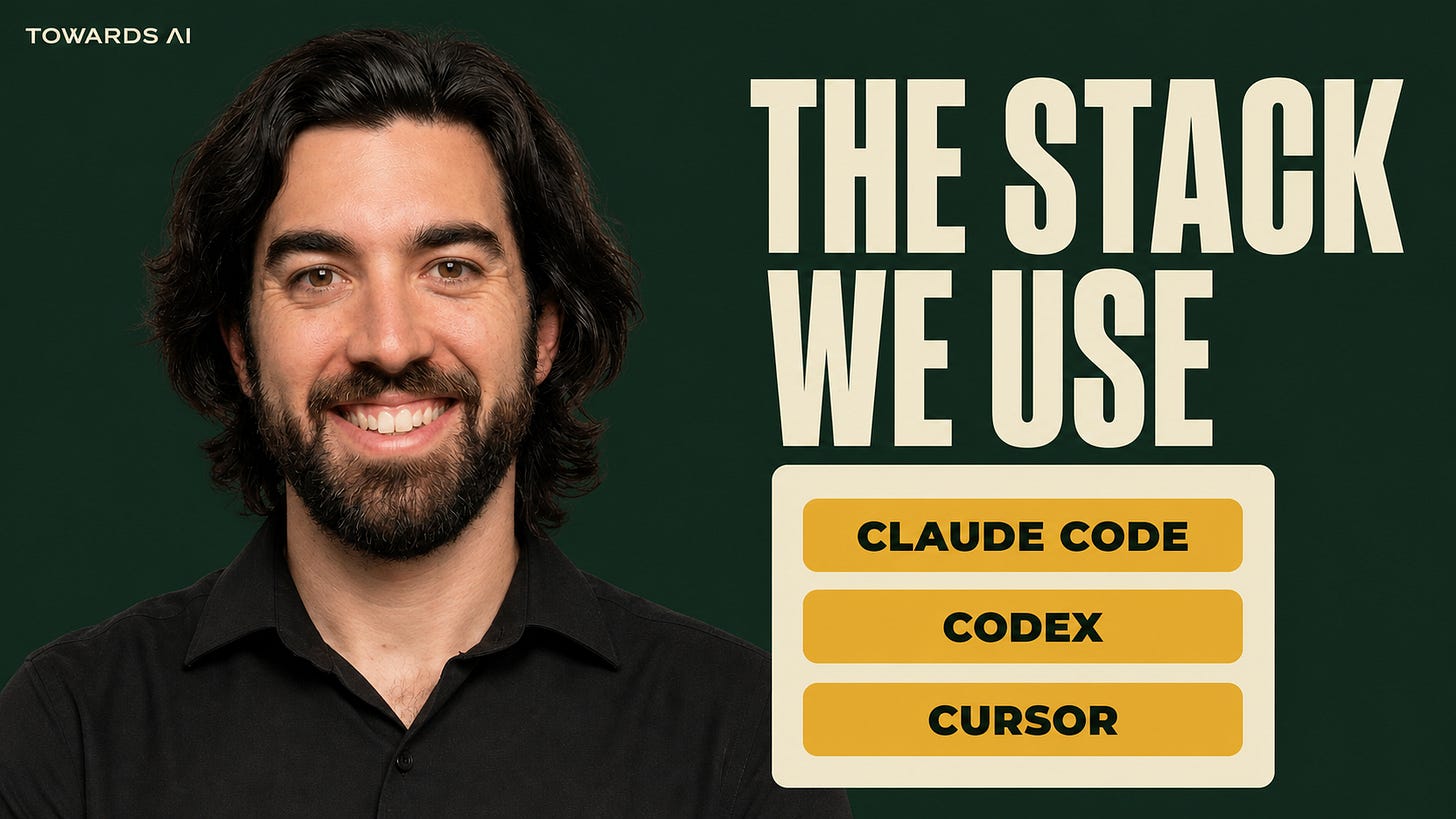
You can use Claude Code, Codex, Cursor or even Kimi Code. It will be very similar.
You can describe a feature, walk away, and return to working code with tests.
That is genuinely useful.
But it also creates a new failure mode: the code works, gets merged, and nobody on the team can explain why it was designed that way.
The rule we use at Towards AI is simple: you do the thinking. The AI does the typing.
In practice, that gives us three workflows:
Context first: attach the README, the two or three relevant files, and the exact change.
Plan, then code: make the agent ask one question at a time before it writes the specification and plan.
Smart decides, fast implements: use the best model for fuzzy architecture work, then a faster model for the narrow diff.
The guardrails matter just as much. Give the agent raw stack traces instead of your theory. Ask for diagnosis, a rewrite, and a regression test in the same prompt. Start a fresh thread after two failed attempts. Review every diff, especially the boring ones.
The local productivity gain is easy to see. The team-level gain only appears when the code stays testable, reviewable, and understandable.
I put the complete workflow, copyable prompts, and six guardrails into this week’s video here (or the article version here):
If you want even more info on agentic coding best practices, consider checking our new Towards AI mentorship program: https://www.louisbouchard.ai/towards-ai-mentorship-for-ai-engineers/ !
Comments
Nothing yet. Say the first thing.
Sign in to join the conversation.