
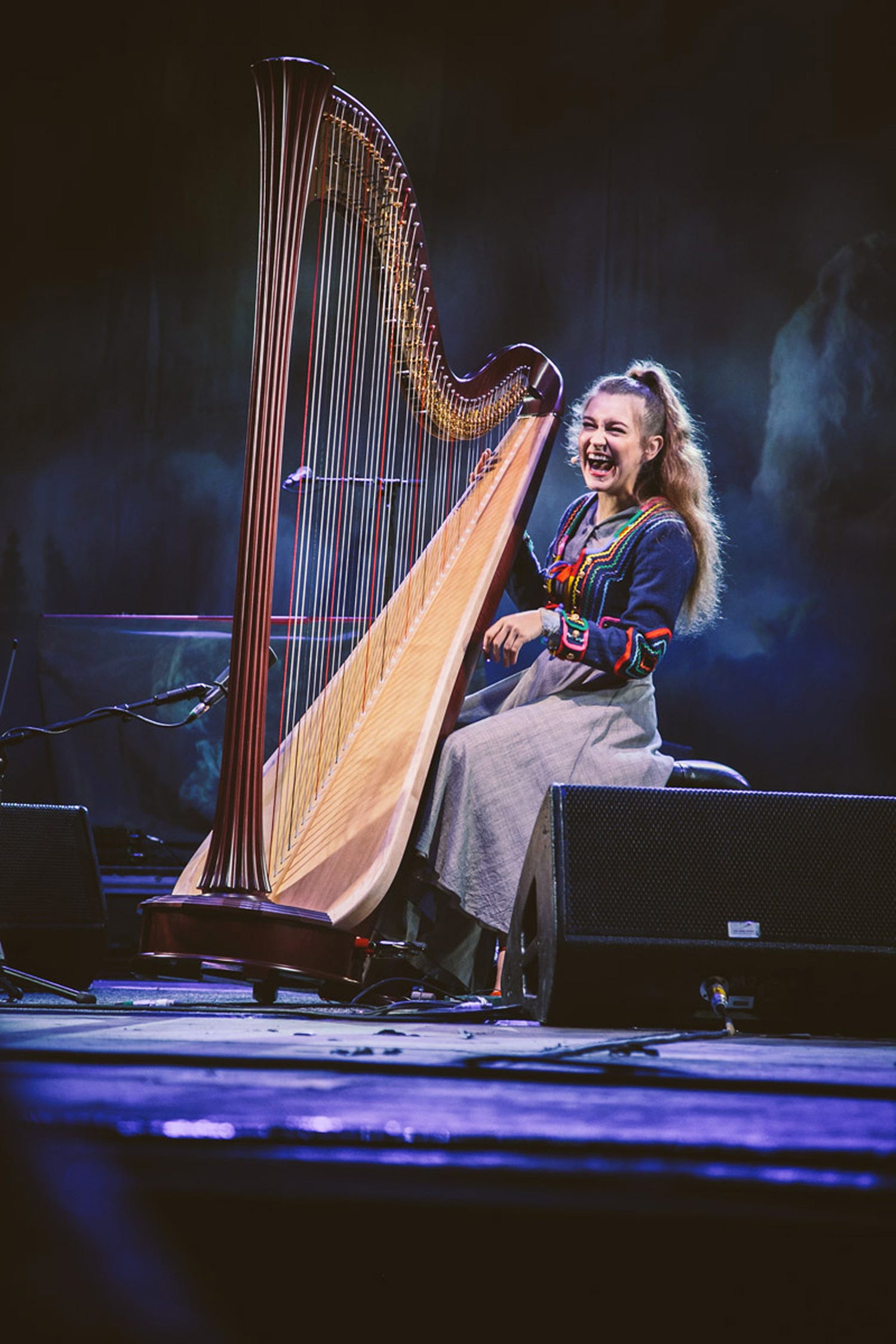
End of the Road festival turns 20 this year. This is no mean feat for an event that could so easily never have happened: the brainchild of a single young music fan, working as a decorator at the time, its 2006 debut relied on loans from friends, hours of flyering outside gigs and the goodwill of artists who didn’t even like festivals. Yet here it is in 2026, filling Dorset’s bucolic Larmer Tree Gardens once again, with indie legends Pulp topping the bill alongside the world’s buzziest contemporary rock band (Geese) and a phenomenal undercard that features L&Q favourites like YHWH Nailgun, Kelly Lee Owens, Beverly Glenn-Copeland and many more.
“Anniversaries are hard,” EOTR founder Simon Taffe told Loud And Quiet editor Stuart Stubbs on a recent episode of our podcast, “because it puts pressure on coming that year – but I want people to come every year.” Happily for Taffe and the EOTR team, people do tend to come every year: the same people, too. “70 to 80%” of the audience are there year-in, year-out. And however they feel about anniversaries, they’ve now got a 20-year track record to look back on: an enormous achievement for a wholly independent, fiercely idiosyncratic festival in an almost comically inhospitable economic climate.
The story of EOTR reads like a leftfield music fan’s teenage dream. A music obsessive who accrued a steady income at a young age through his decorating business, Taffe turned the ‘dream festival lineup’ pub conversation so many of us have had without ever acting upon into a reality, powered by youthful bravado and a steadfast dedication to independent music. With the help of a couple of mates and advice from sympathetic music industry pros, he pulled together the first-ever EOTR lineup in 2006 by contacting all artists personally (accidentally pissing off some booking agents in the process) and winning them over one-by-one. Richard Hawley, Sea Power, Badly Drawn Boy and Kathryn Williams were among the headliners, and the likes of James Yorkston, Metronomy, David Thomas Broughton and Emmy The Great also appeared at Larmer Tree. Tellingly, for many of those first-year artists, it was far from their last appearance at what would soon become one of the UK’s foremost alternative music institutions.
Brighton indie group Brakes were on that 2006 bill, and like so many others, it was the first of many sets at EOTR. Frontman Eamon Hamilton remembers the nascent festival very fondly: “It was a wish list of every band I liked, basically. A concentration of all the bands that we’d wanted to see over the summer.” What struck him, though, was how inclusive it remained despite its connoisseur-style curation. “I was worried it’d be too snobby. But it turns out everyone’s awesome: you’ve got a common ground of a love of good music.”
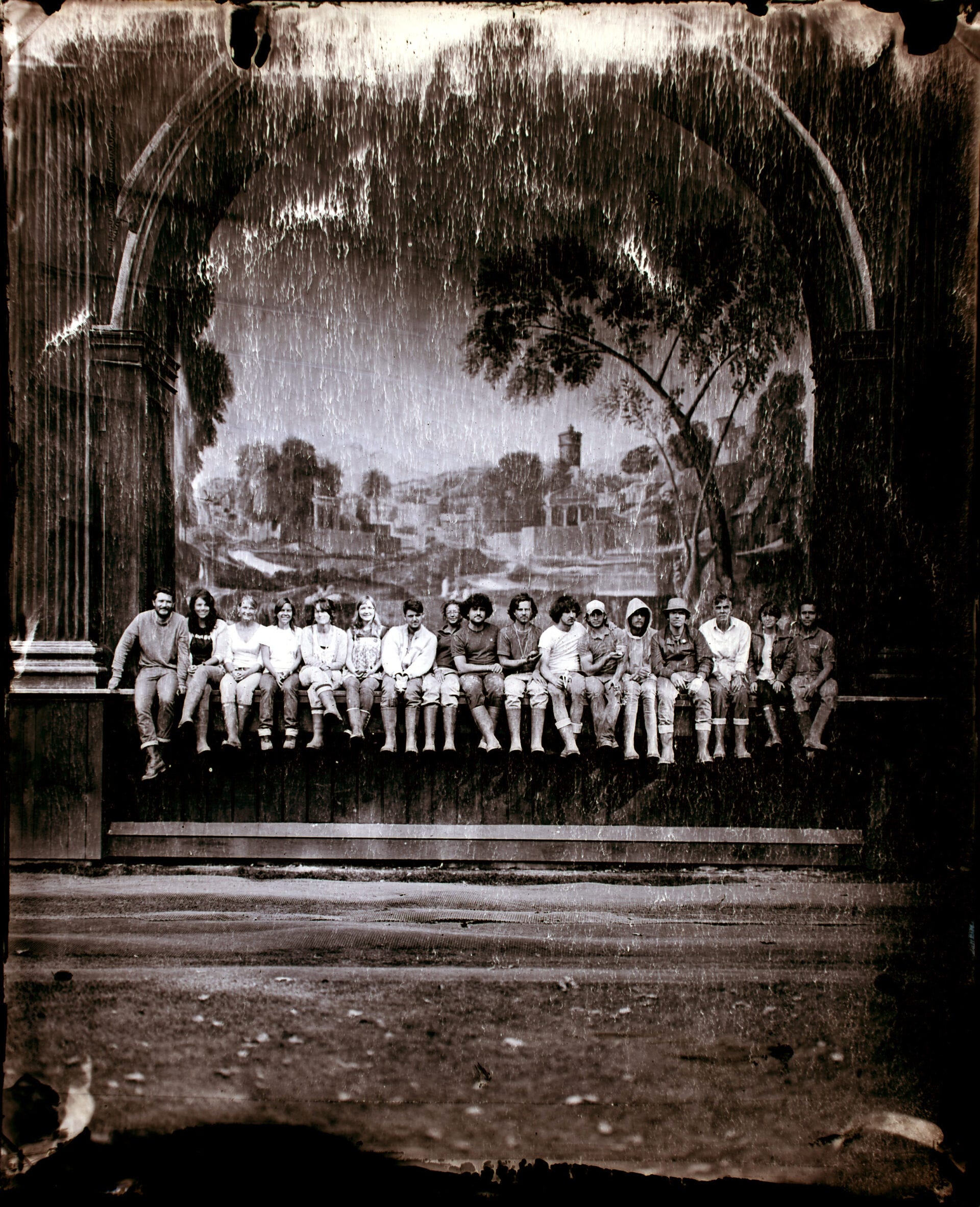
Anthony Chalmers, who went to the same school as Taffe, and is now one of London’s most respected independent promoters with his company Baba Yaga’s Hut, paints an idyllic picture of the setup for the 2006 event. “It was fucking cool, man. It was before I’d promoted my first show, I was like 21 or 22 years old, and we had all our old pals there. Simon’s there, he’s a bit older, and he’s immensely stressed because of money stuff, but for us it’s incredibly fun. I’d been out with him and the other guys earlier in the year handing out flyers at Reading, Big Chill, some other folk festivals, and then we came in for setups, building shit in the day: most of us come from a building or painting and decorating background so that’s what we were used to, constructing the signs, building the box office, working in the day and getting drunk at night. I missed 2007 for some reason and came back in 2008: that’s when the old photo of the setups people sitting on the stage was taken, I’m in the middle of that.
“While when I started promoting shows, I wasn’t like, ‘Simon’s done it so I can do it,’ it must’ve been a factor: having someone there who’s done it makes it feel possible. There’s a lot of love in the curation from Simon, nice location as well, and nowadays there’s lots of good festivals and maybe it’s easier to take for granted, but there really wasn’t then.”
As Chalmers implies, money was an issue for End of the Road at first. The initial festival finances were more or less literally worked out on the back of an envelope, and there were plenty of people telling Taffe to pull the plug when the ticket presales failed to live up to expectations. We can say now that this was due to a lack of marketing nous and brand awareness rather than an issue with the programming, site or general festival approach, but the six-figure sums on the line were no joke. “When we were setting up the festival, I couldn’t sleep for seven days on site,” recalled Taffe on our Music Made Me Do It podcast. “It really was touch and go. I was pretty scared: there was a certain point where I was either gonna lose £80k now, or [if I cancelled the festival] definitely lose £250-300k.”
Somehow, it all came together. The 2006 edition did lose money, but it was well-received enough by its attendees and the wider independent music community that Taffe decided to persist. End of the Road 2007 doubled the first year’s attendance, with an expanded lineup that included the likes of Yo La Tengo, Lambchop and Super Furry Animals; by 2008, the festival was running at a profit and Taffe was able to settle the various debts he had chalked up at the beginning. It was fast becoming a fixture of the UK festival calendar, and not just for Taffe and his mates: artists, fans and families soon began building their own relationships with the festival that endure to this day.
Squid’s Ollie Judge started coming to the festival with his family a couple of years in; he mainly remembers “honing my diablo skills” in the circus tent between the bands at his first EOTR, but as attendance became an annual family tradition his investment in the music culture represented by the festival became central to his life. When Squid first played in 2019, “it was a big moment,” he says. “But we hadn’t hit our professional stride yet: a lot of drinking and snapped strings… my parents were really proud though.” This kind of lasting attachment to End of the Road, with repeat attendees eventually becoming featured artists much to the delight of their friends and family, is remarkably common. Mike O’Malley from post-rock collective Caroline shares similar memories of first venturing to Larmer Tree as a teenager desperate to see Fleet Foxes: “It felt kind of secret because no-one else I knew liked any of these bands.”
Each year, the festival grew a little more, building on its roster of returning artists and attendees to expand into new audiences and genres. Hamilton remembers sharing backstage beers with Kurt Vile when the Philly songwriter’s rider ran dry and Brakes had leftovers after their third slot at the festival; both acts will return in 2026. International indie royalty like Joanna Newsom, Low and Tame Impala rubbed shoulders with the many acts who played vital early shows before finding wider success (King Gizzard and the Lizard Wizard, Cate Le Bon, Wolf Alice), and the site gradually spread outwards too, encompassing new stages and areas. The experimental Boat Stage has been a particularly successful addition in recent years, hosting key sets by the likes of Jockstrap, John Francis Flynn and MC Yallah & Debmaster.

It hasn’t always been straightforward, of course. Like everyone else in independent music, the festival was hit hard by the Covid-19 pandemic, forcing the cancellation of the 2020 edition with a streamed version in its place. London art-punks Modern Woman played their first-ever festival set as part of that event, and despite the difficult context, frontwoman Sophie Harris remembers it fondly. “We played on the Victorian theatre stage onsite with the painted backdrop, it was grand. It was like a mini-festival, we all camped afterwards. It was then kind of strange seeing the site at full capacity the year after.” From there followed a desperate scramble to get back on track in time for a full festival in 2021: read Joe Goggins’ piece on this herculean effort here.
Against the odds, the 2021 EOTR was a cathartic triumph. The debut set from Caroline particularly stood out for its delirious release of cabin-fever tension. For O’Malley, it was a full-circle moment: “Like a lot of musical projects that had developed during the pandemic, we had played together so much, but hardly played live. That was our ninth or tenth show ever and by far the most people we’d ever played to. I just remember it feeling very electric, very exciting and extremely precarious: we weren’t used to playing on stages that big and we didn’t really know how to do a soundcheck for a festival – we normally took hours and hours, so we had to speed run the whole thing. But it added to this feeling of everyone having to focus in and band together.”
2021 also provided Harris’ first view of a fully-fledged EOTR, and the signing of Modern Woman to the festival’s boutique record label for their debut EP. “We were still teething slightly as a band,” she says, “and everybody at EOTR was really supportive of letting us explore whatever we wanted in that release.. We were lucky to work with a label that gets so much joy from giving a platform to establishing artists – in a way that is, I think, not that common nowadays.” It’s a fitting experience for someone who considers EOTR “the best festival in the world: it’s curated by people who really, really love music, [who] just live for it. That’s the key.”
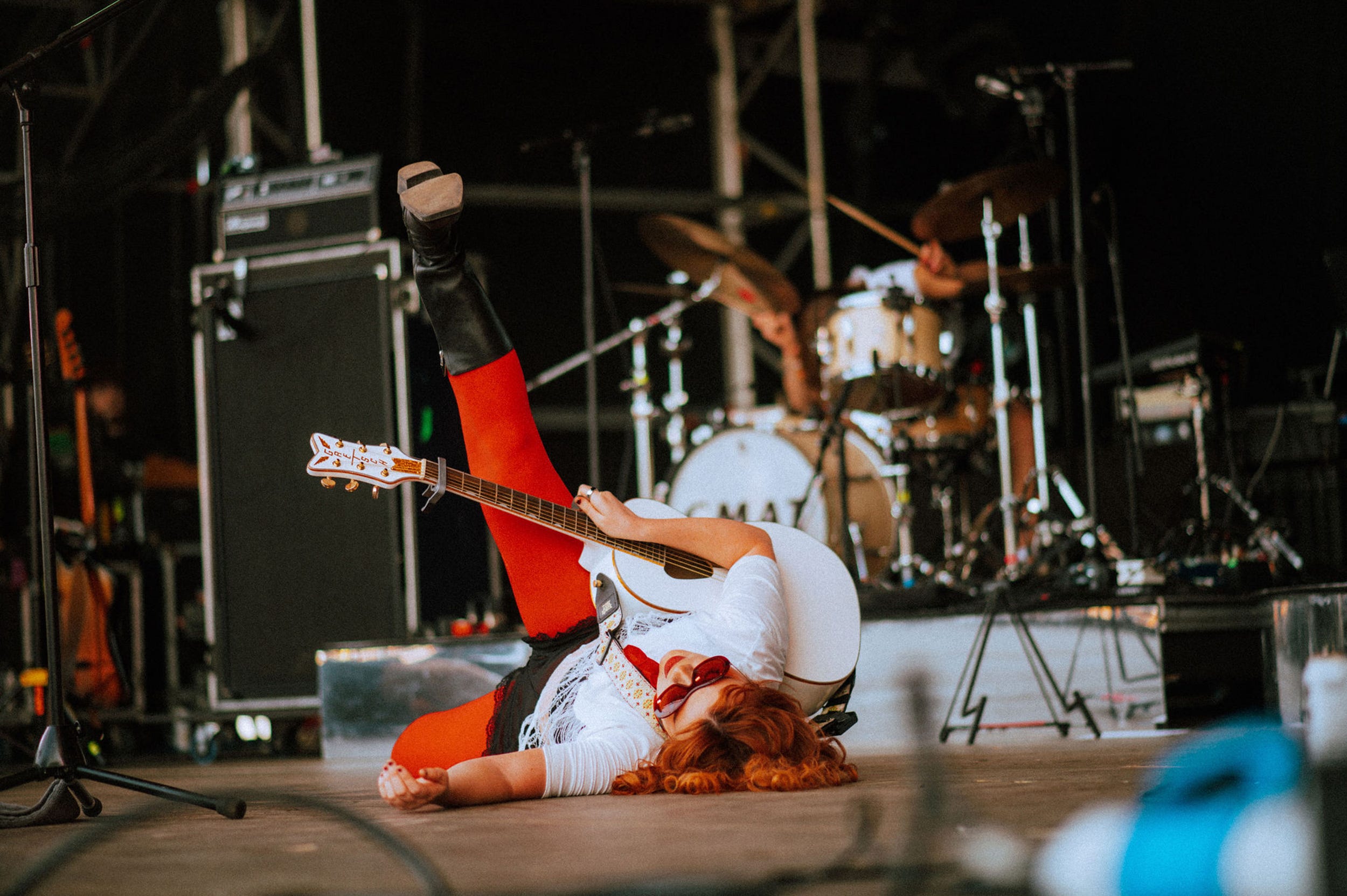
The trials of the early 2020s may have seemed irrecoverable for an independent festival like this one; indeed, many similar events did not survive the pandemic. Yet since the crisis abated, the festival seems sturdier, bigger and more explorative than ever: the Boat Stage is a post-Covid innovation, complementing an expanding late-night programme and bold cinema, literature and comedy bookings in an attempt to cater to an wider range of tastes without compromising on quality, diversity or coherence. This hasn’t gone unnoticed: filmmaker Mark Jenkin, for instance, was taken aback in 2023 when the live score performance for his experimental film Enys Men was met by a rapturous audience, not the handful of “hungover parents and people on comedowns” he had been expecting. “I know most festivals have a cinema element, and I knew End of the Road did as well, because I think I’d been asked to curate something there a few years ago, so I thought we’d be in the film tent and then it ended up we were programmed in the Big Top. But it was a really good slot in the end: it was totally rammed, and a totally unique performance.” Jenkin and his musical partner Dion Star will bring their Cornish Sound Unit project back to End of the Road this year to perform another live soundtrack, this time of his feature Rose of Nevada.
So End of the Road returns for its 20th anniversary in rude health, with a typically excellent lineup, an ever-expanding array of extracurricular programming and a more dedicated audience than ever. Most importantly of course, L&Q has a stage: the Big Top on Sunday, featuring sets from the likes of Factory Floor, Anna Von Hauswolff, Another Country and more. Below you can also find some tips from elsewhere on this year’s lineup from the artists interviewed for this piece, many of whom will be playing themselves.
End of the Road 2026 runs from Thursday 3rd September to Sunday 6th September at Larmer Tree Gardens, Dorset. Catch Modern Woman on the Woods stage on Thursday; Caroline on the Garden stage on Friday; Brakes on the Big Top on Friday; and Mark Jenkin and Cornish Sound Unit on the Big Top on Saturday.
Comments
Nothing yet. Say the first thing.
Sign in to join the conversation.