
An orange ping pong ball.
1952. Lower East Side. Slutty specs. Rockwell Ink. Sweat stains. Polluted cotton shirt. And the pursuit of greatness.
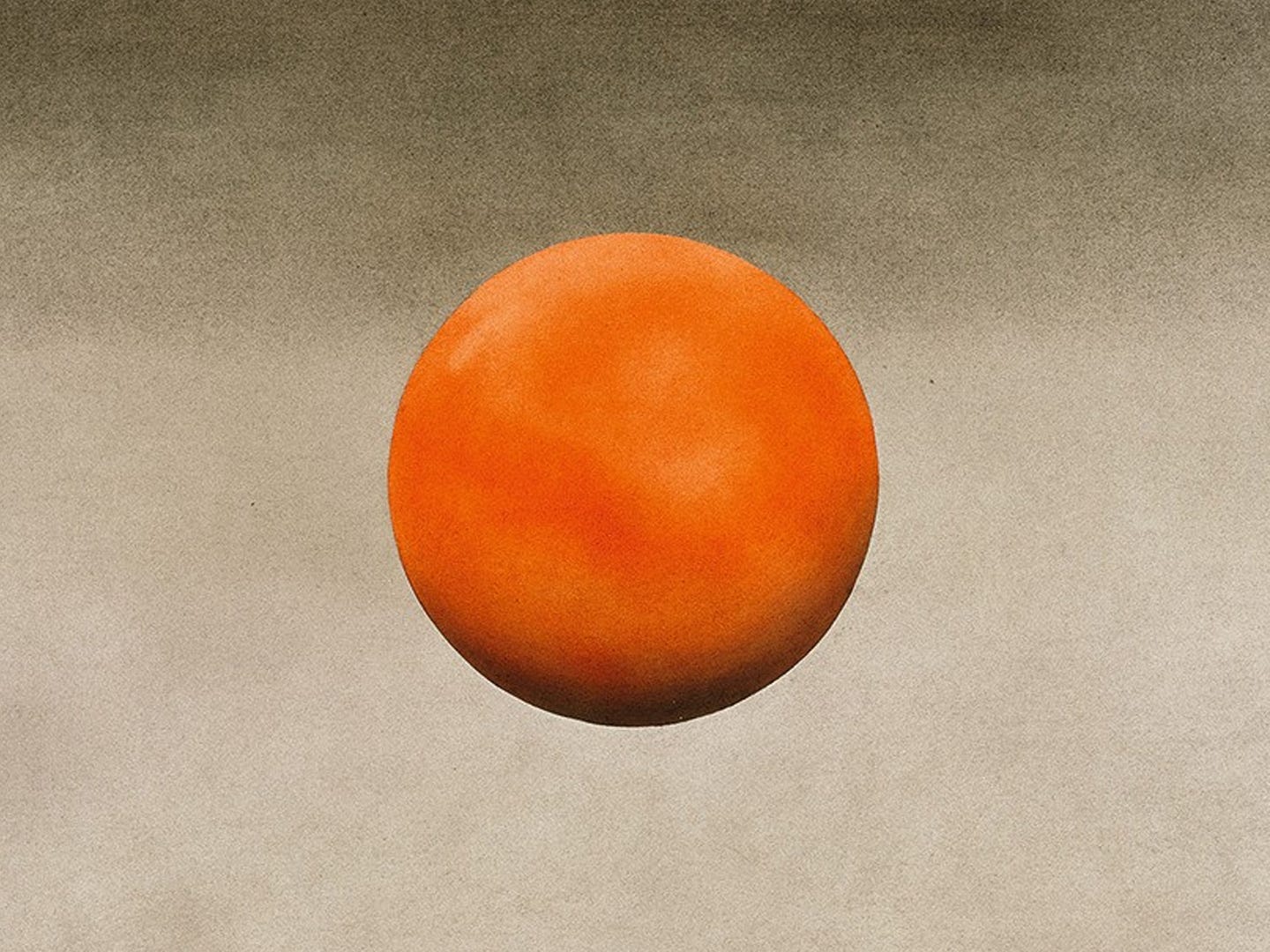
That’s Marty Supreme. Not ‘a period piece about ambition’, but those exact details – the orange ping pong ball, surrounded by the muted, polluted brownish-grey tones of 1950s New York. Every scene in that movie was soaked in specificity.
I’ve been thinking about why I felt more aware of these details than usual. I walked away from the film having to Google whether Rockwell Ink was a real company. I was being shown one person’s specific obsession with such fidelity that I couldn’t look away. And I was being confronted with a story about the pursuit of greatness with such dimension that I genuinely believed it.
In branding, we often fall victim to reaching for broad concepts. Things that could encompass everything as we chase the ‘big idea’. Using universality as a strategy. Betterness. Hope. Joy. Connection. We use concepts that are intangible and lofty – things with such breadth that we convince ourselves their breadth is their strength. It does the job on paper, but what even is it without the detail? Surely it’s too blurry, too vague. No fidelity. No dimension.
So I like to consciously use specificity in my work. The idea that the fidelity of an idea comes from being hyper-specific. Specific materials, specific moments, specific references. The more specific you are, the more real it feels.
Those of us building brands or identity systems or campaigns have been coached up to ‘big ideas’ for so long that we’ve forgotten – or maybe never learned – how to coach ourselves down into specificity. We’ve spent years learning to think ‘strategically’, to find the universal truth, to build frameworks that can stretch across touchpoints and time. We struggle to get clients and team members to think about ideas big enough to inform every part of a brand experience – so that’s all we focus on. Somewhere along the way, specificity gets left behind.
We’re scared of being small. When we focus too much on specific details, a fear sets in that we’re going to create something small. Or perhaps these details aren’t worth discussing because they’re not ‘strategic imperatives’. So instead, we land on vague, lofty concepts. Things with such breadth that they rarely mean anything at all. We convince ourselves and others that universality alone equals reach, so we hide behind it.
We’re faced with this idea that specific choices alienate people. Choosing one colour will narrow appeal. So we keep things open. We add a yellow, a blue, a pink, a red. We fight ourselves trying and failing to make the ‘big idea’ feel less generic, not realising that that’s not the challenge in the first place. The big idea is allowed to be quite wide-reaching. It’s how you access that idea, through specific details, that will make it feel interesting, ownable, gettable.
Without specifics, you end up with something that lacks a sense of identity because you’re not grounded in anything. You’re not creating something with boundaries and walls and skin and texture. You’re creating something so vague, so blurry, that it does a job to some extent – sure – but it doesn’t really connect to anyone or tell a very interesting story.
Meanwhile, when you’re reading a novel and you’re captivated by how the author describes a situation, a scene, an emotion with such fidelity that you feel transported – that’s because the author drew on personal experiences and visceral emotions to articulate it. Only people can do that. Only people can access that level of specificity. We should use this to our advantage. This is the upper hand we have over automated, generated, generic, committee-shaped work.
Back to Marty. That ball isn’t just a detail. It’s symbolic of the whole world. But more than that, it’s doing work that the universal idea can’t do on its own.
If you just said, ‘this is a story about the pursuit of greatness,’ I’d nod and probably forget about it. It’s too abstract to hold onto. But instead it’s a story about that specific sport, with that specific character and that specific orange ping pong ball. These details give me something concrete to anchor to. They aren’t limiting the story to one person’s experience. They’re making the story resonate wider because they’re real and felt.
You don’t reach more people by being generic. You reach more people by being so specific that the details themselves become the bridge to something universal.
This film holds a system of details that makes you believe the world you’re watching, and it’s exactly why the orange ping pong ball can carry something bigger. That one hyper-specific object becomes the anchor for the whole idea, because we’re watching the pursuit of greatness told through one person’s obsession with table tennis. One person’s obsession with a sport most people wouldn’t care about becomes a portal to a story everyone understands.
This isn’t about creating something small. This is about creating something rich and layered and all-encompassing, through the tension between big and small.
Now, if I see an orange ball, I think Marty. And I think about that world. An exceptionally simple identifier that people are more likely to remember. An icon that actually feels iconic. That’s what you want from a logo, from a brand, from any piece of identity work. The specificity gives you something people can hold onto, something that reveals the bigger idea instantly.
The real skill, I think, isn’t just ‘be more specific.’ It’s being able to toggle between the specific and the universal, and helping others around you do the same.
You can start with the universal idea – something like hope or connection – so long as you identify a specific idea, thing, or moment to bring it to life. But you can also start with something really specific and build out from that, so long as you’re able to build a world that has both those dimensions.
Enjoy making every choice matter. Imagine a whole new world for your brand to exist in, even if some of these elements are completely impractical and not a ‘strategic imperative’.
Nonetheless, the process of building this world, making those choices, and sticking to them will help you and the people around you truly understand what this world is. With no vagueness or misunderstanding. It will be clear. It will exist in such high fidelity that you, your team, and your customer will have no doubt that it’s real.
I write about the creative process, running an independent studio, the twists of a non-linear career, the tools I’m using, what I’m learning, what I’m unlearning and current things I can’t stop thinking about. If you’re into branding, design, creativity, considering an independent creative career – you might be interested in following along.
No posts
Comments
Nothing yet. Say the first thing.
Sign in to join the conversation.