
| Part 1 of 1 |
Release Date: August 11, 2026
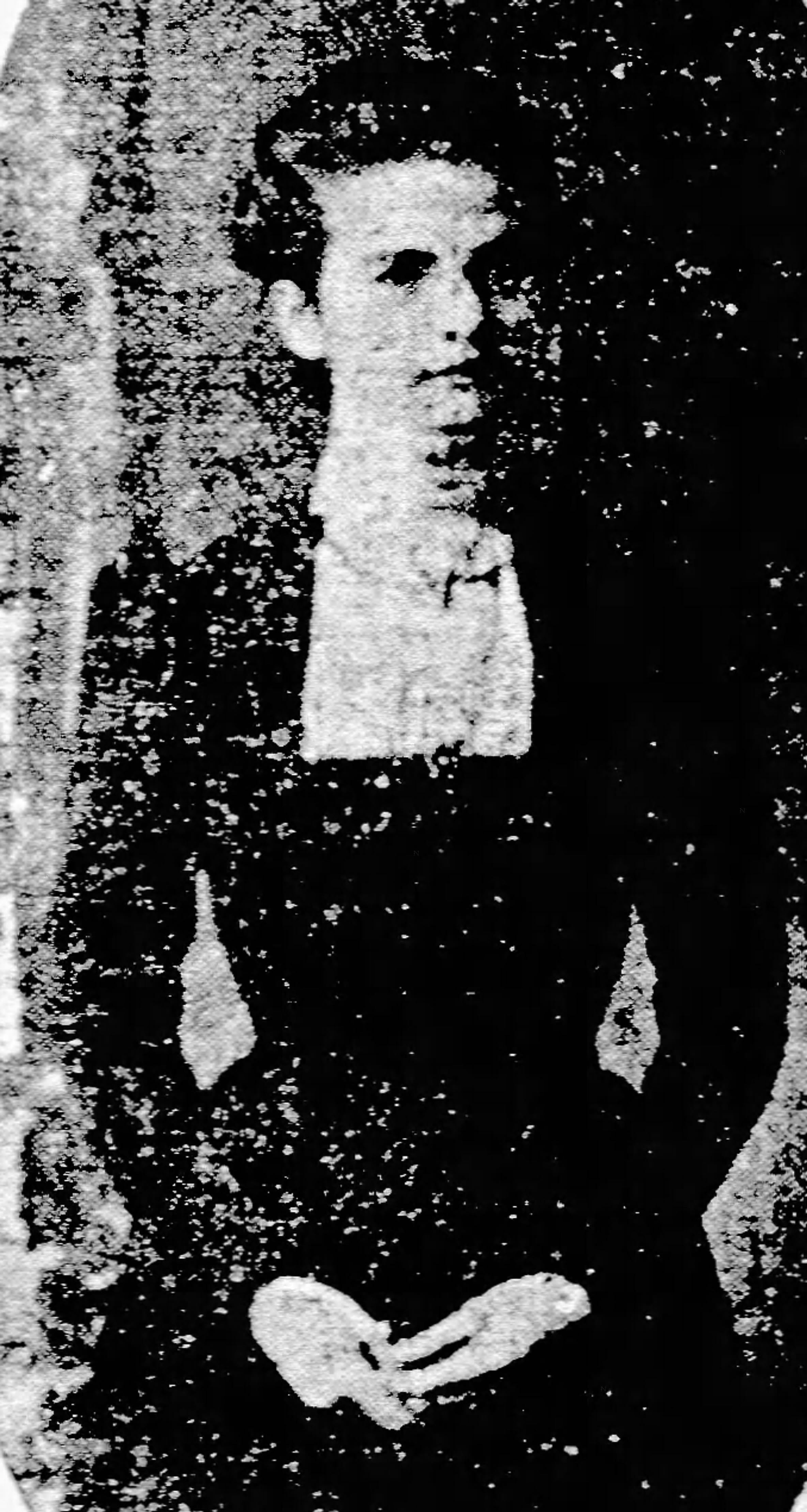
In January 1908, Elizabeth Sohm lost something she had every reason to believe was hers.
The Buena Vista County (Iowa) printing contract – lucrative, prestigious, and symbolically important – was awarded to three other papers but not hers. Not the Storm Lake Vidette, which she owned, published and edited with uncommon grit. Not the paper she’d worked her way into, learned from the ground up, and eventually purchased outright three years earlier.
Elizabeth was thirty-four years old. She was experienced, capable, and known. She was also a woman, an unmarried woman. And in rural America in the opening decade of the 20th century, that fact still had the power to outweigh the rest.
At least according to Elizabeth.
The decision, she believed, had little to do with quality or reliability, and everything to do with gender, and she was likely right. Other papers in northwestern Iowa, all of which were run by men, coded the discrimination delicately – supposedly because she was a woman – but the verdict was clear enough. A line had been drawn. 1
Elizabeth did what newspaper folks do when they’re angry, disappointed, and alert to the absurdities of power: she wrote.
Please hit the ❤️ button at the bottom of the page to help this story reach more readers. And if you’re not already a subscriber, I’d love to have you join me. Thanks!
The editorial Elizabeth published two days before Valentine’s Day of 1908 was brief, sharp, and unmistakably sarcastic. She framed her grievance not as a protest, but as a personal realization. Fighting for what was rightfully hers, she wrote, was a strain on the nervous system of a mere woman. 2
Perhaps the solution, then, was not to fight at all – but to marry.
Specifically, Elizabeth announced she was in need of a newspaper man who could do the fighting and swearing for her.
It was leap year, she reminded her readers – the once-every-four-year opportunity for desperate women to ask for the hand of a man.
And Elizabeth was desperate: “Anyone is at liberty to regard this as a leap year proposal who may feel himself qualified.”
Within days, Elizabeth’s proposal had gone viral.
Iowa papers picked it up first, then papers farther away – as far away as Dublin, Ireland.
Headlines multiplied. Elizabeth became “the fair editoror – editress – of the Storm Lake Vidette,” a woman who had lost a business fight and decided, apparently, to give up the struggle altogether.
One paper insisted she was merely “saving her pride by giving her defeat a humorous turn.” Another was less charitable, using the moment to remind readers that no amount of female independence could replace good man.
“It looks like a joke, but after all, it is the experience of even the successful woman in business, that she needs the man, and that her success is, after all, no real success, and that it brings her no real gratification.
There are very good people who have long glorified the emancipation of the sex, and who talk as if they would to chase man from the face of the earth. But all such talk is pure buncombe. There is nothing better in life than the true partnership of man and woman, no reformers and no agitators are ever going to change that. 3
Elizabeth didn’t bother to publicly respond to her critics, but she did respond to a decided cheeky newspaper clipping which arrived from the next county over.
Grant A. Craig, the bachelor editor of the Lytton Star, had stopped his press upon reading Elizabeth’s proposition and promptly called her bluff.
“We believe we are eligible to fill the vacancy which Sister Sohm feels exists in her print shop. We’re a Missouri Democrat of forty years standing: considered a good printer: as to our fighting qualities, suffice to say we come from a family that kills: in the swearing proposition our press feeder says that we’d be there with the goods, as we swear in seven different languages at once when things go wrong on print nights.”
But before he agreed to take on “fair Lizzie’s burdens,” Grant wrote, his potential mate would need to demonstrate her qualifications as a wife: make pancakes and good coffee, clean shirts, darned socks, and properly repaired trousers.
‘If the fair editoress feels like filling vacancy for a vacancy being filled,” he concluded, “we might make a swap.” 4
Of course, the exchange delighted both readers and the press.
“All Iowa is watching for the next edition of the Vidette.” 5
🇺🇸 Follow me in real time as I build my family’s Century Safe using the same methods Annie Deihm used to build her’s in 1876. Posts drop every other Thursday at Building My Bridge to 2076. 🇺🇸
When that next edition of the Vidette hit the newsstands, it included Elizabeth’s equally cheeky rejection of Grant’s gallant offer:
“We’d like to deny the whole matter, but our own files are against us and so we will have to allow ourselves to be notorious for a week or so. The gentleman at Lytton did not know what he was bringing down on his head. We are sincerely sorry for him – but to be frank, we must admit that we can do all the things he requires.”
She could cook, scrub and darn, she explained. She could do everything from milking the cow to writing an essay, and had even taken first prize at the county fair, “one time for bread, another time for jelly, and still another time for knitted work.”
“We’ve always comforted ourselves with the thought that when we could no longer make a living at newspaper work, we could hire out as dishwasher or chambermaid at a hotel and make a living. Nevertheless, we will have to decline the generous offer of the Lytton man.” 6
In publishing his counter proposal in the newspaper, the Lytton editor may have gone the farthest in calling Elizabeth’s bluff, but he was by no means the only man to step forward: In a matter of weeks, nearly two hundred letters arrived at the Vidette office.
Elizabeth had read each one, she said:
“Some said they were good printers, but their letterheads contradicted the assertion. Others admitted that fighting a swearing were their strong points, and so, of course, did not come under the head of good printers. Still others said nothing in regard to their “Barkis is willin’ sufficient.
“One said he had a heart full of love for us and was a widower with eight children. Now he had better spend some of that love on the children. They no doubt need it.
Some enclosed stamps for reply.
“All seemed sure of an answer.” 7
None fit the bill.
What she was looking for, Elizabeth clarified, was “a man well balanced mentally and morally, educated for the mechanical department and possessing the good sense and tact essential for the business end” of the profession she’d dedicated more than a decade to.
Such men, she observed, were “almost as scarce as hen’s teeth,” but they were also the kind any woman would be proud of.
The vacancy in the Vidette office, Elizabeth concluded, as well as the vacancy in her home and heart, could never be filled by “a galley proof of a man.”
As for men whom she’d passed over, the always community-minded editor had another proposition to make:
“Now, if any or all of the young ladies of Storm Lake who want a husband and are not particular as to what they could get, will call at the office, we will let them draw lots for these letters, and they can answer them and perhaps there’ll be dozens of matches.”
Despite Elizabeth’s best efforts to move beyond her instant celebrity, the attention on her didn't fade. It intensified.
By mid-March, newspapers reported she was ill with nervous prostration.
“The notoriety she received over her proposal of marriage through her newspaper, and the two hundred acceptances as a result, together with her trouble over county printing, has caused her illness. Miss Sohm will fight the case out in the courts.” 8
A month later, the county printing dispute resolved itself quietly, and without court intervention. Three male editors agreed to divide the contract so that Elizabeth’s paper received “just as big a slice as any of them.” No apology followed. None was deemed necessary. 9
And then, just as suddenly as the story had appeared, it ended.
Four month later, in September 1908, Iowa newspapers announced what no one had suspected: Elizabeth Sohm had been married for months.
The ceremony had taken place in May, in a private home in Newell, Iowa, witnessed by only a handful of people. The groom was Joseph E. Morcombe, a forty-nine-year-old newspaperman from Cedar Rapids – well known, respected, deeply embedded in Iowa’s media and civic life.
The marriage had been kept secret, the papers explained, for “business reasons”. 10
Looking back, it’s impossible not to admire the restraint of that choice.
While the world speculated about her availability, Elizabeth was already committed – to a partner she’d quietly chosen, on her own terms. She didn’t allow the public to claim her story before she’d finished living it.
She also didn’t expect Joseph to step in.
After her marriage, Elizabeth continued as publisher of the Vidette, turning over daily operations first to her husband and later to others. She would eventually be appointed postmaster of Storm Lake, defeating three male candidates, and hold the position for decades. In 1917, after nearly twenty years associated with the smalltown newspaper, Elizabeth sold it and she and Joseph moved to California, where she died in 1957 at the age of eighty-three.
Although Elizabeth’s fifteen minutes of fame made for a good story, it wasn't what she was remembered for. Instead, her legacy was as an astute business woman, skilled publisher and editor.
A woman more than capable of fighting her own battles – with or without a man in her corner.
“Self made men are numerous enough,” said a former competitor, “but Mrs. Morcombe belongs to a rarer species being a a self made woman.” 11
Copyright 2026 Lori Olson White
| Part 1 of 1 |
The Story Catalog is not an archive in the usual sense. What you’ll find here is a living catalog of Lost & Found Stories – deeply researched historical narratives told in parts, discovered through newspapers, letters, court records, logs, and the stubborn human habit of leaving traces behind.
Have you read the incredible true story of Aimee Henry and Mary Martha Parker? Call Me a Bastard is my longest serialized story to-date, and the one that started it all here on the Lost & Found Story Box. Check out the story from the beginning.
The Lost & Found Story Box is reader-supported. When you buy through links on our site, we may earn an affiliate commission.
End Notes
1 “Wants a Man who Can Cuss: Iowa Editress Makes a Leap Year Proposition and May be Accepted,” Ottumwa Semi-Weekly Courier, Ottumwa, IA, Janaury 28, 1908, P. 1.
2 Woman Editor Proposes.” Marble Rock Journal, Marble rock, IA, February 13, 1908, P. 4.
3 “Right You Are”, The Courier, Waterloo, IA, February 4, 1908, P. 4.
4 “A Leap Year Bluff,” Iowa City Press-Citizen, Iowa City, IA, January 29, 1908, P. 2.
5 “Wants a Man who Can Cuss: Iowa Editress Makes a Leap Year Proposition and My be Accepted,” Ottumwa Semi-Weekly Courier, Ottumwa, IA, Janaury 28, 1908, P. 1.
6 “Editoress Got Cold Feet: Elizabeth Sohm of Storm Lake Relates Soulful Story,” The Daily Nonpareil, Council Bluffs, IA, February 4, 1908, P. 4.
7 “Editoress Got Cold Feet: Elizabeth Sohm of Storm Lake Relates Soulful Story,” The Daily Nonpareil, Council Bluffs, IA, February 4, 1908, P. 4.
8 “Notoriety Prostrates Her: Woman Editor Who Received Many Proposals, is Ill,” Muscatine News-Tribune, Muscatine, IA, March 11, 1908. P.7.
9 “Three Editors Are Gallant: Will Divide County Printing ‘Take’ with Miss Sohm of Storm Lake,” The Des Moines Tribune, Des Moines, IA, April 8, 1908, P. 2
10 “Editors Wed in Secret: Miss Elizabeth Sohm Bride of J.E. Morecombe. Rites Performed in May; Marriage of the Well Known Editor of the Storm Lake Vidette to Cedar Rapids Newspaperman is Just Announced,” The Sioux City Journal, Sioux City, IA, September 5, 1908, P. 9.
11 “The Sioux City Journal,” Sioux City, IA, January 31, 1916, P. 4.
Comments
Nothing yet. Say the first thing.
Sign in to join the conversation.