
The Reignition Project shines a light on people building meaningful second acts. Have a story to share or know someone who should be profiled? Reply to this email and let me know. 🔥
It’s probably not a stretch to say that most jobs come with concessions. Whether it’s a long commute, less than ideal schedule, or that one difficult co-worker, there are conditions we reluctantly accept in exchange for paid employment. But what happens when you look at your career and realize that you’ve conceded… yourself?
For years, Alex West Steinman succeeded at one of advertising’s most coveted agencies. But as she rose through the ranks of the primarily white, primarily male industry, she found herself wearing a mask to work every day, shrinking to fit in, and – as one jarring discovery made clear – being paid significantly less than her male counterparts.
Those realizations led her to co-found The Coven, a network of coworking communities built on a simple premise: when you design for the people most often left out, everyone benefits. Today, Alex also works as a speaker and facilitator, helping people break cycles of self-diminishment and start building on their own terms.
Below, we talked about the reckoning that led her to take the leap, what it means to lead with purpose, and what she learned from building the wrong thing.
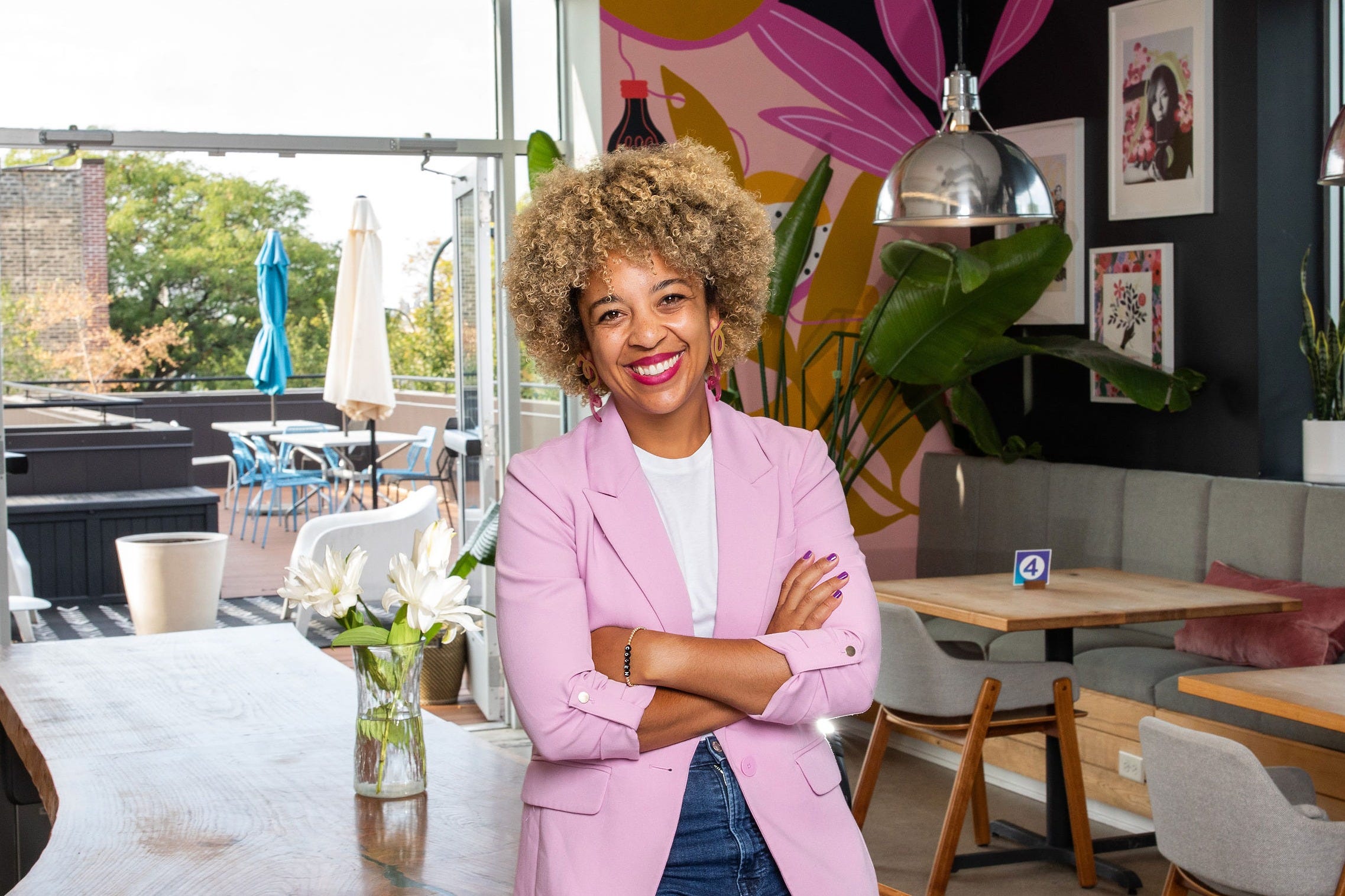
I think at the point where you wake up in the office and realize, wow, I slept over my desk, or I showered at work, or I missed too many bedtimes – those were all moments. But really, it happened very slowly and then all at once.
First was having my daughter and thinking about her growing up in a world where I’m underpaid and not valuing my own worth.
Another piece had to do with my hair, which has always been a core part of my identity. I had straightened it for years, very much trying to fit into a mold. One day, I saw a woman with a shaved head and asked how she found the courage to do it. She said, “I wish I’d done it sooner.”
I cut my hair short and let it grow into an afro. The bigger my afro got, the more I became myself, and the more my voice grew. It was deeply connected.
And then there was a defining moment. I had seen a male coworker’s pay stub – same role, same tenure – and I was making about 70 cents on the dollar. It was the exact statistic we hear about.
I remember thinking: I’m doing everything right, and this still isn’t changing.
My now co-founder looked at me and said, “Then we have to fix it.”
I remember my dad told me, “You leave for a few reasons: money, power, or freedom. You probably can’t have all three.”
I thought, I want freedom to choose my destiny. And I want the power of choice, my own agency. Money would be great, but I don’t know if that comes right now. He said, “I think you should take the leap.”
I took on two freelance campaigns to pay the bills while we were ramping up. Until then, I had done maybe half of a political campaign and half of somebody’s PR – just little things here and there.
But my co-founder Bethany and I decided to take the leap. My other two co-founders stayed in their jobs for the time being to support their families.
We think of it in terms of three pillars: people, culture, and design.
People is about how you feel when you walk in. A lot of people carry real weight – the masks they wear every day, challenges nobody else can see. We want people to feel seen and cared for.
Culture is about shared values but also honoring differences. “Believe best intent” is the thing here. While we may have shared values or what my co-founder calls like-heartedness, we might approach things differently.
Design is a major focus. We think about how women – and many underserved groups – experience space differently. So that means simple things like chairs where my feet aren’t dangling, or a temperature where I’m not freezing all the time.
Absolutely. We think about how lighting affects people: women have more migraines than men do, which can take us out of work and the economic system. So, we consider lighting and natural light.
We think about size inclusivity, especially in boardrooms and meeting spaces where chairs tend to be very specific. Having chairs without arms can support a diverse set of body types. Accessibility is very important.
Women are central, but our fastest-growing membership is actually men.
Our philosophy is that when you design for those most marginalized, everyone benefits.
When you prioritize care for women, for trans and nonbinary folks, for people of color – everyone wins. Men included.
To me, purpose is about intentionally moving forward – and it’s not the same thing as outcomes. We confuse the two all the time. Saying “my purpose is to build a 10-location company” – that’s an outcome, and you can’t control it. What you can control is your effort.
I think the number one reason businesses fail is not because they run out of money, but because they run out of hope. People stop believing in the pivot.
I see that with founders who come to me saying they’re not seeing the growth they want. I ask: what are you actively doing to grow? Have you reached out to everyone you know or want to know? The answer is usually no. They’re afraid of rejection, so don’t ask the question. Learning to face that rejection might be the most important part of owning a business. And learning to take a leap without knowing the outcome – that’s what leading with purpose looks like.
For me, my purpose is simple: I want to build joyful community. It doesn’t matter where or how. What matters is why.
I think I’ve always had a sense of it. Maybe the language has shifted, but purpose-wise, I’ve always been a convener.
Growing up, my house was the place where everybody gathered, making dinner. I’ve led cohorts, and was a volunteer director of different organizations, so uniting people around shared values has always been part of my work. I didn’t realize until we opened The Coven, that, oh, this comes so naturally.
There are so many. I’ve failed a lot.
When we first started, I thought I had to know everything. I didn’t always know what I was doing, but people seemed to think I did, so I started thinking that maybe I had to.
Another mistake: thinking we had to do everything ourselves. During COVID, we pivoted to a lot of online content. At some point, we thought we should create our own platform because that’s how the world was moving. Six months in, it became clear: we’re not a tech company. We were building an entirely different platform instead of growing our actual business.
We ended up scrapping it and going with an existing platform that did most of what we needed for a fraction of the cost. The real lesson wasn’t just about that decision, though. It was about the instinct behind it. We’ve seen what happens to organizations that stretch themselves into spaces they’re not meant to occupy. I’m grateful we caught it when we did.
You’re never going to feel fully ready.
There’s no clear sign that says, “Yes, turn here now.” You have to take the off-ramp when you feel ready enough, and that’s going to be different for every person.
So always make this assessment: what is the worst that could happen? And if you can live with that answer, there’s probably less to lose than you think.
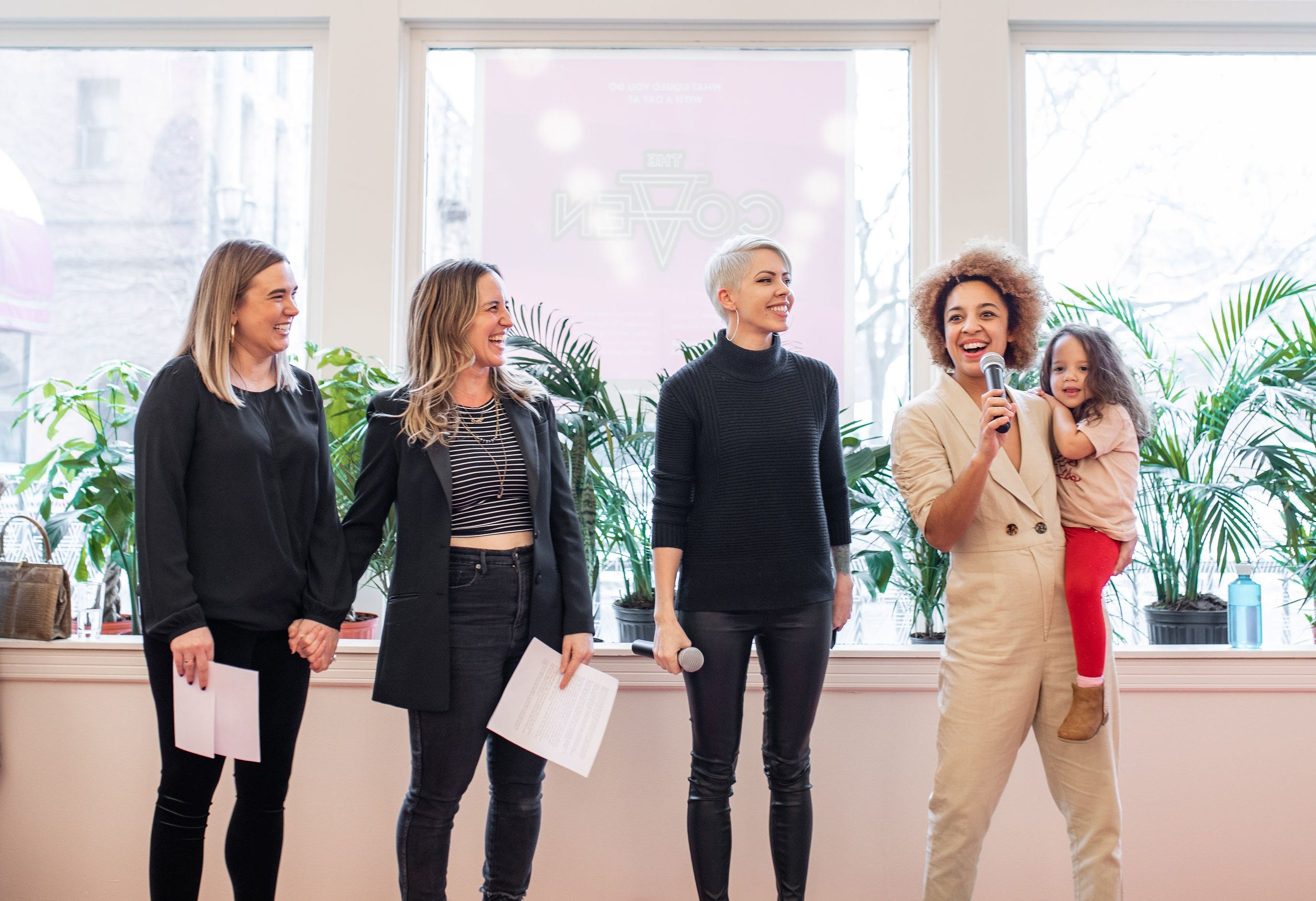
The Coven: https://www.thecoven.com/
Share this post with someone who needs permission to stop fitting in.
Comments
Nothing yet. Say the first thing.
Sign in to join the conversation.