
[potential spoiler warnings!]
Resident Evil Requiem for me, was one of my most anticipated games of 2026, with my eagerness to see this next installment spanning all the way to 2021 after finishing Resident Evil Village. When I finished RE8, I was left shocked, not just because the game was intense and took a lot out of me (which it did), but because they killed off the main character, Ethan Winters (RIP, mold man). His character had carried this series on his back since 2017, but with his story ending on a simple title card, “The father’s story is done,” I was left wondering what they would do with it going forward.
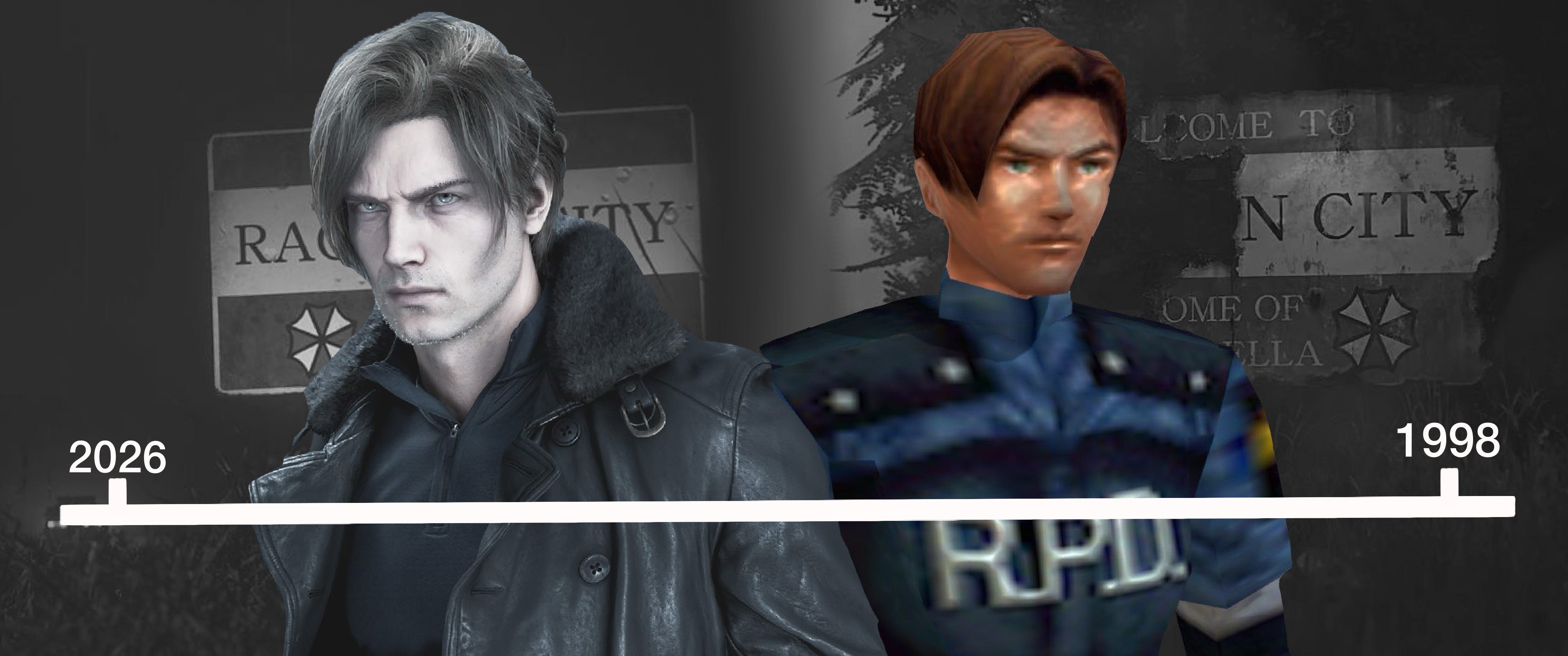
Now, if you had told me that one of the main characters in RE9 would be Leon Kennedy and that we would be going back to the ruins of Raccoon City, I wouldn’t have believed you (I would have passed out), and yet here we are. For me, it’s really shocking to see how far this series has come, with a 9th installment carrying it forward, plus many other spin-offs. Time and time again, the franchise surprises me. And Resident Evil 9 proved one very important thing. The series is going to outlive all of us.
Quick history lesson. I’m sure that if you already clicked on this article, you know what Resident Evil is, but it’s in my name, so I’m gonna have to dump some lore on you. Sorry, I don’t make the rules, but it will be quick, I promise. ;)
Don’t scroll. I saw that!
In my eyes, the core of Resident Evil is pretty simple. Shoot zombies, but be heavily inconvenienced while doing it. Which, in this case, falls in line pretty well with the coined term survival horror. This inconvenience is core to the franchise and has always been, given that the entire first era of the Resident Evil series centered on one city, Raccoon City, before they blew it to pieces, leaving only one question: Where do they go from here?
The answer is none other than Resident Evil 4, yeah, that Resident Evil 4 that has many ports. I’m not shocked we haven’t gotten one for a Samsung smart fridge yet, but jokes aside, Resident Evil 4 is the golden goose of the franchise and has always been. It blew up beyond anyone’s comprehension, becoming a new vision for the series, moving forward with new mechanics, settings, and characters. To this day, it’s still deemed a masterpiece and even won Game of the Year at the 2005 Spike VGAs, which, with all these achievements, would mean whatever came next had to be just as good as Re4 had been.
What would follow would be RE5 and RE6, which wouldn’t be as much of a “lightning in a bottle” moment as RE4 was. Both games leaned heavily into the action elements that had made RE4 special. The only issue is that horror was no longer in the room with us, and many fans grew frustrated with how RE6, specifically, lost the plot along the way, in favor of what the game was supposed to be: a “Hollywood action” style. To this day, if you were to ask anyone who is a Resident Evil fan what their most hated game is, it would most likely be Resident Evil 6. For me personally, which promise not to tell anyone, but I actually kind of did like Re6. It definitely isn’t a game I would choose if I wanted to be scared, but it’s one I’d want to have fun with. But that’s not the point here.
The backlash Resident Evil 6 received specifically would not have looked good for the franchise at all, which led the developers to take a step back, look at the broader problem, and figure out what worked, ultimately producing the savior of the franchise, RE7. It would take a completely new approach, being first-person and completely terrifying, which is what fans wanted from the series all along. What would follow this golden streak for the franchise were the remakes, which would continue to bring in new fans along the way, making the franchise even more successful than it once was.
But here’s the thing: with a growing fanbase of the new vision for the series, there were still holes left unfilled and ignored by the franchise. The fanbase had grown split by preference, with first-person versus third-person and classic zombies versus whatever werewolf abomination was in that village. And it left the series in a place where it needed to pick a side.
But what if it didn’t?
Resident Evil 9 is living proof that the developers looked at every complaint, debate, and split in the community and decided to give them the best of both worlds while finding a way to make two different playstyles work.
The game as a whole feels like a love letter to the series without ripping off nostalgia or past feelings. In many corners and parts of this game, you can feel the essence of the older entries sprouting in ways that are rewarding and intentional rather than cheap. For me, it was so reminiscent to see ink ribbons return in hard mode and to have two playable protagonists with overlapping stories, as we did with Resident Evil 1 and Resident Evil 2. To me, these were essential parts of the game from the beginning, and now to see them return in a new mainline entry truly felt special, like seeing an old friend after so many years.
What makes Resident Evil 9 exciting beyond nostalgia is that it feels like a definitive direction for where this franchise is headed. For me, Resident Evil 7, while an absolutely amazing game, felt like an experiment, a way to see what stuck and what didn’t. What makes Resident Evil 9 feel so different as a reinvention is its commitment. Many of the elements we see in this game were test runs from its predecessors, used here as finished products rather than as trials. And with what Resident Evil 9 did, I think Capcom finally perfected the formula for the series moving forward.

For YEARS, I have always wanted a proper approach to dual-protagonist gameplay and storyline. I have always adored how, in Resident Evil 1, you had the opportunity to choose between Chris Redfield and Jill Valentine, and the same applied to Resident Evil 2, where players could choose between Leon Kennedy and Claire Redfield. Resident Evil 9 flows between both protagonists, and while the option to choose either isn’t there, the game presents players with the best of both worlds, featuring Leon Kennedy and Grace Ashcroft.
Grace Ashcroft plays in first person. It’s slow, utterly terrifying, and follows the core of survival horror with a limited inventory. Her sections in the sanitarium, down to the smallest detail, are so reminiscent of Resident Evil 1. Trekking through the dark, looming hallways of the Spencer Mansion is exactly how it felt to wander around this giant sanitarium with no clue where to go, what to do, or how to escape, minus the very obvious objectives the game gives you. The point is, the game is absolutely intense in these sections, and playing as Grace really captures the feeling of vulnerability. Notably, one of my favorite puzzles in this section was tracking down different body parts for a corpse, which I know may sound incredibly concerning, but you need to hear me out on that one. I decided to play the majority of Grace’s sections in third person, which gave me a completely different experience from the first-person option. The game was just as chilling as before, but it was the fact that I had a choice that made the option between these two modes mean so much.
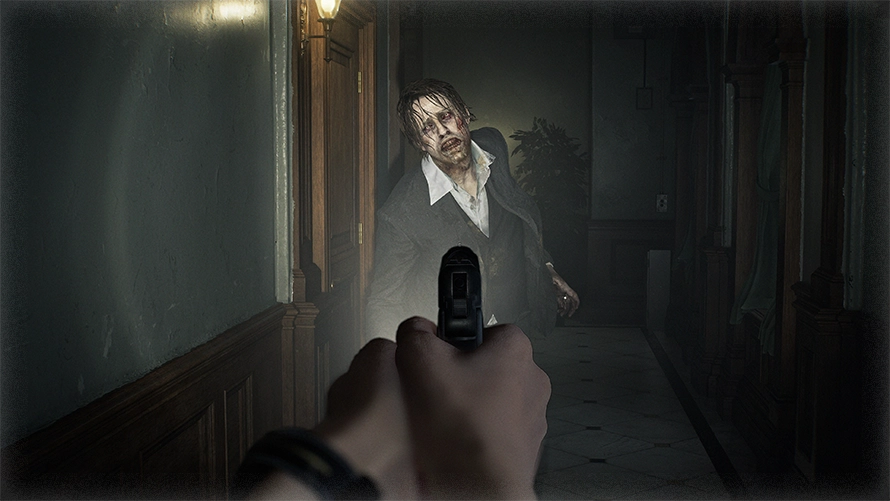
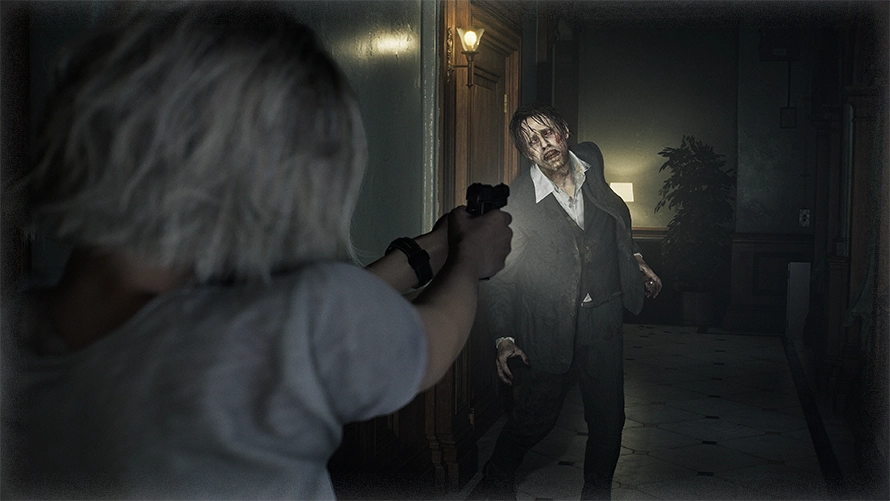
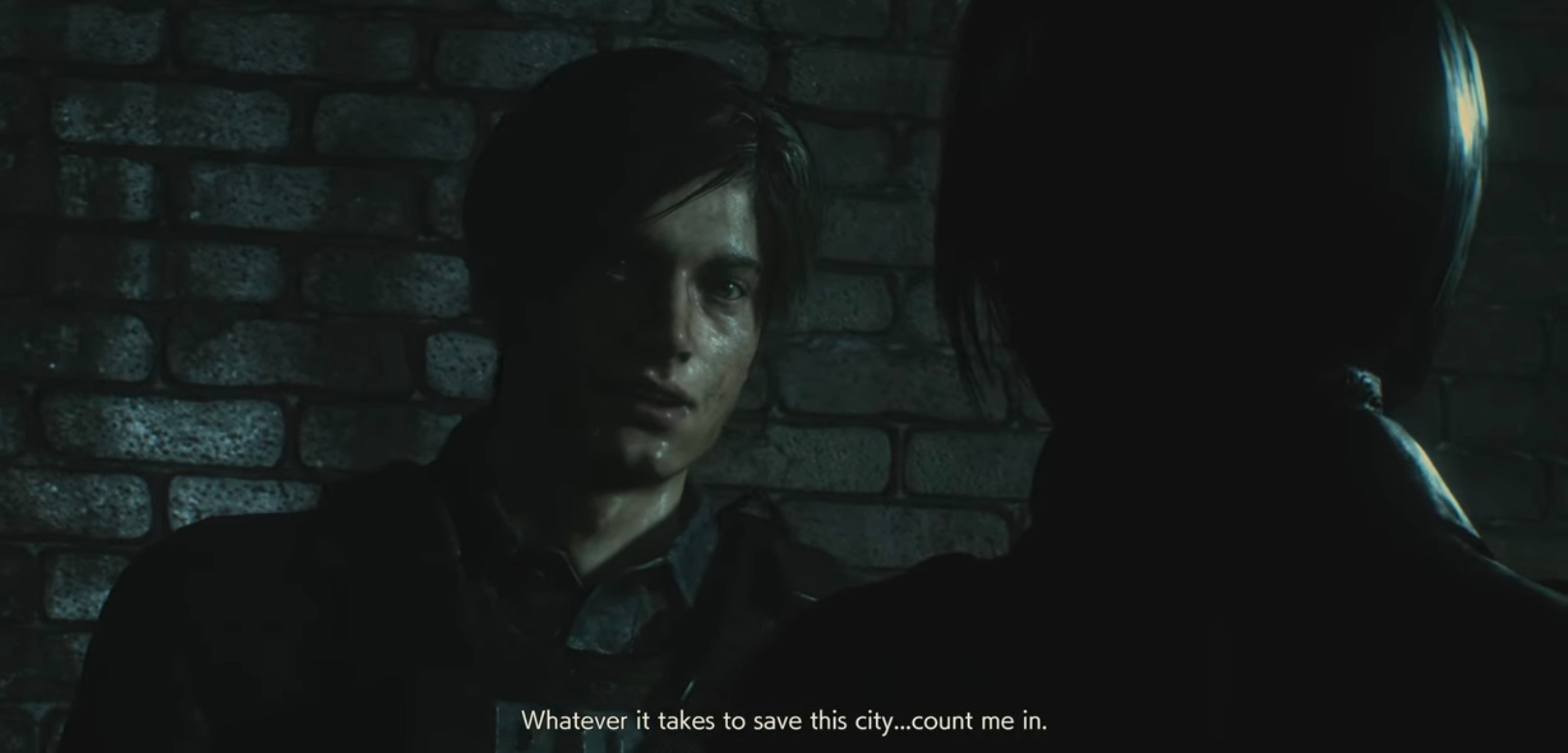
Leon S. Kennedy, on the other hand, yes, I am using his government name now, plays exactly as you expect him to. A lot of his gameplay style is just like the Resident Evil 4 remake, with added defensive options and finisher moves, which are my favorite part when fighting the zombies. His sections play in third person with a more action-forward approach, fitting an iconic veteran who knows what he’s doing (minus the unnecessary backflips). Going from Grace to Leon was incredibly relieving, especially when Grace’s sections had me close to seeing the light. Playing as Leon felt like he was a walking, talking save room because it gave me breaks from the intense moments during Grace’s storyline. You feel really powerful playing as his character, but at the same time, it’s not like he’s just plowing through all these enemies. It takes precise parry timing to land those satisfying moves. I appreciated the switch from time to time because it kept the gameplay fresh, and you had to adjust to each switch based on who you were playing as, which kept me hooked.
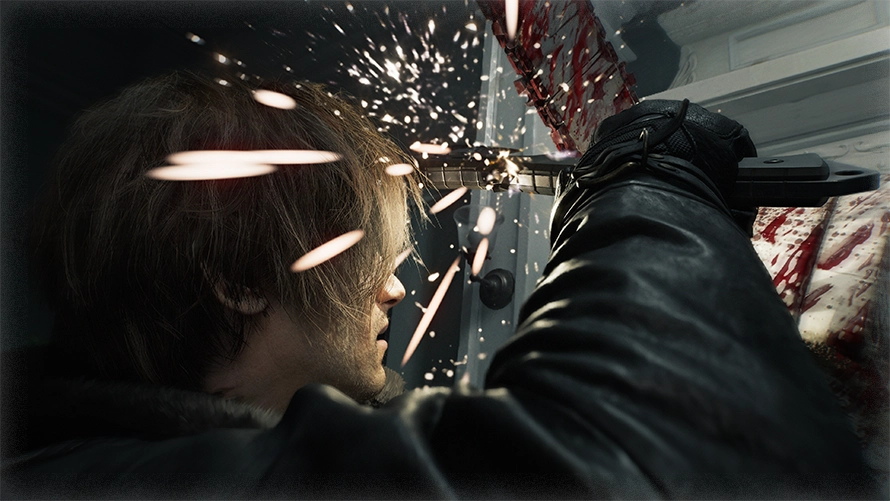
The way the game also handles these overlapping stories is truly impressive, given that most Resident Evil games with two protagonists would give you an option to choose one or the other. However, I really loved how, in RE9, bouncing between these two stories with Grace and Leon is handled really cinematically, and it felt like seeing the series through a new lens, as it has never taken this direction before. But it definitely works. I also found that, when going from Grace to Leon, being able to see the mess I made playing as Grace definitely kept the situation and story consistent. You truly did feel like you were living in the moment just hours prior and were able to see the damage, which felt unique to each playthrough.
Finally, I’m at my favorite part of this segment, which is characters. For me, the Resident Evil characters are always written in a really lovable and relatable way, so you become a part of their journey of growth and survival, and Capcom nails it every time, especially with Resident Evil 9.
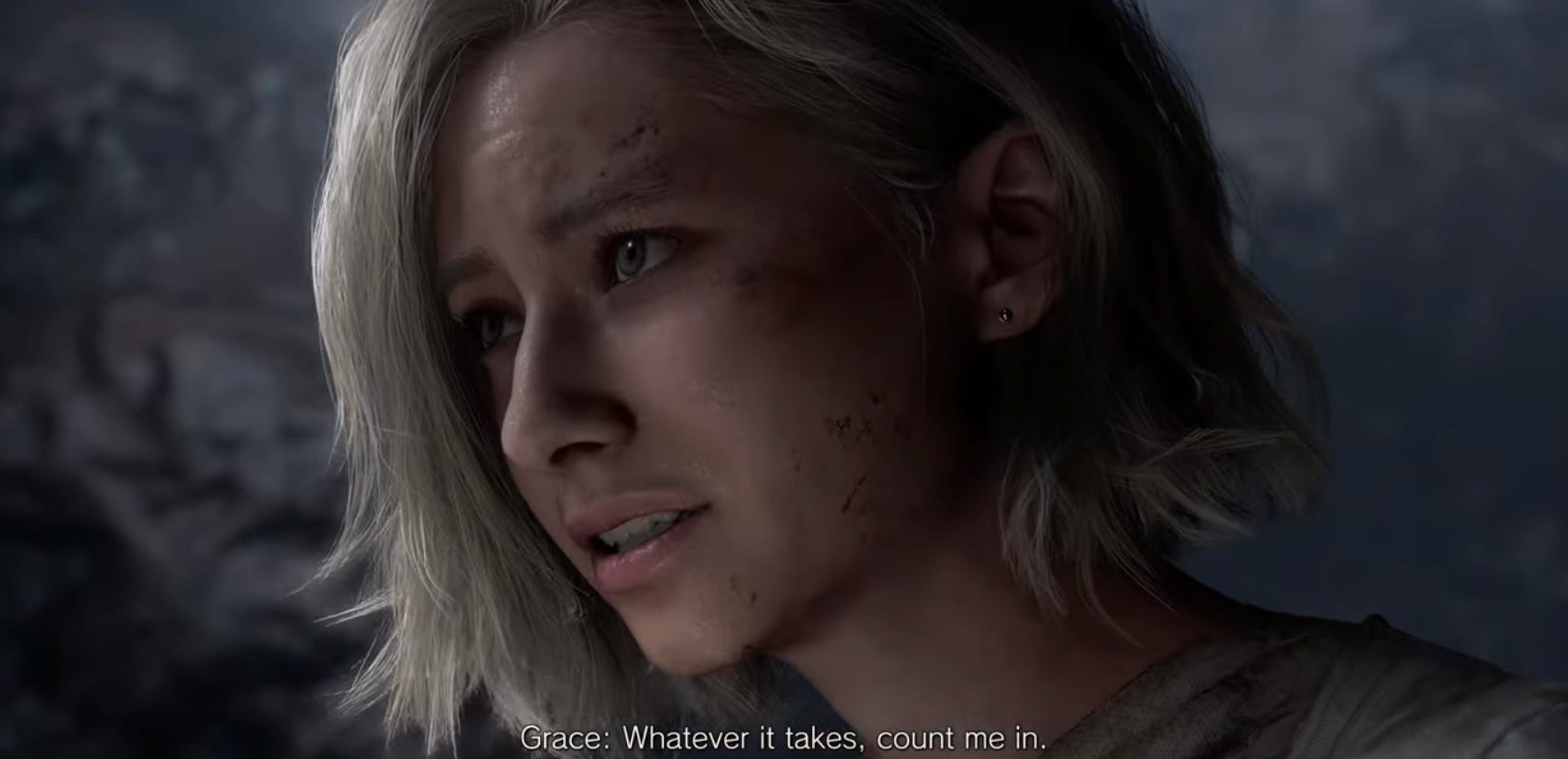
Grace Ashcroft is an FBI intelligence analyst who is deeply introverted and struggles with anxiety, which is quite the combination for someone in a horror game. If it were me, I would have just let a zombie bite me and called it a day, but Grace works really well with these qualities because her fear feels completely human. Watching her take deep breaths to gather herself and push through felt compelling for a character like her in the series, as it’s rare for characters to experience a situation like this and really show how scared they usually are. But having Grace’s personality on full display, especially in her gameplay, keeps the game feeling real and immersive. For example, she can trip and fall when playing as her. Speaking of immersion, the voice acting for Grace carried a lot of weight in her emotional scenes, revealing who she was at her core. It truly sold her character, and Angela Sant’albanos performance as Grace made me connect with her much more.
Leon, on the other hand, is the Leon we all know and love. There is a reason he is as popular as he is (besides the other reasons), but he remains the same guy we have known across the series, most notably in the remakes. One thing I truly appreciate about his character is the consistency carried through the remake series into this mainline title. It feels as if we have grown with Leon from his rookie days to his role as a government agent, and he hasn’t changed much. His jokes and one-liners still land every time. With Leon, one thing I had been concerned about was his characteristics, as we see he’s going through a hard time in Requiem, and the story seemed to be taking on a moodier, angrier tone regarding the character’s struggles. But despite being on his deathbed, Leon is still kicking and cracking jokes each time. And with his character, I adored seeing how selfless he actually is. While we have always known him to be a hero, this was one of those times when we weren’t exactly sure whether he would die, and despite everything going on, he still pushed through. That is what I like to see with his character. Something about seeing those moments of vulnerability with a character like him, at this age and with this level of experience in his career, the traumatic experiences of Raccoon City affecting him to this very day allowed us to see the cracks of that rookie is still within him, which is what made this character a complete perfection.
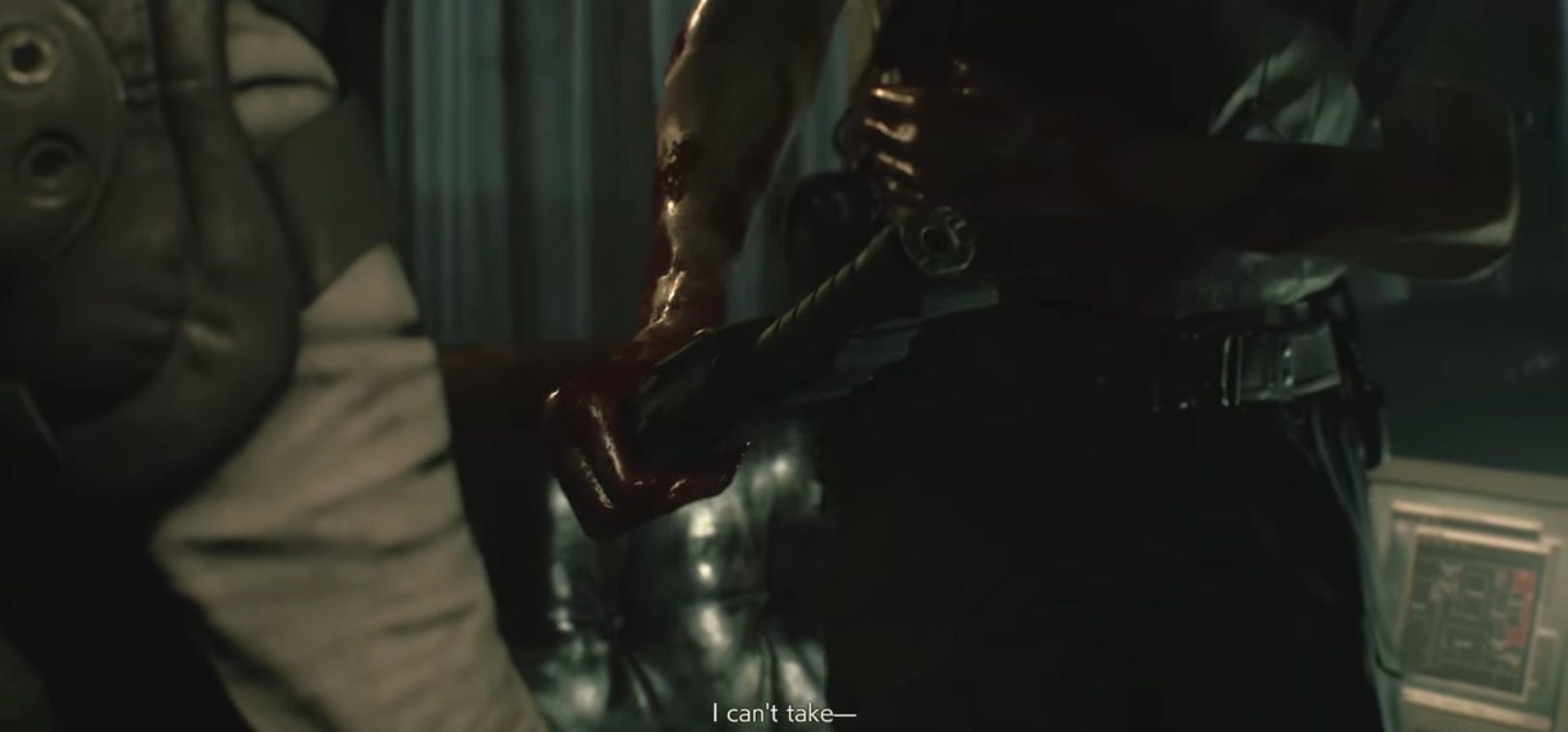
As characters, Leon and Grace both exist in their own elements, and I appreciated how full-circle a moment this was for both characters. And here I start getting into lore territory. Grace is the perfect archetype for a character who I do think has a lot of potential to become a more established survivor in the future. A lot of the Resident Evil characters started off in their early 20s. None of them had ever experienced an outbreak before or even seen a zombie, and that’s what made the game so perfect. You weren’t playing as someone who knew what they were doing. You were playing as someone who had never seen these things before. To me, that’s why Grace’s introduction to the series and as a character is absolutely perfect. She follows that formula incredibly well, and it felt like she could have existed in the older games because of how on-the-nose it felt for a character like her. While I do miss the veteran characters, I do hope that, in the foreseeable future, this formula is kept with two characters as a way of introducing more new protagonists. However, I think Leon’s character arc in this story is especially strong, given the parallels between him and Grace. I noticed them automatically and couldn’t help but feel how much Grace felt like I was playing as a younger Leon Kennedy in his police officer days (you know? the worst first day of his life). Grace is a rookie FBI intelligence analyst who has never seen any of this before, and Leon more or less begins to fill the shoes of the late Marvin Branagh, the officer we meet in Resident Evil 2, who is injured and turned before we can properly help him. However, with Leon, he truly fulfilled the role of mentor to someone caught up in the same situation as he was. For instance, the scene where Grace is crawling under the gate to get to the other side while “the girl” chases her before Leon saves her and hands her his gun (which had like one bullet in it, thanks a lot, Leon) was almost a one-to-one match to Leon’s experience. For me, Leon as a character was someone who carried a lot of survivor’s guilt for never being able to save someone from Raccoon City, so being able to save Grace from a place that carried a lot of horrors felt like a fulfilling moment for his character, and it was this type of depth that I truly appreciated.

When I started this, one of my main points was that I felt this franchise had finally found what it had lost all those years ago. I feel that it holds true not only for the gameplay style but also for the story and the elements introduced, which makes me excited to see what will happen in the future of the Resident Evil franchise, from Umbrella to bigger, grander conspiracies. I think Resident Evil 9 set up the perfect lead-in for the bigger issue and big bad at hand, being the connections beyond Umbrella’s own menacing actions. I did feel like one day this antagonizing force would become a constant that would soon grow dry if something new wasn’t introduced. However, the series proves in this game that there is much more to come. And with that, I’m incredibly excited.
Resident Evil 9 Requiem, at its core, felt like everything I had been asking for, as the roots of this series now feel unearthed after decades of searching. Not only did the game succeed in returning to where it came from while remaining fresh and opening a door to somewhere new, but I feel that it would have been incredibly hard for the franchise to do all those years ago, and somehow, they managed to pull it off. The developers had clearly been listening, and Re9 is structural proof of that, as the game knows what it is and what the fans need without favoring the other.
Despite every reinvention, obstacle, and moment when this franchise almost lost itself entirely, it keeps on surviving, and I don’t think anything is going to stop it soon.
Thank you so much for listening to me go on and on about one of my favorite franchises. Trust me, there are many more to come, so join me and my discussions here on skill issue. See you later ;)
-Lore <3
No posts
Comments
Nothing yet. Say the first thing.
Sign in to join the conversation.