
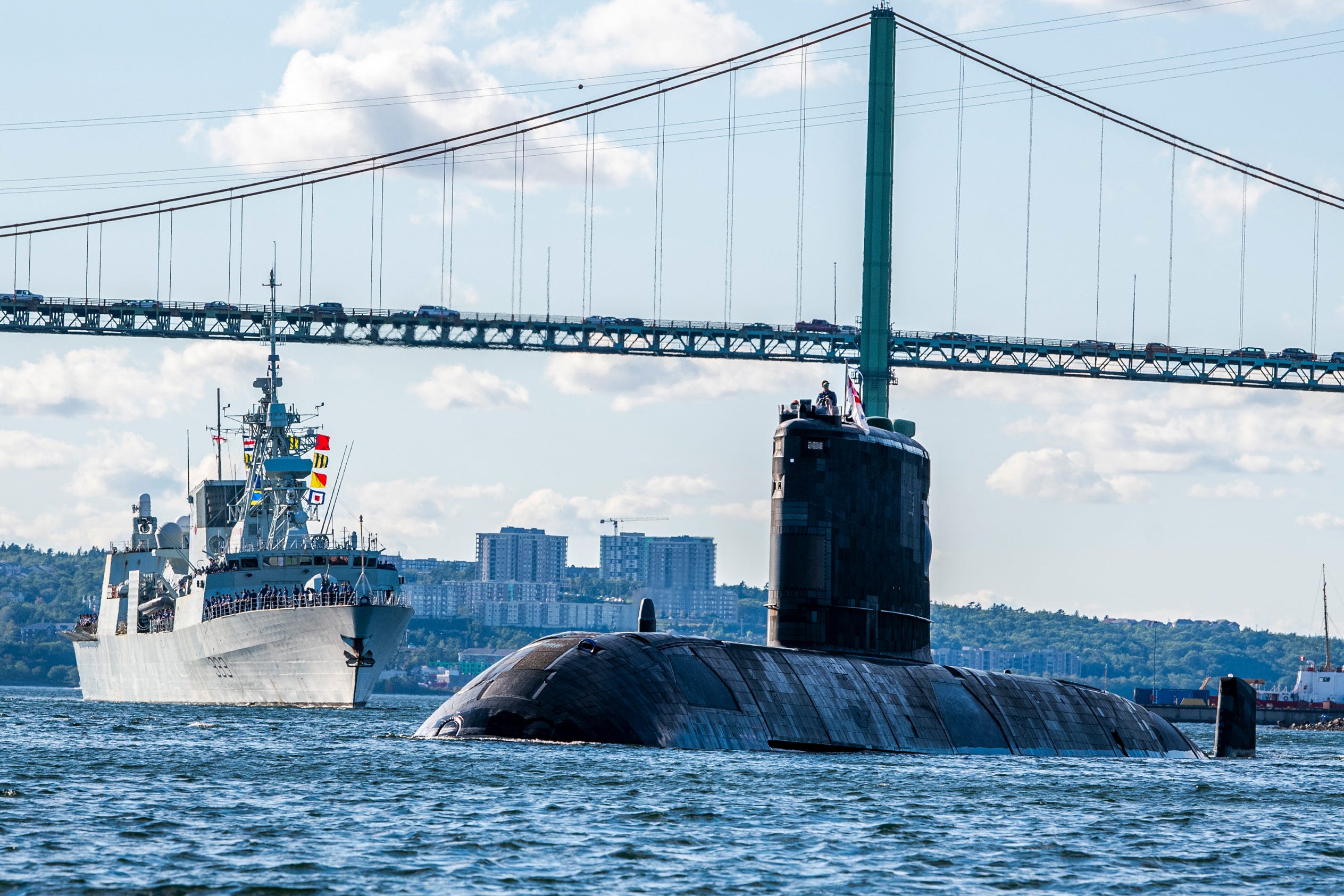
The bids close next week. Twelve submarines. Sixty billion dollars. And buried in the contract terms is an elegant and quietly consequential act of economic statecraft.
Defence procurement has long been treated as a zero-sum game: public money consumed by hardware at the expense of other national priorities. Canada is now testing whether that assumption still holds.
This is not simply a purchase of twelve advanced vessels to patrol Arctic waters — waters that are, incidentally, becoming more navigable and more contested with every passing season. It is a calculated move by Mark Carney to convert a military necessity into a national economic lever.
The government has effectively inverted the traditional defence pyramid: the leading demands placed on the competing consortiums are no longer just about naval hardware, but about binding investments in Canada’s technology, energy, and automotive sectors.
Carney’s message to the South Korean (Hanwha Ocean) and German (TKMS) bidders is: show us the submarines, but first show us the clean steel mills, the electric vehicle battery plants, and the critical mineral processing facilities.
The bids currently on the table reflect that pressure directly.
Steel: The Korean offer centres on a binding $345-million agreement with Algoma Steel — not simply to secure steelworker jobs, but to build a new structural steel beam mill aligned with Algoma’s transition to electric arc furnaces. The result: a domestic supply of low-carbon structural steel fit for naval hulls and heavy industry alike.
Electric vehicles and batteries: Canada has tied the contract to its auto sector with equal directness, pressing both Seoul and Berlin to commit Hyundai and Volkswagen to EV and battery production facilities on Canadian soil. South Korea has already signed a memorandum of understanding to advance EV and hydrogen-powered commercial vehicle manufacturing in Canada as part of its bid. VW’s PowerCo gigafactory, already under development, is set to produce enough battery cells for a million electric cars every year.
Rare earths: Germany’s TKMS is countering on different terrain — offering Canada a position in a transatlantic defence production alliance with Norway, with its bid reportedly extending into rare earth mining and artificial intelligence, aiming to embed Canada in a European critical technology supply chain.
Where the Korean offer delivers manufacturing scale, the European offer delivers supply chain position.
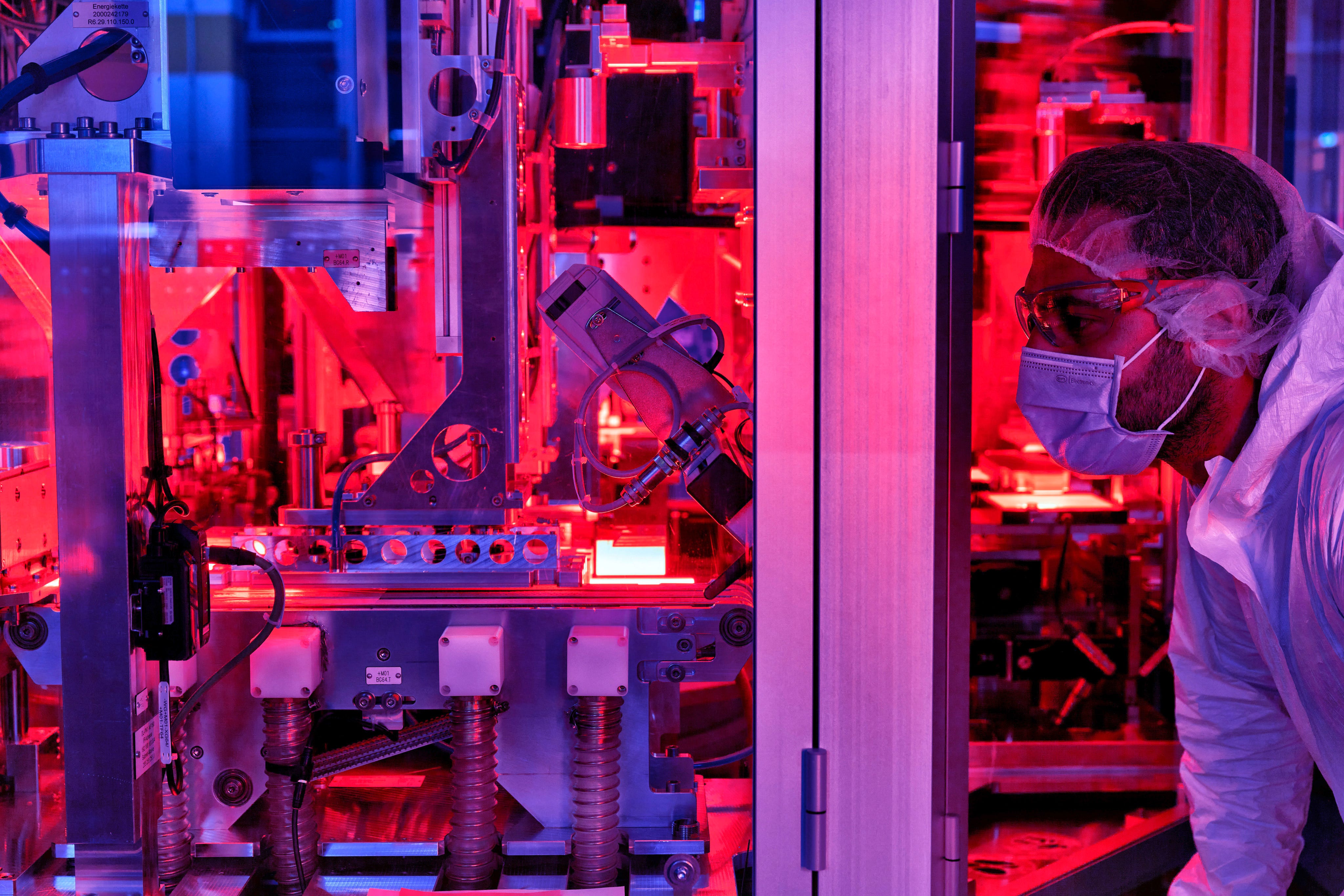
This is dual-use strategy in its clearest form. Modern navies increasingly rely on the same lithium-ion battery technology used in electric vehicles and grid storage because it enhances submarine endurance and stealth. The military requirement and the civilian application draw on the same supply chains. Canada is building an industrial base from the hull plates up — and has just launched new state investment vehicles to channel $4 billion into deep tech to strengthen defence, secure energy sovereignty, and cut foreign dependencies.
Canada’s first-ever defence industrial strategy, launched last week, makes this objective explicit: military procurement must now act as an engine for sovereign industrial capacity.
But the playbook itself is borrowed directly from the nation now sitting across the negotiating table. In the 1970s, South Korea used domestic defence contracts to compel conglomerates like Hyundai and Hanwha to build shipbuilding, steel, and electronics capabilities at national scale.
Those firms are now global leaders. Canada is running the same mechanism in reverse: compelling those same firms to transfer industrial capability into Canadian territory as the price of access to a sovereign contract — under acute pressure from US tariffs that have already exposed the fragility of its industrial base.
The pressure facing Canada is not unique. European governments are preparing to spend record sums on defence while watching their own industrial base hollow out and their dependency on Chinese clean technology deepen.
What Ottawa is doing with one submarine contract, European capitals should now replicate across dozens of procurement decisions in the years ahead. The opportunity is there for allied middle powers to cut defence deals that bolster the foundational pillars of their national economies on everything from semiconductors and 5G through to the latest in energy technologies.
Last summer, Keir Starmer signed a £10-billion agreement with Norway to supply Scottish-built warships to police offshore energy infrastructure against Russian threats. Central to that deal was a reciprocity pledge: for every pound Norway spent, a pound would return into Norwegian industry through joint ventures or technology partnerships.
The logic was right. But a government operating with Canada’s level of strategic intent might have gone much further — using that agreement to secure access to Norwegian industrial capacity, including firms like Morrow Batteries, backed by Norwegian state investment vehicles, and one of the very few domestic battery manufacturers operating in Europe. European steel firms are among the key industrial players to see the opportunity more energy storage would bring to protect against the excessive industrial power prices threatening their future.
This is what national economic statecraft can look like when it means business.
No posts
Comments
Nothing yet. Say the first thing.
Sign in to join the conversation.