

Europe’s response to the oil and gas supply crisis in the Strait of Hormuz is likely to quietly entrench another structural energy dependency: this time on Chinese clean energy technologies.
The fastest, cheapest route to deploying clean energy at scale — solar panels, battery storage, grid technologies, heat pumps — currently runs overwhelmingly through China. Beijing’s dominance across these supply chains is the product of decades of deliberate industrial strategy.
At the end of last year the energy think tank Ember published a landmark analysis suggesting “Chinese industrialists have made climate scenarios look attainable” and that China can now “deliver the bulk of the goods needed for the global energy transition at prices affordable in most markets.”
Researchers at John Hopkins found Chinese firms have pledged at least $227 billion across green manufacturing projects, surpassing the $200 billion invested by the US over four years of the Marshall Plan.
China’s dominance in these technologies means we could see one European chokepoint replaced by another, no less real for being completely different in nature than fossil fuel dependencies (where the threat is more to sudden disruptions to supply and price volatility), and less visible on an energy bill.
Li Shuo, director of the China Climate Hub at the Asia Policy Institute, argues China’s lead in low carbon technologies is now “virtually unassailable.” “If you want to surpass China, you had to get your act together 25 years ago.”
In the climate community, this is increasingly accepted conventional wisdom. It’s the basis on which some advocate Europe making common cause with Beijing, and regard any attempt to catch up in any of these technologies as futile.
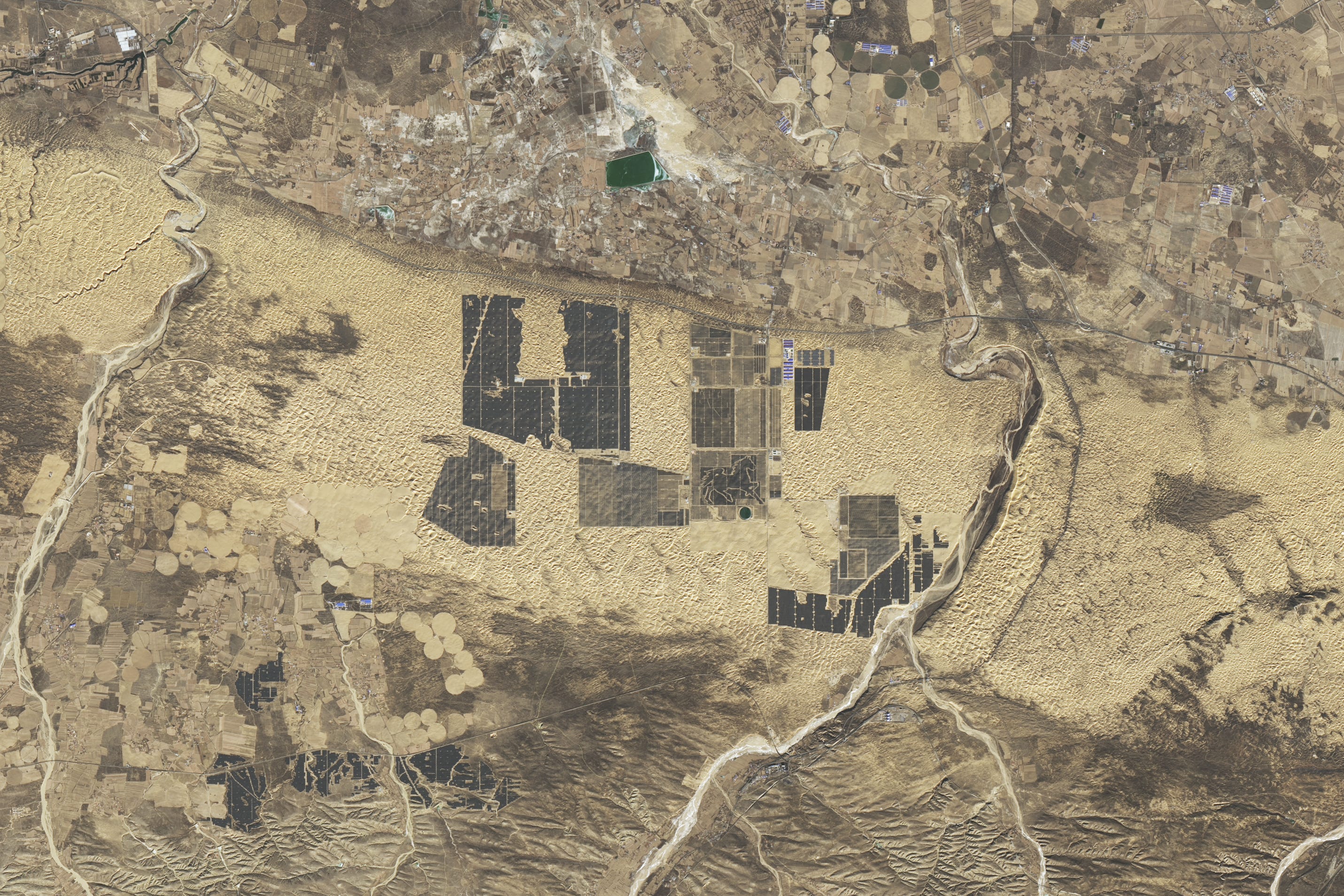
In 2024, China supplied 98% of Europe’s solar panels. Its share of lithium-ion battery imports stood at 88%. Six in ten inverters — the devices that make solar and wind power usable — came from China. These aren’t marginal shares. They are near-total dominance of the infrastructure on which Europe’s energy transition depends.
There is a discomfort about this topic in climate circles out of a fear that even raising the issue hands ammunition to those who would delay or derail the transition altogether. That fear is understandable. It’s a real problem that the old climate consensus has never adequately addressed.
Jason Bordoff, the director of the Center on Global Energy Policy at Columbia University’s School of International and Public Affairs, told the NYT’s Ezra Klein just this month, “If it (dependency on China for low carbon technologies) is perceived as an unacceptable risk, that’s a large amount of sand in the gears of the clean energy transition.”
The unmanaged risk
But inconvenient arguments tend to surface because the underlying problems are real.
Ignoring a dependency risk doesn’t dissolve it. It simply means someone else is managing it, on their terms, not yours.
Just over a year ago the former head of Britain’s security services issued a warning on the front page of The Times that security risks from Net Zero policies are arising and that existing policies are handing too much power to Beijing.
Earlier this month the UK blocked a Chinese wind firm, Ming Yang, from building a £1.5 billion turbine factory in Scotland, reportedly on national security grounds.
This followed reports the German government would likely block China’s entry into their wind energy market too, also on security grounds.
In December Italy launched an auction for new solar projects requiring modules to be ‘non Chinese.’
A shifting calculus
The latest fossil fuel shocks may push European governments to increasingly opt to overlook these risks — treating dependency on Beijing as a necessary evil or even a good thing.
It’s clear many Europeans welcome the influx of affordable Chinese clean technologies as a positive development — offering cost savings, a hedge against fossil fuel volatility, and a means to meet climate goals and diversify away from Russia, the US, and the Middle East.
Recent polling in Politico suggests that majorities in historical US ally nations in Europe and Canada are now beginning to see working with China as the lesser risk.
Trade-focused visits to Beijing by Starmer, Carney, Macron, Merz and Sanchez since the start of the year may signal leaders in these nations could be starting to feel the same way.
For now there are confusing mixed signals coming from different parts of different European governments as well as from the EU. Policy silos in Brussels and national capitals prevent coordinated action, compounded by differences in priorities and risk tolerance among different European nations.
The fundamental issue is a complete absence of a holistic approach.
This is precisely the failure at the heart of the old consensus: the assumption that energy and security policy could be managed in separate silos, by technocratic processes insulated from geopolitical realities. The China dependency problem is what happens when that assumption meets a world of great-power competition. The framework has to change before the dependencies do.
Continuing to prioritise cost and carbon targets while overlooking risks to the future of Europe’s industrial base, national sovereignty, and implications for Europe’s defence, could prove counterproductive for the transition too. If it leads to job losses and vulnerabilities in our military defences rather than more security and economic renewal, and right at the moment when economic and security issues are topping the agenda, public support for climate policies will erode — perhaps terminally.
Eight risks, hiding in plain sight
That’s why Loom is publishing new research that brings an independent assessment of the national security risks of China’s role in Europe’s energy transition.
Our findings — based on twenty interviews with European national security insiders and the expertise of authors who are respected authorities in this field — identify eight distinct security risks arising from Europe’s growing dependence on Chinese clean energy technologies. Some of these have been discussed before, in fragments. What this research does is connect them and look at them in the round, which is important - especially as they could all materialise at once. What emerges when you do that is unsettling.
The economic damage is already underway
China decimated Europe’s solar industry. Automotive and wind manufacturing could be next.
If the energy transition leads to job losses instead of economic renewal, public support for decarbonisation will erode. Over the long-term, Europe’s trade deficit with China will widen and Chinese leverage will strengthen, including through an outsized influence over prices. Europe’s AI ecosystem, a strategic priority, risks becoming dependent on Chinese batteries. If China restricted battery exports, AI development here would slow.
The authors are careful not to overstate the threat. Contrary to sensationalised press reports, large-scale Chinese cyberattacks designed to shut down European energy systems are rated “very unlikely.” But several risks — including the economic ones — are rated “very likely.”

Rearmament runs through Beijing too
Rearmament and decarbonisation draw on the same supply chains. Rare earth magnets and batteries, both dominated by China, are critical inputs for modern warfare. Without new energy industrial strategies, Europe’s defence sector will very likely become more dependent on China too.
Washington’s ultimatum
The most underappreciated risk identified in the research doesn’t originate in Beijing. It comes from Washington DC.
The US could sanction Chinese suppliers or components, and demand European nations remove them from their energy systems, or face tariffs or other sanctions such as the withdrawal of the US from European security architecture.
The Trump administration’s hostility to Europe’s clean energy direction is barely concealed. The US National Security Strategy published in December criticises European climate and energy policies as a challenge to US fossil fuel exports — something to be corrected. The scenario European governments need to plan for is this: Washington demands that Europe reduce or remove Chinese clean energy technology — or faces tariffs, sanctions, or reduced security commitments.
When Trump threatened 100% tariffs on Canada if Ottawa “makes a deal” with Beijing, it gave a sense of the register.
This has happened before. European governments spent years insisting that Chinese digital infrastructure was manageable. Then the US threatened to cut intelligence sharing over Huawei, and the technology came out in the UK immediately.
The energy stakes are higher. The dependencies are deeper. The technology is woven through the entire infrastructure of Europe’s energy transition. Unwinding it under duress, on American terms rather than European ones, would be vastly more disruptive and costly — and would set back the energy transition itself, not just Europe’s industrial position.
The energy transition in Europe can still deliver what Loom has argued should be the organising principles of the continent’s new energy strategies: economic strength, sovereignty, affordability, resilience, and national security. But China overdependency cuts across all five simultaneously. It undermines economic strength by offshoring industrial value. It erodes sovereignty by recreating the single-source dependency Europe is trying to escape, which could also affect prices. It threatens resilience by concentrating chokepoints. And — as this research makes clear — it creates national security risks that European governments have barely begun to map.
Few argue for full decoupling — but in select key industries like auto, batteries and wind, the window to build sovereign, competitive alternatives is still open. It won’t stay open.
Structuring Europe’s energy future entirely around Chinese supply chains while calling it diversification isn’t a strategy and isn’t a hedge. It’s a blindspot.
No posts
Comments
Nothing yet. Say the first thing.
Sign in to join the conversation.