
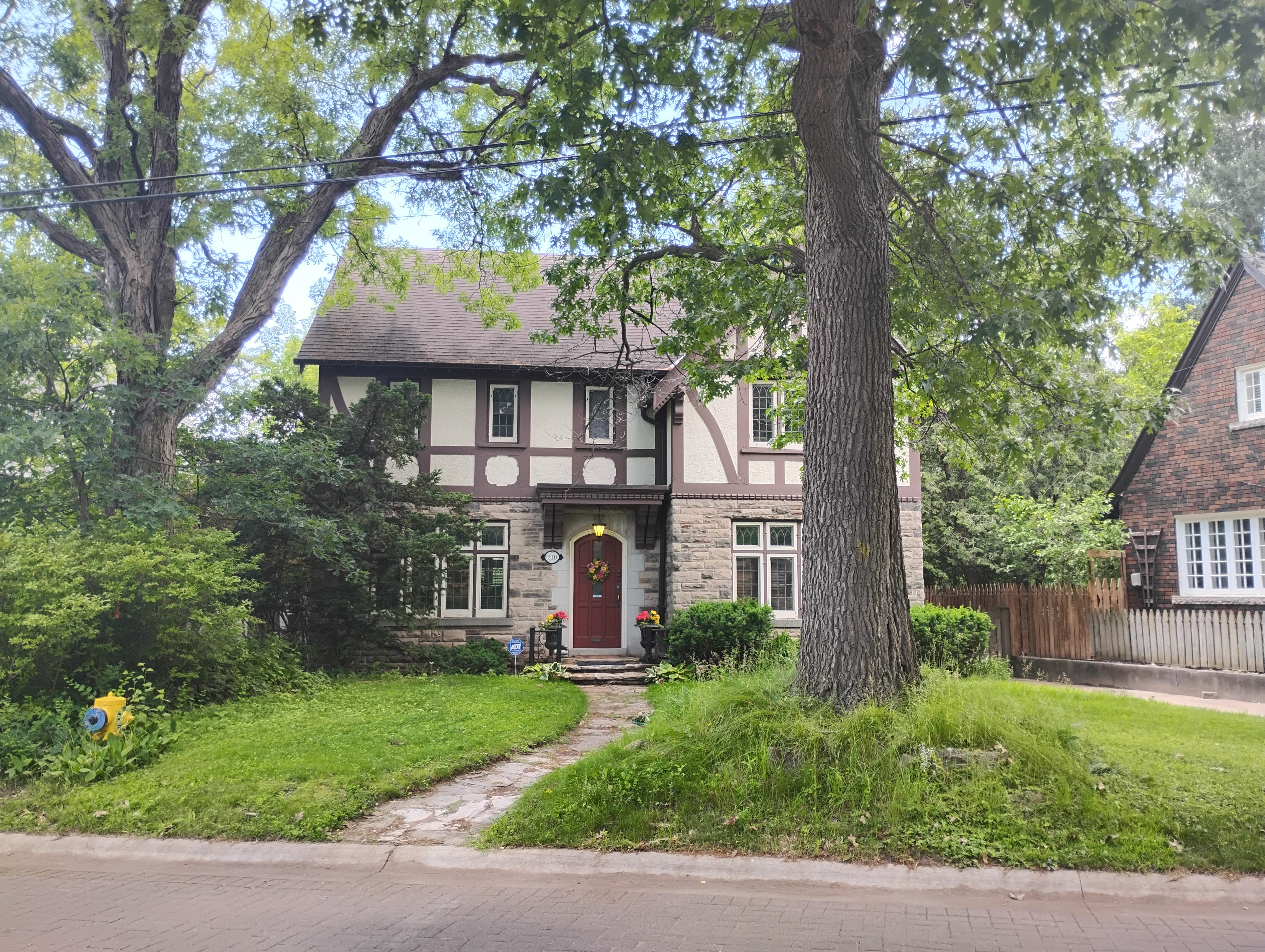
The hilly residential road off South Kingsway is the highest point before the ground plumets down to the Humber River. There is nothing but forest separating the backyards of the houses on the lower Riverside Drive from the river below. The view from the rooms facing west has remained the same as it was in 1935, when the family of Lucy Maud Montgomery purchased - chiefly from her own money, earned from writing - the newly built house on 210 Riverside Drive. Canada’s best known cultural export, then as probably still now, LMM spent last seven years of her life in this house, before she was found dead in an apparent suicide which, LMM’s biographer Mary Henley Rubio has receipts, actually wasn’t.
The most comprehensive LMM vita available today is Mary Henley Rubio’s Lucy Maud Montgomery: The Gift of Wings, published in 2008, after LMM’s diaries were finally unsealed and annotated. (My large trade paperback of Rubio runs 684 pages, about 80 of which are endnotes and bibliography.) Rubio, who has also edited the diaries for publication, uses the personal records extensively and fact checks them when possible and identifies the silences. Her best guess is an accidental overdose of tranquilizers and whatever else Maud’s doctors thought useful to give her for her ‘neurasthenia’. The year she died, 1942, both she and her retired Presbyterian minister husband Ewen MacDonald were on a combination of meds that probably did them more harm than good - he continuously for years, she only at moments of acute distress. MacDonald had serious mental health problems throughout his life ranging from - what the psys now call - catatonic depression to manic delusions, and if Maud’s diaries were accurate, he largely depended on her care and practical sense to function and perform at his job as an erratic provincial preacher.
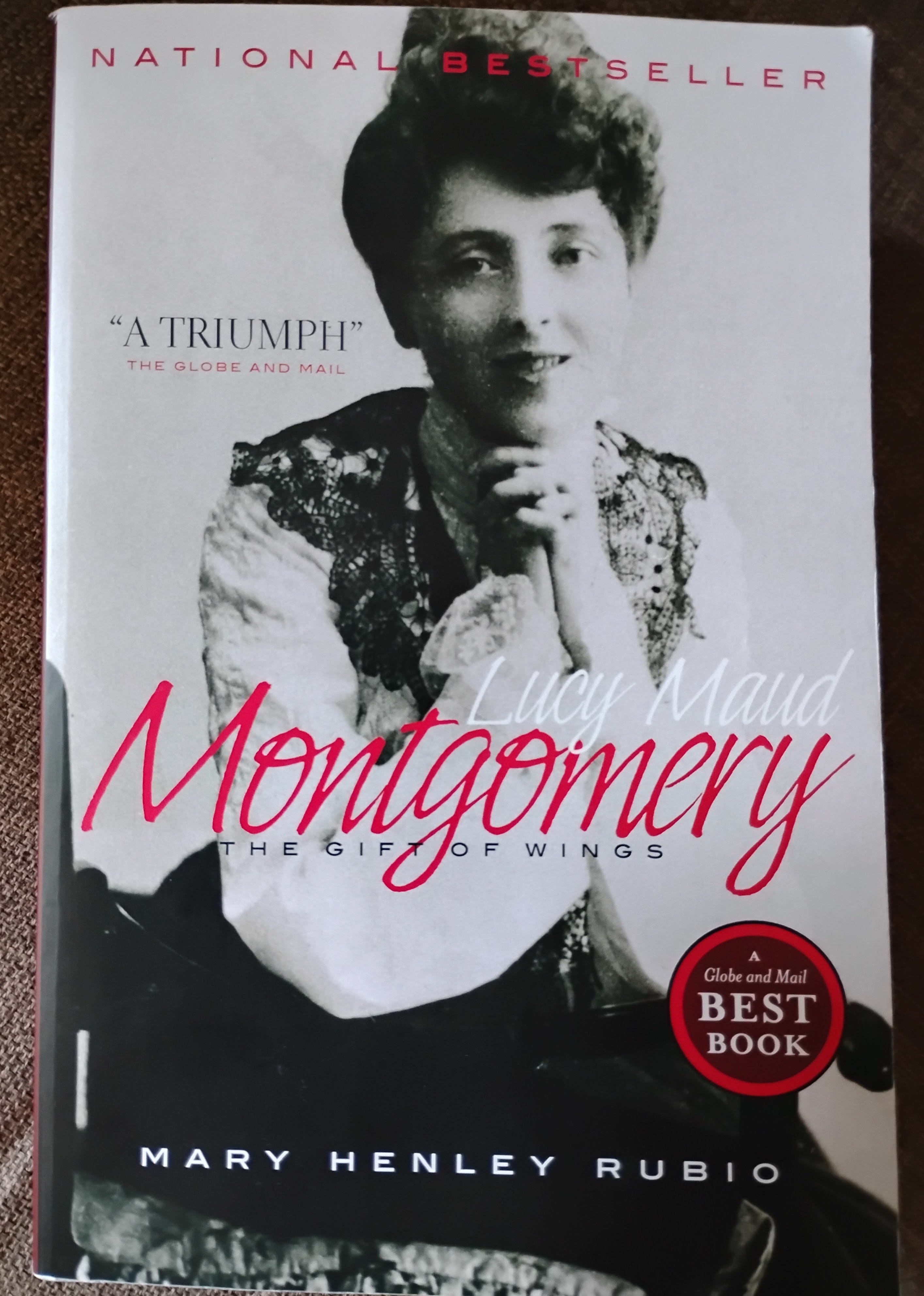
Henley Rubio divides the sections of the book geographically: PEI, Leaskdale (his first Ontario parish), Norval (second), and Toronto (he is retired, LMM continues working and paying off the mortgage on the fancy house). Maud married Ewen at a scandalously old age of 37. She was by then the famous author of Anne of Green Gables and already earning more than her future husband ever would. It was the golden age of print, certainly for LMM, who sent short stories to literary and popular magazines all over North America and was being paid substantially for her work. (In her middle age, she could earn from selling four short stories to an American magazine more than her husband would earn per year. She regularly surpassed him in royalties from her books too.) Duty to remain with her grandmother was also a factor. Grandma Macneill who brought her up lived under the threat of having to leave the house which her late husband, Maud’s grandfather, left in his will to a male relative. Then there were a couple of men that Maud liked who ended up being unavailable, and a further couple of characters that she didn’t care for. Finally after a long fiançailles Maude and Ewen married, moved to Ontario, and he proceeded to go mad.
Or did he? Rubio talks to a number of people who knew him a bit who claim that he was just ‘slow’ and ‘unemotional’. LMM’s diary presents him as an ongoing catastrophic demand for care and attention, with acute periods that put the entire household’s business to a stop. While there are mixed accounts of Ewen, the accounts of their eldest son Chester were uniformly bad - and even worse than LMM’s candid but strategically redacted diary. Chester’s disastrous behaviour - lying, thieving (he stole items for pawning from mother, father, housemaids, schoolfriends, girlfriends), exam failing (he was called to the bar after many unsuccessful attempts), inability to hold a job or stay true to his word, abandonment of wife and two kids, bigamy (he apparently managed to get married again before his divorce was finalized), public masturbation (!) and harassment of maids - was what finally broke Maud. Luckily she wasn’t alive when he got arrested for embezzling money as a government employee. All the same - the frenzy over Chester and the dull beat of continuous pain over Ewan become too much as you’re reading the final quarter of the book. Why did she see Chester as her own failure? Why did she see her life and her adult sons so integrated? At various points in the book I found myself yelling Paging Dr Jung for emergency individuation.
Comments
Nothing yet. Say the first thing.
Sign in to join the conversation.