
One new Erebus artifact published.
19 March 2026.
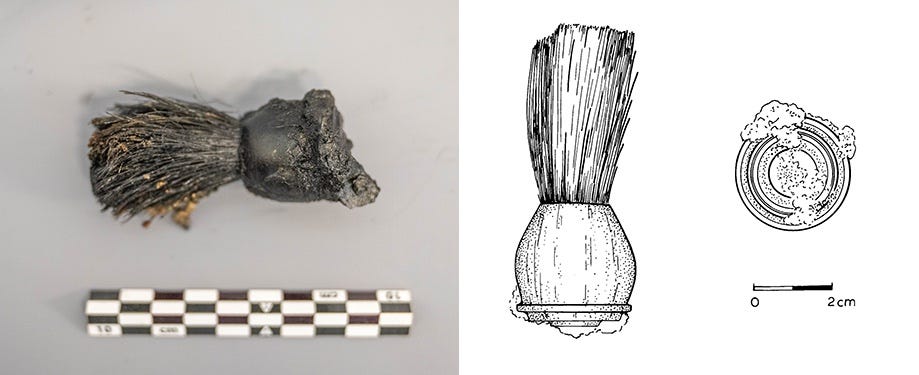
A few artifacts recovered in 2024 have now been published to Parks Canada’s website, as spotted by Conner Nelson of La Crosse, WI. Most of these were debuted in the September 2025 press release announcing the end of Parks Canada’s dive seasons (in #42). However the shaving brush is entirely new. Parks Canada identifies its bristles as likely coming from “either a badger or boar.”
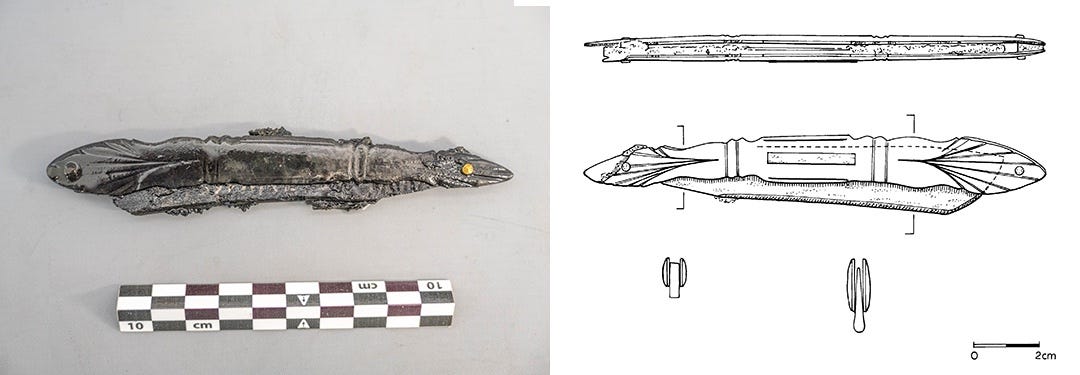
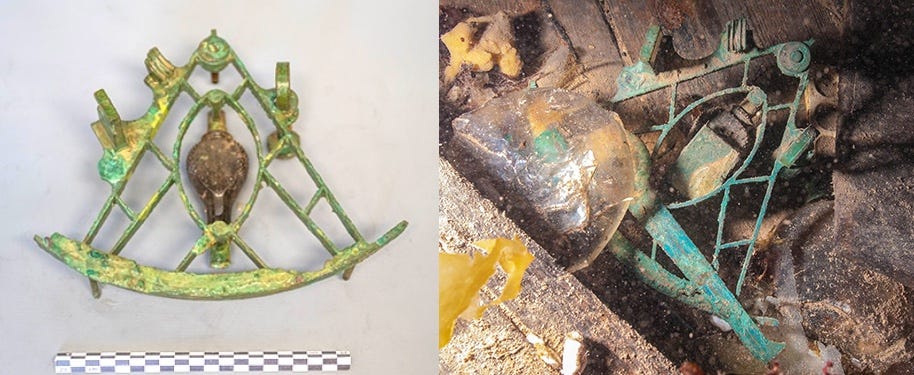
As well, new details have been added to each of the other 2024 artifacts on the page. We get our first view of one of the shaving razors found in the seaman’s chest, as well as studio shots of both the sextant and the coat (remarkably spotted on the sea floor near the stern).
Most interesting might be the view of the Tam O’Shanter pitcher still in situ on HMS Erebus, prior to excavation.
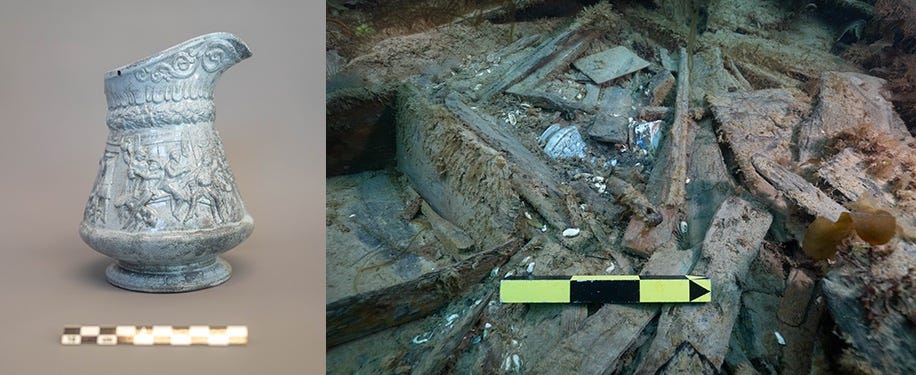
Other new details are tucked in to the Underwater Archaeology Team’s notes for each item, viewable when clicking on each photograph.
Upcoming events.
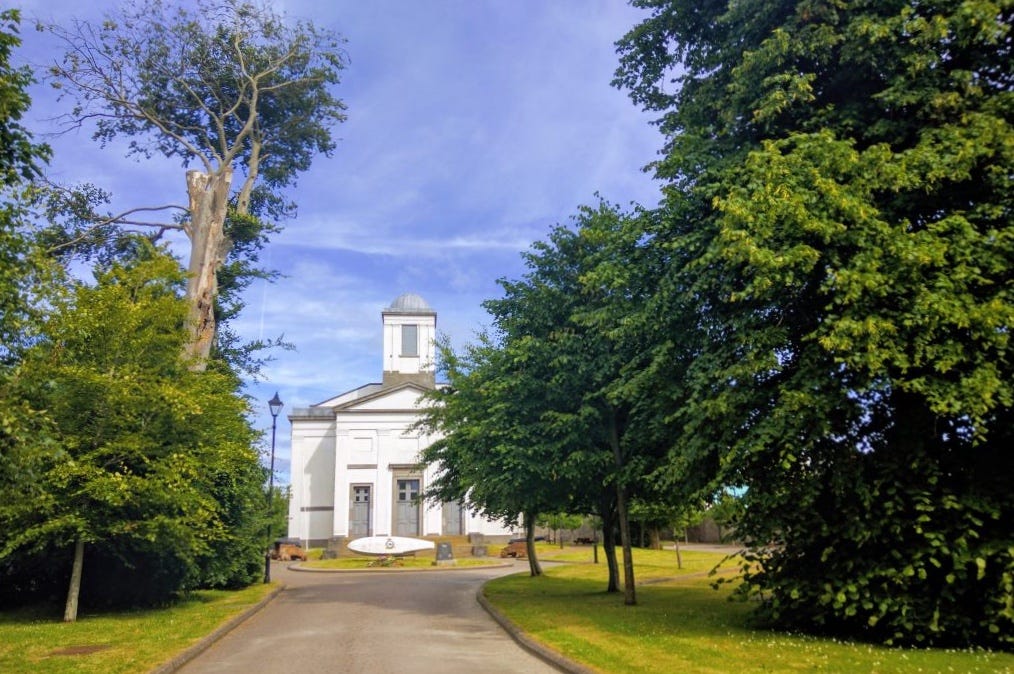
Regarding the upcoming Erebus shipwreck artifacts exhibition at Pembroke (in #46), the museum has alerted the Remembering The Franklin Expedition Facebook community that the Erebus’s bell will indeed not be coming to Pembroke. They also explained their open-ended exhibition dates, by revealing that Portsmouth at present “has no plans” to exhibit their Erebus artifacts themselves. This is quite the reversal by Portsmouth, after their purchase of the Kellett flag and their announcement of what was to be a Portsmouth-Belfast-Hartlepool exhibition tour. On these grounds, Pembroke advises that their exhibition may even go into 2027 (nota bene: they do close during the winter).
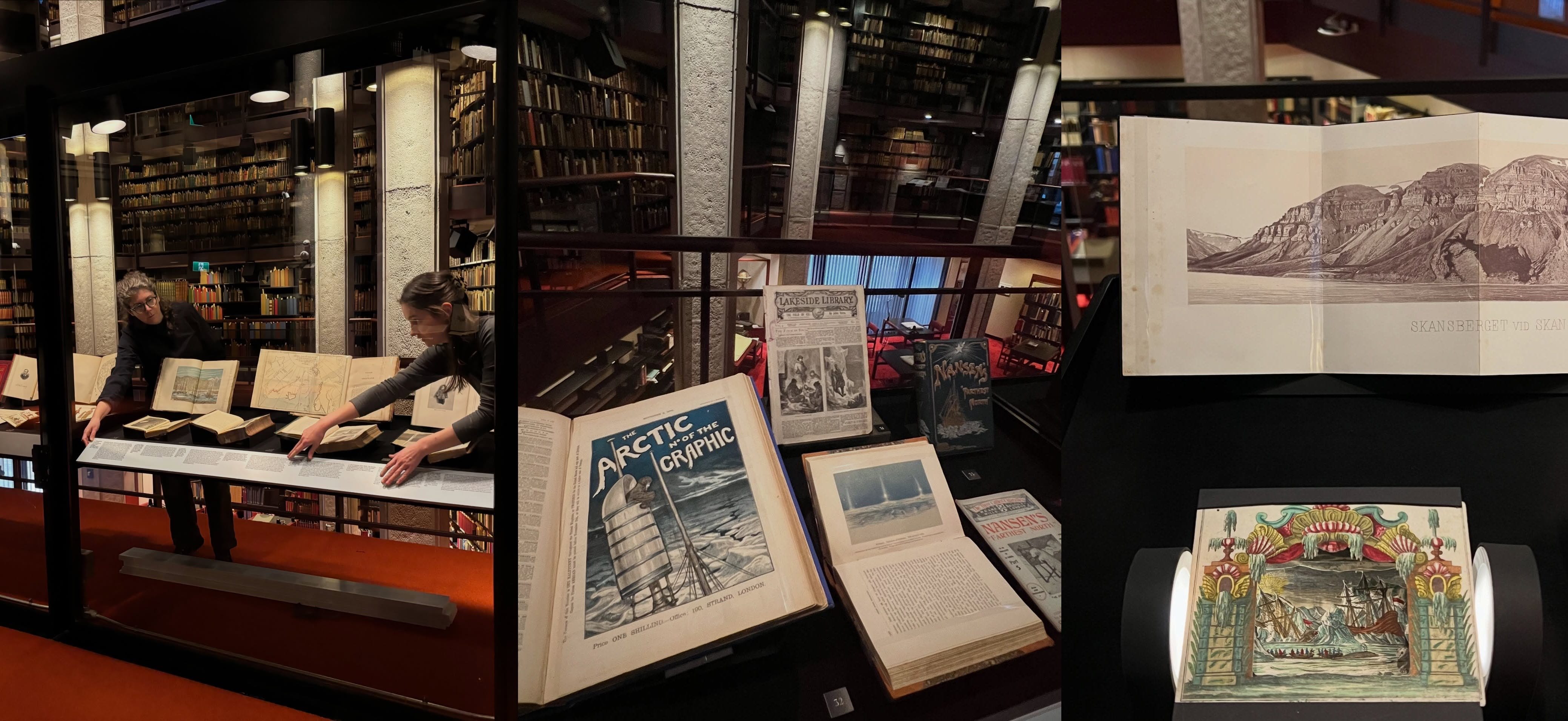
Across the pond at the University of Toronto, an exhibition is currently underway at the Thomas Fisher Rare Book Library (link to Instagram impressions). Titled Arctic Fever: Image and Narrative in North Circumpolar Voyaging of the Long Nineteenth Century (link), the exhibition has been curated by Mark A. Cheetham and Isabelle Gapp. The two have also edited a weighty compilation of articles to accompany the exhibition, available to download entirely for free (Academia.edu, ResearchGate). Cheetham has also created an online exhibition, with views of the exhibition cabinets for those that cannot attend in person (link). The exhibition runs another month until April 24, and has already been covered in The Guardian (link). This is a rare opportunity to see material together that otherwise has to be winkled out piece by piece from a library.
On April 9th, Anne Strathie (author of A History of Polar Exploration in 50 Objects) will be giving a talk in Bath at the BRLSI (online viewing available). The BRLSI has a collection of Beechey Island Franklin relics larger than is held at the National Maritime Museum in Greenwich, and doubtlessly some of them will be out for her talk.
And then on April 27th, Fabiënne Tetteroo (who discovered the DNA candidate match for James Fitzjames) will be speaking in London at the Royal Geographical Society (online viewing available). Tetteroo will further be speaking on July 11th at the Abbots Langley Festival (link).
Recently.
January 2026.
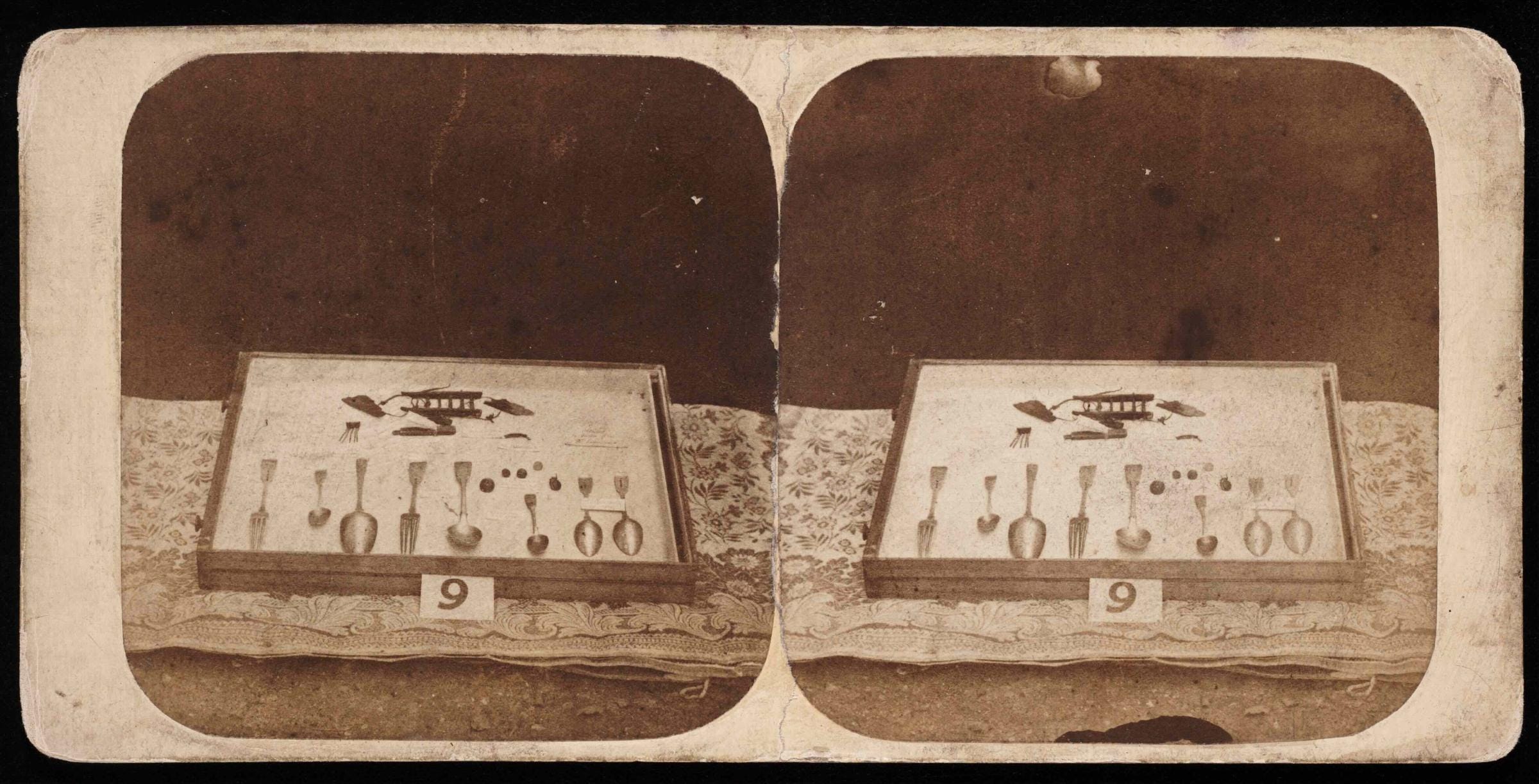
‘A Welcome, Though a Painful, Gift’: Lieutenant John Cheyne’s Photographic Stereoscopic Views of the Franklin Relics. By Anthony Hamber.
Anthony Hamber, author of a book-length study of photography at the 1851 ‘Crystal Palace’ exhibition, has written an article dedicated to John Powles Cheyne’s stereoscopic photography of McClintock’s Franklin relics.
Aficionados will recognize a few errors here regarding Franklin matters, e.g. that “all fourteen of the officers of the two ships” had their portraits taken at Greenhithe, etc. But Hamber’s chief value to this topic is his background in historic photography, not Franklin studies.
This means that, while Walpole and Lewis-Jones previously described Cheyne’s set as having “commanded the price of one guinea” and thus being “a significant cost to the working class,” Hamber can counter that Cheyne’s set “was not excessively priced” for the time. He also has the eye to identify something I neither noticed nor could have identified in my own articles on Cheyne’s stereography: that, “In some instances, the background on the glass plate negative has been scraped away, leaving a clear glass area that is printed as black.” Now identified by Hamber, this seems starkly obvious in some of the slides.
Hamber’s knowledge of the era is also notable in considering this assessment: “Given that Cheyne listed one hundred subscribers, it is curious that so few sets have been located.” Hopefully this suggests that more sets may yet come to light.
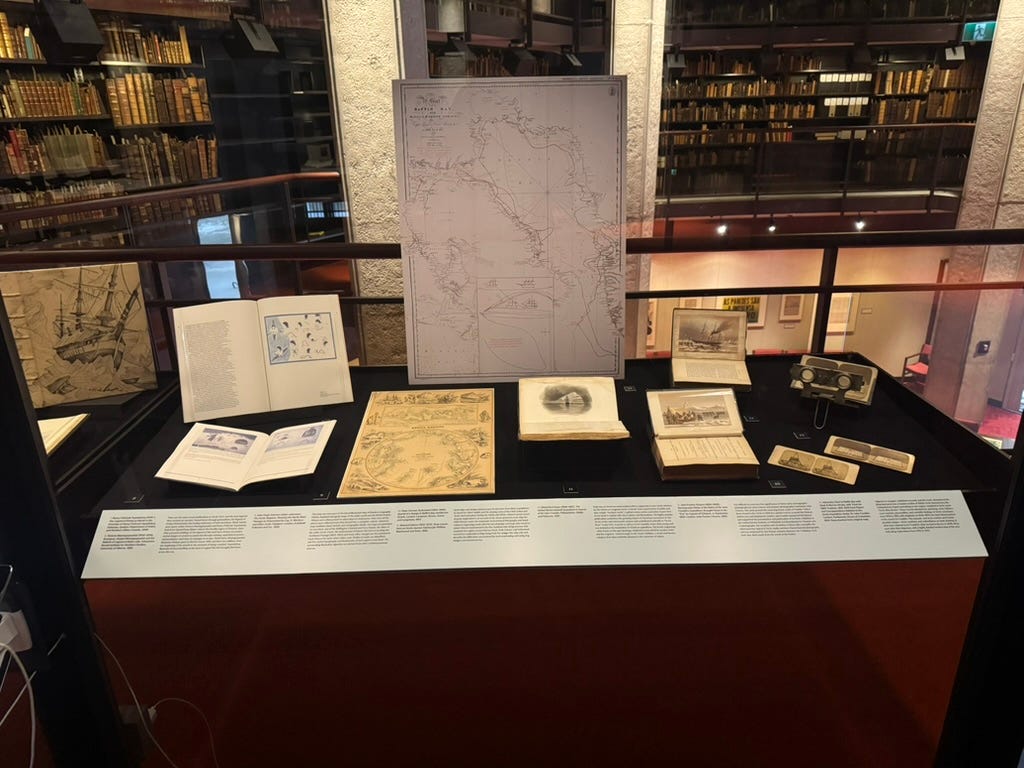
Hamber’s article is part of the new publication mentioned above, Arctic Fever, edited by Mark A. Cheetham and Isabelle Gapp. Some of the Cheyne stereographs he is discussing are out on display at their exhibition in Toronto (seen above, right).
Last Word.
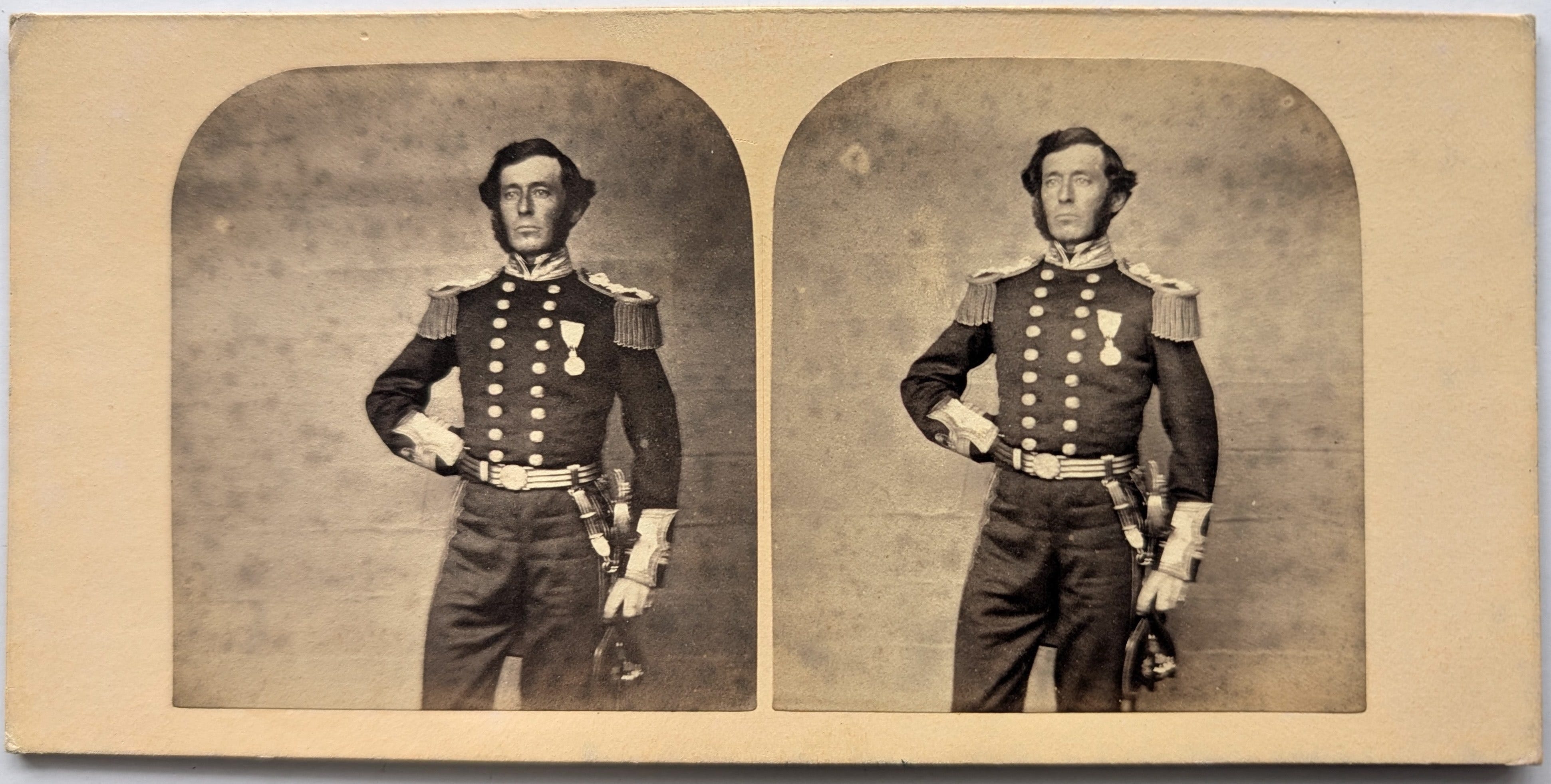
Speaking of John Powles Cheyne’s photography: Peter Maunder of Wales has allowed me to here present a previously unpublished photograph by Cheyne of Franklin searcher Leopold McClintock.
In June 2025, this newsletter (in #40) spotlighted that the original three-quarter length Cheyne portrait of McClintock – which I’d presumed to be lost – had at least existed up to 1981, when an original copy was published in The Photographic Collector by Jonathan and Victoria Steel.
As rare as that is, Peter Maunder (author of the book Tiverton Cloth) holds an even more rare alternate from the same session. It shows a number of imperfections that were ironed out – perhaps in post-production – from the Steel’s version, most starkly the apparent ironing of the uniform itself.
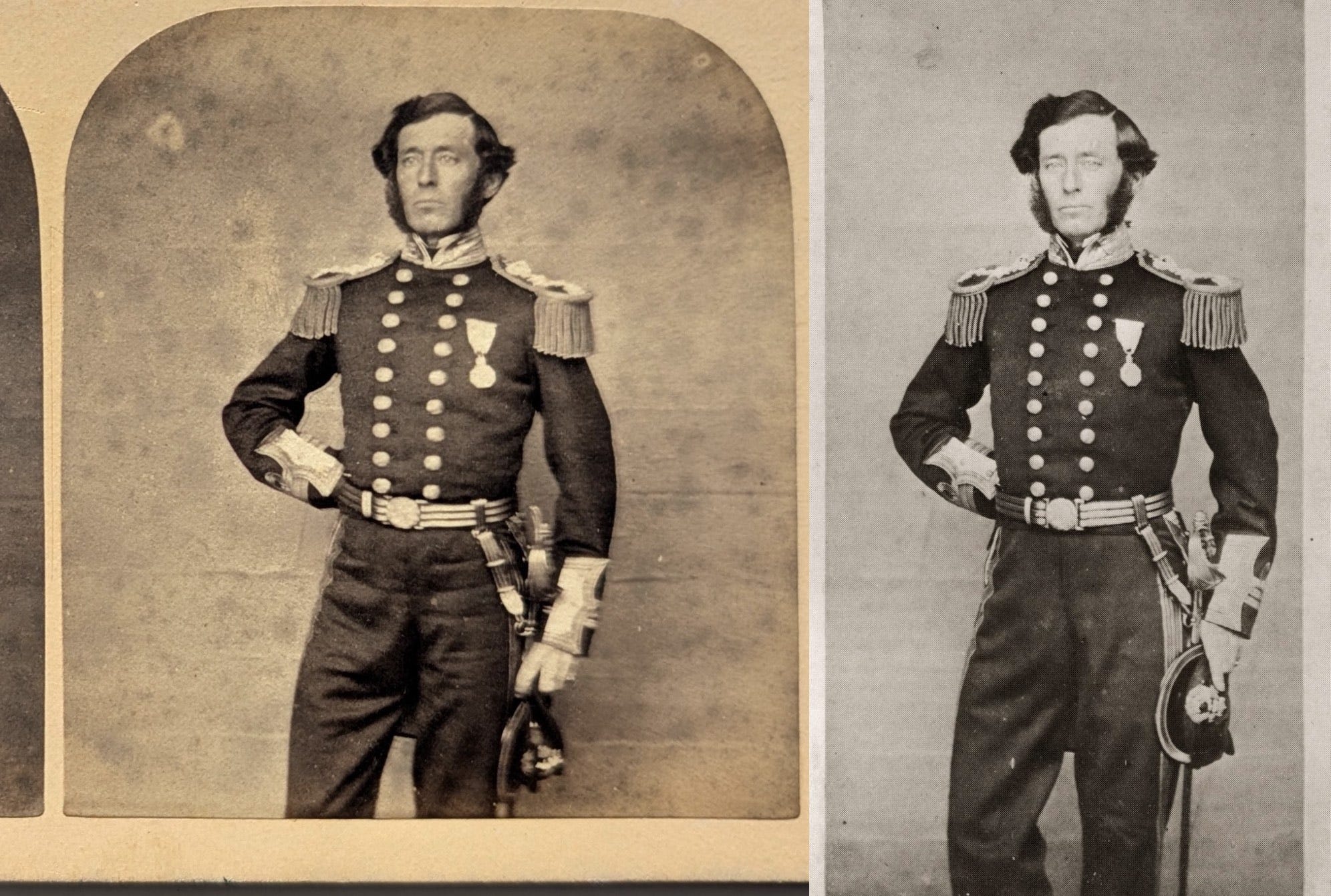
Though less polished, the Maunder stereograph’s value is precisely its unstudied, candid nature. My thanks to Peter Maunder for sharing this photograph from his collection.
For details on the Steels’ Cheyne photograph, see illuminator newsletter #40:
https://loganzachary.substack.com/p/illuminator-newsletter-40
Comments
Nothing yet. Say the first thing.
Sign in to join the conversation.