Ohayo! It’s been a while since I wrote anything or sent an investor/holder update for Gearbox. With the spike of AI slop and populism all over the internet, it feels like people engage less in proper discussions. LobsterDAO is there for anything worthy to discuss openly, but that doesn’t require long articles. However, today is the day.
I’ve honestly stopped seeing much point in investor updates past the first product iterations and being live for a long time. Note: Gearbox has been alive for almost 5 years! Why: after you’ve shipped a few products and people understand your mission and values - it’s less about aligning the narrative - and more about execution, product, users, metrics, revenues. I perceive them to be silent accomplishments, meaning they speak for themselves as you grow.
Ideally, you should still write updates - but once investors sit on multiple chairs, you worry about oversharing strategic moves or, more importantly, simply sounding weird by over-explaining rather than hyping yourself up. But without the juicy bits, updates turn into “look at our big numbers, woah,” which isn’t much fun to read, is it? Early on, constant reminders of values and vision matter. Later on, it’s mostly grinding. Could be wrong, but that’s how it feels.
Note: I am definitely wrong, because this cycle (tradfi or crypto) is all about screaming louder than the other person with whatever numbers you can fabricate. Scream! Such as the market and society today. Or has it always been? Anyway, that’s not the point.
Three parts:
first, my DeFi ramble - what’s changed since the early days.
second, Gearbox Protocol: what we did wrong so others can learn.
third: what is being done to grow and break from the shackles of poverty.
Obviously, none of this is financial advice. If I knew how to give financial advice, I wouldn’t be writing substracks and tweets. I’ll tone down on “what we have achieved” and focus on the mistakes instead. I don’t think it would be particularly interesting to read countless pages of “omg well done to us” because that doesn’t teach anything. Therefore, if you find this piece to be overly negative - it’s only because the focus is on pain points. Don’t forget that the protocol is operational from 2021, with no bad debt since the start (4 years), and with a solid runway to scale up further!
Back in the DeFi days (2020 - not 2017, for the sake of these arguments)…
…“adjusts his posture while speaking in a broken, almost faded voice, as if his support-stick broke in two pieces while he was climbing out of his chair”… “completely forgetting the fact that some of his thoughts are a cognitive bias called rosy retrospection…
It was unusual that a team could mint tokens at will from their wallet. Or that a centralized stablecoin like USDT/USDC would be accepted as collateral everywhere. Or that permissioned setups for oracles like Chainlink would be universally accepted. Or that oracles which are even less tested than Chainlink, with arguably a worse setup, would grow to such numbers. Or that bridges would have admin roles in their contracts. Or that admin keys and multisig with unknown (note: non anon, but actually unknown, probably the same team) members would be all around. Or that every UI would have a bunch of IP blocking integrations, almost KYC-inducing…
When Uniswap added google analytics tracking to their UI, people screamed. When someone added a fee to a GOOD service they provided, people screamed. Some of those reactions were absolutely moronic, but the mob was ruthless back then.
The crowd demanded absolute purity. Some of those things made sense and were valuable, but some were also early-stage hysteria.
The decent features of the DeFi back in the days were:
Oracles were attempted to be forced into being fully on-chain. However, high gas costs for every tick update and inability to track any medium and long tail assets, let alone list them within the first month of their launch - drove this all to very low usage. Impossible? Not really, but just incredibly impractical. That’s how Chainlink initially won, by being a practical usable thing.
DAOs weren’t allowed to have admin commands over user balances, so you had to design and audit contracts with many edge cases in mind, which slowed you down. Longer to design, longer to audit… Now? Hello updates, not even a timelock in place in some cases. Or a full control over validators to begin with.
Projects weren’t allowed to have equity entities with conflicting interests. Everything was on-chain or at least teams and holders would be aligned on one asset. Today? Teams make not one - but two tokens, and an NFT and a DAT. Conflict of interest? No way! And buyers endorse this more than the former!
USDT and USDC were labeled as centralized scary assets and DAI’s PSM with USDC was a wow-event for the crypto police. We tried to make LUSD happen, but without any fractional reserve shenanigans and plurality of collaterals - it couldn’t scale.
I am not even going to mention “incentives being fully on-chain and fair” because businesses aren’t fair. It’s just that back in the days we were building protocols - not businesses. Hence the lavish EF spending and being relaxed (what was the cause of major drama this cycle for Ethereum). We were in a state of kumbaya, some say, but I saw the vision in it of an open, uncensorable level playing field.
And next to all that, there were no unfair situations where some whales would get more rewards proportionally speaking than community farmers. Communism prospered! Note: I am not sure if the previous DeFi cycle can be called communism, please help me, political couch warriors, what’s the right term for everyone having equal chances?
It’s not about “protocols vs products” anymore. It’s now about either vs businesses. You can have a product and be opinionated and still be too “naive” to win in business. PS: referencing Michael and Paul.
Like idiots, we seemed to be upholding some of those cypherpunk ideals even after 2022. For the sake of early users, actually, but not for the sake of scaling. And as it turns out, those things are sometimes mutually exclusive. Remember the scalability trilemma? It applies to societal structures too. Maybe we drank our cool aid too much or actually believed in the “true” way?
That doesn’t practically matter if you care about the end results.
At the end of the day, practicality crushed all those ideals.
I’m not crying over it - this is just the logical path to adoption. Users want smooth experiences, and that means someone needs to have the money to create those experiences, which leads to centralization, user tracking, etc. The verticalization shift is everywhere. Owning the user, as web2 has it in marketing, was unthinkable. Now it’s the default strategy for any properly-sized project.
Money wins, stakeholders want more control, and so it all changes.
We realized those things early enough. Everybody saw those. But we didn’t properly act on that to the desired level, because we didn’t attribute as much meaning to that.
Did we do some TVL deals? Barely any: Gearbox has always had organic usage over 90% (any incentives were visible). One might think “well done, guys” - no, in hindsight, more shady financial engineering in crypto has benefits for longevity (look at almost every new L1 optimizing for week-one liquidity to PnD its foundation reserves). There is a fine line (is there even?) between “financial machinations ruined the narrative and the community sentiment” vs “we made so much $$ that if we now build good products, new users won’t even know of this”. The latter usually ends up buying luxury cars though, not products.
Note: you can probably still sense the fake-purist thinking from my tone in that paragraph, and that’s an issue in itself. The current cycle really prioritizes and rewards the other spectrum. It’s a learning curve after all.
Hiring also flipped. Old DeFi launched with tiny anon teams and opened up so that community contributors would step in. To be a level playing field for open, uncensorable, self-custodial finance. Now: you need a headcount and cash. Many OG projects - including us, under-hired. We liked strong small teams. But when the game got bigger and became more centralized (not necessarily everywhere), you needed BD managers, more customer support, more integration support - all in all, people. We didn’t even have the concept of customers back then, because “go click WRITE on Blockscout” was the default reply. Moronic, wasn’t it?
Anyway, we added BD late, and it hurt. You didn’t need BD before because there were like 20 decent collaterals and 10 teams alive. Today? +2-3 every month, so the list and backlog grow much faster. The landscape got bigger real fast.
We didn’t overhire to build “proper processes” and support teams - mind you, our asset and integrations list has grown close to a 100 already last year. But why not hire community support, and such pain-solving roles? That felt unnatural, thus we were constantly chatting with any big or small community member across every chat we had. That’s quite uncommon these days, but was a must for growing good communities back during ICO times. There is probably a mistake in overhiring (you see that often in startups) but underhiring isn’t good either.
Security, while staying decentralized, was always the utmost priority for us. We have never sacrificed on this front. But being secure in a centralized setup is many times easier than being secure with fully on-chain contracts. More attack vectors, more eyes on your work. The decentralization baggage definitely slowed us. Newer 2021-era teams moved faster: more central control, higher budgets to scale BD. Decentralization adds latency and cost, however you look at it.
Incentives changed too. This cycle, rewards and farming deals went off-chain - quiet bonuses for whales and delta-neutral funds. Upgradable contracts and admin keys became normal - less risk of your protocol bricking, fewer attack vectors if you retain control. On-chain degens as a concept fully died, because there was no alpha in being on-chain or dev-smart. The alpha was in booking those vanilla TVL deals which were all about BD. Gatekeeping.
And let’s not forget about the dinosaur in the room: governance & DAO. The previous administration made it incredibly hard to go fast. We had to always look over our shoulder for anything related to wording DeFi and lending, to having no control over everything (truly), to spending time and efforts on proposals, etc. It took a huge, huge chunk of energy to make it all work and make it right. We did it, to the max possible, but it wasn’t the core protocol attention I could have spent time on. The resulting extreme transparency (showing publicly where every $1 goes) is something very cool, but at what cost was it achieved… On the contrary, now we have scams going rampant, crowned by the main character himself, but it is what it is.
Noticed the title pun now? HUMBLE acronym meaning the absolute opposite?
Speaking of money for a moment…
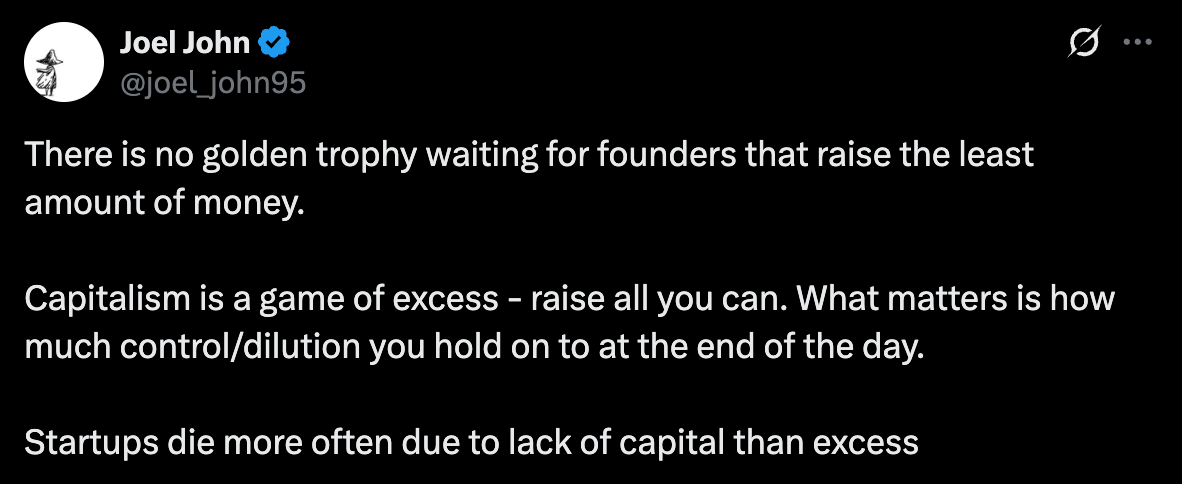
Gearbox raised about $8M over 4+ years - and spent over $3M on audits alone. As a thought exercise, that would leave ~$5M total, or ~$100k/month so far (4+ years) for salaries, marketing, and any events - quite scrappy for a protocol peaking at $500M TVL. That includes devs fixing UI, building new integrations, building new protocol versions, building the monitoring safety systems, and more. That’s like… very low for a lending protocol. In fact, the only consistent lesson from second-time founders you always hear: alwaysraise more. Under-raising doesn’t work in crypto, it’s a fairytale.
Being scrappy and “genuine” (re: naive) cost us. Under-hiring wasn’t noble - it just made us slower. At the same time, staying humble allowed us to try V1, V2, V3 on a relatively non-lavish treasury - to still be alive to date.
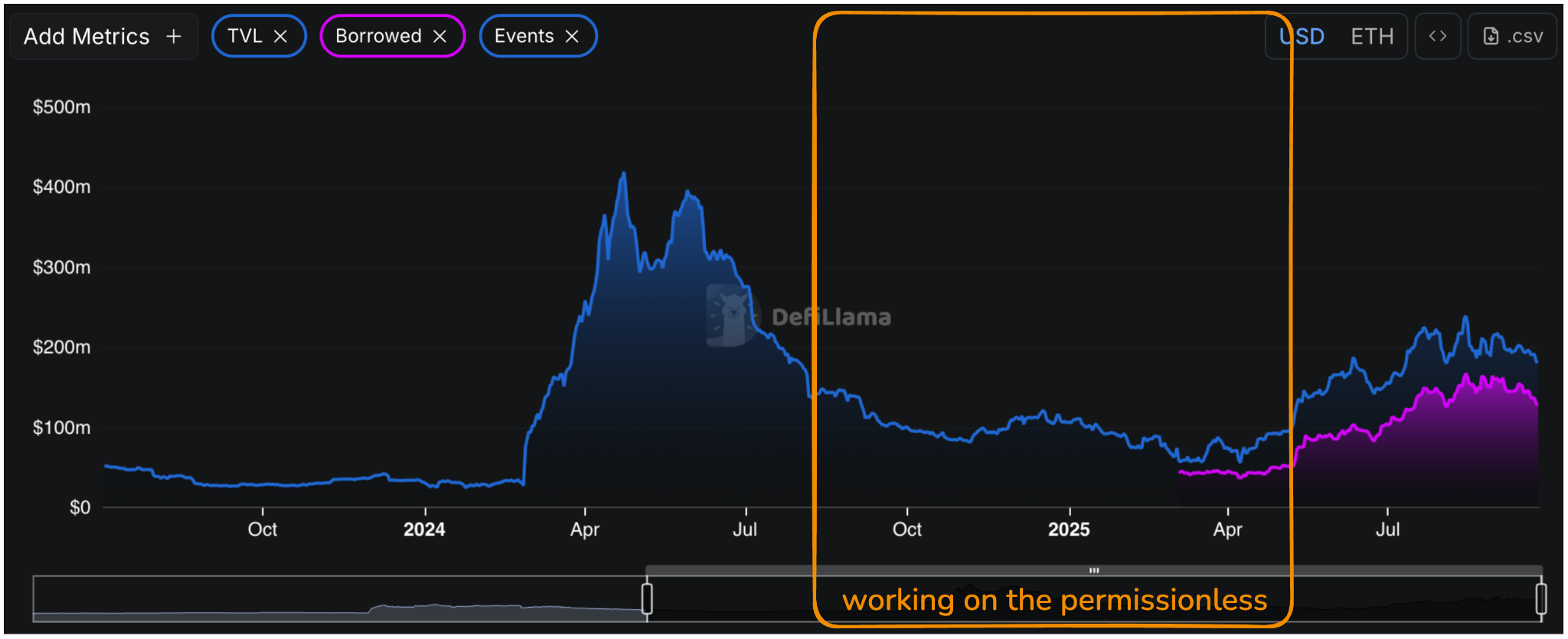
The reason why Gearbox and GEAR didn’t get into a parabolic move after the staking hype faded out - is more trivial, in my opinion. All of the above (under-hiring and lack of resources) contributed to a slow rollout of Permissionless. Again, security is of the utmost importance and we didn’t ever compromise on that - timing was an issue.
It’s not the fault of the dev side, but more the planning overall: we could have launched more chains and more assets in a less “perfect way” by repurposing some things we already had live. We could have not waited around as much but been more proactive during the time we waited for the Permissionless. This, however, is again a regular DeFi struggle - having to grow while waiting for the next better version.
The resources are finite, you can’t always combine the two.
Startups are like riding a horse while fixing its legs mid-gallop - you can’t stop to re-shoe it. Everyone’s in that spot. Or if you like cars more than horses: imagine fixing a car as you drive full-speed. A tire falls off, you still can’t stop - so you fix it as you drive. Fun!
There are a lot of things we’ve done right though, of which we are very proud of (thanks to everyone who has been supporting us and the protocol, using the protocol, integrating it, and talking about it <3). Some of the things we are definitely proud of:
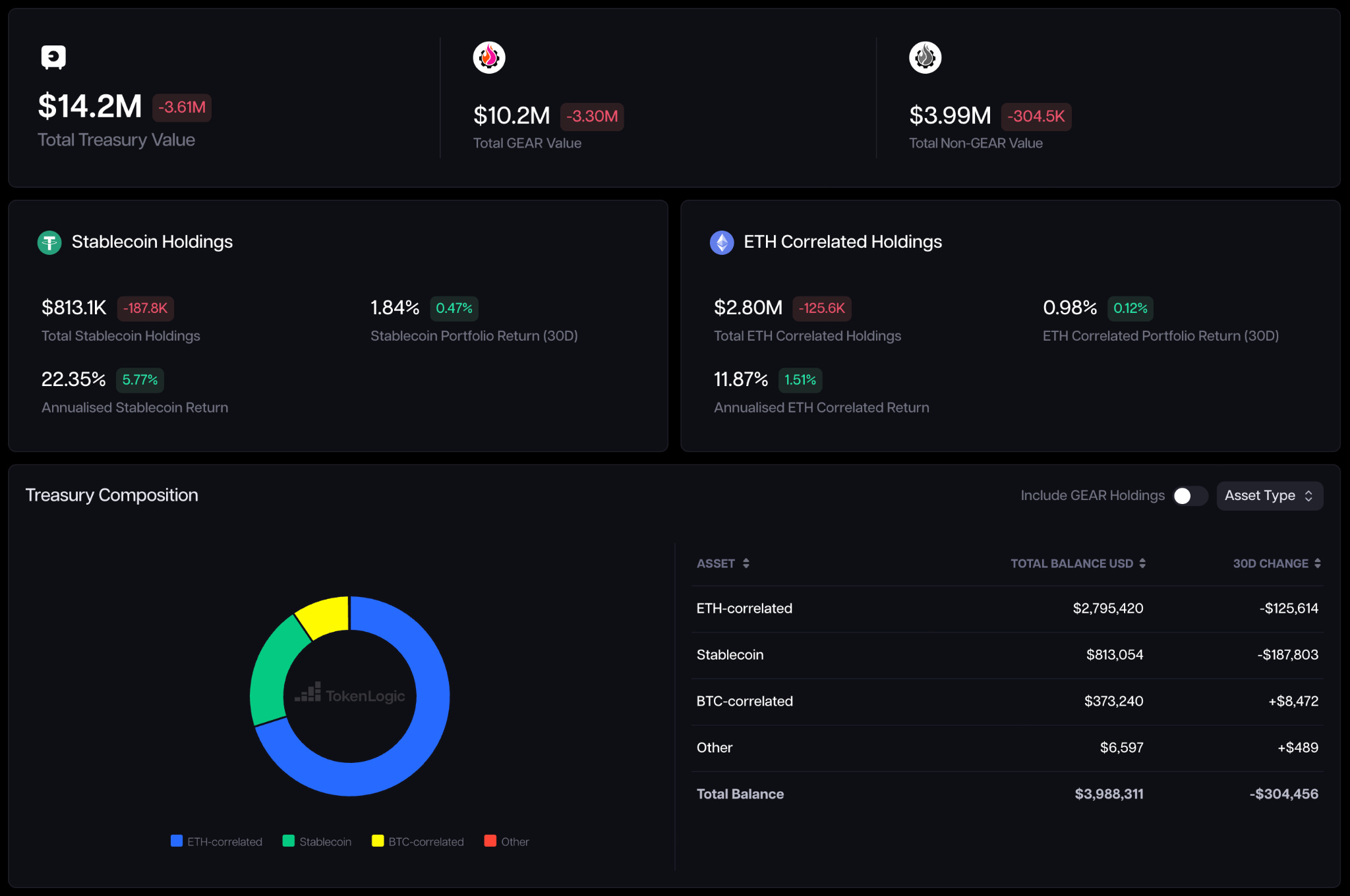
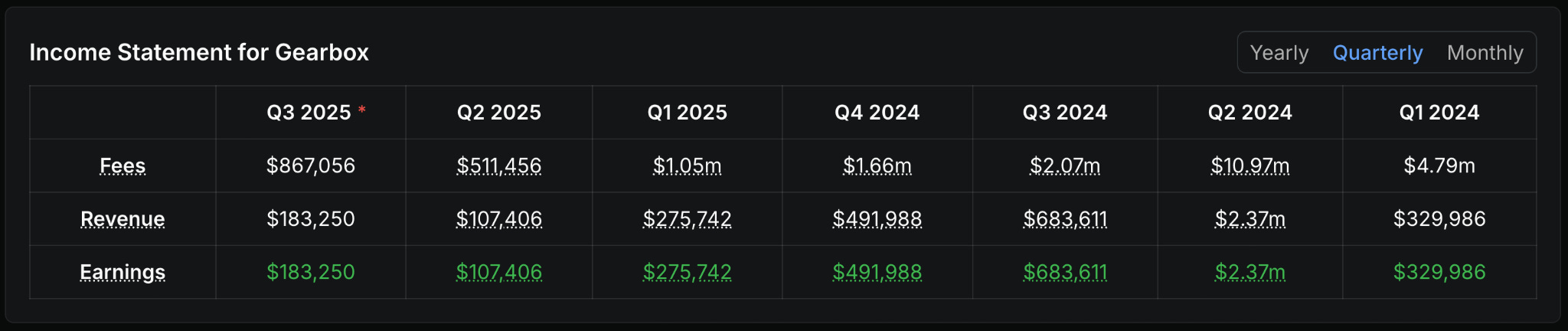
Gearbox Protocol made > $3.5M in fees over the years and now has a healthy treasury: $3M+ (the non-GEAR amounts). During 2024, revenues were even higher than incentives or headcount spend, so the protocol was profitable! You can see here: https://gearbox.tokenlogic.xyz/treasury. A goldmine has been set up: the fee mechanisms and products are in place, they just need to scale more.
The protocol has been live since 2021 with $0 bad debt ever recorded. That’s something even the giants of DeFi can’t always say, and that’s because we have never compromised on security. It makes the business side go a bit slower, but users and their funds are always of the utmost priority. And that’s all while having close to 100 integrations & assets, peaking at about ~$500M TVL, and currently sitting at $300M TVL. This is an incredible achievement, however you look at it.
Gearbox Protocol has been audited as much as any $1B+ protocol, by the best auditors in the industry. You can check most of the published reports here. Multiple times with ChainSecurity, also Consensys, MixBytes, ABDK, SigmaPrime, PeckShield, Decurity, Watchpug.
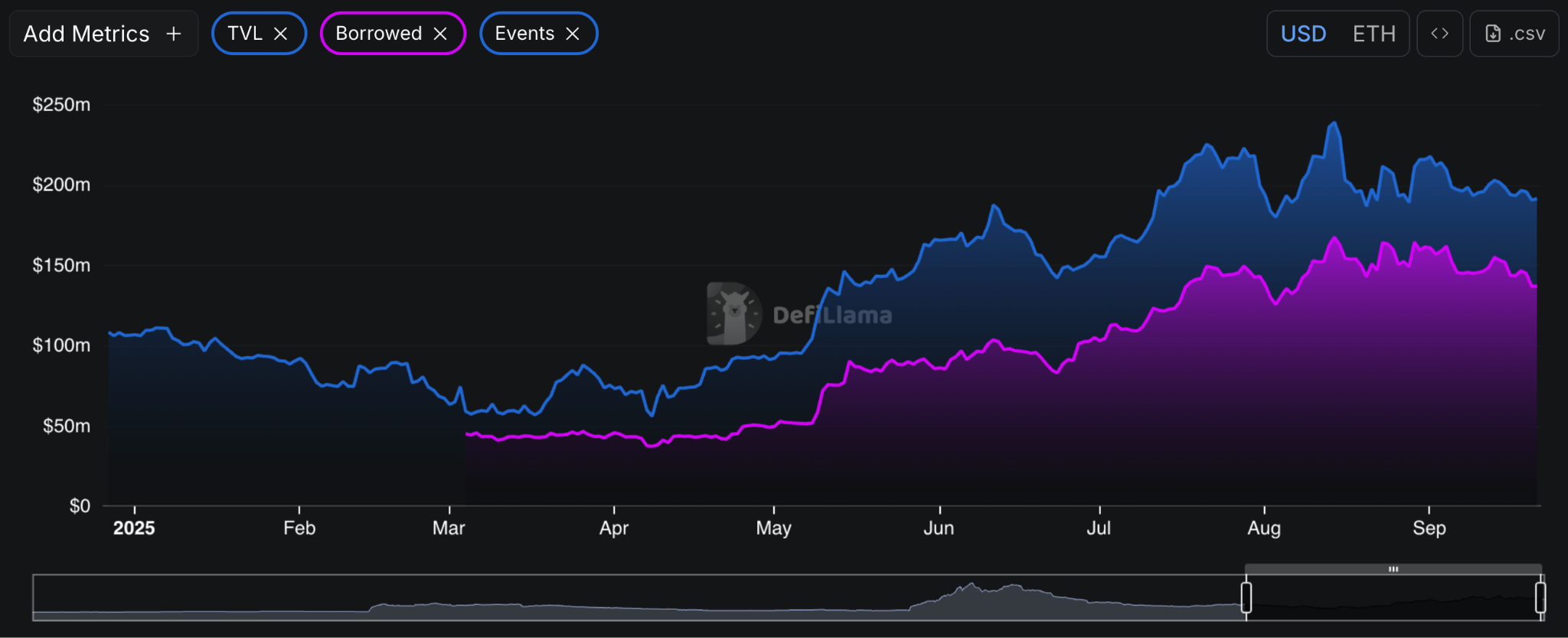
Gearbox Permissionless has been gradually rolling out over the past few weeks, with new curators joining in Q4. The protocol has already grown to $300M TVL with just a couple of curators. Keep an eye on the updates as more curators and assets roll out in the very near future. BD and the tech team are now much faster than before, so we hope to see more activity and speed on things going live.
The team is seasoned and talented, having worked together for quite a while. We are now with 15 full-time contributors and a couple part-time. And our intention is to grow to 18-19 by the end of Q4, as we do interviews (join us!) starting right now. You can check everyone’s GitHub or CT account where applicable.
The protocol has already audited and tested integrations with most of the major and non-major assets: Ethena, restaking like EtherFi, staking like Lido, generalized vaults like Mellow, various points things, Pendle PTs, and more. You can click around in the app to see what’s available: https://app.gearbox.fi/.
The lending markets are massive - next to perps, top-three PMF. Trillions will be tokenized on-chain. Centralized collaterals or not - doesn’t matter - programmable assets are the point. We’re in a market with wind in its sails - we just need better sails.
I believe there will be multiple players within lending (leverage, underwriting collaterals - there are a few slightly different products & services you can put under this umbrella). The same way we don’t have just 1 bank - we have many banks, per every country. We also have banks specializing in some things (boring DeFi like Vitalik said, and a bit further on the risk curve). There are many specializations, business partners, curators, risk baskets, geographies, and so on - which are all huge markets for any protocol today. The current DeFi size is really tiny. I am not saying we are early to crypto - I am saying we are very early to the size of TVLs and fees that on-chain finance, fused with tradfi, is able to bring. Trillions isn’t a joke.
Does it mean Gearbox will outgrow Aave, for example? I am more cynical than not, so I find that extremely unlikely today. But you don’t need to have such an outrageous thesis when you are valued at $30M FDV, do you?
Anything below $500M doesn’t need a strong explanation, so let’s get to the big competition numbers once we at least cross 10x from here.
Again, the wind is blowing in the DeFi direction with all its force (especially into lending primitives). With Gearbox permissionless now being rolled out, being open-source, having a long track record of security and a growing BD team - the sails seem to be coming together. Now, how do we get the sails fixed when the wind is there?
Know-How: Unique Features to Know About
Gearbox has always been at the forefront of technical innovations (articles in the last section can weigh more on that). From being able to leveraging LP tokens like Curve and Balancer to leveraging tokens that don’t even have LP representation (Convex) in 2022-20233, to leverage on points without looping in 2024 (direct leveraged protocol deposits), to being able to leverage positions even which are locked, all while losing nothing to slippage (now!)
Before we get into this sexy part, let’s roll back a bit.
What is Gearbox Protocol? You can see it as a lending primitive, now fully permissionless. In some way, you can say it’s similar to Aave, Morpho, Fluid, Euler. Each with their own differences, each with their own architecture.
Gearbox is very unique in a sense that leverage you get from it (and a huge % of lending protocols’ usage these days is leverage on delta-neutral) - is not looping. Looping is when you lend/borrow by arbitraging rates inside the same protocol (endogenous yields from the rate differences). Gearbox approaches leverage in a more safe, more unique way - via Credit Accounts.
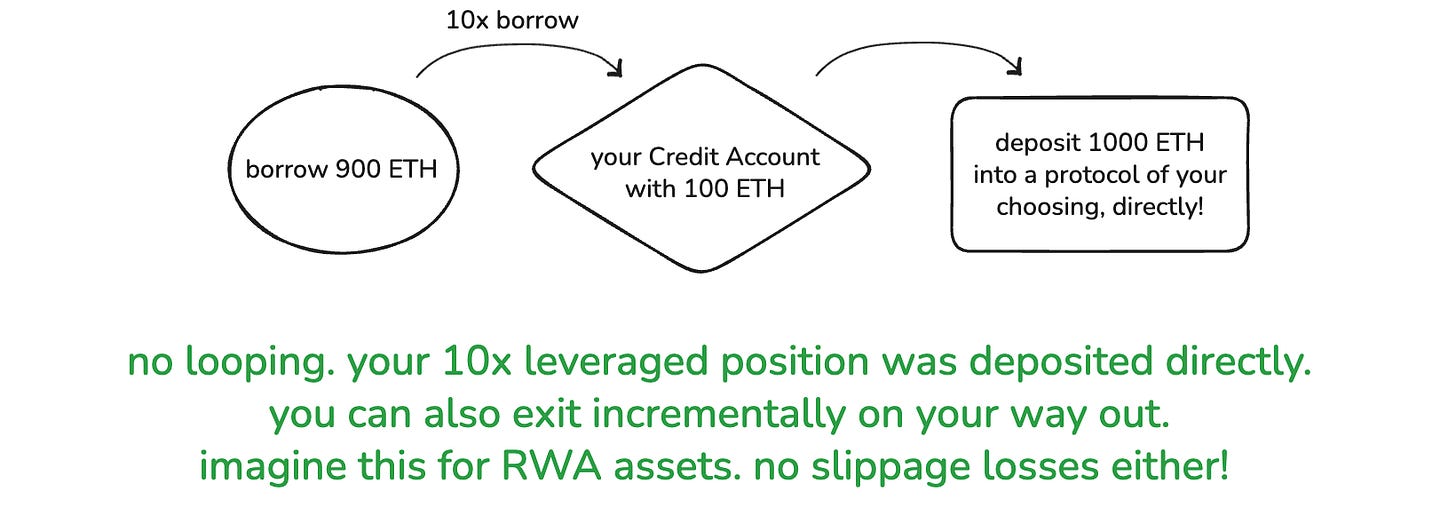
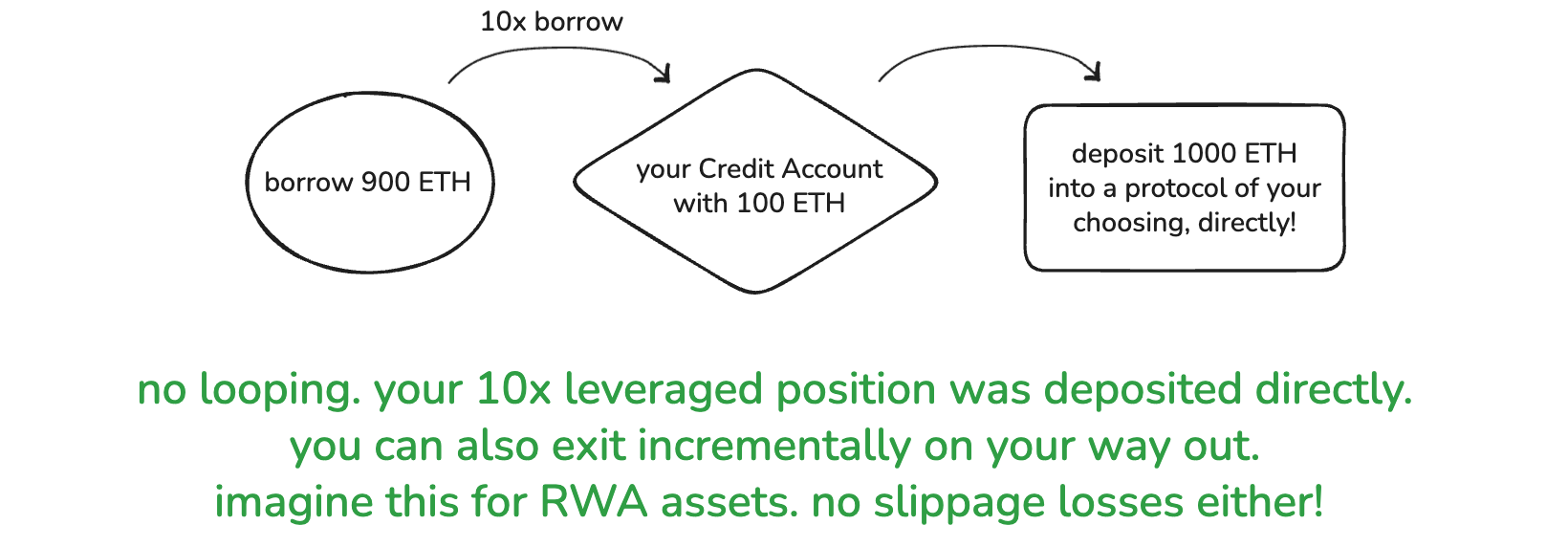
How does it work? A user can get x10 their amount of money, or x5 or x20 (depending on collaterals) at the start - and THEN deposit those funds into a protocol of their choosing. A user gets the leverage they wanted, the protocol gets the TVL directly, and the position overall is more isolated from everyone else, making it safer. You can add more to your position, reduce it, and so on.
Imagine it like a leveraged wallet with margin inside of it. The yields are also exogenous then (coming from the protocol you deposited in).
Now back to the sexy part…
1. Stop Losing Months of Yields When You Farm (!)
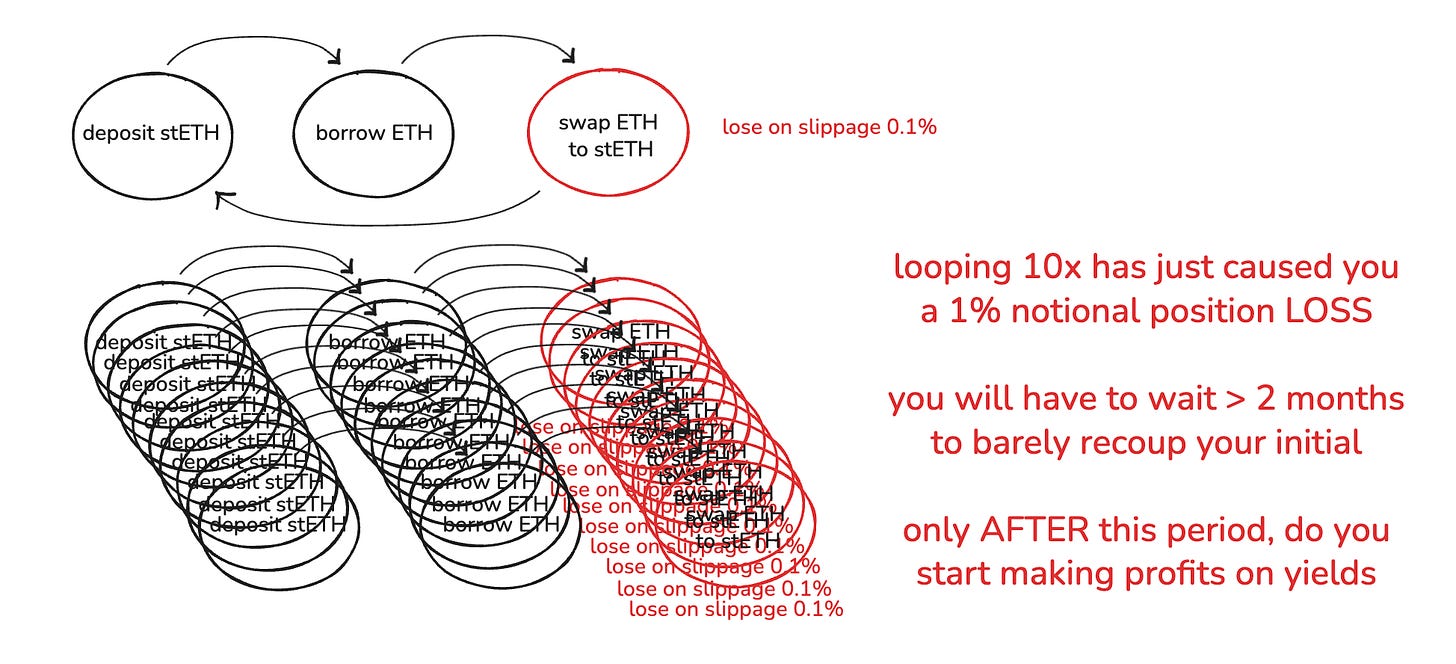
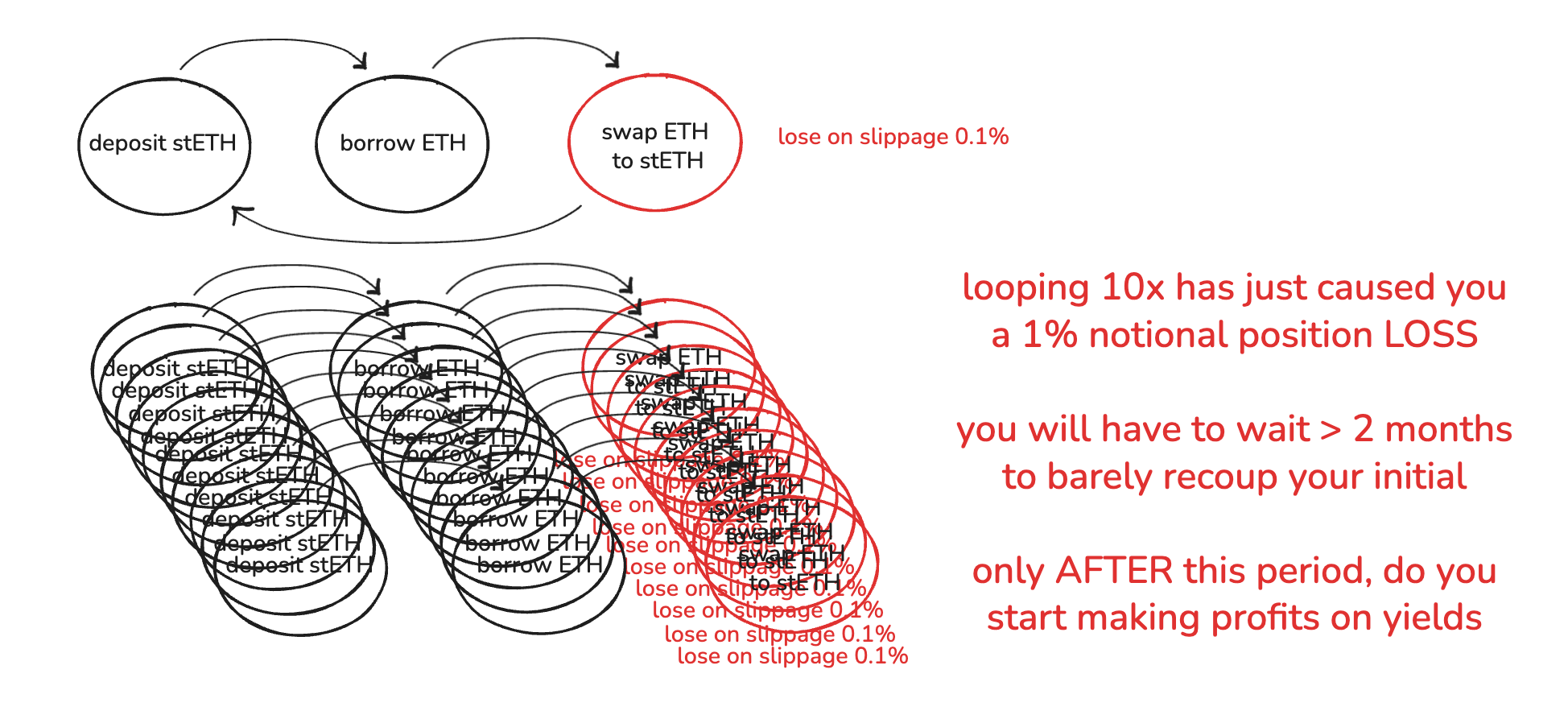
Remember that every time you entered levered points, staking, leveraged anything - you’d lose to slippage? As you loop and buy-sell a derivative (stETH, ezETH, EtherFi, etc.) you’d lose weeks or months of APYs on slippage. That is the case across absolutely every other lending protocol, due to how they are designed. Ouch!
This is how looping works across any other lending protocol.
The same issue is on the way out as you unwrap your position…
No more. Gearbox, thanks to its Credit Accounts, is able to circumvent all that.
How? Its architecture is built around Credit Accounts where you get x10-x20 of the money you want to use to farm - and then that chunk goes into the protocol you want. Direct deposits-withdrawals from Credit Accounts remove the need of having to “buy-sell” the derivative as you loop.
Imagine the experience as if you had a leveraged wallet:
Direct deposits-withdrawals also enable leverage integrations with any RWA asset that doesn’t want to overspend on supporting secondary market liquidity. This is a big, in my opinion, potential USP.
There is more to it once you dig into the codebase <3
2. Lending Infrastructure for NEW Credit Cards.
Another thing that’s actually very interesting is the ability to turn Credit Accounts into an infra for on-chain native credit cards. A new way to enable credit on-chain and connect it to real payment networks. We’ve had this thesis before the card fomo even appeared (currently you already see big numbers of ReDotPay, Plasma making their own, EtherFi one, HolyHeld, Brahma, etc.) - but executing it proved to be harder than we thought. Such products, which depend on incumbents (wallets) are not as easy to push. So either you do them yourself or you have to wait for them to be ready. The right thesis, but bad timing? Perhaps.
But do give it a read, here. Scroll down to the second part.
The core value proposition is “anyone can make their own lending market (instance)”. This thesis of modularity and permissionless is now very similar across AMMs (came to them much earlier than to lending), and among lending protocols. There are many differences on a technical level, some of which I touched upon above, and it’s a huge market which has only just begun.
As we see more curators, asset managers, and family offices become more hands-on in the industry, each one of them would want to own their vertical to some extent. And Gearbox Permissionless is now here to offer them the best stack.
I see the same happening to ever piece of the stack, as tradfi incumbents with huge user bases and moneys come into the space. If you can’t outcompete them (spoiler: you likely can’t unless you are Aave and that’s really it) - you have to work with them. Permissionless lending as a license model (customizable deployments) being Morpho, Gearbox, Euler - permissionless AMMs - permissionless vaults like Mellow, Makina, Veda - permissionless explorers like Blockscout - and so on.
When we started in 2021, we arguably had more technical and unique advantages compared to any other lending market. With time though, every DeFi protocol started resembling one another more closely than before. The differences became more related to BD, execution, and hustling. As a business does, no wonder.
When we get feedback from our friends, users, backers - on marketing, on UI, on product launches, on integrations - thank you! Generally, we see and understand most of it. It’s never ignored. We just didn’t have the time or the resources to fix it all at once. Each time we enter something into a backlog, there is a new launch.
The talent we have at Gearbox is amazing. We hire slowly, but the ones who remain are amazing. They’re still there, still incredibly talented. Now, we’ve added two people solely to work with curators - helping them launch, guiding them through hand-holding. Curators scale us: it’s the modularity thesis Morpho, Euler, and Mellow also chase. We set on it early but executed late because we were half-size or even smaller.
If you’d like a new challenge and can work autonomously, fully remote, then join! Ping ivangbi on Telegram and I’ll connect you do the flow to plan a call.
We’re scaling hiring, tightening priorities, and accepting the game as it is - not the DeFi purity test we once worshiped. The wind is there; now we build the sails.
More BD, to have more unique rewards on integrations, more unique integrations themselves, etc. It’s a massive pile of calls and conversations. Jorge is currently managing well, but being as senior (and to have more leads which might not be as obvious) doesn’t hurt. Not a junior role by any means.
Louder communications. We have really lost our voice as we have been heads down pushing permissionless, but we have to scream louder. As we have many more partners these days, we need a +1 comms person to work next to marketing.
At the same time, better UI. We kept perfecting the UI over the years, made some good design choices (and some not) but our eyes after 4 years can’t make up a new user flow from scratch. That needs a fresh look. And that’s where +1 comes in.
Scaling, scaling, scaling - to other rollups, chains, assets, risk baskets, etc. Gearbox Permissionless, the new version that’s been rolling out, is exactly for that.
Driving revenues back to GEAR. That’s already happening, just in low numbers. What differentiates GEAR from many other utility/governance tokens is that it has always had fees, and from a few weeks ago - also buybacks. There are multiple opinions on buybacks, but with the revenue meta the alignment with token holders is more important. Currently, 25% of revenues go into buybacks. As the protocol scales further and grows, that percentage should grow as well. Next to that, Gearbox has no external equity company like in the case of Uniswap Labs and Uniswap DAO where the former milks token holders. Everyone contributing is aligned on one thing - GEAR. No other token, no other NFT shenanigans.
GEAR has been fully circulating (not including the DAO portion ~35% with small yearly incentives only) - and that’s a great thing that no more unlocks are there. We don’t control the market (no controlled supply like in many crime L1 launches), so we have to overwork the conditions. In crypto we have majors shooting up and then winners like Ethena, Pendle, Aave - many others are in limbo state price-wise.
But we continue pushing, we have to keep trying!
One role which I think is imperative for long-lasting protocols/products is good user support. Interfaces in DeFi are still pretty ass, and it’s very annoying when whales try to interact - get an error - then come to TG or Discord - and are met with an “ok sir I check with admin”. Probably the most retarded thing ever to not hand-hold your power users. We have started fixing this and will improve more!
If you are reading this but heard of it for the first time, that’s fine (means I’ve been doing a bad job though). You can read some about Gearbox here and here. Although there is a lot of cool stuff and permissionless info that hasn’t been properly written about yet. That’s being written about as we speak.
I first talked to Mikael, the creator of Gearbox Protocol, together with Ilgiz in February 2021 - right after Mikael’s ETH Global MarketMake finals appearance. Although I was not looking to join any team back then and was just chilling, I saw big potential and wanted to join that DeFi train, pushing forward something new and cool. To this date I still think it’s an amazing primitive, with an incredible team, awesome committed backers, and a super smart OG & newcomer DeFi community. I still don’t know what would be cooler to do in 2025 (surely it’s not making a new generalized rollup) so I am excited for permissionless to properly unravel.
I do find myself a bit more useless these days day-to-day though, because Mikael and Ilgiz - and now Muggle, Jorge, and others - have stronger experience when it comes to execution. Myself, as a lover of narratives, stories, launches, and 0 to 1 - the current state feels less about bootstrapping and more about execution. That’s also a sign of market maturing in general, as so many products find themselves with a good core community - but needing to scale beyond the initial power user segment. Gearbox is doing it permissionlessly, with a strong technical team.
We have to derive the advantage from where it is: working with technical teams. We might not be the most Washington- or New York-native protocol going to the sauna with the big boys - and even if we try, it’s not native to us. However, stronger than others technical prowess and reliability - are our thing. Therefore, we choose to be at the underlying level stack, working with integrators and curators. The people who understand the small technical intricacies and care of the things which might be very hard to explain to a regular retail user.
A license model, if you must, is the way we things are going forward to scale. A solid revenue sharing is in place, of course.
Execution, execution, execution. That path has already been set, now it’s about growing the instances, the integrations, the TVL, the revenues. We all wanted to get to this point and have fundamentals win - now we need to live up to the expectations.
This piece, as usually it is, is not only my thoughts either. I listen to the smarter, more senior people (who have bigger brains but might not be as shilly-talkative) and try to put their thoughts in perspective. Hopefully, digestible enough. We’ve been doing such pieces before, but more with a focus on the product. Today was a different twist.
Thanks to everyone who keeps an eye on Gearbox, continues supporting and using the protocol, works with us on attracting TVL and users, and also to the backers who have been with us for so many years. We continue trying to make you proud (and rich).
As always, if you have cool ideas, FUD, or questions - lobsterdao telegram chat remains open yet heavily moderated. For Gearbox specific questions, there is a dedicated chat too. I hope this piece gave you some insights, and if not, I hope you still buy my bags so one day I can delete my social media accounts <3
Onwards!
We are mostly Telegram deep-sea dwellers, so find us there.






Comments
Nothing yet. Say the first thing.
Sign in to join the conversation.