
Welcome back to my series (which opened with An Anniversary, a Thank You, and a Journey) chronicling my travels through France in celebration of Under a War-Torn Sky’s 25th anniversary, our WWII flyers, and the French civilians who saved them when downed in Nazi-occupied territory. A personal commemoration of my WWII veteran father and a “book-cation” centered on experiencing the places and people of a beloved book.
In these posts—which follow the escape route of my protagonist Henry Forester—you’ll find a mixture of travelogue, history, reflections, and places that sparked scenes, characters, and themes when I first wrote the book. Plus, conversations with French people who took my breath away in their largesse, gratitude, and concern for us—despite insults to our Allies and the very real fallout in their lives from our current president.
This entire series will be posted on my website October 1st—the novel’s official pub day anniversary. I’m thrilled to be celebrating the night before with a hybrid in-person/online book talk at the Lewes Public Library, co-hosted by the wondrous Browseabout Books (click here to register).
******
“In the depths of winter, I learned that within me lay an invincible summer…no matter how hard the world pushes against me, within me, there’s something stronger—something better, pushing right back.”
—Albert Camus
With this quote, Camus—existential novelist and editor of the covert, anti-Nazi newspaper Combat—perfectly encapsulates the determined, daring women of the Resistance. More than once, my character Madame Gaulloise quotes Camus to Henry, typically when deflecting his awed compliments of her bravery and worry over the risks she’s taking for him. Her attitude? That it’s simply what you do when faced with monsters.
Dauntless, embracing, and breathtakingly generous, Madame gathers up Henry at the Montreux train station with the fierce protectiveness of the mother she is (of a captured French soldier about Henry’s age). She will come to seem invincible to Henry—a quality many lost flyboys described if lucky enough to be sheltered by this type of passeur (resisters specifically moving lost Allied flyers): women in their 40s or older, well-heeled, well-read, multilingual, and aristocratic (whether by birth, marriage, or simply attitude and deportment). Flyers followed these intrepid women without question. Their seemingly unflappable aplomb infused airmen with a ready resolve that was absolutely critical to their surviving checkpoints and unexpected twists in their escape plans.
One of the many amazing things about these women is that they often acted all alone, more out of compassion than patriotism, at the drop of a Dior hat. Many—like Comet Line founder Dédée de Jongh (see post #4) or Mary Lindell (see below)—plunged headfirst into the danger of saving others during the chaotic fall of France to Hitler. This was long before there was any calculated benefit of getting on-the-run airmen back to England with the hope of their flying missions again. They simply spotted a British soldier or RAF flyer who’d managed to escape Hitler’s blitzkrieg and the disaster of Dunkirk and was wandering—clueless and frightened—through newly-seized Nazi territory. They rushed to help—long before the British SOE (Special Operations Executive), created a month later, would be ready to aid resistance groups or “ratlines.”
In fact, whatever routes these untrained women and their friends managed to improvise often ended up being some of the most successful and lasting of the war’s escape networks.
Women like Madame Gaulloise took advantage of both the sexism of the time and Europe’s lingering social class hierarchies. Universally considered “the gentler sex,” women still didn’t have the right to vote in France (that came after WWII—and in Switzerland not until 1971!) and simply were not considered smart/resilient/plucky enough to think or plan clandestinely. As a result, it could be much easier for women to convince guards of their innocence if questioned about their comings and goings.
Upper-class women had the greatest advantage. They could revert to autocratic disdain to intimidate the heck out of the Reich’s rank-conscious junior officers or foot soldiers. Brought up to revere authority, it was inconceivable to them that a well-heeled matron, adorned in pearls and furs, could possibly be a “terrorist” (Hitler’s label for Resistants). With higher ranking officers, often themselves from affluent families with well-educated genteel women, that ploy didn’t work as well. Women like Madame might need to spar verbally in a deadly game of wits to avert their suspicion. Thankfully, having moved in France’s high society, political elite, or academic circles before the war, they were practiced in the art of pointed repartee—in being charming while still keeping a man at arms-length.
But it was a high-wire act.
As Madame Gaulloise says in Chapter Nine, “I play a high society coquette to disarm my enemy and keep myself a mystery. Women have had to cloak themselves in this way forever. It is especially useful with the Reich. Nazi Aryans can be such fools for a well-made dress, well-bred manners, and witty cocktail chatter. They all want to be aristocrats. But the price is, they think they know me for something I am not.”
Madame was so much fun to write. Beginning with picking her code name “Gaulloise”—which literally translates to “a female from ancient Gaul.” But it also was the name of an iconic French cigarette. Known for its intense taste and scent, as being the choice of intellectuals and artists, the cigarette’s logo was of a winged warrior helmet and its slogan Liberté toujours, “freedom forever.” The perfect symbol for the clever, cultured, and charming character who spoke to me so clearly.
Readers have seemed delighted by Madame’s wicked sense of humor and quick-on-her-feet ad-libbing, like loudly shaking her keys to prompt her nervous poodle into peeing on the pants of a German officer who’s insisted on escorting her to her room following an evening at a Montreux hotel casino. After the Nazi leaves in a huff, she cradles the dog and playfully says to Henry (whom she instantly starts addressing as cheri), “Isn’t it a shame that poor Philippe gets so overwrought and has accidents like that just at the sound of keys?”
I’ve been so pleased by the teenage boys—and the 30-something men who’ve emailed me recently saying how much they loved the book in high school—who developed serious “teacher-crushes” on her. For that brushstroke, I can thank my longtime editor, Katherine Tegen. She recognized my portrait of Madame naturally tilted in that direction and encouraged me to deepen the color of that nuance.
As an elegant, urbane woman who fits seamlessly into Europe’s sophisticated and cosmopolitan venues, Madame is a revelation to a farm boy like Henry. Naturally inquisitive and a good student, yes, but Henry had never before seen the likes of her or her world of Belle Epoche hotels they initially stay at in Montreux (you can imagine his puzzled reaction to its bidet). He’s awestruck by her exquisite Annecy home with its library of wall-to-wall books, Impressionist paintings, and antiques polished to a gleam with sweet-scented lemon oil.
As was often the case, Madame needed to house Henry for a bit while she sets up his escape. She sells one of her most-loved paintings to finance it and to buy black market food to supplement the meager rations the occupying Nazis granted (Parisians were allowed to purchase 180 grams of meat—less than half a pound—per week). That delay authentically gave me the chance for some lovely character reveals for them both as she talks to him of philosophers, novelists, or painters like Picasso (whose cubism totally perplexes Henry). She’s an instinctive tutor, he a hungry learner, and Madame gently muses that at least “this madness” might provide introduction to things he would like to learn more of.
As accomplished society-women might be back then—think Jane Austen traditions—Madame’s an accomplished pianist as well, playing Chopin, Debussy, Beethoven. It’s in those spellbinding musical interludes that Henry really feels the allure of her intellect and suddenly understands a line by the English poet Wordsworth he’d found among her books: “the still sad music of humanity.”
“Henry watched her hands lilt across the piano’s bright white keys, her fingers long and creamy, unblemished by sunburn or picking crops. But it wasn’t so much her well-preserved beauty or sophisticated femininity that mesmerized him. It was a cultivated intelligence that Henry couldn’t quite understand, a completely new and complex world of arts and books and refinement that she represented…Her face glowed with a rapt appreciation of the music as she played, obviously finding a peace in the melody like that he found in a quiet sky…she was so engaged, so elevated by creating this moment of musical beauty, she had completely forgotten his presence, forgotten the sorrow of her imprisoned son, forgotten the danger of her clandestine work…that was it: she carried an aura of knowing sadness that she somehow counterbalanced with a determined hope for happiness.”
Madame will tell Henry that Camus wrote “that there is no sun without shadow” and “that mankind’s grandeur lies in his decision to rise above his condition, oui?” I hope she seems all that—an amalgamation of the stunning passeur women and their experiences, both triumphant and tragic, that I read about before writing her. There’s a swath of bios and novels about these women now. But honestly, few existed 25+ years ago when I was researching Under a War-Torn Sky. So, it felt a particular honor to “bring them to life” through Madame.
Madame reappears and once again is pivotal in the sequel, A Troubled Peace, because so many readers were as worried about her as Pierre (I’ll share more about that in posts regarding Annecy and the Vercors). Right now, I’ll end with a thumb-nail sketch of the five real-life women who inspired Madame’s personality, circumstances, and gambles:
Mary Lindell: Alias Marie-Claire (for her two cats). A strong-willed, charismatic, and somewhat controversial Brit who had a “common law” marriage with a French count. She fell into running what became an incredibly successful escape line in June 1940. She noticed a British officer, who’d given up his place on the hastily evacuating boats at Dunkirk thinking he’d get by on his Oxford-impeccable French to find his way to neutral Spain. He was sitting across from her in a Parisian café, blending in, wearing civilian clothes he’d managed to pilfer.
But he hadn’t replaced his combat boots.
Mary tried to catch his attention as a German patrol checking papers began moving through the restaurant. He ignored her. Finally, right as the soldiers approached his table, Mary stood, rushed past the Nazis to slap the Brit’s face, berating him in rapid-fire French as if he was her chauffeur being drunk and insubordinate. She completely befuddled the Germans and dragged the equally confused Brit into the street, telling him to be quiet and follow her.
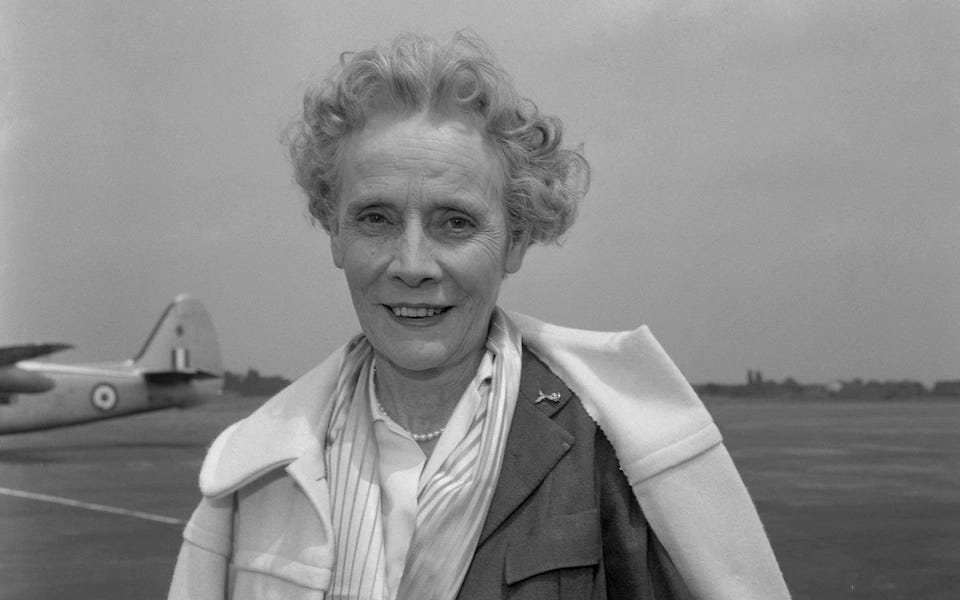
Such bodacious acts remained her M.O. To obtain passes and scarce fuel rations, she’d march herself up to German authorities wearing her WWI Red Cross uniform and commendation ribbons (she’d been a nurse on the front line trenches). She’d proceed to brazenly cajole or bully officers with the ruse she planned to escort children separated by the “recent unpleasantries” from their parents, who desperately awaited them over the demarcation line in Vichy’s so-called “free zone.” Totally cowed or charmed, they’d agree. Her driver was typically a downed, disguised flyer—shaking in his boots no doubt during her performance.
Arrested and confined for months in Fresnes prison on suspicions the Germans ultimately couldn’t prove, she went right back to helping evading flyers after her release. She was recaptured in 1943, shot while trying to escape, and sent to the notorious Ravensbrück concentration camp—where she is credited with saving as many inmates as she could negotiating with the guards.
Comtesse de la Bourdonnaye: French aristocrat and early member of Paris’ Musée de l’Homme network, one of the first Resistance groups to form when France fell. She helped fund their clandestine newsletter and hid British soldiers and RAF in her lavish homes. She was arrested by the Gestapo, spent several months in Cherde-Midi prison. Once released, she continued her resistance by working with Hôpital des Enfants-Malades, which hid and transported Jewish children to safety.
Comtesse Bertranne d’Hespel: After her husband was killed in 1940, she sheltered, fed, and disguised 20 Allied airmen in her home near Reims. In her brief mention of Bertranne, the author of Sisters in the Resistance pointed out one very practical benefit of wealthy families harboring airmen: they were much more likely to speak English and have spare time—critical to helping flyboys sit still in hiding, sometimes for weeks. “These women,” she noted, “often had to use their entire repertoire of card games” to keep the men occupied and quiet.
Virginia d’Albert-Lake: A young American married to a Frenchman, living just south of Calais—right along the Comet Line (see Post #4). When a friend furtively asked if she could translate instructions to a group of downed Americans, she didn’t hesitate. All told, she and her husband hid or moved 66 airmen—before Virginia was caught as she biked to a safe house. One described the relief they’d all felt when meeting her: “There we were, walking into this apartment after some pretty hairy experiences, greeted by this beautiful woman who said, ‘Hi fellas, how’re you doing?’…She had no fear whatsoever. She even showed us around Paris—with Gestapo all around!”
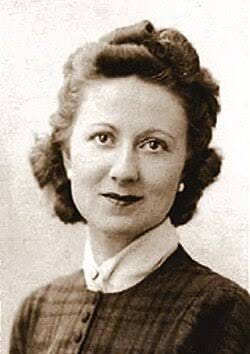
Virginia would survive Gestapo interrogation and Ravensbrück. I remembered this statement from her son, while fashioning Madame’s sobered but stubborn joie de vivre: “After her release, she felt she’d been given a second life—and loved it. She had a fantastic sense of humor. Very sharp, very American, very fun.”
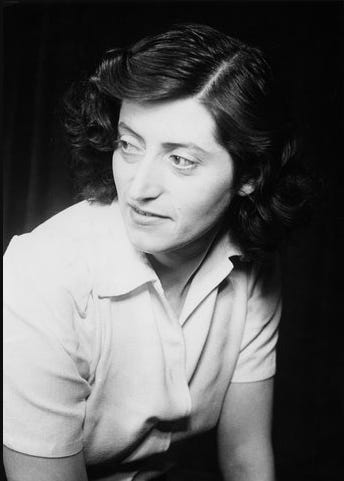
Lucie Aubrac: Teacher and wife of one of the Resistance’s most important leaders, she helped found Libération-Sud. She didn’t move flyers, but I knew of her through her memoir Outwitting the Gestapo. Her pulling off outrageous rescues of her hubby Raymond definitely influenced my portrait of Madame Gaulloise and the risks she’d dare. When heavily pregnant with her second child, Lucie walked into Lyon’s prison—where the infamous Gestapo “butcher of Lyon” Klaus Barbie operated. She feigned having been done wrong, that Raymond HAD to marry her. Delighted, the Nazis agreed, saying they’d take him to a priest to perform the ceremony, then, as chilling example, shoot him on the church steps afterward. Calmly, she insisted on first going home to change into more appropriate dress. Again, swayed by her concocted story and anguish, they agreed. Lucie hurried home, arranged a rescue ambush with comrades, and made off with Raymond at the church!
My next post is pure travelogue (and English major geek-time) on Madame’s glamorous Montreux world and Lake Geneva (and its impact on Lord Byron and his wonderful, weirdo circle of creative geniuses). Stay tuned!
Yours in hope,
—L. M.
Comments
Nothing yet. Say the first thing.
Sign in to join the conversation.