
I love barns. Wherever I drive, I’m on the lookout. I used to fly around the country doing press checks, and would always allow an extra couple of days, rent a car, and head out into the countryside. The excitement of hunting, but with a camera.
They are built for functional reasons, with economy, and attention to siting, the weather, the barn’s purpose, and past experience. They have to work!
Architecture without architects — the architecture of practicality.
When I run across a barn like this, I’m both stunned and ecstatic. I sit down inside and absorb the beauty. Barns are my cathedrals.
I just ran across this shot and wanted to share it, and so, threw in other photos from Oregon.
I’m planning to do a book on barns before long.
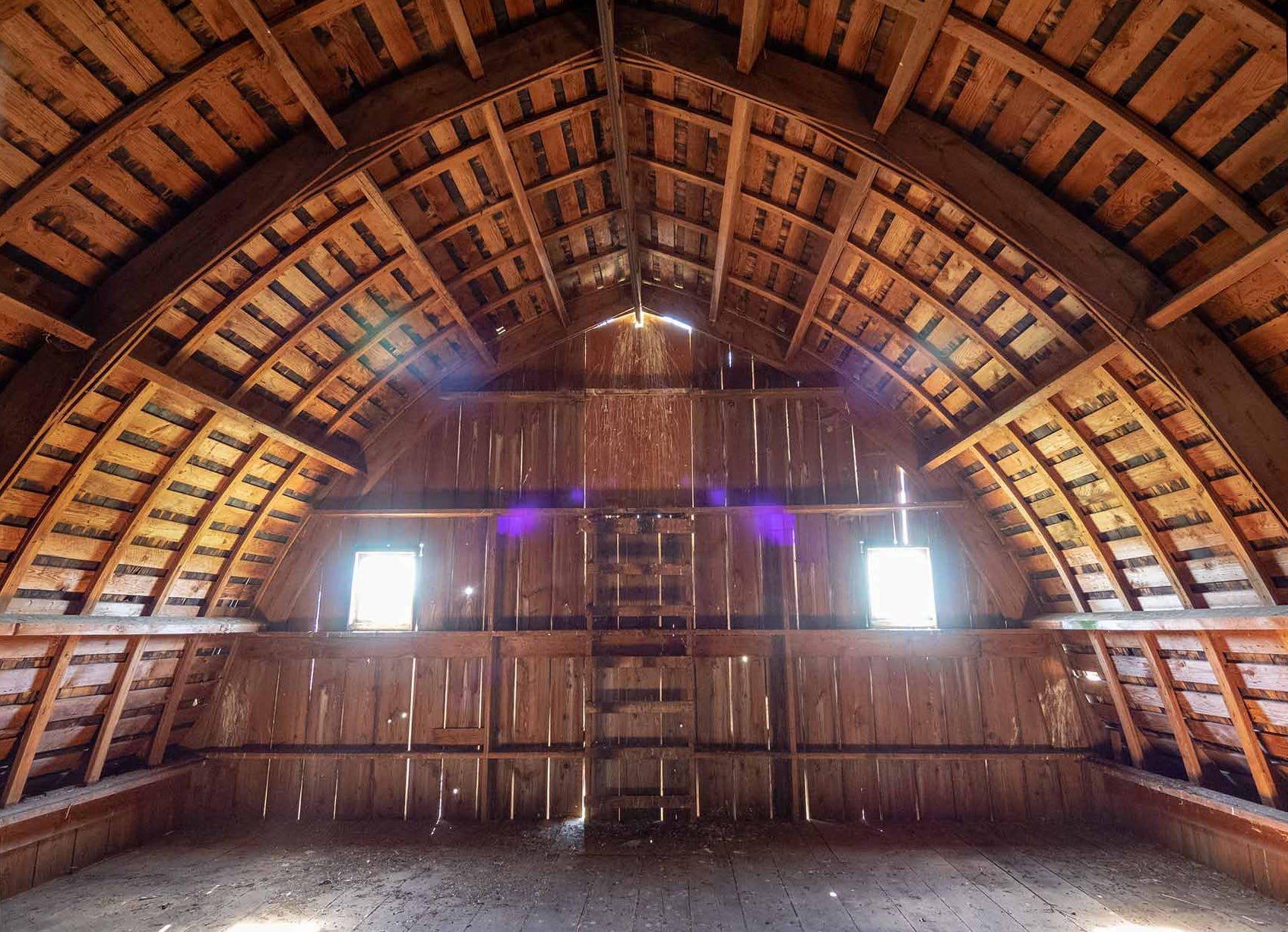
BTW, Williamette — as natives will point out — is pronounced “Will-lam-it.”
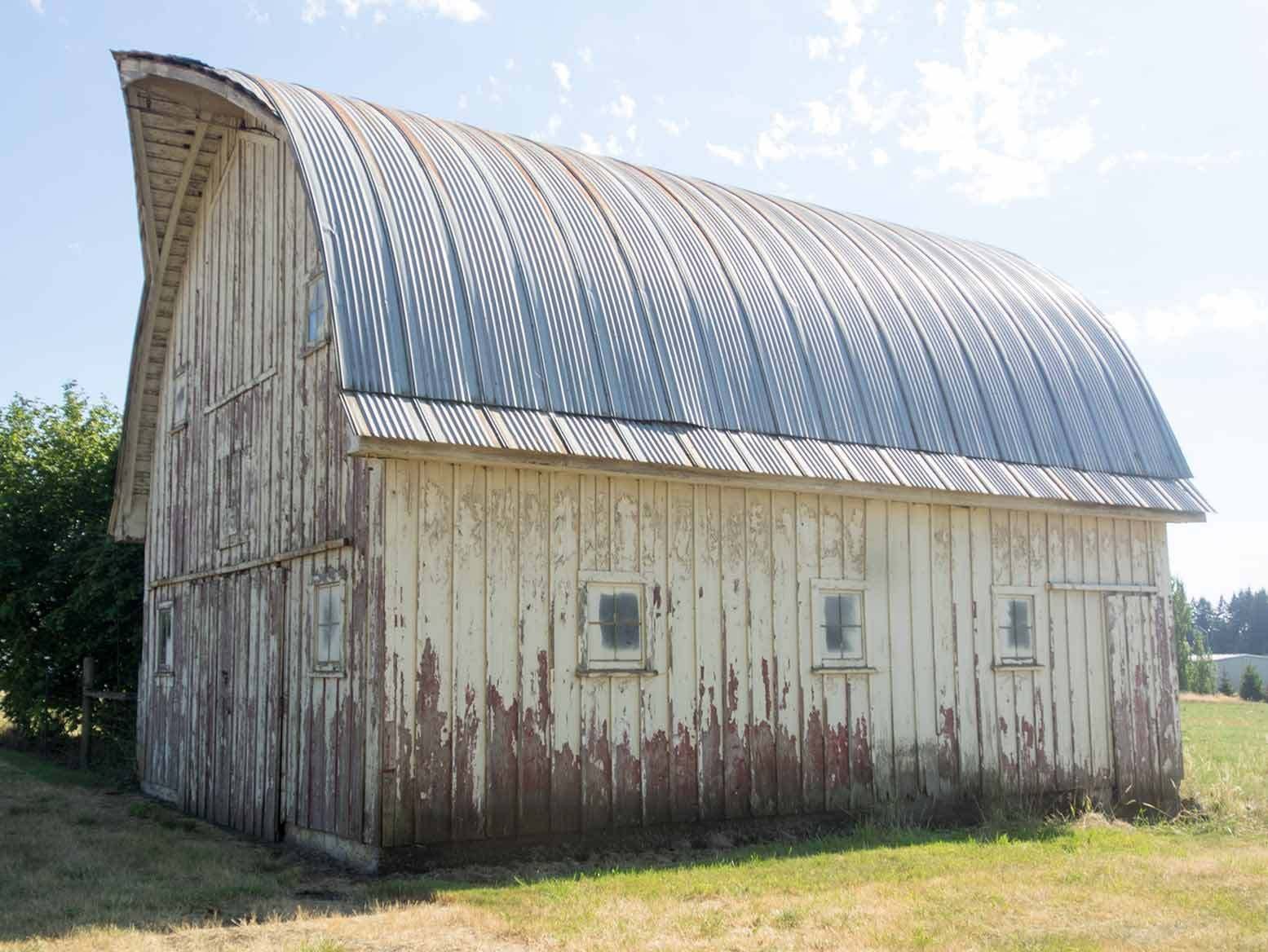
Above: Exterior of above barn. What a surprise to walk inside!
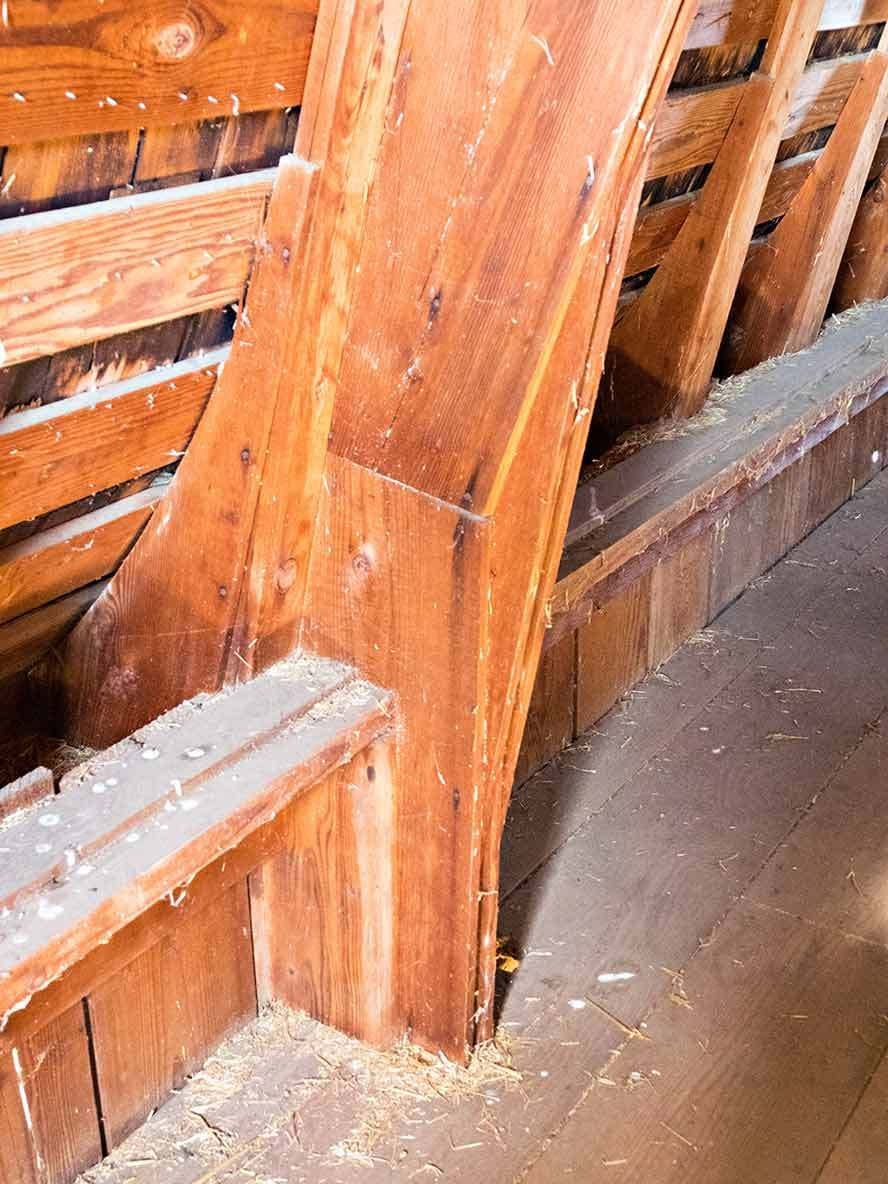
The unique feature here is that the roof’s curve is achieved by building the rafters out of 1″ material. 1 × 12s laminated together (I believe 4 of them) to achieve the simplest of laminated trusses. After laminating, the top edge is sawn to a curve. The barn is 24′ wide, 32′ long, 26′ to the ridge. Thanks to Mackenzie Strawn for measuring it; he also wrote: “I have a carpentry manual from the 1930’s with a short section on the Gothic arch barns, they suggest making the roof radius ¾ of the width.”
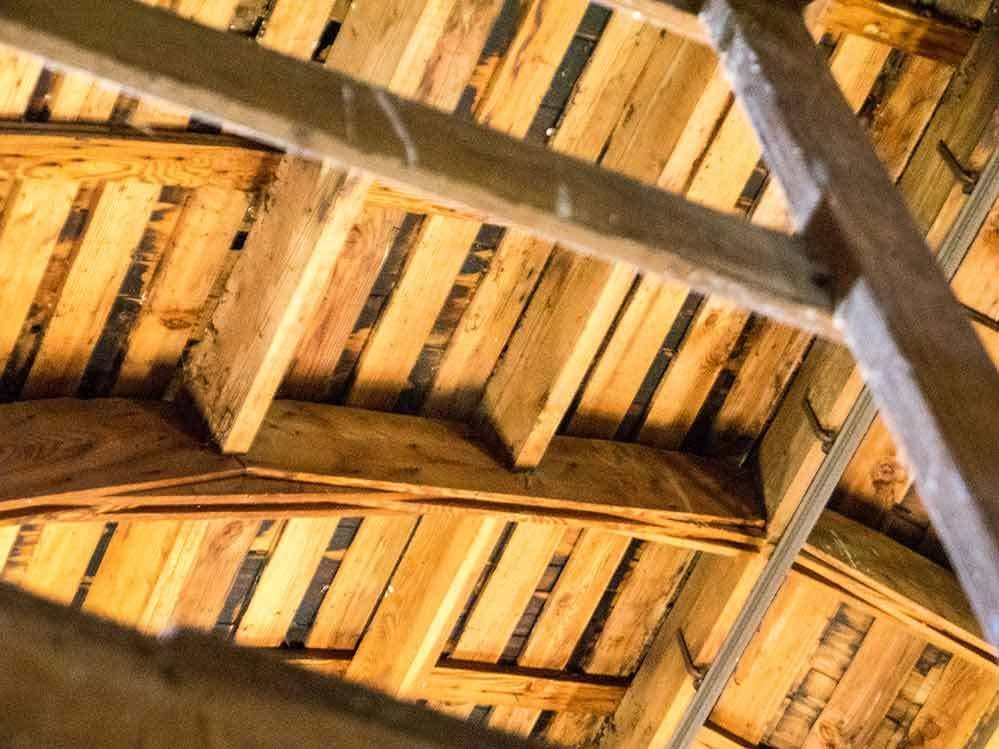
This is similar to the construction of the Nepenthe restaurant in Big Sur: framed entirely with laminated 1″ lumber.
A gambrel roof is a two-sided roof with two slopes on each side: a shallow upper slope and a steeper lower slope — as compared to a gable roof, which has just one continuous plane on each side meeting at a ridge, making a simple triangular profile from the end view.
A gambrel roof provides more usable space in the upper story or attic because the steeper lower slopes open up headroom. A gable roof, however — one of the most common roof shapes – is simpler to frame. (The gambrel shape is a great design for a home, with bedrooms upstairs.)
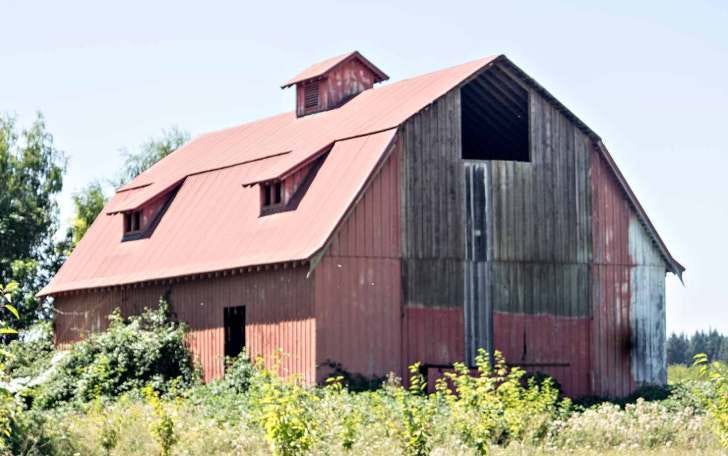
Above: carpenters, note the way the dormer roofs are on the same plane as the top of the gambrel roof — nice touch.
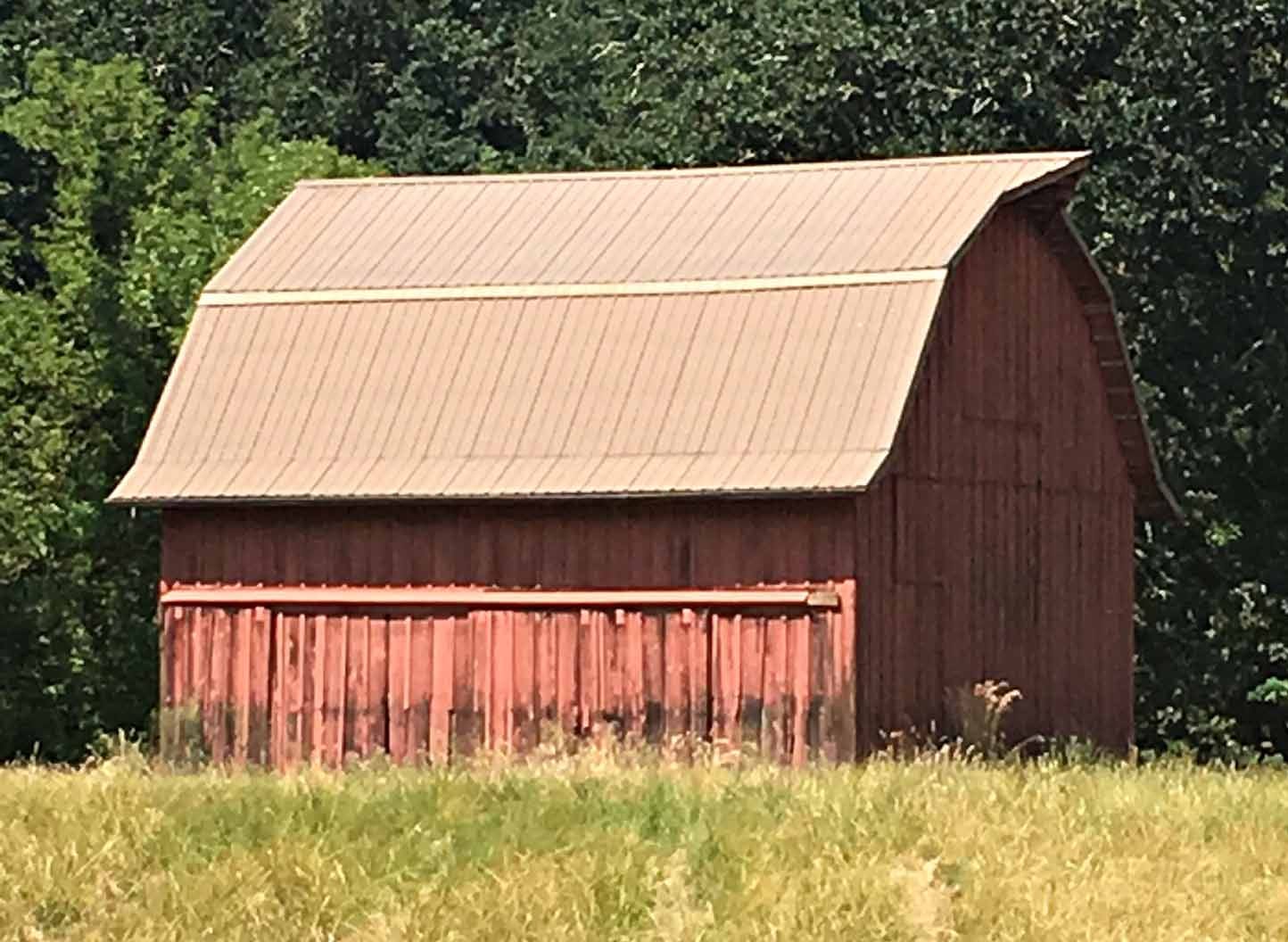
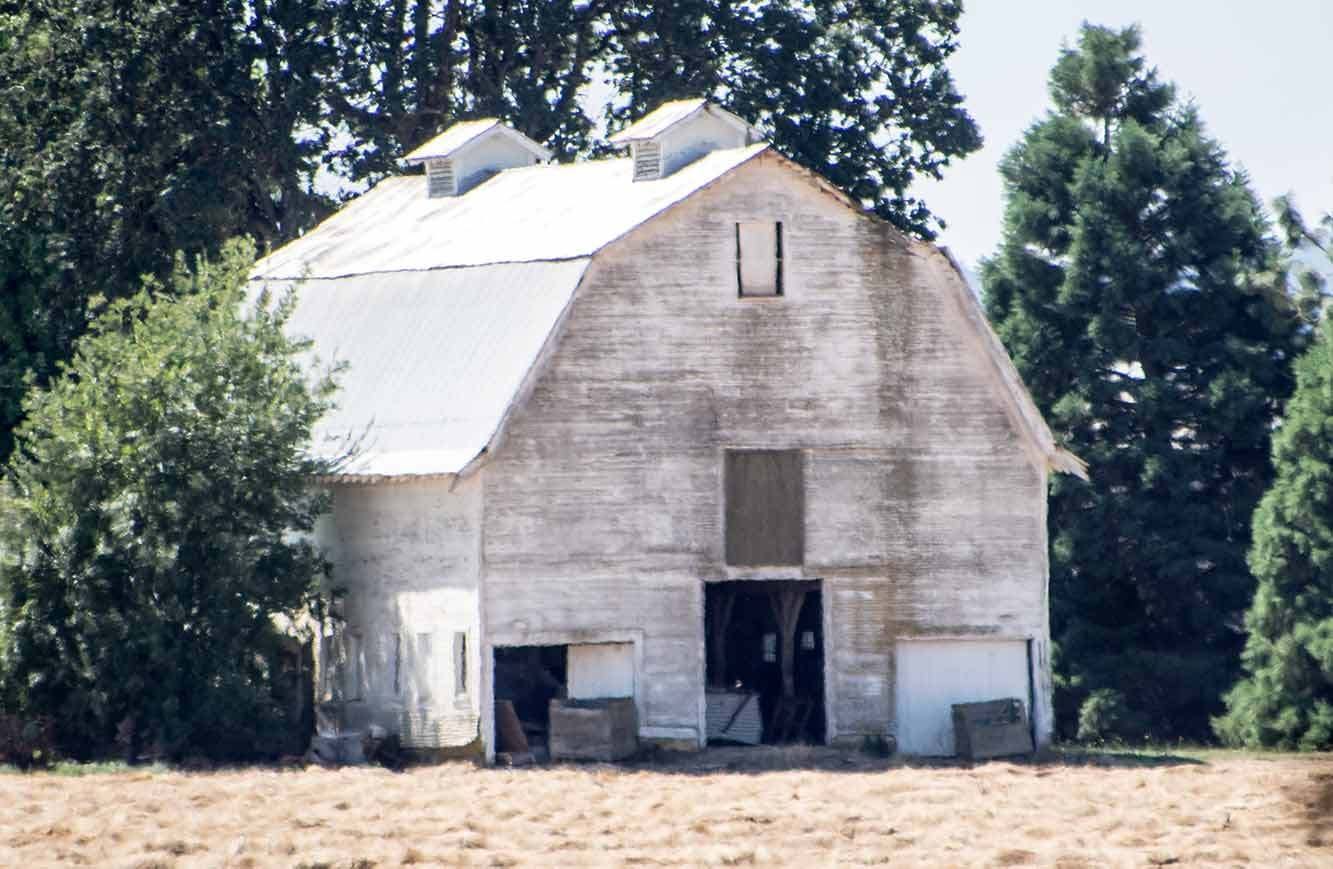
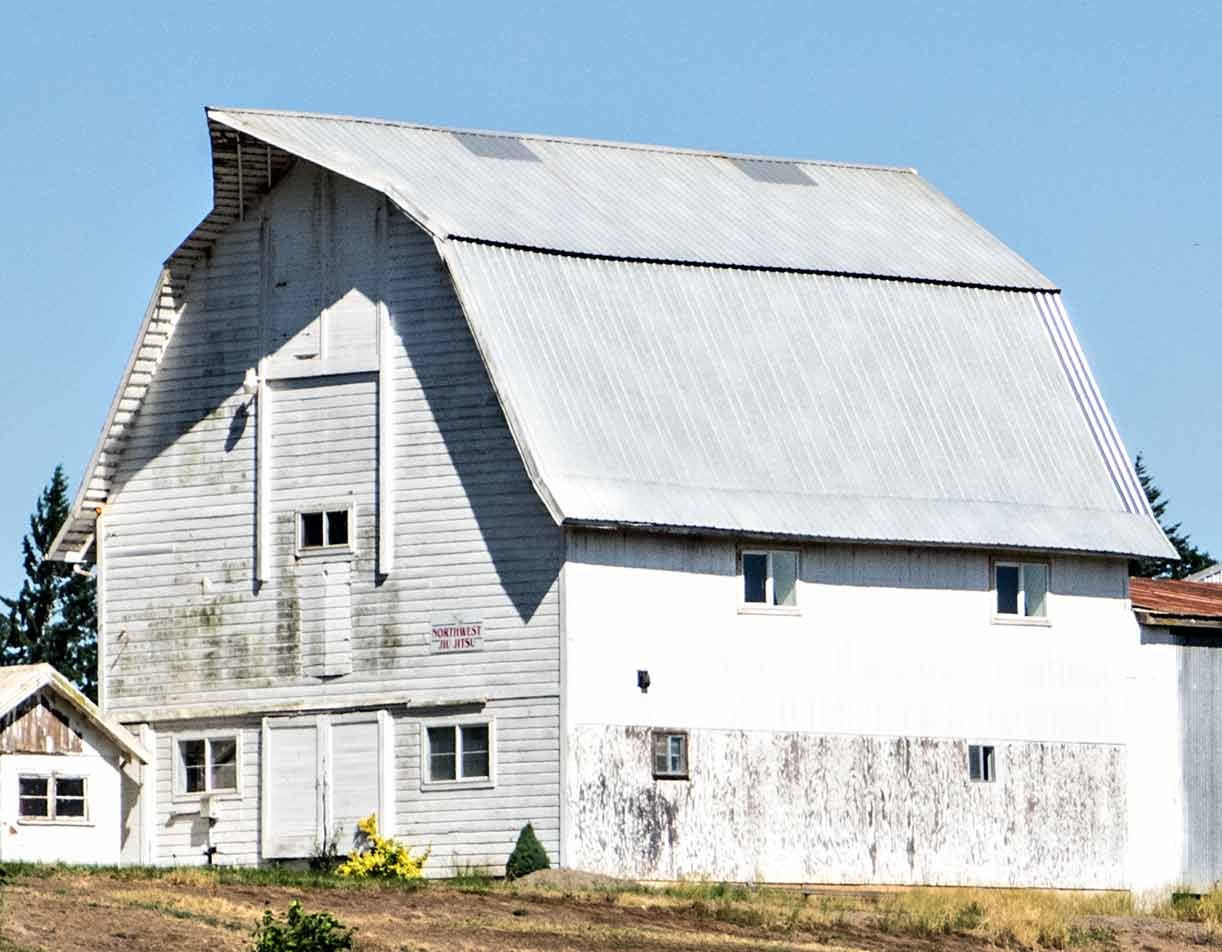
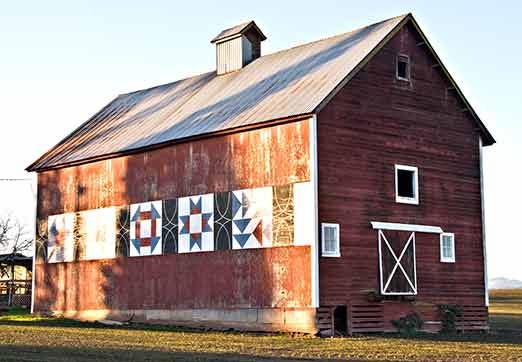
Above: By side of road near Carlton on Hwy 47, southwest of Portland. Notice how straight the eave line is, meaning the barn’s foundation is sound — no sag. I always look for straight-across eaves.
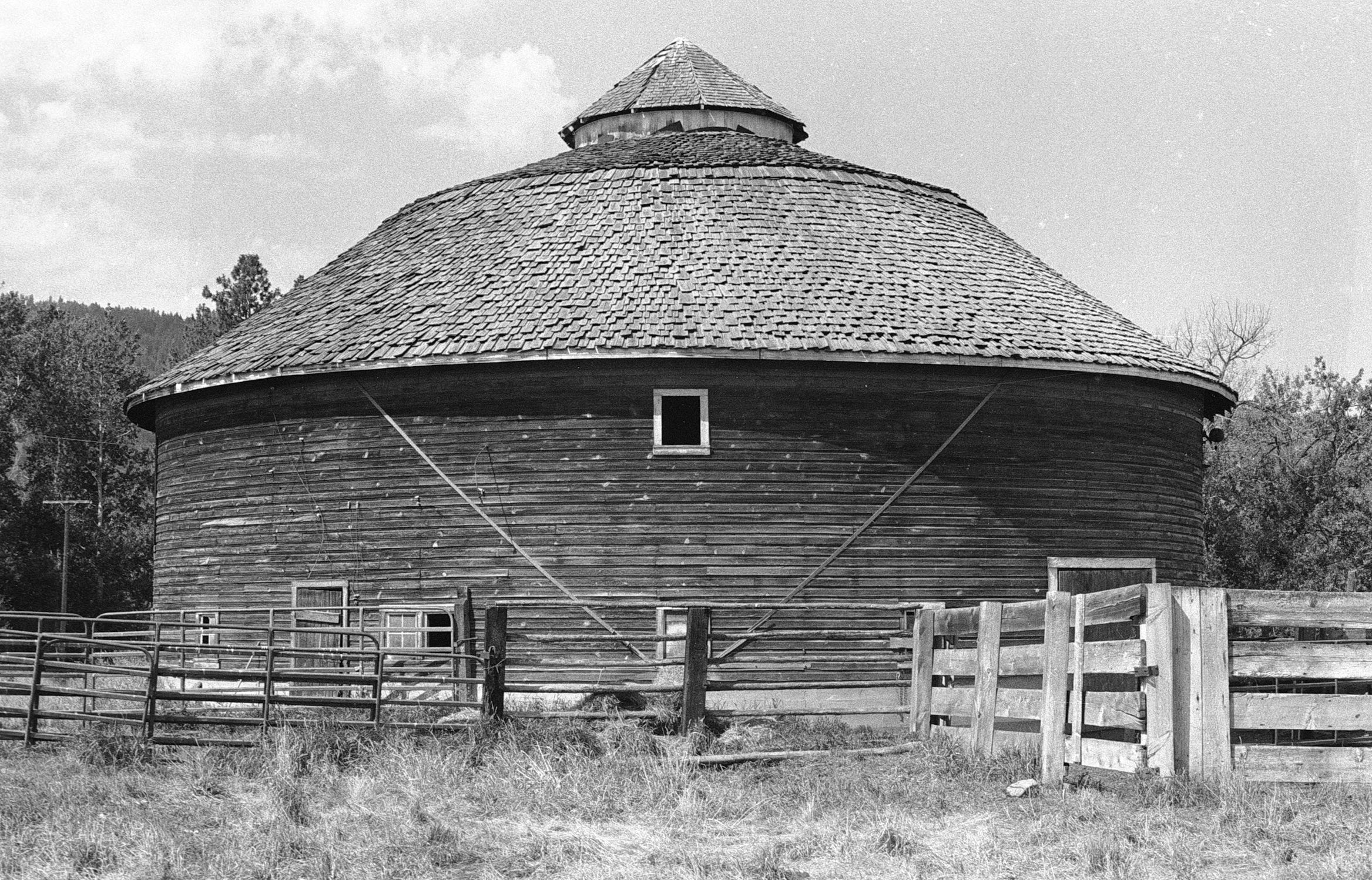
Imagine driving down a country road and coming upon this beauty. Of interest to builders: note the cables (or maybe rods), which evidently provide structural (shear) support, tying plate and sill together with triangulation.
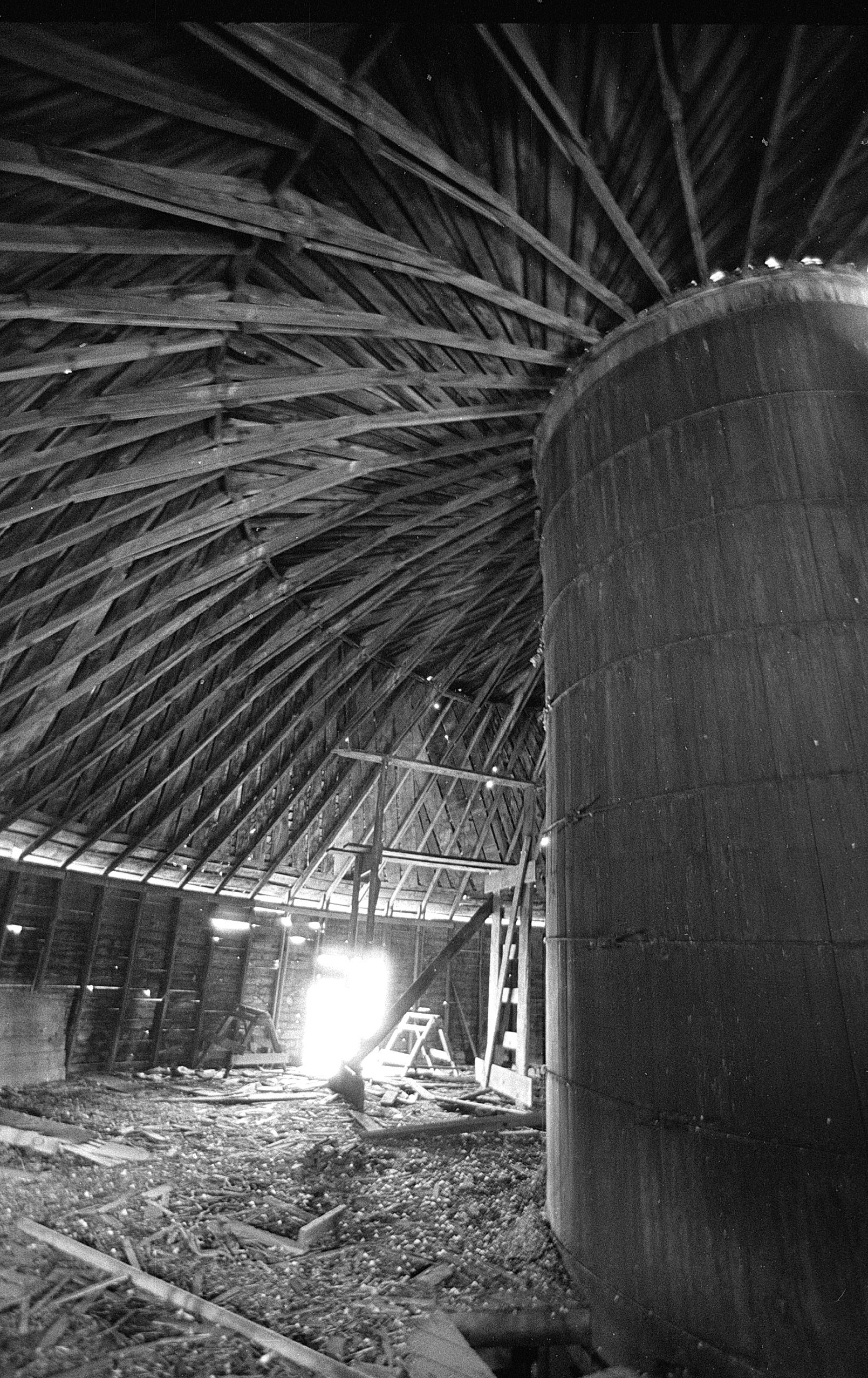
Trusses (much stronger than rafters) are nailed together 2 by 6’s. Here they span from perimeter walls to silo at center
In a way, this framing is like a giant yurt.
Shop talk: it looks like the break in the roof line (look back at exterior shot) occurs at the peaks of the trusses.
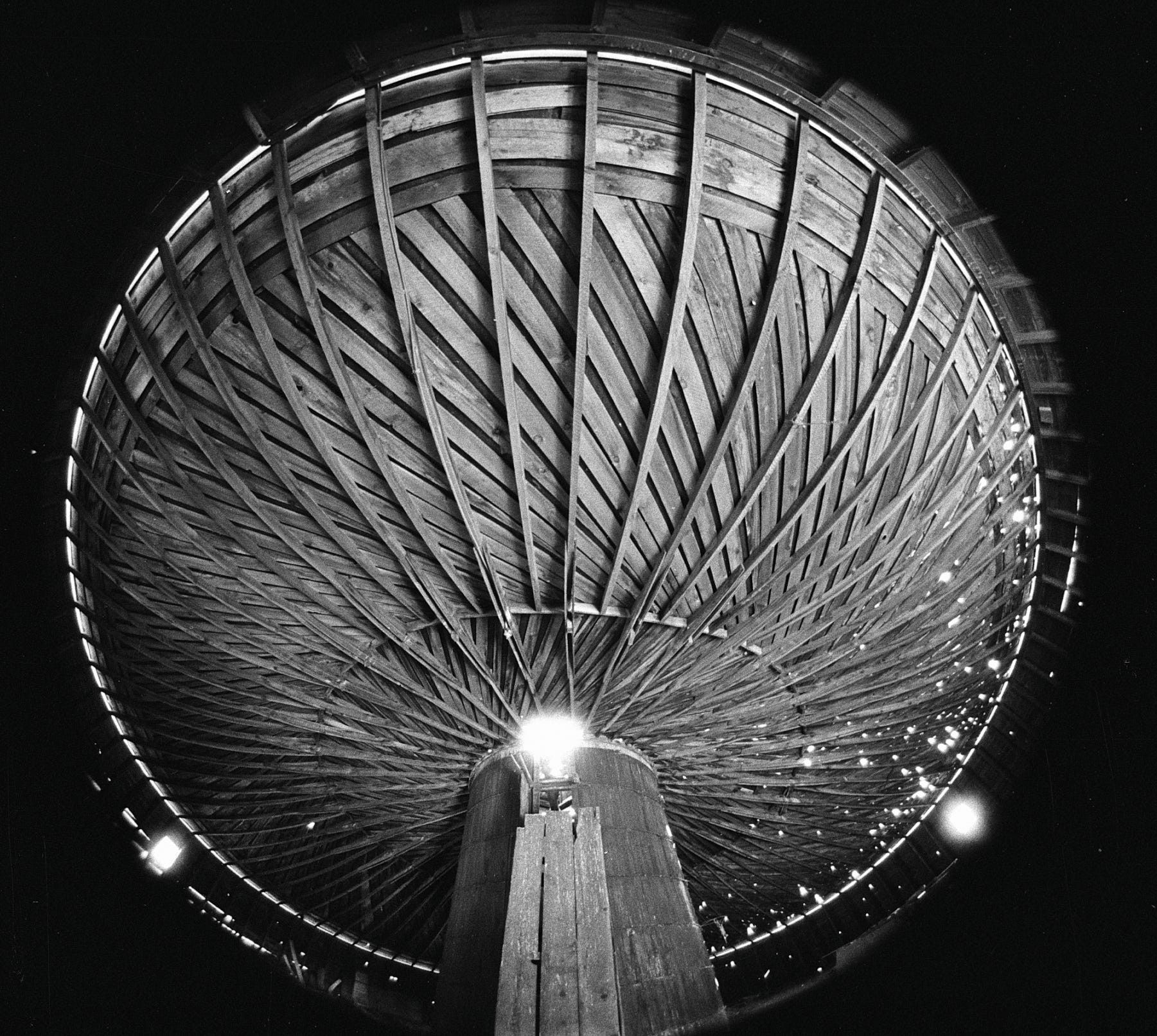
Above: fisheye shot
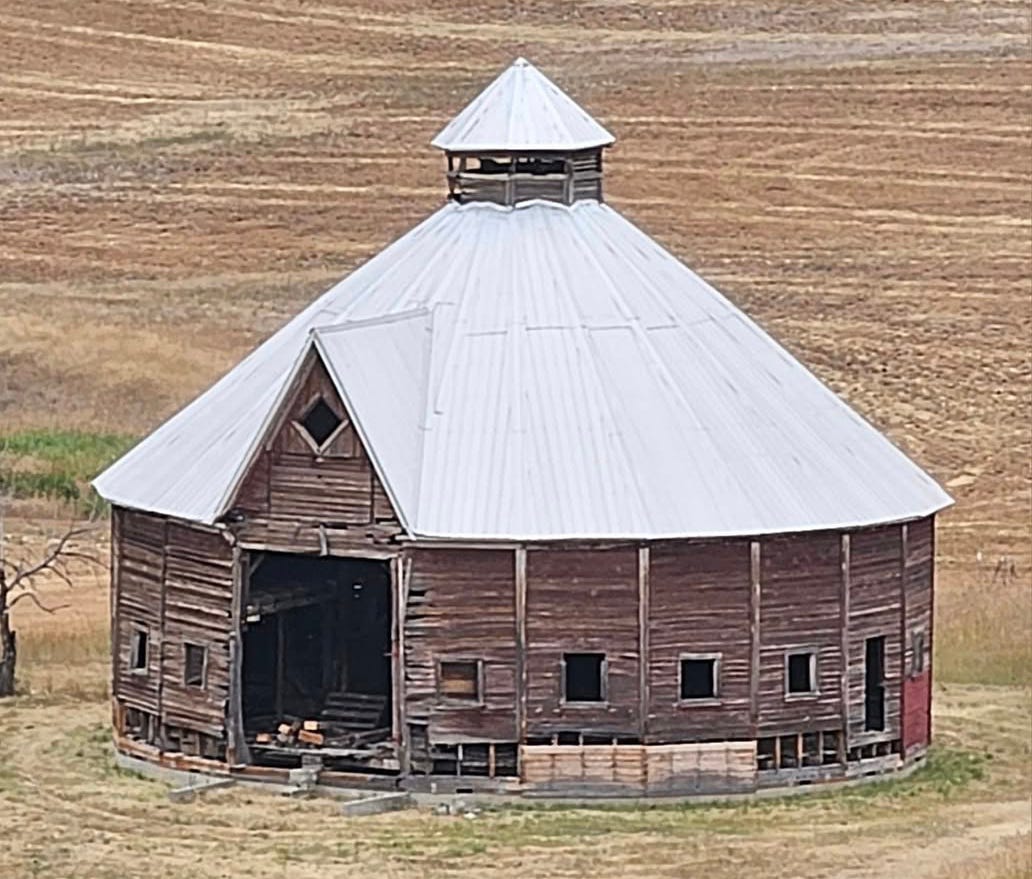
Above: 18-sided Bill Baker Round Barn, near Flora, Oregon
For the granddaddy of all round barns (in Oregon), see my post:
Huge Round Barn in Oregon
·
Apr 2
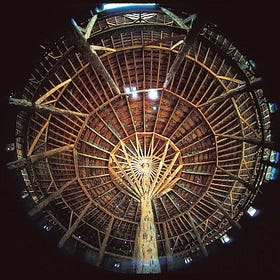
I was delving around in the photo files from our book Home Work, published in 2004. This is the so-called round barn, built by cattleman Peter French and what is now in the Malheur Wildlife Refuge in southeast Oregon.
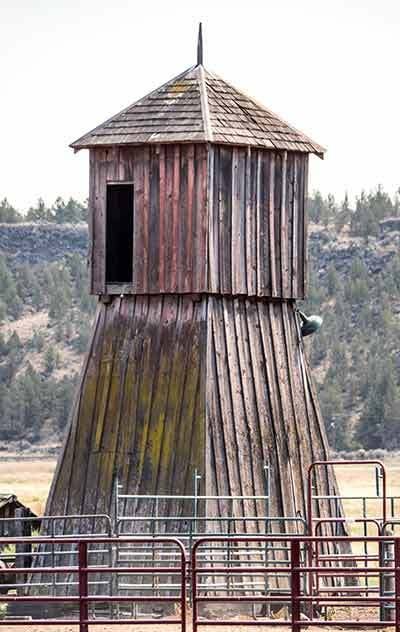
I ran across this water tower when heading to Prineville to visit my friends Lew and Krystal. Lower sections of water towers are typically canted like this to provide added strength for the weight of water, which is inside the (usually wooden) tank in the upper section.
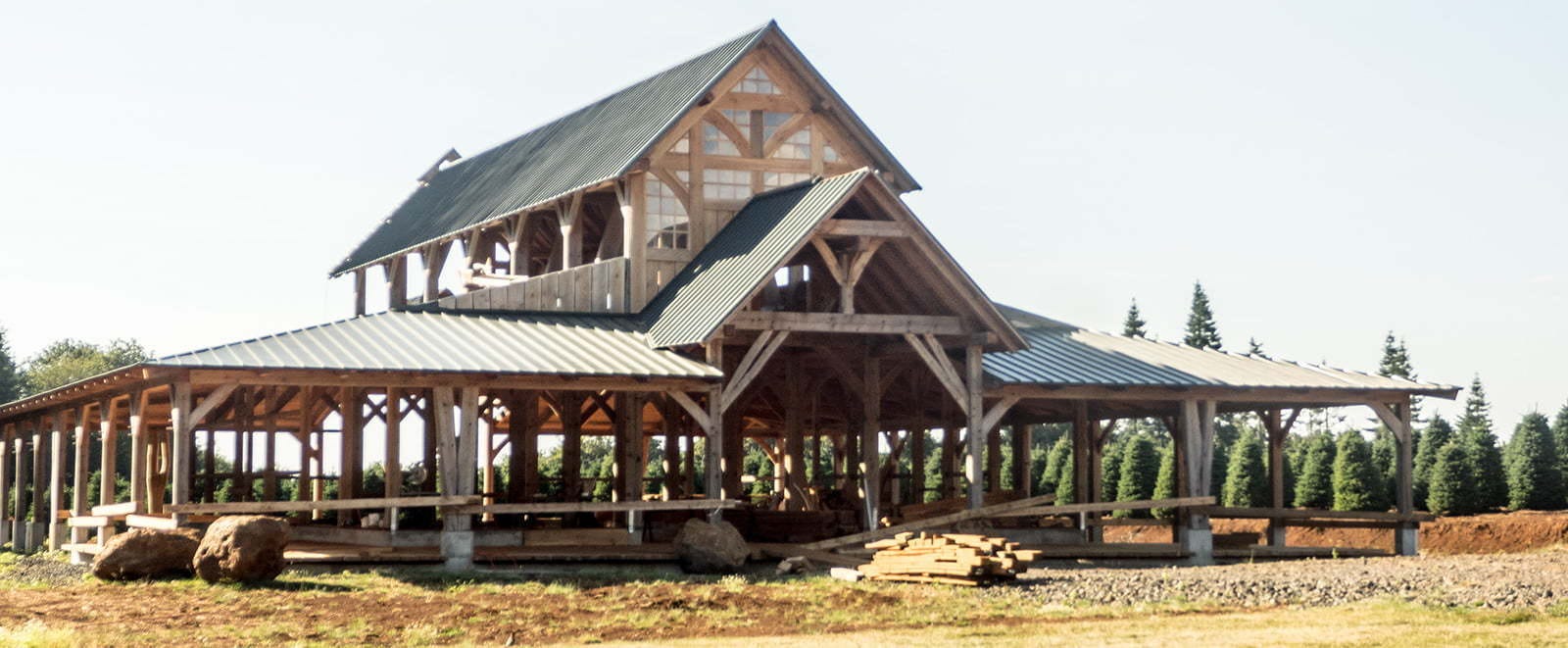
The afternoon that I was photographing the curved-roof barn shown at the top of this post, I met Mackenzie Strawn, a carpenter who had a shop next to the barn. When he learned of my interest in barns, he asked if I’d like to see a unique timber framed horse barn in the neighborhood. Well, yeah-uh!
I shot these photos in 2014, when the barn was still under construction. The owners were publicity-shy, and I agreed not to use their names, or give the location.
Notice the curved rafters, put together in classic timber-frame style, with mortise and tenon connections made with wooden pegs.
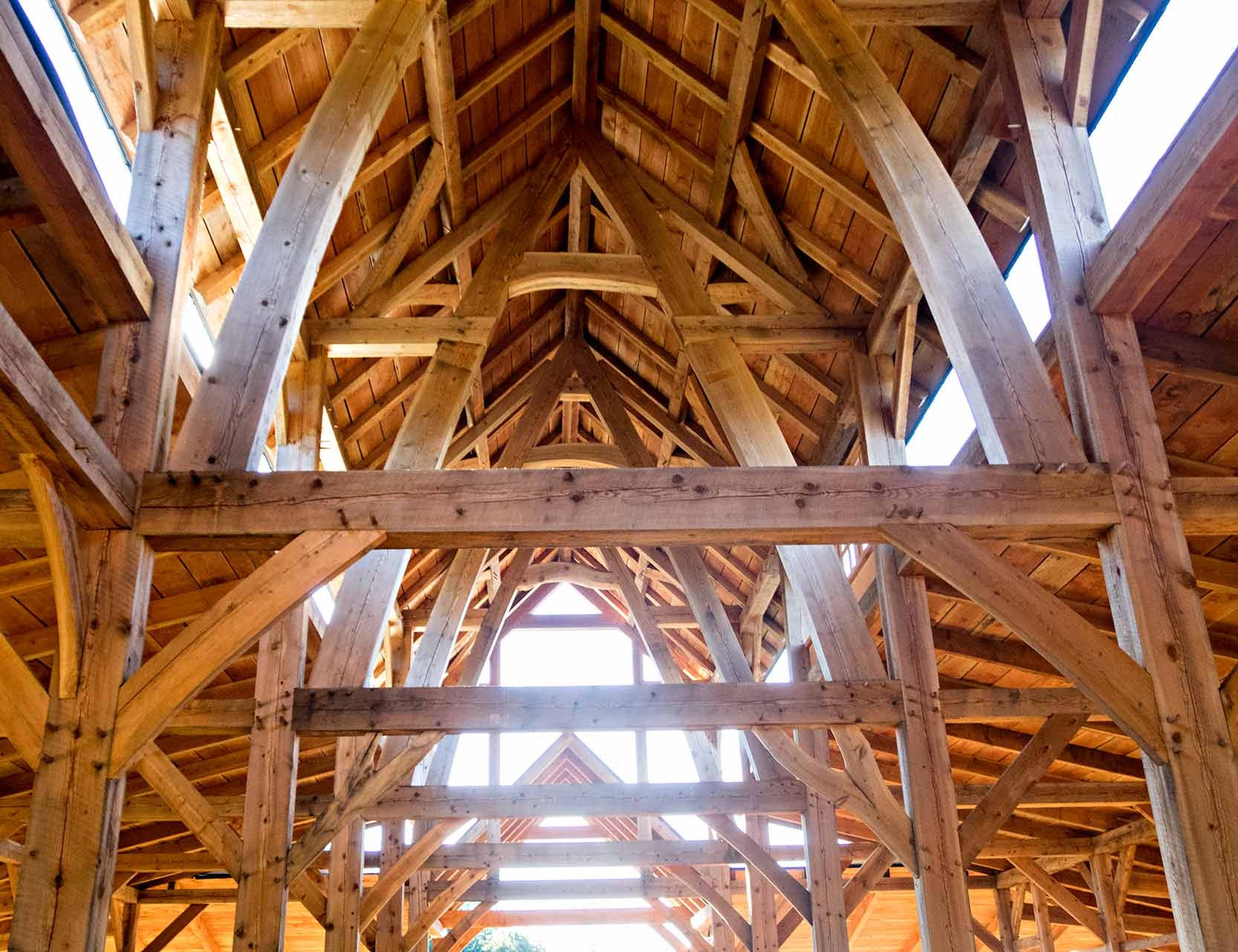
All I gotta say is wow!
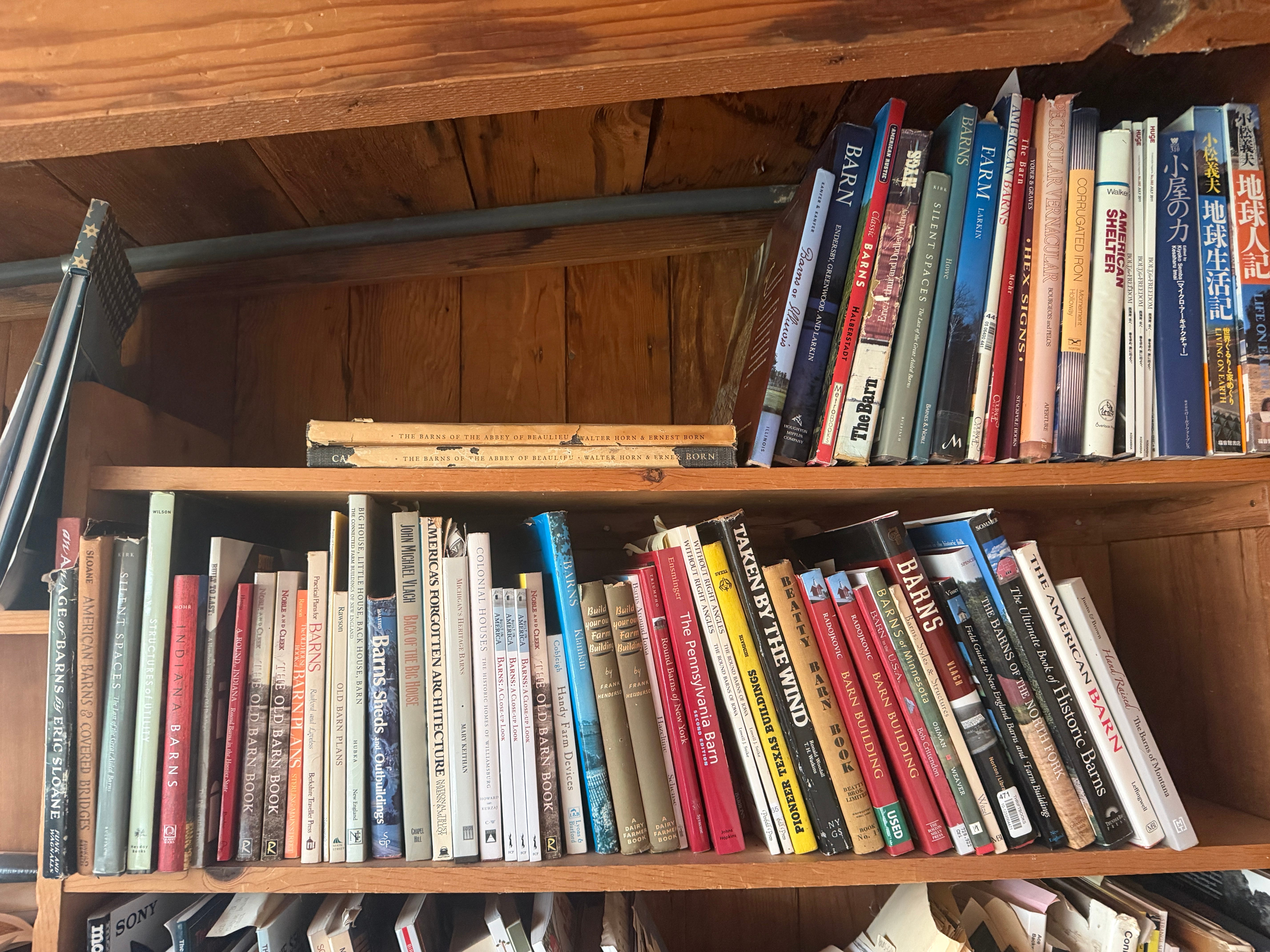
I have over 50 books on barns, some of them rare, that I’ll refer to when putting together my book.
Thanks for reading Live From California with Lloyd Kahn! This post is public so feel free to share it.
Comments
Nothing yet. Say the first thing.
Sign in to join the conversation.