
A couple of weeks ago I was discussing Width Of A Circle with Mike Scott, on Twitter. He finds it superior to Station To Station (the song). I absolutely don’t, and at the same time I observed that I don’t think the album Station To Station is really an album, more just the 6 songs Bowie couldn’t remember recording in LA when his cocaine usage peaked and almost killed him.
I think a lot about Bowie.
I grew up with him. I was 11 in July 1972 when Starman on Top Of The Pops changed pretty much everything for my generation.
So, I thought I might go through the decade and make a few observations. This will take us to Station To Station. Part 2 will begin with Low.
I’m not going to grade the albums.
The Man Who Sold The World
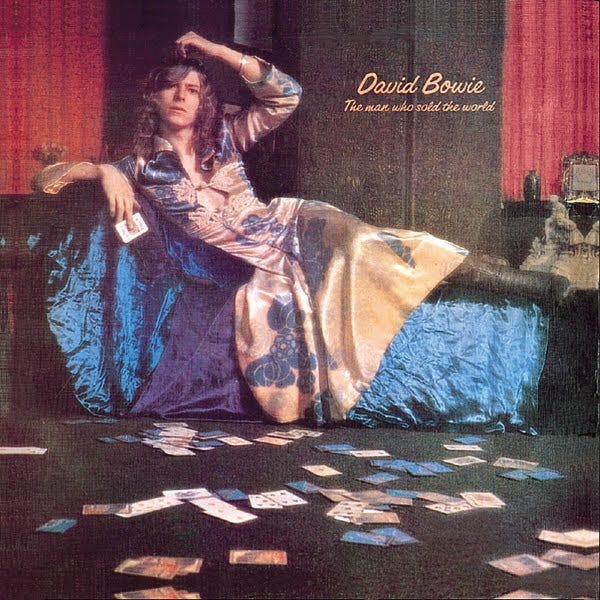
Meeting Mick Ronson was arguably the most important moment in Bowie’s career. I can see Bowie eventually satisfying his huge ambition without Ronson, but I’m not sure if he’d have scaled those heights.
By 1970 Bowie was already an accomplished songwriter, and a strong singer, but he wasn’t really breaking any new ground. And he couldn’t seem to find a look which would separate him from the pack of wannabes. However hard he tried. Even wearing a man’s dress. What Ronson brought was huge. He was a brilliant guitarist with real stage presence. He could be sophisticated, he could be very direct. He was a great arranger - strings and piano parts came easily to him. And he knew musicians. He brought Woodmansy (and later, Boulder). He probably spoke a language they understood far better than Bowie did, at the time. With Ronson, Bowie finally had someone he could throw ideas at on a daily basis. In my experience, it’s difficult to write when I don’t have anything specific to write for. With Ronson around, I believe, Bowie’s songwriting really began to flourish, and he began to own his voice.
Not that things were fabulous, immediately, but there are some great tracks on The Man Who Sold The World. What’s missing from the album is the arch, the camp that morphed into glam that we find on the subsequent records. One could almost argue that there’s a little too much Hull and not enough Hadden Hall. Too close to Jethro Tull and not close enough to The Velvets. One could almost surmise that Bowie and Visconti (the producer) believed that Ronson was all they needed. Their saviour. No, they needed a proper musical vision, and a novel presentation, too.
Standout tracks - The Man Who Sold The World, Black Country Rock.
Hunky Dory
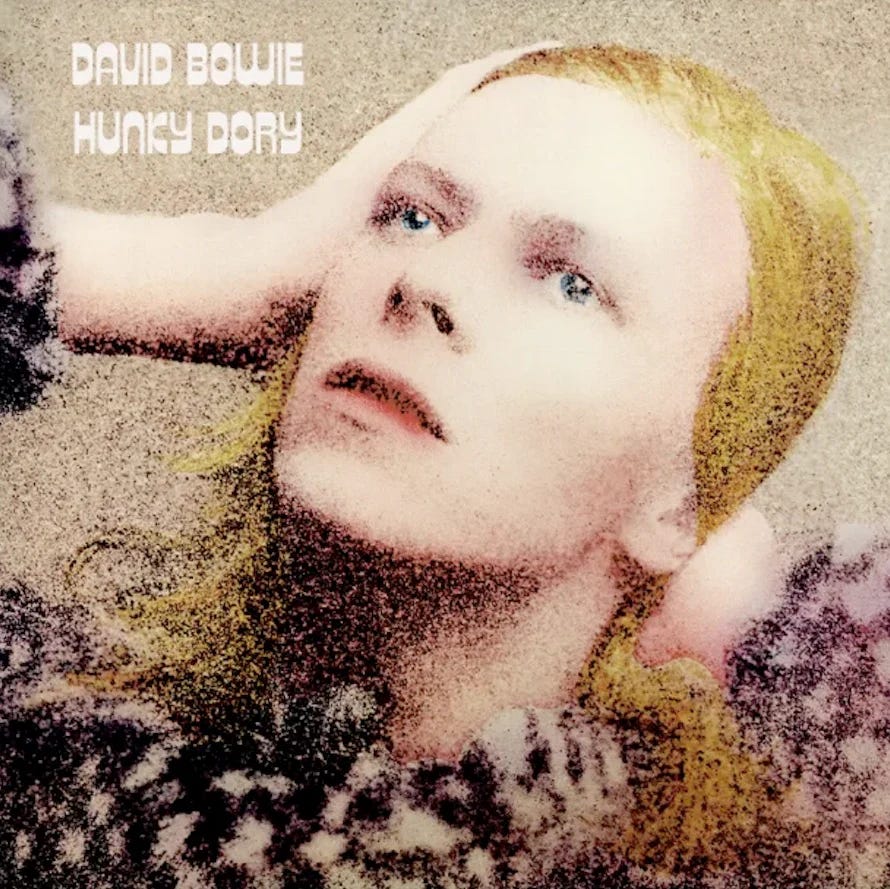
The Man Who Sold The World didn’t give Bowie the stardom he so desperately craved, so he went back to the drawing board. Or more specifically - the piano. I can’t be sure, but it certainly sounds to me like the vast majority of his pre-Hunky Dory work were guitar compositions. These new songs were different, and better. Much better. There’s a lighter touch to the lyricism, too, and there’s humour, there’s camp. There’s something that sounds a lot like glam, but glam hasn’t happened yet. Ronson, who quit, only a few months before, is back, and with a vengeance. Can Life On Mars really be his first recorded string arrangement? Can Life On Mars really be written by someone who has only recently taken to composing on the piano? Rick Wakeman, who plays on the recording was blown away by the sophistication of the piece. Maybe he should have accepted Bowie’s offer to join The Spiders?
Bowie’s early 70’s Nietzsche fascination/obsession is well documented and surfaces on a few occasions on TMHSTW, most notably - The Supermen
Strange games they would play then
No death for the perfect men
Life rolls into one for them
So softly a supergod cries
Which is a little heavy handed, I’d say. Lovely. But not world changing.
Oh, You Pretty Things, on the other hand…
Look out at your children
See their faces in golden rays
Don’t kid yourself, they belong to you
They’re the start of the coming race
The Earth is a bitch, we’ve finished our news
Homo Sapiens have outgrown their use
All the strangers came today
And it looks as though they’re here to stay
Oh, you pretty things (oh, you pretty things)
Don’t you know you’re driving your Mamas and Papas insane?
Let me make it plain
Gotta make way for the homo superior
This is a quantum leap in songwriting. And let’s be clear - the term homo, wasn’t exactly common British slang in 1971, but when a bloke in a dress, who has another song entitled Queen Bitch, sings this, he surely has more in mind than spreading the Thus Spoke Zarathustra doctrine. Right? And the light, playful lyrical touch, avoiding the didactic, gives the listener license to enjoy, to find their understanding. I know Bowie was a little old school, in this respect, and was rather defensive about his songs, and their (alleged) meaning. He felt this must necessarily be what the writer intended, what (he) says it is. He rather pompously commented that he didn’t think Peter Noone, really understood the Oh, You Pretty Things lyric. The Death Of The Author was written in 1967, but Barthes was not widely studied outside (or inside) France for some time. I’ll cut him some slack on this. Still, I must admit I have always found his position strangely disappointing, and confusing, since in just a couple of years he’s begin using the Boroughs’ Cut Up method… Either way, Oh, You Pretty Things is a huge step in the right direction, and actually got him back on Top Of The Pops (he was on in 1969 with Space Oddity) playing piano for Noone. Or so I read, I can’t see him.
There are no clunkers on Hunky Dory, all the songs are good or great (with the possible exception of Song For Bob Dylan) we all have our favourites, and least favourites. I don’t love Changes. But that doesn’t mean it isn’t fabulous. And Fill Your Heart and Kooks are perfectly counterbalanced by Quicksand and The Bewlay Bothers. If we’re rating his albums, which I decline to do, right now, none would be above this one.
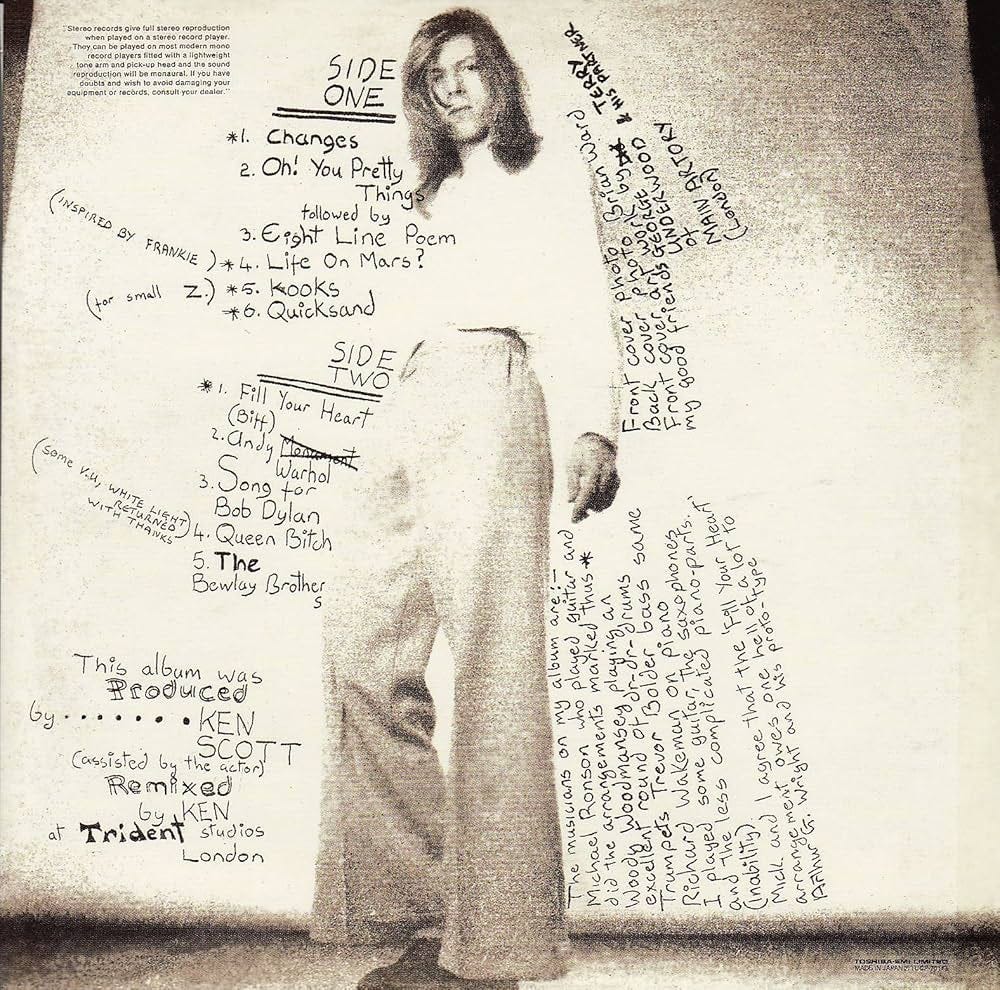
It sold 5,000 copies.
The Rise and Fall of Ziggy Stardust and the Spiders from Mars
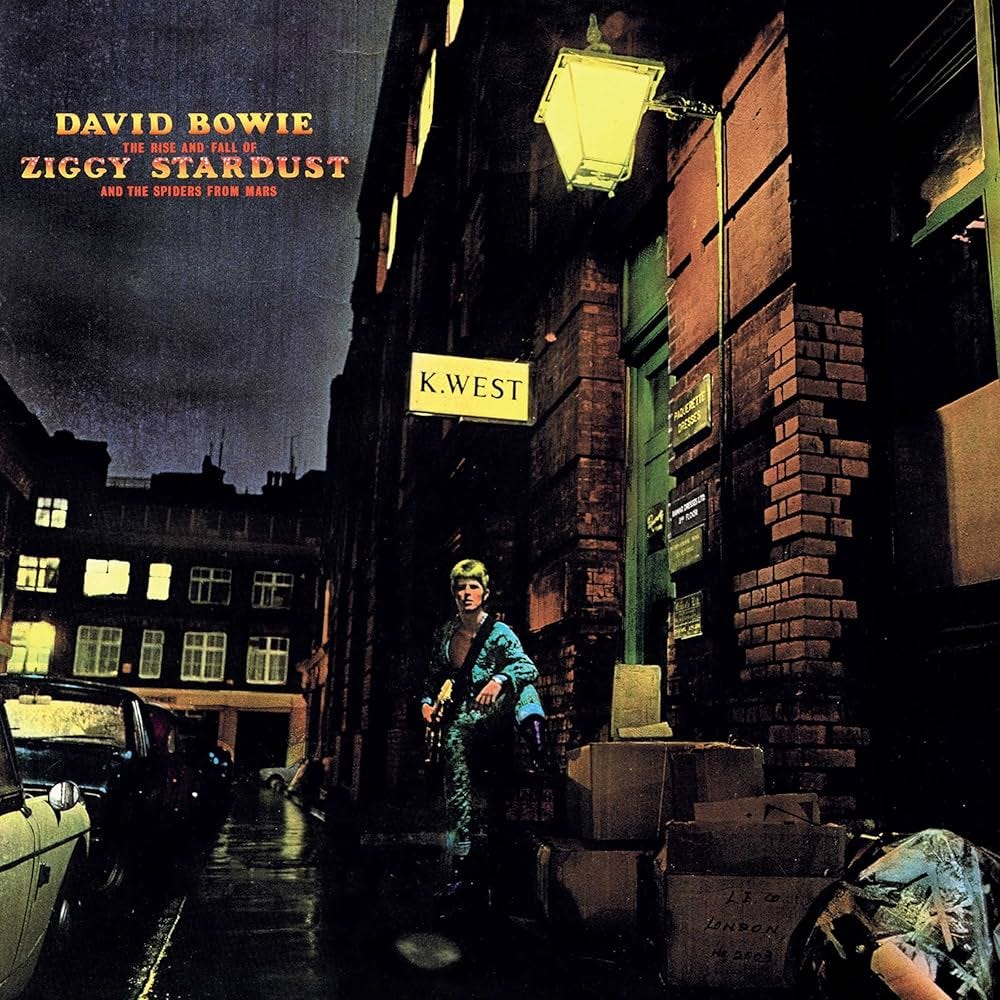
He was already working on Ziggy before Hunky Dory was even released. I didn’t know that until I started writing and fact checking this piece.
From Wikipedia -
<Hunky Dory was recorded in the middle of 1971 at Trident Studios in London, with Ken Scott producing. The sessions featured the musicians who would later become known as the Spiders from Mars – Mick Ronson (guitar), Trevor Bolder (bass), and Mick Woodmansey (drums). According to Woodmansey, Hunky Dory and Ziggy Stardust were almost recorded back-to-back, but the Spiders realised that most of the songs on Hunky Dory were not suitable live material, so they needed a follow-up album with material they could use on tour.>
This completely undermines the argument I’d been working on in my head for several years, which went something like -
After the failure of Hunky Dory, at the same time as witnessing the success of T.Rex and the birth of Glam, Bowie decided he needed to dumb down his product, and focus more on the presentation.
Oh, well. Maybe not, then.
Nonetheless the songwriting, and the production on Ziggy is markedly less nuanced and more ‘straight ahead’ than Hunky Dory. Which made it not only a better fit for a live show, but also for mainstream radio and TV.
And… Bowie was definitely watching T.Rex. See Lady Stardust.
And still… and I’m pretty adamant on this, none of what happened next would have happened without the new hairdo.
As she tells it in Me And Mr. Jones, Suzi Fussey visited Hadden Hall to cut Angie’s hair, but Angie had other plans. David would look great with short hair, she said. Suzi agreed. No rock stars had short hair in 1972. Bowie was almost bullied by the pair into the idea. Eventually he came around, he showed Suzi photos he’d seen in Honey magazine of models wearing Kansai Yamamoto designs. They sported fire red hair. Bowie asked Suzi if she thought she could dye his hair that colour…
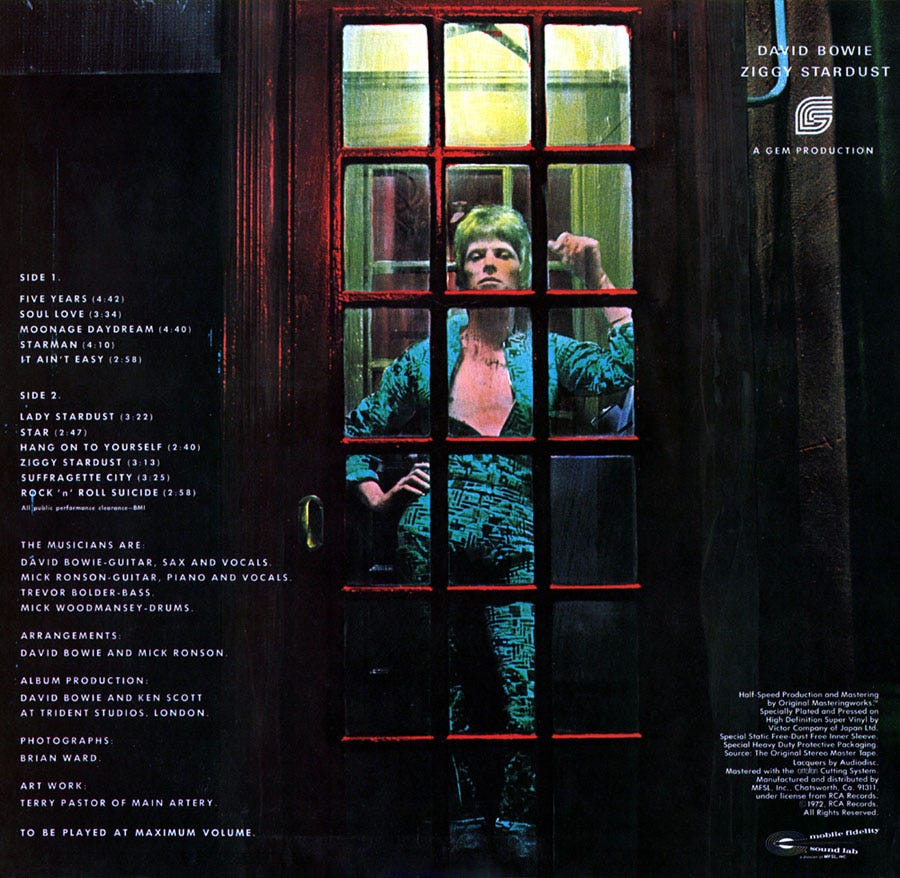
Like many born 1961 I know Ziggy pretty much note for note, start to finish. But still, I feel I should listen again, now, before continuing.
Five Years
Make no mistake, this is one of the great album openers. It is so brave. So stripped bare - drum beat, nothing else, then just vocal bass and piano. No harmonies, no Ronson slight on the Les Paul. The build isn’t subtle, it’s just intense. Strings complicate and confuse, as the narrator loses his composure, and then some. Why would you stay calm if you only had five years?
Some of the writing isn’t great. But most of it is. Enough is. If we look at individual lines we can recoil with an occasional “Ugh!”. But the WHOLE is magnificent, and that’s because the whole is pulled together in the performance.
A girl my age went off her head
Hit some tiny children
If the Black hadn't have pulled her off
I think she would have killed them
A soldier with a broken arm
Fixed his stare to the wheels of a Cadillac
A cop knelt and kissed the feet of a priest
And a queer threw up at the sight of that
I think I saw you in an ice-cream parlor
Drinking milk shakes cold and long
Smiling and waving and looking so fine
Don't think you knew you were in this song
And it was cold and it rained, so I felt like an actor
And I thought of Ma and I wanted to get back there
Your face, your race, the way that you talk
I kiss you, you're beautiful, I want you to walk
Something not talked about much. Bowie’s chops as a singer. He’s right up there. One of the reasons he recorded so quickly is that he almost never sang out of tune. If he knew what he wanted to sing, he’d sing it.
Soul Love
This is a tough one for me, today. It’s so close to being perfect. It was my favourite, aged 12. And I can see how it would be for many. But not for me, anymore
And it’s all down to the choice of the title. Soul Love. It’s dull. Amidst the explosion of imagination that Ziggy is… it’s dull.
Almost all the other elements are wonderful
Stone love, she kneels before the grave
A brave son, who gave his life to save the slogan
That hovers between the headstone and her eyes
For they penetrate her grieving
Is exquisite. So exquisite.
All I have is my love of love
And love is not loving
Not so much. But it does sing beautifully.
I’m also a massive fan of Bowie’s sax playing. This solo is perfect.
Moonage Daydream
Is where things things get more difficult/awkward for me because, again, 11 year old me loved this, and this was an album for teenagers to play loud. Not for for who I am now…
Still, I take issue with the jive talking. And this is the song, along with Rock’n’Roll Suicide, that made me think that Bowie willfully dumbed himself down, adopting the already clichéd lexicon of rock’n’roll.
Freak out in a moonage daydream, oh yeah
Musically, it’s absolutely up to the task, and there needed to be a song or two to showcase Ronson’s chops, right?
Starman
If I’m to be honest, Starman is far more guilty than Moonage Daydream when it comes to jive talking-
Some cat was layin' down some rock 'n' roll
"Lotta soul, " he said
Then the loud sound did seem to fade
Came back like a slow voice on a wave of phase
That wasn't no DJ, that was hazy cosmic jive
But he pulls it off with a chorus sublime and somehow innocent, naive, even (the narrator, not Bowie).
Let the children lose it
Let the children use it
Let all the children boogie
It Ain’t Easy
It’s a placeholder, but it’s a great one. But one could imagine that The Spiders, in 1972, could have taken almost any blues ‘standard’ Bowie brought to them and they would have made it electric, and their own.
Lady Stardust
Perfection. For me it’s the best Bowie song of the Glam era (which ends, for me, before Diamond Dogs). Also there’s sweetness and a warmth in Bowie’s acknowledgement of Bolan as the one who paved the way for him. No guitars, no strings, just majestic performance of a sublimely beautiful song.
Star
Just watch me, now…
Hang On To Yourself
Just as Quicksand, Life On Mars and The Bewlay Brothers needed Kooks and Fill Your Heart, Five Years, Lady Stardust and Rock’n’Roll Suicide needed Star and Hang On To Yourself. It’s a slight song, but it’s fronted by a marvelous vocal performance -
Oh, she's a tongue twisting storm
Comes to the show tonight
Praying to the light machine
She wants my honey, not my money
She's a funky-thigh collector
Laying on electric dream
Isn’t really that great, on paper. But it’s not on paper. It’s coming through your stereo (at maximum volume). And that’s how it works.
Also… funky-thigh collector is kinda awesome.
Ziggy Stardust
I’m not sure I’m brave enough to go here.
It’s not even close to the best song on the album, but somehow this recorded performance perfectly encapsulates the essence of The Spiders and so it will forever be - Ziggy. Ronson is on fire, and to the fore, but so are all four of them. No need for more from me, here.
Suffragette City
Like Hang On To Yourself, it’s light fare, and there’s jive to the nines, but the delivery is where it’s at, and Bowie and The Spiders make such a glorious rock’n’roll noise. The vocal delivery, AGAIN, is magnificent and the choice of Henry, is genius.
Rock’n’Roll Suicide
Hmm.
I thought I’d tired of this one.
Maybe I’m too old to be listening to this, and I certainly can’t listen as I did when I was a teenager. But oh, my… even now I can feel the power of this song. It would be pointless to point out the better lines and the weaker ones. The whole is relentless. It’s stronger than you or I.
After Hunky Dory Bowie felt like he needed “a follow-up album with material they could use on tour”. After listening to Ziggy, all the way through, for the first time in a very long time I just feel like laughing out loud at his genius.
Oh, no, love, you're not alone Just turn on with me and you're not alone
No matter what or who you've been
No matter when or where you've seen
All the knives seem to lacerate your brain
I've had my share, I'll help you with the pain
You're not alone
Just turn on with me and you're not alone (wonderful)
Let's turn on and be not alone (wonderful)
Gimme your hands (cause you're wonderful)
Gimme your hands cause you're wonderful (wonderful)
This could work, I think…
Aladdin Sane
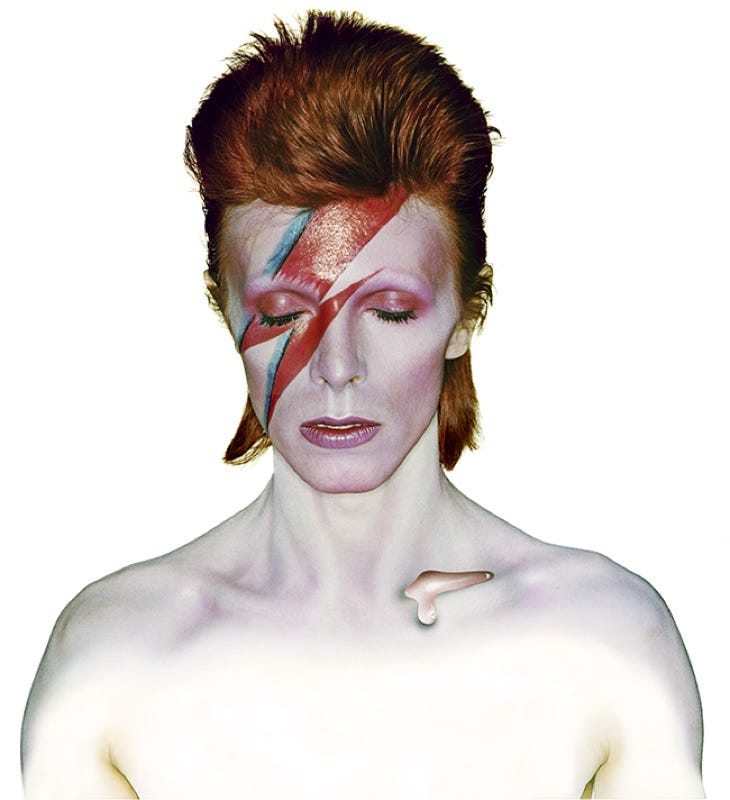
Bowie’s first release as a star.
Written and recorded on the on the road touring Ziggy 1972-3, when he also took time out to produce Transformer, and mix Raw Power. A fame driven workaholic. Is it any wonder he ended up a cocaine addict?
The sound of Ziggy is attractively compact. String section excepted, only four musicians play on the album. For the Aladdin Sane sessions, Mike Garson was added to The Spiders on piano, and there are two extra woodwind/horn players and three backing vocalists. Not compact.
There’s rarely more than one electric guitar playing at any time on Ziggy. Watch That Man opens side one, here, with what sounds like Ronson times two, one left and one right. Maybe one is Bowie? The sound of the album is more expansive, especially with Garson’s piano which adds hints of jazz and the avant garde. His playing dominates much of the album and that’s a twin edged sword. To my mind this sounds like the free rein Ronson was given on TMWSTW. Bowie’s latest infatuation gets the centre stage. At the same time the twin electric guitar sound feels very much Stones influenced, so the inclusion of the frantic glammed up Let’s Spend The Night Together is not hugely surprising. Jagger is even name checked in the Drive In Saturday lyric. What all this adds up to is an album with a rather confused identity. Which makes sense. Bowie wanted to move on from Ziggy, but knew that he couldn’t, just yet, without committing commercial suicide.
So, with all that said, it’s kind of amazing that the album is actually quite good, and good stuff on it is really, really good.
The Jean Genie, which was recorded first and preceded the album as a single is arguably The Spiders at their very finest. It’s a classic Muddy Waters riff, which had been called both Manish Boy, and I’m a Man, and was very much in the public domain by 1972. The sound is more muscular than anything on Ziggy, but it’s still focused, direct. The lyric is a smorgasbord of New York imagery with a little starman/spaceman thrown in for good measure. Also, it’s sexy.
He's so simple-minded, he can't drive his module
He bites on the neon and sleeps in a capsule
Loves to be loved
For a 12 year old in the Peak District, where the nearest thing to cosmopolitan is the Manchester city centre this was shocking and inspiring.
Note Bowie playing harmonica and percussion (perfectly) while singing live on TOTP. I couldn’t do that!
It was kept out of the number one spot in the UK charts by Blockbuster, by The Sweet, which borrows the same riff. Bowie, who was sure he came up with the idea first, allegedly ran into Nicky Chinn, the Sweet songwriter, at the BBC. He said one word - cunt. And then he may or may not have hugged him.
The title track is ambitious, that’s for sure. But it doesn’t really pull it off. The jazz piano and the chunky Les Paul are fighting. Garson wins, but I don’t think that’s what anyone, other than Bowie would have wanted in 1973. Note the On Broadway chords Bowie will use again on Golden Years.
Drive In Saturday was the single released to coincide with the album in April ‘73 and it’s a very different beast. It’s future retro Spiders. It’s doo wop sci-fi with moog and melotron. And it’s musically very sophisticated. Right up there with Life On Mars. I’m guessing this was the song that made Bowie realise he didn’t need his version of All The Young Dudes included on the album. This is better.
Lyrically it does that same thing The Jean Genie does - the imagery is wide screen, and it’s vague enough to be mysterious, and somehow sensual, while at the same time singing about a future impotent society.
It’s a gorgeous piece of music. Listening, today, it still sounds fresh, and surprising.
Panic In Detroit is another example of Bowie taking a simple riff and making a complex song from it. And The Spiders are on great form, again, adding a latin percussive vibe to an almost hard rock track. If RCA didn’t have Life On Mars and Changes in their vaults waiting to be released to the new adoring public, this would surely have been single number three.
Time is a tough one. Every teenage boy in the UK thought it was fabulously risque of Bowie to sing falls wanking to the floor, and the we should be on by now refrain is quite beautiful, but it hasn’t aged well. This is well crafted music for teenagers to make them feel smart, and make them think that you’re a genius. I probably can’t make it all the way through, today. But Ronson’s solo is worthy of mention. It perfectly matches the angst of the vocal.
Revamping The Prettiest Star was probably smart, and it affects a Drive In Saturday Lite feel with the doo wop backing vocals. I recall loving it, but it’s filler, if we’re to be honest. Life must be good when your filler is this good.
The jewel is saved for last. And, finally, Garson’s piano is perfect for Lady Grinning Soul (much better use of the word soul in a song title).
She'll come, she'll go And when the clothes are strewn
She'll lay belief on you
Skin sweet with musky oil
The lady from another grinning soul
Cologne she'll wear
Silver and Americard
She'll drive a beetle car
And beat you down at cool Canasta
Don't be afraid of the room
Touch the fullness of her breast
Feel the love of her caress
She will be your living end
The track sounds as dusky and sensual as the lyrics read.
Ronson’s counterpart acoustic is also shockingly brilliant. Was there anything he couldn’t do/play? The Spiders really sound like they are breaking new ground here, and in no way sound like they are holding Bowie back. And yet this would be the last time they are to be found on a recorded Bowie composition.
Slight aside - By December 1972 I was an avid Bowie fan. I read the New Musical Express every Thursday morning and so I knew Aladdin Sane was coming a LONG time before the release date, so I had the old lady in our local record (and household appliances) shop in Chapel-en-le-Frith order it for me. I had my copy a day or two before any of the major retail outlets in the nearby larger town had the album in stock. This could absolutely never happen today, or even in 1980. But somehow or other, in early 1973, a tiny little shop in a tiny little town got Aladdin Sane first, because they ordered it first…
Pin Ups
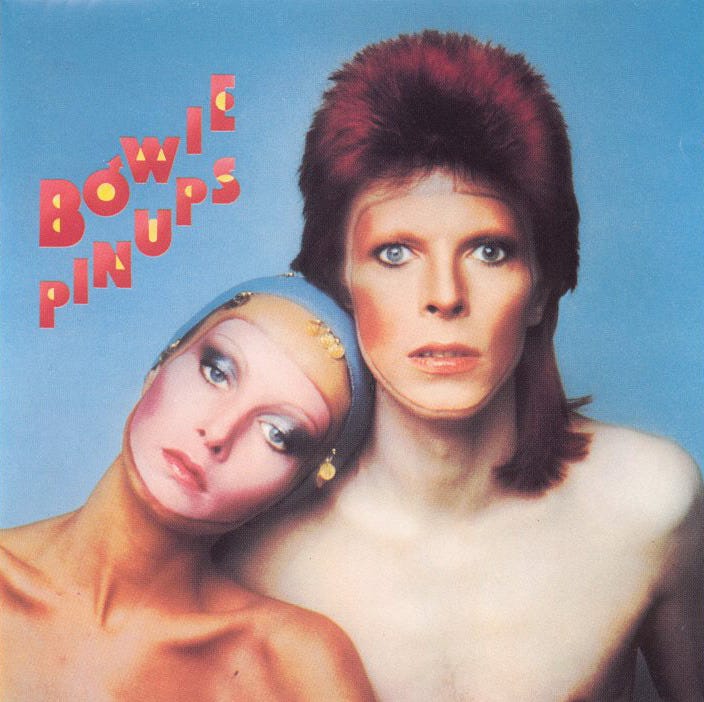
From Wikipedia < By 1973, David Bowie was at his commercial peak. At the end of July, five of his six albums were in the top 40 and three were in the top 15. Bowie’s most recent LP, Aladdin Sane, came out in April, but his label, RCA Records, wanted a new album by Christmas. Having just completed the Ziggy Stardust Tour, Bowie was exhausted from the extensive touring schedule. His manager at the time, Tony Defries, was negotiating for larger royalties with Bowie’s music publisher and recommended he not record any new compositions until negotiations were finished. Although he had intended his next project to be an adaptation of George Orwell’s novel Nineteen Eighty-Four , he devised a record of cover versions as a “stopgap” album. >
The Wikipedia article goes on to state < Following a surprise announcement at the end of the tour that the Spiders were breaking up, tensions were high during the sessions, which was reflected in the tracks. >
Maybe, but I disagree. The band sound fantastic. The SOUND of Pin Ups is superior to Aladdin Sane to my ear.
Highlights - Here Comes The Night, which is epic, and better than the original, I Can’t Explain, Sorrow, Where Have All The Good Times Gone?.
Disappointments - See Emily Play, Shapes Of Things.
Diamond Dogs
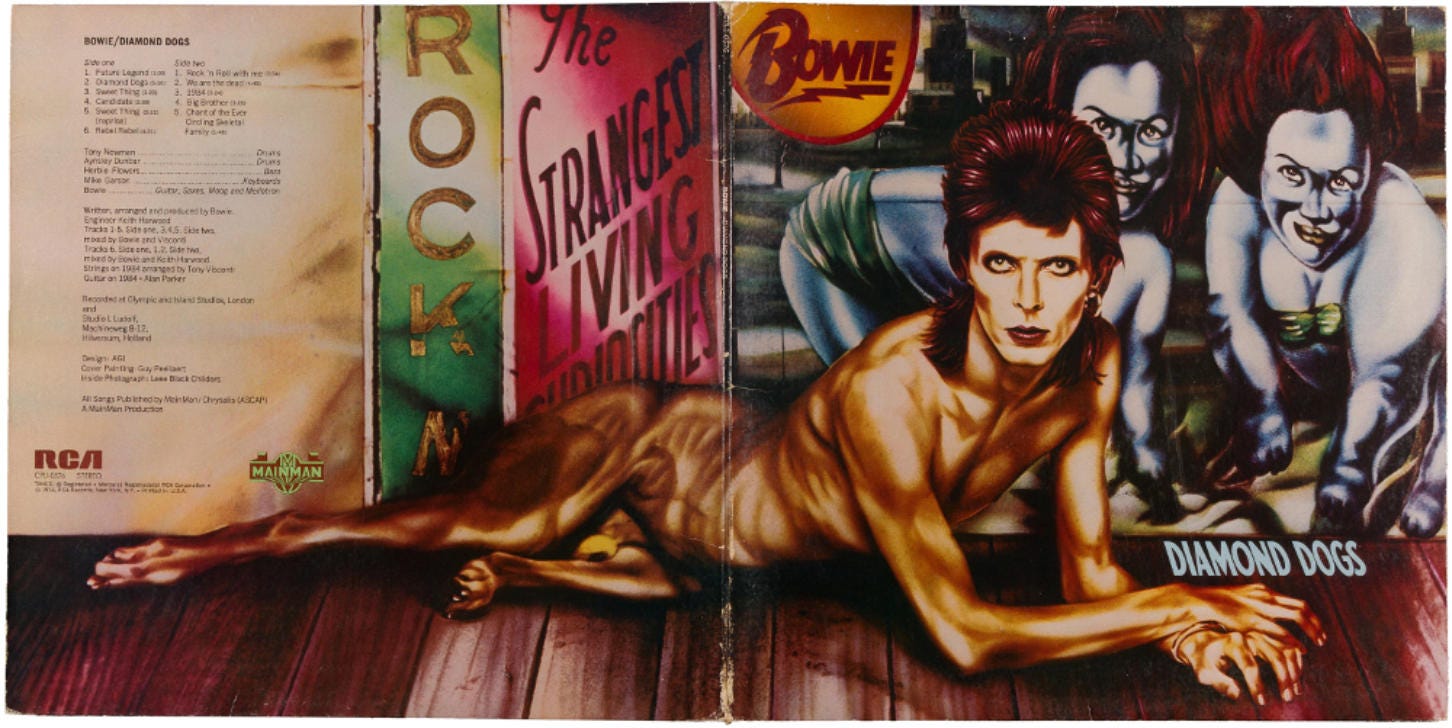
The end of Glam.
Frankly I think he should have ditched the hairdo sooner, but then Young Americans wouldn’t have been such a shock…
These kind of work, for me
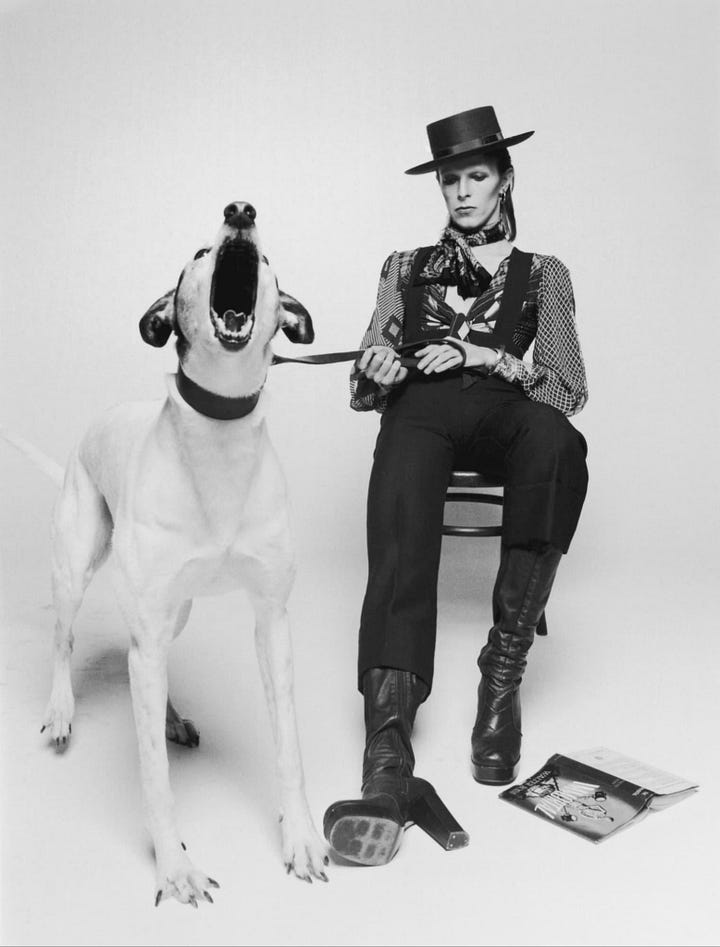
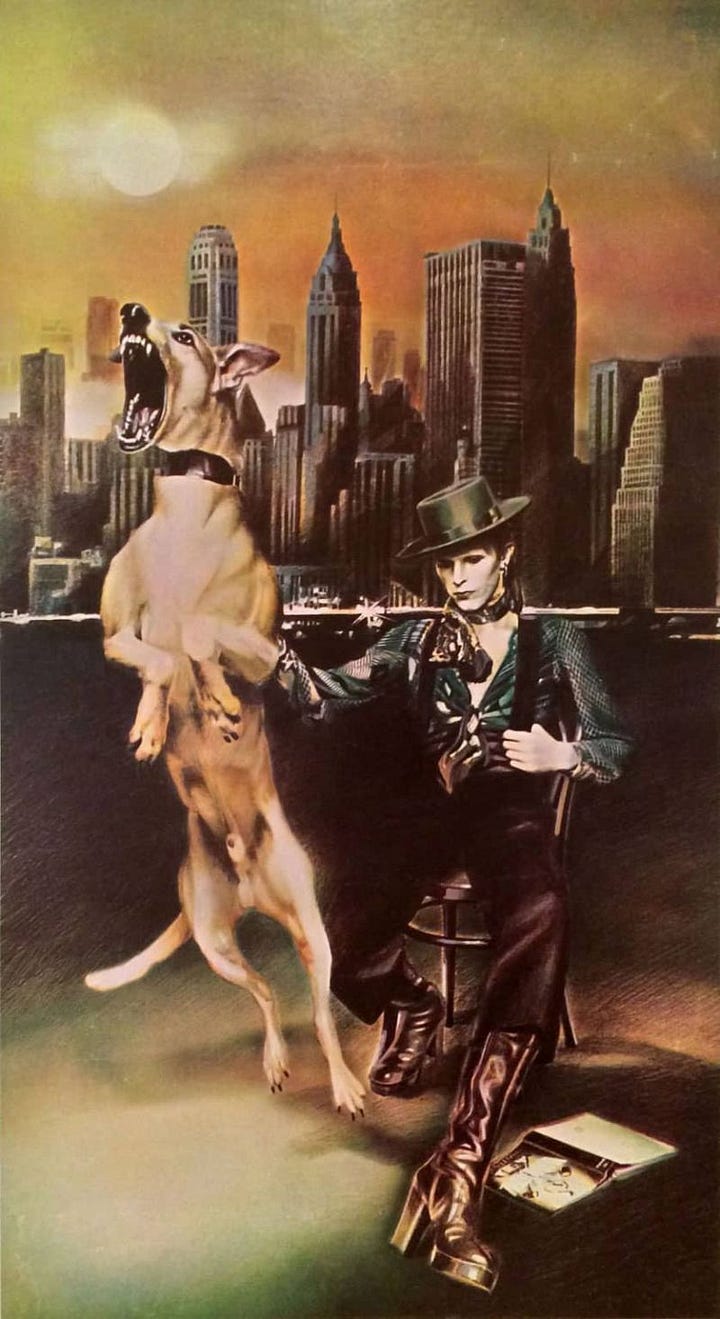
But this?
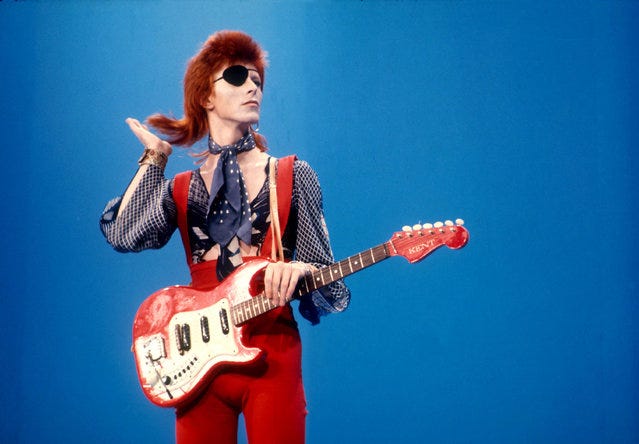
No. He looks lost between ideas.
He was. The 1980 Floor Show wasn’t thought out, or fleshed out and was quickly discarded. But still the idea was for the new album to be a 1984 concept album. That didn’t really happen either, did it? Diamond Dogs is not that…. or is it?
Still, without Ronson, without the Spiders, without Ken Scott or any producer, with only Visconti (string arrangements, mixing) and Garson, really, at his side, he somehow fashioned his best album.
Right now, thinking about it, I’m guessing Bowie fell on his feet with a half assed idea for a record because The Songs Are So Good. He was still at the height of his songwriting powers. Maybe THE highest height. He was used to directing the musicians. Now he was doing much of the playing himself. And, who knew? He was absolutely up to the task.
Dystopian futures are such a cliche, today, but not so much in 1974. Back then, the future was exciting, alluring. Space. The final frontier, etc.
Drive In Saturday ever so gently paves the way for Diamond Dogs, but we teenagers were not ready for Future Legend.
And in the death
As the last few corpses lay rotting on the slimy
thoroughfare
The shutters lifted in inches in Temperance Building
High on Poacher’s Hill
And red, mutant eyes gaze down on Hunger City
No more big wheels
Fleas the size of rats sucked on rats the size of cats
And ten thousand peoploids split into small tribes
Coveting the highest of the sterile skyscrapers
Like packs of dogs assaulting the glass fronts of Love-Me Avenue
Ripping and rewrapping mink and shiny silver fox, now legwarmers
Family badge of sapphire and cracked emerald
Any day now
The Year of the Diamond Dogs
This is not a song. It’s a spoken word piece over an experimental synthetic soundscape. No free jazz BS, though. It’s composed. The guitars that come in halfway through establish an order, and a key, and then…
This ain’t Rock’n’Roll
This is Genocide
Sliding, howling, bendy distorted guitar chords. Distantly, but definitely related to Chuck Berry. Definitely not Mick Ronson. And then the band. Definitely not The Spiders. Different - less comfortable for the listener. Ever so slightly further from the mainstream, but still very much R’n’R.
I haven’t discussed Bowie’s Chuck Berry thing. For all his Nietzsche, his lyricism, and his Camp, he was always a rocker at heart.
He leans on this a lot. Not just Chuck. Hang On To Yourself is Glam Eddie Cochran. But with Suffragette City, Watch That Man, Cracked Actor, and now, Diamond Dogs, he takes the CB elements and he warps them ever so slightly, or not so slightly, and a now we have a new R’n’R for a new decade. This kind of writing is not easily done. Keith Richards did it but he never quite warped Chuck into something so alien…
He does a lot of barking on the title track. Ow, Ooh! The track, just like Drive In Saturday - is more Future Retro. But this time, the two elements meet, and fight, and it’s a glorious brawl. Visconti’s treatment of the vocals during the mixing, with distortion and flanging isn’t exactly going where no man went before… but Hendrix aside, maybe no pop star went. Bowie’s guitar playing is electric, wild, untamed. Far wilder than Ronson ever was. Maybe he lacks the technique, the control, but here, this is a GOOD THING. Plus (with the intro) it’s seven minutes long. It’s another brave, confrontational opening gambit.
Bowie is now using William Burroughs’ cut-up technique for his lyrics. I particularly like Manhattan Chase. I used to bank there.
The Halloween Jack is a real cool cat
And he lives on top of Manhattan Chase
The elevator’s broke, so he slides down a rope
Onto the street below, oh Tarzan, go man go
Meet his little hussy with his ghost town approach
Her face is sans feature, but she wears a Dali brooch
Sweetly reminiscent, something mother used to bake
Wrecked up and paralysed, Diamond Dogs are stabilised
And then it’s over and something’s fading in, maybe backwards, and then the drums and the piano hit, and then the twin guitars, raw, and brittle, and then the vocal
It's safe in the city
To love in a doorway
To wrangle some screams from the dawn
Have we heard Bowie sound so weary before? Finally, he sounds like he smokes 40 a day. Then…
And isn't it me
Putting pain in a stranger?
Like a portrait in flesh, who trails on a leash
Will you see that I'm scared and I'm lonely?
So I'll break up my room, and yawn and I
Run to the centre of things
Where the knowing one says
The voice tears at the throat and something very beautiful happens.
Boys, Boys, it's a sweet thing
Boys, Boys, it's a sweet thing, sweet thing
If you want it, boys, get it here, thing
For hope, boys, is a cheap thing, cheap thing
The nine minutes, or so, that make up the Sweet Thing suite (clever) are, for me the pinnacle of Bowie’s recorded works.
Musically, it’s right up there with Life On Mars, but the delivery is 1974, after 2 years of stardom. Well, it’s a very different singer. Even if his strengths are undiminished, he has new ones. Being fucked up might not be great for life, but for art…
The sound isn’t small. There’s plenty of ambience, but for the most part it’s just drums, bass, Garson on piano and Bowie on vocals, guitar and sax. And it doesn’t need more. Like Five Years…
Garson deserves special mention. His playing is magnificent, far superior to anything on Aladdin Sane. Maybe having toured together, he and Bowie understood each other better.
Boys, Boys, it’s a sweet thing
Boys, Boys, it’s a sweet thing, sweet thing
If you want it, boys, get it here, thing
For hope, boys, is a cheap thing, cheap thing
And then Bowie is playing a guitar solo, and it’s fantastic, and then it morphs into a new riff and the piano falls back and it’s all of a sudden rather dangerous
I'll make you a deal, like any other candidate I'm having so much fun with the poisonous people
We'll pretend we're walking home 'cause your future's at stake
My set is amazing, it even smells like a street
There's a bar at the end where I can meet you and your friend
Someone scrawled on the walls "I smell the blood of Les Tricoteuses"
Who wrote up scandals in other bars
Spreading rumours and lies and stories they made up
Some make you sing and some make you scream
One makes you wish that you'd never been seen
But there's a shop on the corner that's selling papier-mâché
Making bullet-proof faces; Charlie Manson, Cassius Clay
If you want it, boys, get it here, thing
The longer the lyric goes on the less the band sound like any band you’ve ever heard before, brash, bold and yet brittle, and by the end of Candidate, sure enough, it implodes
I guess we could cruise down one more time
With you by my side, it should be fine
We’ll buy some drugs and watch a band
Then jump in the river holding hands
Implodes into noise and saxophone and then Garson is back and
If you want it, boys, get it here, thing
For hope, boys, is a cheap thing, cheap thing
And then if you think it couldn’t peak and higher, it does. Beauty on top of beauty and all the way off the scales, but no idyllic ending, no.
The band you’ve never heard before are back and they just want to play one note, the guitar just wants to feed back and howl, and no, Bowie didn’t invent Krautrock. No, but for some of us teenagers, maybe he did.
The Kids in ‘74 are listening and trying to love it, but they are sorely conflicted and then, no silence, segue into
Rebel Rebel
Farewell to The Kids.
I’m not sure he planned it that way, but Rebel Rebel was Bowie’s last 45 to sell, mostly to teens and pre-pubescents. Ziggy was an album for The Kids, Aladdin Sane, maybe, even more so. Diamond Dogs moved on. Some came along for the ride, some stayed with Ziggy.
What a way to sign off.
2 chords and an iconic riff. More fabulous guitar playing, mostly Bowie. The closest he ever came to the simple magic of T.Rex.
They put you down, they say I'm wrong Rebel Rebel, you've torn your dress
You tacky thing, you put them on
Rebel Rebel, your face is a mess
Rebel Rebel, how could they know?
Hot tramp, I love you so
Side 2
Rock’n’Roll With Me
Co-written with Warren Peace. Bowie’s first co-write on any of his solo albums (but one wonders if Ronson may or may not have deserved a credit or two?). Peace wrote the chords, which are a lovely juxtaposition of complex verse and strident chorus. Wilkipedia calls it a ‘power ballad’ … rubbish!
The lyric comes perfectly after the butch glam swansong that Rebel Rebel is. The actor is looking for an exit.
Gentle hearts are counted down When you rock and roll with me
The queue is out of sight and out of sounds
Me, I'm out of breath, but not quite doubting
I've found a door which lets me out!
No one else I'd rather be
Nobody down here can do it for me
I'm in tears again
When you rock and roll with me
The sound, again, is a less spooky version of the Sweet Thing ensemble, and Bowie’s twin lead guitar sax work is key to the song’s success. It’s magnificent. Without them, well, one might call it a power ballad.
We Are The Dead
The first song which actually invokes the 1984 concept. Really, Diamond Dogs is an escape from glam album with a little 1984 trio (wonderful trio) of songs at the end of it.
Garson on electric piano brings in the track with a little skip straight from Broadway, and it’s straight into a wonderfully beguiling verse, almost shockingly beautiful. No guitars, no sax, just vocals and space and magic. Almost like an Stax ballad, but not, still very Bowie. Which (later) is why much of Young Americans DID make sense.
Something kind of hit me today We're taking it hard all the time
I looked at you and wondered if you saw things my way
People will hold us to blame
It hit me today, it hit me today
Why don't we pass it by?
Just reply, you've changed your mind
We're fighting with the eyes of the blind
Taking it hard, taking it hard
And then, well, was that the chorus? The mood switches hard left and the electric guitars and synths evoke the Future Legend sound of broken decadence, and now the vocal is weary, defeated, cynical, sneering
Yet now
We feel that we are paper, choking on you nightly
They tell me, "Son, we want you, be elusive, but don't walk far"
We're breaking in the new boys, deceive your next of kin
For you're dancing where the dogs decay, defecating ecstasy
You're just an ally of the leecher
Locator for the virgin King, but I love you in your fuck-me pumps
And your nimble dress that trails
Oh, dress yourself, my urchin one, for I hear them on the rails
Because of all we've seen, because of all we've said
We are the dead
1984
Written during the Aladdin Sane sessions, and one can hear echos of Panic In Detroit. Along with Rebel Rebel, this was surely every ‘74 teen’s fav - mine, certainly. Shaft style wah-wah guitar (Alan Parker) and Shaft like strings (Visconti) combined with a full on rhythm section that rocks hard while remaining funky. It’s a brilliant recording, but somehow, a little out of place on the album for which it was supposed to be the centerpiece. Almost like Rebel Rebel, it seems to belong more to 1973. No crime, of course. The singer is energized, just like the drums and bass, and yet somehow he’s less alluring than the broken cynic we were just listening to.
Not to worry, the Sweet Thing band are back on Big Brother, and the singer is very much on point.
Mellotron strings and a horn (or is it a synth?) evoke an almost The Seventh Seal vibe for the intro, so when the band kicks in with a synthetic Hunky Dory type groove it’s a weirdly wonderful surprise. The chord progression is just slightly odd, but not so odd that it can’t support a fabulous melody and that’s just the verse…
Don't talk of dust and roses
Or should we powder our noses?
Don't live for last year's capers
Give me steel, give me steel, give me pulsars unreal
He'll build a glass asylum
With just a hint of mayhem
He'll build a better whirlpool
We'll be living from sin
Then we can really begin
But, Big Brother was the bad guy, wasn’t he? Not so fast. It’s a simply brilliant move on Bowie’s part to write, again, from the point of view of the follower. When the Kids had killed the man, I had to break up the band… was great. This is better -
Someone to claim us, someone to follow
Someone to shame us, some brave Apollo
Someone to fool us, someone like you
We want you Big Brother, Big Brother
It’s a perfect closer to a near perfect album.
Except it isn’t.
Every track on side 2 thus far ends with a repeating refrain at the fade - a guitar on Rock’n’Roll With Me, tremolo electric piano on We Are The Dead, siren synth on 1984. Big Brother, instead, segues directly into Big Brother part 2 - (The) Chant Of The Ever Circling Skeletal Family.
Brother
Ooh-ooh
Shake it up, shake it up
Move it up, move it up
Brother
Repeated over a 5/4, 6/4 groove, simple AND complex, sounding like Can if they came from Mali, Bowie’s almost punk rhythm guitar leads the ensemble, and the listener, into something shockingly new. Again. Repetition, Kids, it’s cool! It’s the perfect bookend to Future Legend.
Young Americans
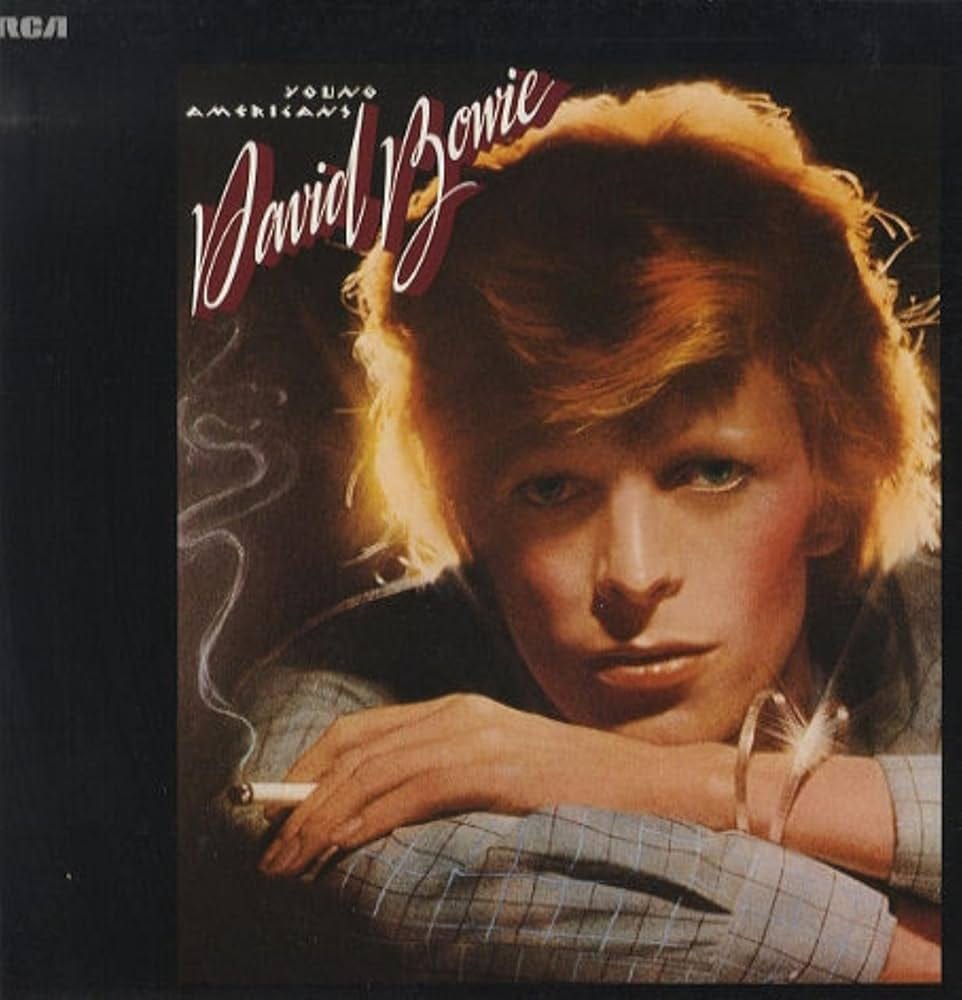
Diamond Dogs was released in May 1974, the tour, which was documented by David Live (October ‘74), began as a lavish theatrical affair, but Bowie soon tired of this, and began integrating soul covers into the set, eventually taking a break from the tour in August to begin recording what became Young Americans. It’s hard for me to get my head around that schedule. I’m always exhausted when I finish an album project, and as keen as I may be to start the next one, I inevitably need some down time from writing, to refuel, or something like that. No such breaks for Bowie in the 70’s, and after the recording sessions, the tour resumed.
What do you get living like that?
The album was released in February 1975. It took me many listens over several weeks, but I grew to love it and I still do.
The title song is probably the album’s most successful piece, and showcases Bowie’s new Springsteen infatuation and his concurrent immersion in African American culture, led by his guide and new sideman Carlos Alomar.
They pulled in just behind the fridge
He lays her down, he frowns
“Gee, my life’s a funny thing, am I still too young?”
He kissed her then and there
She took his ring, took his babies
It took him minutes, took her nowhere
Heaven knows, she’d have taken anything, but
(All right)
She wants a young American
(Young American, young American, she wants the young American)
(All right)
But she wants the young American
This is about as far from a future legend as one can get. Still, his immersion must have been thrilling and inspiring. Now, probably called cultural appropriation. I’m really not sure how I feel about that, so I’m not going to attempt to address it. It does provide him with some awesome seeming stream of consciousness lines, though, for sure.
Have you been the un-American?
Just you and your idol sing falsetto
'Bout leather, leather everywhere, and
Not a myth left from the ghetto
Well, well, well, would you carry a razor
In case, just in case of depression?
Sit on your hands on a bus of survivors
Blushing at all the Afro-Sheeners
Ain't that close to love?
Well, ain't that poster love?
Well, it ain't that Barbie doll
Her heart's have been broken just like you and…
I always heard it as Have you been to hung America? Assuming Bowie’s cock obsession was still alive and kicking, and assuming that he’d surely given the New York leather bars a visit, or two.
Somewhat oddly, for such a rich lyric, it doesn’t dominate the track. What one gets from Young Americans is a joyous feeling of a group of musicians coming together and having a great time making something beautiful. The fabulous vocal delivery is far more important than the actual words.
No so on Win, though.
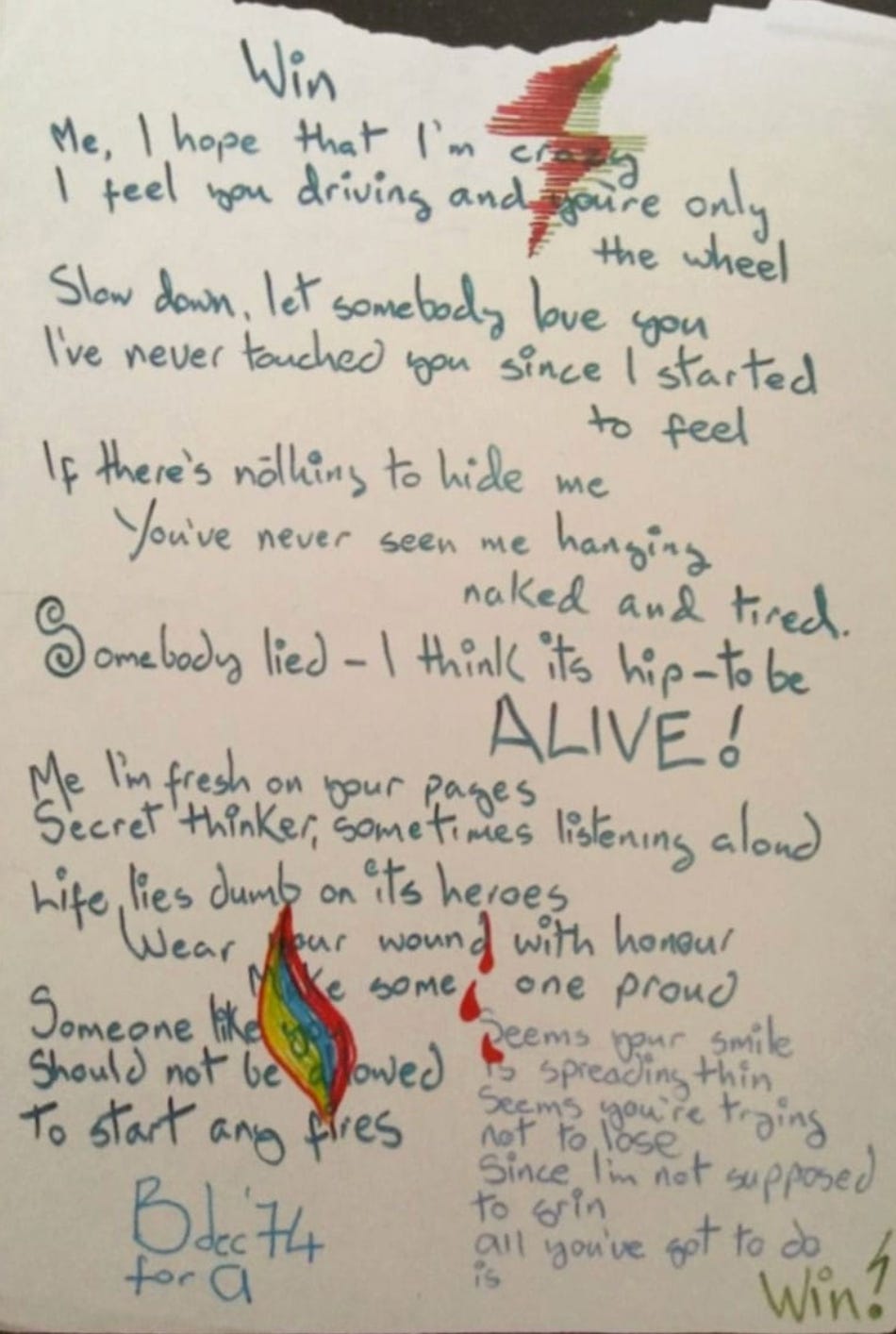
December ‘74, for A?
If only as a vehicle for his amazing vocal talents Win is right up there in the Bowie pantheon (did I use that phrase before?). The vocal range required to sing this is apparently the greatest of all his songs consequently it was only performed live once. The composition is simple, and yet sophisticated. When did I say that before? It’s what he did with most of his best works.
The verse lyrics are flexible enough to interpretation to be almost meaningless. It’s really all about how the listener responds to All you’ve got to do is win. I always read it as narrated by the defeatist cynic from Diamond Dogs, but that’s just me. Why did Beck choose to cover this, the most difficult of Bowie songs? Questions, questions…
Fascination is a Luther Vandross tune Bowie adapted for the project. It’s fine, listenable, groovy, but really, not much more than that. High class filler. Bowie chose to include this and Fame, late additions to the project, over Who Can I Be, Now? and It’s Gonna Be Me. Visconti was confused and disappointed. Both of the rejected tracks offered far more of a view into Bowie’s psyche, he said. Listening, now, I think I can see both sides. The two acoustic piano driven tracks sound far more derivative of ‘classic’ r’n’b than the rest of the album. Bowie sounds more like a cover singer on them. Here, at least, he’s making HIS OWN PLASTIC SOUL.
Right is another thing entirely. It’s a decidedly odd, almost modal, 2 chord composition. A mid tempo jam. Not at all catchy, not really groovy, but strangely hypnotic. Kind of great.
Taking it all the right way
Keeping it in the back
Taking it all the right way
Never no turning back
Read it however you like. Or don’t read it. I don’t think I ever tried awfully hard to.
Side 2 opens with 14 year me’s favourite Somebody Up There Likes Me. Sadly, today, it sounds like an exercise, rather than a song. It’s great title, of course, and he runs with it. I guess the lyric is an extension of the Candidate idea, but it’s less interesting. I’d never turn it off, if someone played it. I’d never play it, either.
Across The Universe isn’t completely awful, but it’s an awful misstep. If I’d just met and been befriended by Lennon, I’m sure I’d have done something far worse.
On the other hand Can You Hear Me gets better with each passing year. I have even dared to sing it in my set in my old age.
Everything about the recording is just about perfect - Carlos’s guitar into, over the 4 chord, the beautiful tension and then release into the tonic and the vocal. Visconti’s strings are lush, and sweet and that’s just right.
There's been many others
So many times
Sixty new cities, and what do I
What do I find?
I want love so badly
I want you most of all
You know, it's harder to take it from anyone
It's harder to fall
Can you hear me call?
A simple love song set on the road, touring. His life, for a change.
Which leads nicely into Fame.
A guitar riff Carlos wrote for James Brown, who certainly didn’t give him a co-credit, so why not recycle it? One magical session in The Record Plant with Lennon, and it’s a number 1 in America!
Is it any wonder you are too cool to fool?
Fame (fame)
Fame bully for you chilly for me
Got to get a rain check on pain
(pain)
Fame
Take away Fame, or the title track and the project falls apart. But with them as bookends it holds together. Just about. Was Bowie lucky, or did he know it wasn’t finished, that it needed more? Or was he so far out of it that he just went whichever way the wind blew? Either way, wherever it blew him, he still, somehow, had his full arsenal of talents, despite the desperate state of his constitution. Somebody up there…
Station To Station
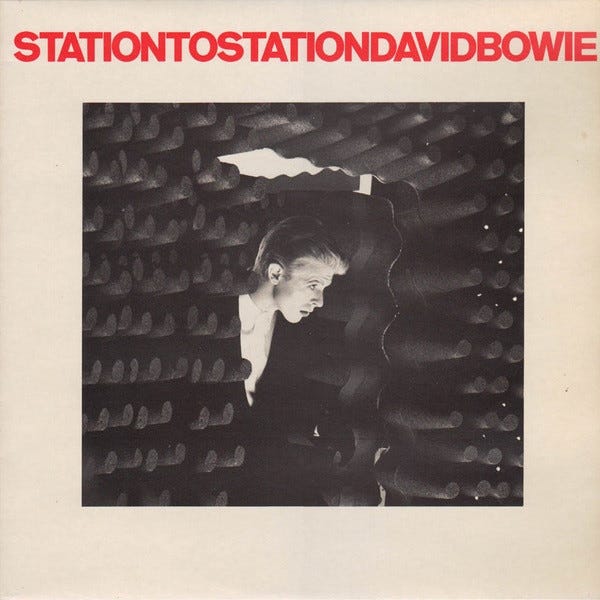
Bowie moved to LA in the spring of 1975, after Fame made Billboard #1, and after he accepted Nick Roeg’s offer to cast him as Thomas Jerome Newton in his upcoming adaptation of Walter Tevis's 1963 novel The Man Who Fell to Earth. Shooting began in June.
Thanks, Wikipedia. I don’t know why I didn’t put two and two together, before today. I always wondered why Bowie ended up in LA.
He hung out with Keith Moon, Iggy, Lennon, Nilsson and alienated all of them except Iggy. "If you really want to lose all your friends and all of the relationships that you ever held dear, [cocaine is] the drug to do it with."
I wish I had my notes from The Idiot handy…
After initially staying with friends he moved into Marlin Monroe’s old home, with the swimming pool he believed she haunted. He didn’t sleep there, much, or anywhere. Red and green peppers, milk and cocaine. Crowley and the Kabbalah for company. How could this possibly go well?
And yet, the musicians speak with great fondness of the recording sessions at Cherokee Studios.
The team from the final Young Americans sessions continued, with Harry Maslin producing and Alomar leading the musicians. Dennis Davis drumming, George Murray on bass. Joining them were Early Slick on lead guitar and E Street Band pianist Roy Bittan.
From Wikipedia < Initial working titles for the album included The Return of the Thin White Duke and Golden Years named after the first track recorded. Golden Years, which Bowie began writing before he began filming The Man Who Fell to Earth, was completed in ten days and issued as a single while the album was still being finished. Recording for TVC 15 began shortly after its completion..
A cover of Wild Is the Wind, written by Dimitri Tiomkin and Ned Washington and first performed by Johnny Mathis in the 1957 film of the same name, was recorded during the sessions. Bowie was inspired to record it after he met Nina Simone, who had recorded her own version of the song in 1966. He recalled in 1993: “Her performance really affected me. I thought it was just tremendous, so I recorded it as an homage to Nina.” A guest during the sessions was Frank Sinatra, who praised Bowie’s recording of Wild Is the Wind. His feedback prompted Bowie to include it as the album’s closing track. While he had begun writing Word on a Wing during filming, both Stay and the title track were written and recorded entirely in the studio. The three tracks were composed throughout October and November, rather than in one quick rush. Slick stated: “He had one or two songs written, but they were changed so drastically that you wouldn’t know them from the first time anyway, so he basically wrote everything in the studio.”
He arrived at Cherokee with fragments of songs rather than finished compositions, changing them as recording progressed. He then gave the ideas to Alomar, who worked on the arrangements with Murray and Davis. After the backing tracks came saxophone, keyboard and lead guitar overdubs, followed by vocal tracks, ending with production effects. Bowie would use this new process for the rest of the decade. Alomar recalled, "It was one of the most glorious albums that I've ever done ... We experimented so much on it". Maslin added, "I loved those sessions because we were totally open and experimental in our approach." Slick contributed numerous guitar effects throughout the sessions. According to Bowie, "I got some quite extraordinary things out of Slick. I think it captured his imagination to make noises on guitar, and textures, rather than playing the right notes." Both Slick and Maslin praised Bowie's "on-the-spot approach". Slick found the lack of rehearsals advantageous, resulting in a cleaner performance. >
So, maybe a method in his madness, or was he just brilliant despite himself?
As I stated in the introduction to this piece, I don’t really consider Station To Station to be an album. There’s no concept or aesthetic holding the material together. Just cardboard. That said, the highlights rank awfully high, in my book, and the failures are missteps, often beautifully crafted, but just wrong. Of course, 15 year old me thought it was all amazing.
The title song starts with a red herring. No, that kind of station, even if it sounds awfully like a train. Then the band, their dirge, so dry, no life to their sound. Emotionless. Session technicians. And yet entirely perfect for
The return of the Thin White Duke
throwing darts in lovers’ eyes
Here are we
One magical moment
Such is the stuff from where dreams are woven
Bending sound, dredging the ocean lost in my circle
Here am I
Flashing no colour tall in this room overlooking the ocean
More from Wikipedia < Bowie later expressed regret that he "compromised in the mixing. I wanted to do a dead mix ... All the way through, no echo ... I gave in and added that extra commercial touch. I wish I hadn't." Speaking to Creem magazine in 1977, Bowie proclaimed that the album was "devoid of spirit ... Even the love songs are detached, but I think it's fascinating." >
Indeed it is.
And then, boom boom on the tomtoms and we’re in Bavaria, the air is clean and life is good.
Once there were mountains on mountains
And once there were sunbirds to soar with
And once I could never be down
Got to keep searching and searching
Oh, what will I be believing and who will connect me with love?
Wonderful, wonder who, wonder when
Have you sought fortune, evasive and shy?
Drink to the men who protect you and I
Drink, drink, drain your glass, raise your glass high
It's not the side-effects of the cocaine
I'm thinking that it must be love
It's too late - to be grateful
It's too late - to be late again
It's too late - to be hateful
The european canon is here
There are more than hints of Brecht here (with a lovely All The Young Dudes turnaround thrown in) so no surprise when Alabama Song included in the Isolar tour setlist. To be sure this is rock’n’roll, and by the end of the 10 minutes there’s a feeling that the studio must have been quite frenzied. Possibly quite frightening should an outsider have stumbled upon the drug addled ensemble, making this strange fabulous racket.
Golden Years
That dry rhythm section sound again, but here seeming to magnify the precision of the groove which is genius and is all Alomar. Bowie presented him with the On Broadway chords and Carlos said, words to the effect of - we can just play it like that, you’ll get sued. It’s a brilliant track and entirely deserving of making Bowie the first white dude on Soul Train. You might think it could be from Young Americans. No, Young Americans is positively wholesome next to Station To Station. It’s too cold to sit with those songs. It’s fucked up LA Bowie weird.
Golden Years sounds like a lovely title, doesn’t it?
But
I'll stick with you, baby, for a thousand years
Nothing's gonna touch you in these golden years
Sounds awfully like a reference to the Thousand Year Reich. Or maybe not. The nazi salute from the Limosine in Earl’s Court on the Isolar tour certainly inclines the writer to think so, though.
Word On A Wing
Is a tough one. It’s beautifully executed. Bittan’s paino playing is sublime. It’s a lovely chord progression, that gets complex without being willfully difficult. It has all the hallmarks of classic Bowie, but it isn’t. Not for me.
Two things. The rhythm, the feel of the track is awfully vanilla. Especially after the previous two tracks. Maybe it’s a little too fast? And the lyric. The lyric is too on point. There is only one way to listen to it and I suppose I should come out and say it - I’m not comfortable with Bowie’s faith in my face. I’m much more comfortable with arguably confused Kabbala references that are easily misheard as something else entirely. And that’s on me.
TVC 15
Is a mess.
I suppose, listening now, I’m seeing a pattern. I’m not enjoying the songs led by Bittan’s playing, but I’m sure that’s not the whole of it.
From a lyrical point of view, maybe it’s easier to enjoy when you’ve been told that it’s written about Iggy thinking his TV was trying to pull him inside (or something like that). But without that, transition, transmission are just words which don’t seem to add anything to the picture, other than spelling it out.
Stay
On the other hand…
Following on from Panic In Detroit and 1984, but pulling away from the rock and embracing the funk it’s worth the price of admission alone. The guitar riff entry is classic, perfect, and then the drums enter with that dead sound again, as on the title track, before bringing the full beat in with such force that Davis defies the sound. A second, very rowdy, lead guitar joins the party and it’s a glorious noise. Slick really is in great form on the whole album. I kind of love how nerdy he looked in 75-6.
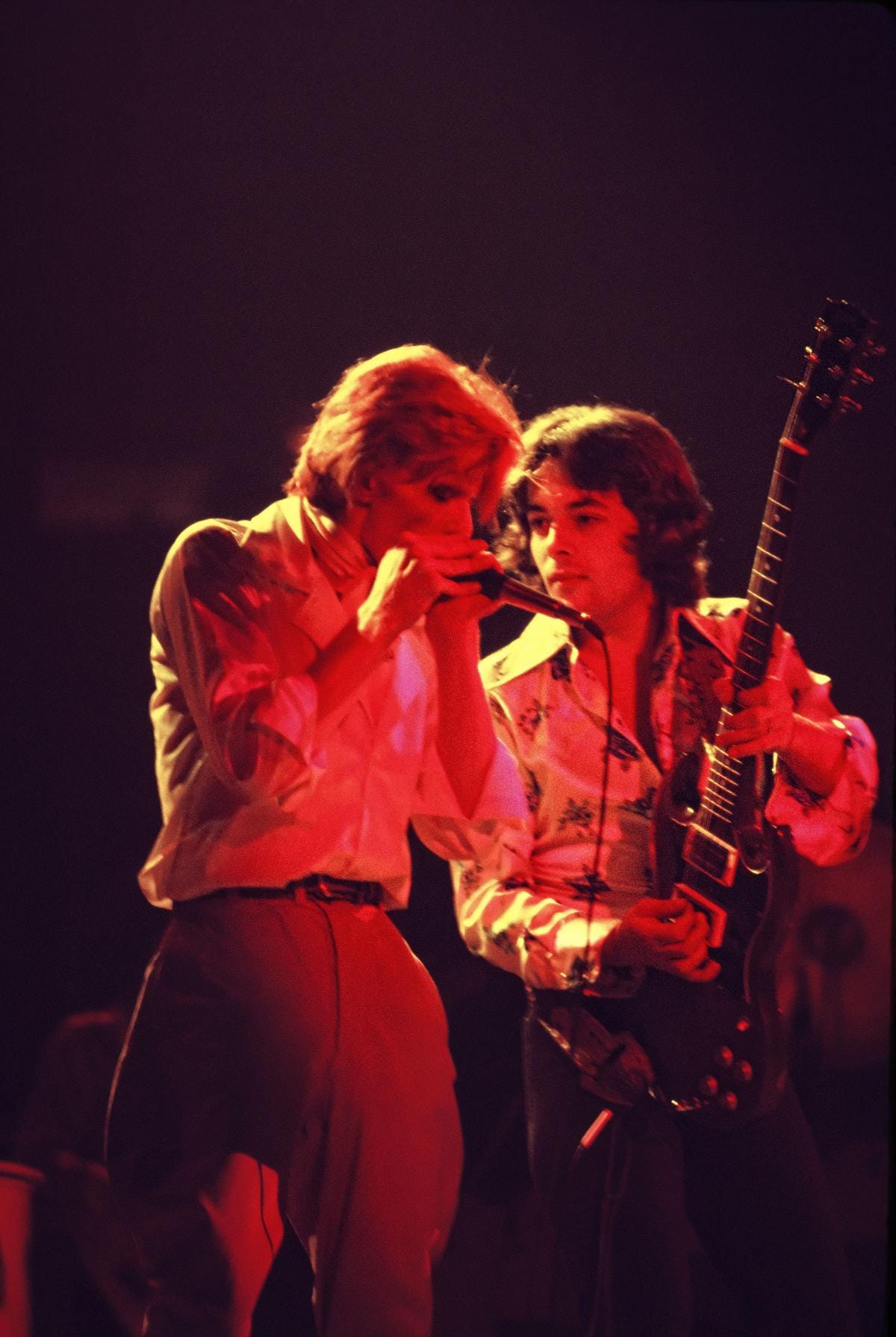
So, it’s glorious noise but the song didn’t begin, yet. It takes a left turn to do so and we’re almost in jazz funk territory, almost Steely Dan clever chords, but not quite. We are the right side of the divider. It’s actually a fairly simple A, B, C arrangement - A being the intro riff, B being the verse and C being the chorus which concludes with the first chord of A. The genius is getting from A to B, and then B to C.
The lyric is appropriately simple and pretty direct, otherwise he might be in Fagen territory…
This week dragged past me so slowly
The days fell on their knees
Maybe I’ll take something to help me
Hope someone takes after me
I guess there’s always some change in the weather
This time I know we could get it together
If I did casually mention tonight
That would be crazy tonight
Stay, that’s what I meant to say
Or do something, but what I never say is
Stay this time, I really meant to so bad this time
‘Cause you can never really tell
When somebody wants something you want too
If we want to nit pick, it could be a minute shorter and still be great, maybe greater.
Part of me wants Stay as track 1, side 2. It’s far superior to TVC 15, but no, the running order is correct because it perfectly tees up the closer.
Wild Is The Wind
It begins with Alomar’s guitar which is so, so beautiful, so clean, so elegant emerging from the distorted funk of Sway. Bowie’s 12 string joins him and then the vocal. That vocal. Sinatra was right. I think it might be the best Bowie vocal track.
Listening now, 50 years later, knowing what we do now… not Bowie’s words, but could he write anything better, to express his situation
Give me more
Than one caress
Satisfy this
Hungriness
Let the wind
Blow through your heart
For wild is the wind
Wild is the wind
You
Touch me
I hear the sound
Of mandolins
You
Kiss me
With your kiss
My life begins
You’re spring to me
All things
To me
Don’t you know you’re
Life itself?
Listening now, 50 years later, knowing what we know, and having heard Black Star…Maybe it’s me projecting, but I think I hear something here which might be a farewell, too.
But no. They moved to Berlin, and we are thankful.
End of part one.
No posts
Comments
Nothing yet. Say the first thing.
Sign in to join the conversation.