
One of my favorite episodes of South Park is Season 15, Episode 7: “You’re Getting Old.”
In it, Stan develops a severe case of cynicism following his 10th birthday. Everything around him turns to shit. Literally:
Why is it one of my favorite episodes?
Well, I could give you a long-winded explanation about how hard I identify with Stan as a cynical asshole who struggles to enjoy anything, and how isolating and frustrating that is, and how Stan eventually learns to cope using alcohol, which makes the world look normal again, which is bleak considering he’s ten, but sort of eye-opening if you’re also a person who has relied on alcohol to do stuff for you in the past.
But that would be pretty dark, and we haven’t even gotten past the intro yet. Besides, it’s not entirely true.
It’s my favorite because FART NOISES, you guys. Obviously. Fart noises are hilarious.
This conversation happens in every community, on every platform, about everything, all the time. You know the one. It goes like this:
“[Thing I like] is bad now. It used to be good.”
“That’s just nostalgia. John Hodgman says nostalgia is a toxic impulse.”
“No, I’m very knowledgable about this subject. Something has definitely changed.”
“Every generation says this.”
“I’m telling you, it’s different now.”
“No it isn’t.”
“Yes it is.”
“No it isn’t.”
“You’re a dick.”
“You’re a dick.”
“No, you’re a dick—”
And so on. Nothing gets resolved. People tend to land on either, “I guess you’re right, people have always said this,” or, “Well, smart phones are making us dumber, so maybe we are getting worse at making stuff…?”
But who is actually right? Friends, I’m here to tell you there is an answer. And I know what it is.
They both are.
“Boo! We wanted a real answer!” 😡 😡 😡
Alright, alright.
There are two things going on here. First, your taste changed. Obviously. That’s a real thing that happens, no matter how much you feels like your musical taste is stuck in high school and might never graduate.
Second, the market changed. That’s also a real thing that happens, and these days it does have a lot to do with smart phones. Not that they’re making us dumber, but that they’re supercharging mediocrity.
The stuff that wrecked you at seventeen wrecked you because you were seventeen. You were an idiot at seventeen. You knew nothing. Put a worn-out literary trope in front of you and you gobbled it up. Play you Bittersweet Symphony and you were inconsolable for days. Were you guys also obsessed with A Clockwork Orange? Were you so obsessed you dressed as a lady-droog for prom?

Look, it’s not your fault. It was the first time you were coming across this stuff. Everything felt like a revelation.
(Full disclosure: I still cry every time I listen to Bittersweet Symphony. Do you not? HOW?)
Nowadays, you’ve seen it all, heard it all, done it all — okay, maybe not all (calm down, it’s your thirties, not the end of your life) — but a lot more. This is not stuff getting worse. This is you getting better at reading, listening, watching movies and consuming media in general. Which is a good thing that comes with an annoying side effect (fart noises.)
The other side of this is the market changing. That’s also always happened, and the way it’s happening now is not necessarily different from the way it’s always happened — it just seems to be happening much more quickly these days.
Nowadays, the things that succeed are things that scan from a thumbnail, or can be summarized in one sentence for a seven-second video. Those things are necessarily less complex. This is the direction that mainstream art and culture tend to move in general (for example: it’s why mass-marketed pop music of today is less complex than classical music of the before-times, which was only intended for a niche audience in a small socio-economic bracket.) Things become less complex as the methods for disseminating them scale up and they are put before a larger and larger audience with broader tastes and wider backgrounds.1
Does “less complex” mean “less good”? No, not necessarily. But it usually means “less unique” and “less challenging”, and if you’re a person who uses those measures to help you assess art, you’re going to find that stuff doesn’t come up to snuff.
The pipeline narrows. The weird stuff dries up. Not because nobody’s making it, but because nobody will pay to distribute it.
Lots of people will tell you that it’s impossible to say whether art is “bad” or “getting worse” because art is subjective, and therefore, impossible to measure.
That’s a copout.
It’s true that art is subjective. And it’s true that art isn’t necessarily “better” just because it’s more complicated, challenging, intellectual, classical, stuffy, white, old, etc. etc. etc. You can’t quantify the “goodness” of art to any kind of standardized measure and objectively say, “This art is better than that art.”
That being said: throughout history, there have been things that lots of different people, across lots of different cultures, tend to converge upon as being components of quality in art. Some of those include:
tension and resolution
originality
necessity (every element earns its place in the piece)
emotional truth
transcendence of the moment
coherence
This is true not only within the Western classical tradition, but in classical Indian aesthetics through the concept of “rasa” (emotional essence); Japanese traditions like “ma” (use of negative space); and Chinese classical painting, which emphasizes “qiyun” (spirit consonance).2
There are also examples of criteria that shape indigenous art outside of formalized classical traditions. Yoruba aesthetic philosophy includes the concept of “iwa” (essential nature or character )3 and Australian Aboriginal art, which is grounded in a very different framework to Western classicism, emphasizes not so much “emotional truth” or “beauty” in the Western sense, as the importance of accuracy and authority.4
Put simply: quality matters, and there are elements of quality that appear to transcend boundaries between ethnic and cultural groups.
All of these criteria were developed by people with particular cultural, class, and historical positions that shaped their views. That means they’ve been used to exclude work by minority artists for centuries, on the grounds that their work was too specific to experiences the critics didn’t share.
That’s not an argument against the criteria themselves; it’s an argument for holding them carefully. But I would say that as humans, we don’t change the criteria to accommodate art by minority groups: rather, we learn to agree that this kind of art fits the criteria.
When you say stuff from your childhood was better, you’re actually not wrong. But it’s because you’re remembering a highly-filtered subset.
Take books. The books you read as a child (if you grew up during the early aughts, nineties, or prior) were more likely to be books that had already survived at least a few years, maybe a couple of decades, even a century or so. There was no TikTok recommending stacks and stacks of quick reads back then. Things spread slowly and selectively. The books that got widely read were mostly books that were of high enough quality to already be enduring long-term.
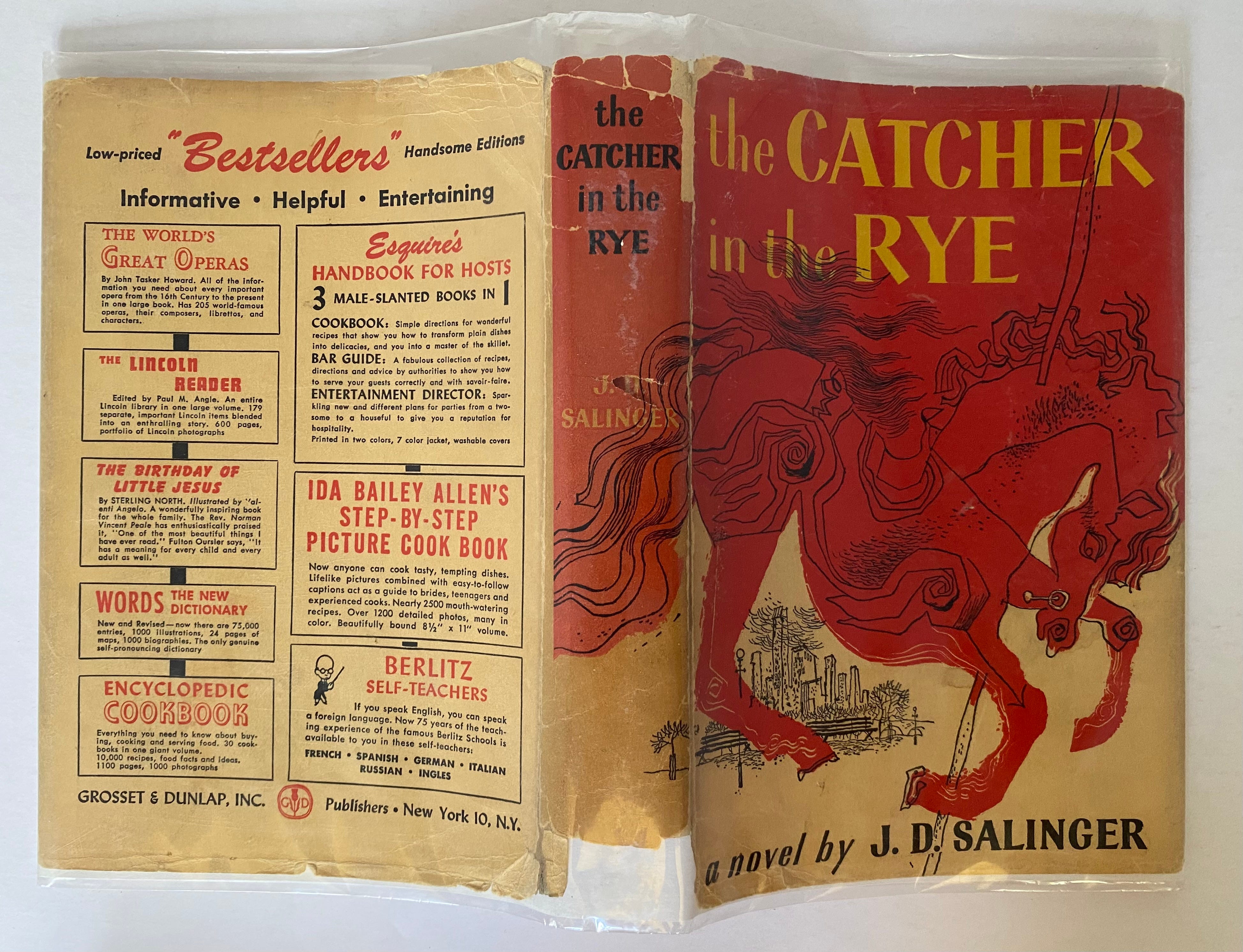
Not only that, but the books you are more likely to remember are the good ones. If a book makes a big impression on you, you’re going to remember it. The ones that wreck you stick. The ones that don’t fade into the ether.
This is called survivorship bias and let me take a quick detour to tell you about the best-known example of it, because it’s pretty neat.
Back in WWII, the Allies studied damage to their planes in order to determine where they needed better protection.5 Their studies yielded this image:

From this, they determined that they needed to reinforce the wings and tail, as clearly, that was where most of the damage was happening.
But a guy called Abraham Wald pointed out that the planes they were studying were the ones that came back. They were looking at damage on the planes that survived. The ones that didn’t come back were probably the ones that got hit in other places (like the cockpit and engines.) So what they actually needed to do, paradoxically, was reinforce the spots with no damage.
Survivorship bias is the tendency to focus on the “survivors” of a selective process, while ignoring the failures. And it applies to culture as much as to WWII: The Rolling Stones come up on Spotify and you think, “Damn, music was so much better in the seventies,” while conveniently forgetting all the absolutely fucking awful music of the seventies.
DJs play the hits. You’re only hearing the stuff that made it.
So we compare the best stuff of the past to the average stuff of the present and conclude that things have declined. Recently, they actually have — but not because people are dumber or worse at art.
What’s changed is the ratio. The system that democratized access to production (YouTube, TikTok, Instagram) now produces more average stuff more efficiently, and that average stuff is more visible than it used to be because algorithms are very good at surfacing it.
The thing that’s gotten worse isn’t the books, music, or movies themselves, but the infrastructure for finding the great ones. Word of mouth used to be slow and selective. A truly strange bit of art could find its audience over years, through one person recommending it to another, until it made its way into your sticky little seventeen-year-old fingers and blew your tiny little mind.
Now discovery is mostly algorithmic, and the algorithm has no mechanism for slow and selective. It does fast and broad. The weird book that would have found a million devoted readers over a decade now finds nobody, because it never trends.
The person nostalgic for the past is right about the symptom (stuff seems worse) but wrong about the cause. The cynic who says, “Every generation thinks that,” is right that humans are biased, but missing the full picture.
What's actually happening right now: you entered middle-age (or thereabouts) in the 2020s. Your tolerance for mediocrity decreased, at exactly the same moment that mediocrity became highly visible. The infrastructure for finding greatness collapsed right as you were getting to a point in your life where you’re truly able to appreciate greatness.
Which means you’re going to be listening to a whole lot more fart noises.
Liz Shipton is the critically-acclaimed author of Dot Slash Magic. Their female-rage-fueled dark fantasy satire Mother & Slaughter is available wherever books are sold.
https://journals.plos.org/plosone/article?id=10.1371%2Fjournal.pone.0244576
https://estetikajournal.org/articles/10.33134/eeja.230
http://archive.sciendo.com/MJSS/mjss.2018.9.issue-4/mjss-2018-0115/mjss-2018-0115.pdf
https://www.ngv.vic.gov.au/essay/the-raw-and-the-cooked-the-aesthetic-principle-in-aboriginal-art/
https://doctorspin.org/media-psychology/psychology/survivorship-bias/
Comments
Nothing yet. Say the first thing.
Sign in to join the conversation.