
“You have to give the people what they want. Then you can give them what you want.”
“If I sacrifice my work, it dies. It is better that I die.”
If you haven’t seen Big Night, Stanley Tucci’s 1996 directorial debut, do yourself a favor and stream it tonight. It’s a masterpiece. Not only does it star Tucci and Tony Shalhoub (honestly, how much more convincing do you need?), it also features one of the most adorable romantic subplots of all time, and some truly incredible food porn.
Like this monstrosity:
The timpano. It’s a cake. Filled with pasta. It’s a pasta cake.
Big Night tells the story of Primo (Shalhoub) and Segundo (Tucci), two immigrant brothers from Calabria who run a failing Italian restaurant on the Jersey Shore in the 1950s.
Primo’s food is complex, nuanced, and (to use a problematic word because I can’t think of a better one) authentic. Despite (or perhaps because of) this artistry, the restaurant is going under. Segundo, who handles the business, can’t make ends meet.
Meanwhile, rival restaurant Pascal’s is raking in money hand over fist, despite (or, as we learn later, because of) its bland, uninspired food.
Big Night spoke to me on a visceral level. Segundo’s battle to reconcile his brother’s uncompromising artistic vision with the reality of paying customers is painfully familiar. In a classic scene, a woman orders a side of spaghetti for her seafood risotto, and Primo — refusing to make it on the grounds that risotto and spaghetti are both starches and therefore cannot be on the same plate — calls her a philistine.
“Maybe I should make mashed potato for another side!”
“She likes starch!” pleads an exasperated Segundo.
Primo’s struggle with ignorant American customers who don’t appreciate his food is also painfully familiar. It nails the central frustration of making art for money:
How do you give the people what they want, without sacrificing what you want?
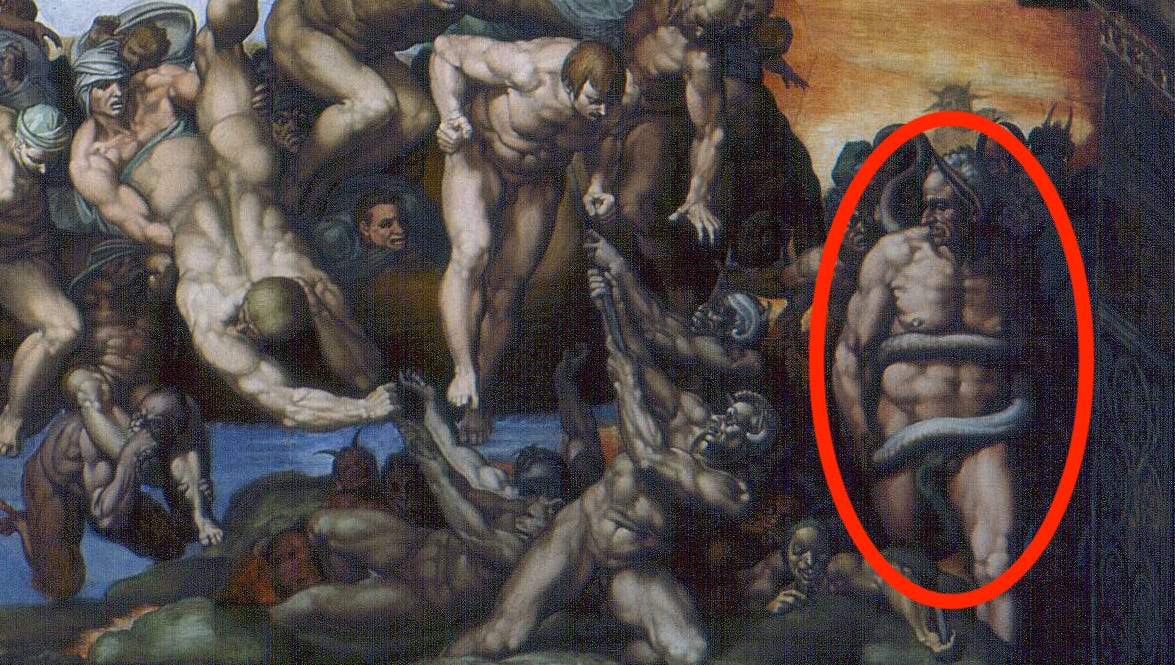
History is full of artists who bemoaned their audiences’ lack of taste, understanding, or willingness to experiment. Michelangelo despised one elite patron so much he hid an offensive caricature of him in a mural.1 Beethoven once exclaimed, “I won’t play for swine!” and walked out of his own concert.2
Oscar Wilde summed it up pretty neatly in The Critic as Artist:
“The English public always feel perfectly at ease when a mediocrity is talking to it.”
So it’s a well-documented complaint. And in the algorithm-fueled market, this complaint has been supercharged.
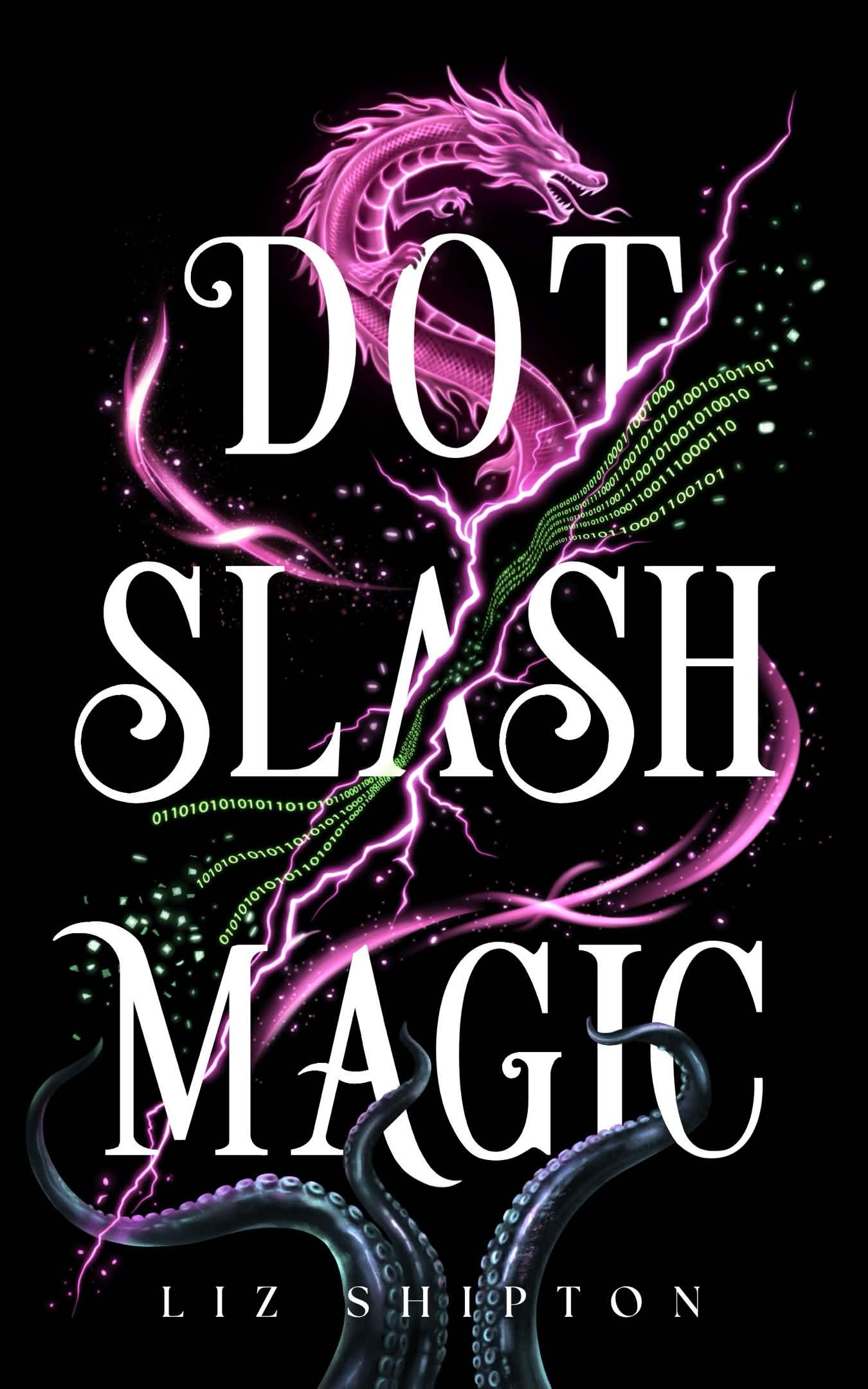
For the last five years, I’ve been writing the line between “speculative fiction” and “romance.” I write non-standard characters and a lot of sarcastic social commentary, stuff it all into a borderline-too-complicated sci-fantasy plot, and then try to wrangle that into a package that will appeal to the mainstream.
In practice, that means incorporating smut and romance. The mainstream market for smutty fantasy romance is enormous; including it in my off-the-wall, cross-genre satire was my attempt to reconcile my inner Primo with my inner Segundo.
Where I went wrong was in trying to put my own spin on it. I wanted to give fans of fantasy romance something a little different. Because when I entered the market five years ago and surveyed the Great Amazonian Romanta-Sea, my immediate thought was, “These books are all exactly the same! Surely this isn’t what people want?”
I was wrong. It is exactly what people want.
The lady with the risotto wants spaghetti. More starch! She likes starch!
What I’ve learned since is that the market doesn’t want ‘different.’ The algorithm doesn’t like friction. And books that don’t do what people expect create friction. Books that can’t be summarized with an immediately identifiable trope create friction. Books that don’t end with “happily ever after” create friction.
I’m not saying this is specific to romantasy, or romance, or things women read. There are plenty of low-friction books aimed at men. I’m also not saying that something isn’t art just because it includes smut, or doesn’t include challenging prose. Art is subjective.
There’s nothing wrong with liking low-friction books. People are busy. They want to unwind at the end of the day with a glass of wine and a relaxing story.
“A guy works all day, he don’t want to look at his plate and ask, ‘What the fuck is this?’ He wants to look at his plate, see a steak, and say ‘I like steak!’”
— Pascal, Big Night
Sometimes I wonder, though: how much of this is actually what people want, and how much of it is driven by the algorithmic spiral?
At it’s core, the algorithm is people. It’s a recommendation engine that analyzes behavior and makes suggestions based on that behavior. Lots of people like a video about a certain kind of trope? Great! thinks the algorithm, I’ll show that video to more people.
At a certain point, that becomes an endlessly self-fulfilling loop:
The algorithm amplifies high-engagement content, which makes that content more visible, which means higher engagement, which means more amplification, which means more engagement...
That’s obvious. But it doesn’t end there.
Readers casually scrolling through BookTok are not only more likely to see a video with high engagement because it’s being pushed by the platform, they are far more likely to engage with that video, purely because other people already have.
“While quality played a role…social proof played a far bigger role.”
Authors see this happening, and push out their own content capitalizing on the same trope. The algorithm, seeing that this content is the same as the other content that did well, amplifies it.
Publishers (slow to catch on, but quick to invest) start backing what the algorithm is already pushing, meaning their considerable resources are also being poured into a few narrow channels.
And eventually, everything is fairy smut.
The question is: Is this what anyone actually wants? Or is taste being dictated by a spiral we don’t control?
In a study in Science magazine in 2006, three behavioral scientists created a fake “music market” to test this question.3
They showed around 15,000 people a list of unknown songs from unknown bands, and split them into two groups. The first group were shown just the song title and band name, independent of context. The second group saw the song title, band name, and a fake stream-count indicating how many times the song had been “played” by other people.
They then had the participants listen to and rate the songs.
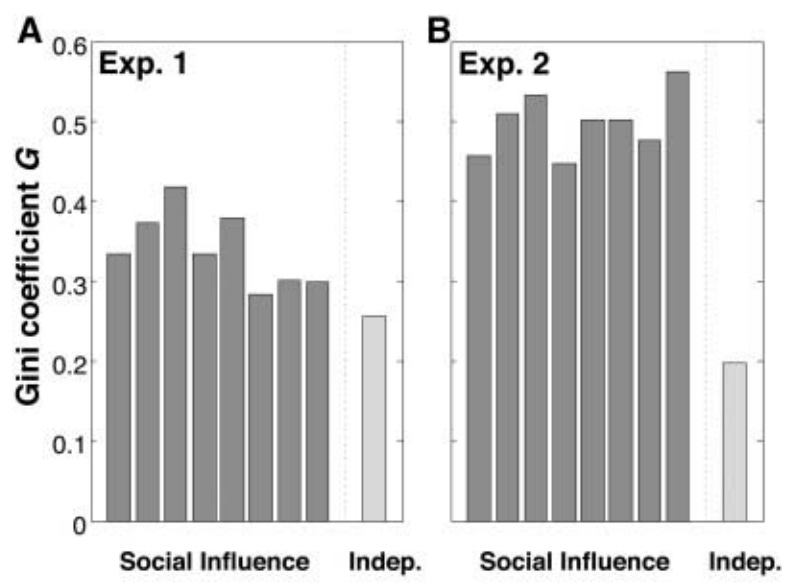
While quality played a role in which songs were rated most highly, social proof played a far bigger role. Songs that started out with higher stream-counts were more likely to be rated as “better” by participants. When they re-ran the experiment and seeded different songs with higher stream-counts, those songs were rated as “better.”
So taste isn’t just something The Algorithm measures and accounts for. It’s not just delivering what people like: it’s actively shaping it.
This has always been the way it’s worked; it just hasn’t worked at this scale before.
I spent the last five years trying to fight this market. And I’ve come to the same conclusion that Primo and Segundo did at the end of Big Night: you can’t.
If you’re a bright-eyed creative with experimental taste just getting started, this probably isn’t what you want to hear. You’re reading this, thinking to yourself, “Maybe you couldn’t, but I will.”
Sure, kid. Go ahead and open your restaurant. I hope you know how to make spaghetti.
Unless you don’t care about making money — if that’s the case, cook whatever you want. But if you want your restaurant to stay afloat…
Start a pen name to write low-friction, super smutty, rivals-to-lovers MM sports romance (MM is hot right now.) Lean into tropes. Pile on the algorithm.
BookTok, full speed ahead.
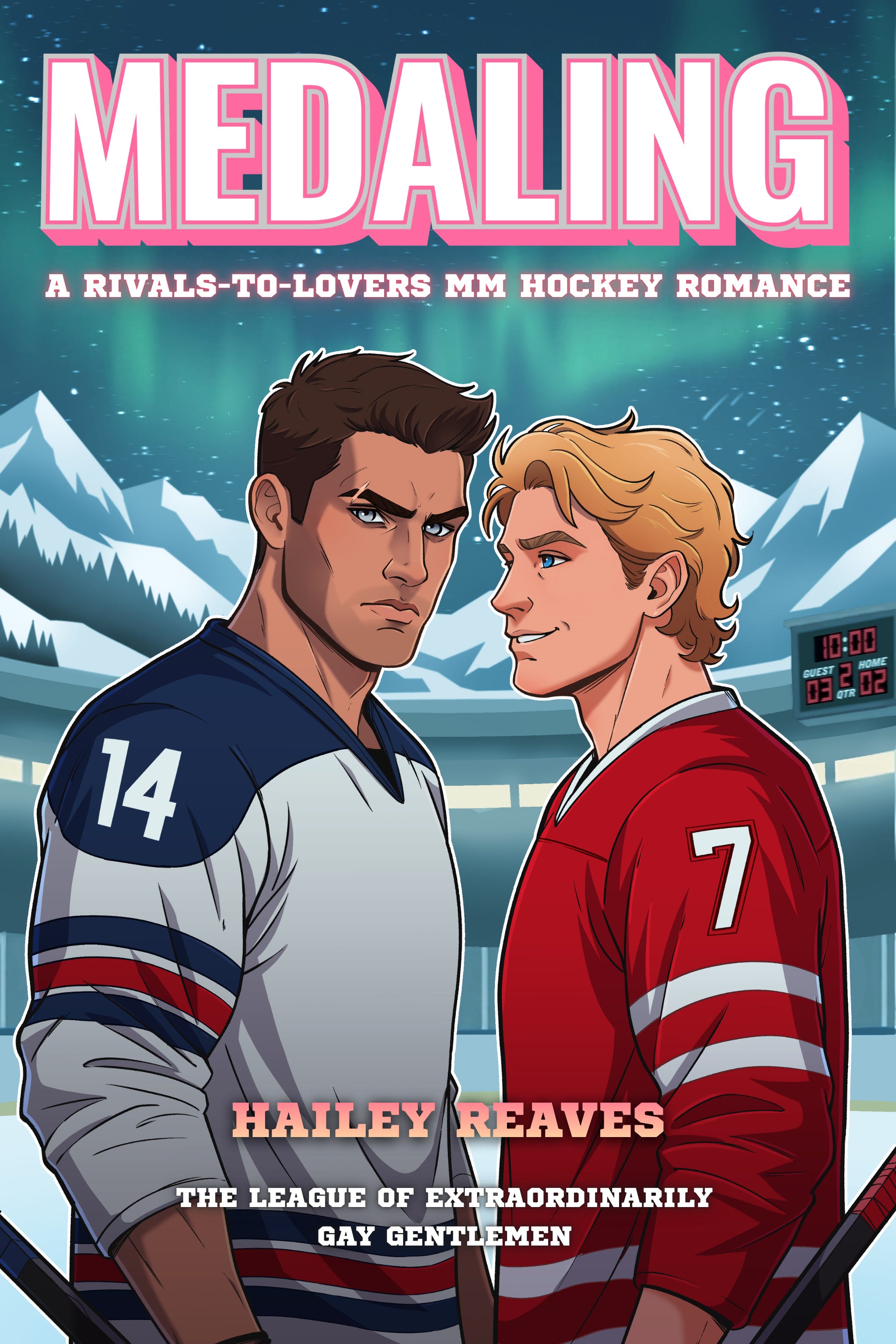
The first book I launched under this name made more money in its first two months than my eleven other books made the whole of last year, combined.
Pascal was right: you have to give the people what they want.
And you know what? I like writing low-friction, smutty MM romance. It’s fun. It’s also queer, so it’s inherently dissident, which means I get to slip the social commentary in there. So I’m still giving them what I want, a little bit 🤫
The problem our brothers faced in Big Night was primarily one of geography. They opened a restaurant on the Jersey Shore, and expected a clientele comprised of vacationers looking for comfort food to appreciate haute Italian cuisine.
Had they opened their restaurant in Silverlake or the East Village, they might have done better.
Similarly, I put high-concept sci-fi disguised as romantasy in front of mainstream readers just looking for an easy way to wind down in the evening. That was never going to work, no matter how it was packaged.
The solution? Change the geography.
At the same time I started my pen name, I began detangling the smut from my existing work, going harder on the speculative weirdness, moving it away from the mainstream, and seeking out audiences in different places. Goodbye Jersey Shore, hello Silverlake.
God help me. Not Silverlake…

I don’t expect it to do well. In fact, I have a feeling the small number of fans I do have for this work might desert me completely when I stop putting in the smut.
But that’s fine: I have my pen name slinging spaghetti for me now.
Which is kind of the crux here. If you’re a person whose taste lies outside the mainstream, then getting to make art the way you want to is a privilege. It requires time and space and freedom from financial strain. You can’t make that art and expect to be able to live off it.
Primo and Segundo learn this the hard way. They never solve the problem. They don’t save the restaurant. They can’t reconcile Primo’s artistic vision with the demands of their Jersey Shore clientele. In one of the most heartbreakingly beautiful endings in cinema, our hapless brothers don’t resolve anything at all.
They just make an omelette and eat it together:
Liz Shipton is the critically-acclaimed author of Dot Slash Magic. Her female-rage-fueled dark fantasy satire Mother & Slaughter comes out July 1st. Pre-order it for Kindle here, or get it wherever else books are sold.
https://theconversation.com/why-michelangelos-last-judgment-endures-275323 (it should be noted that art critic Leo Steinberg disagreed with this claim.)
https://www.gutenberg.org/files/43591/43591-h/43591-h.htm
https://www.princeton.edu/~mjs3/salganik_dodds_watts06_full.pdf
The Last Judgment Painting: https://commons.wikimedia.org/wiki/File:Last_Judgement_(Michelangelo).jpg
Comments
Nothing yet. Say the first thing.
Sign in to join the conversation.