
Last year, as part of the launch of my first ever trad-published book, I was invited to write a guest post for a relatively large online hub for fantasy book reviews, author interviews, and features.
Super excited, I penned an in-depth dive into the book’s themes, my motivations, and the cultural moment that spurred me to write it.
Toward the end of the article, I included this line:
Much of what I write is motivated by the secret wish that one day Musk or Trump gets his hands on it, and really really hates it. Trump can’t read, obviously, but I suppose he could do the audiobook.
Now…look. I knew that last line was risky. I like to say dumb, provocative shit. The book itself was fairly political (and blunt about it) as is my online presence. I expected to receive pushback.
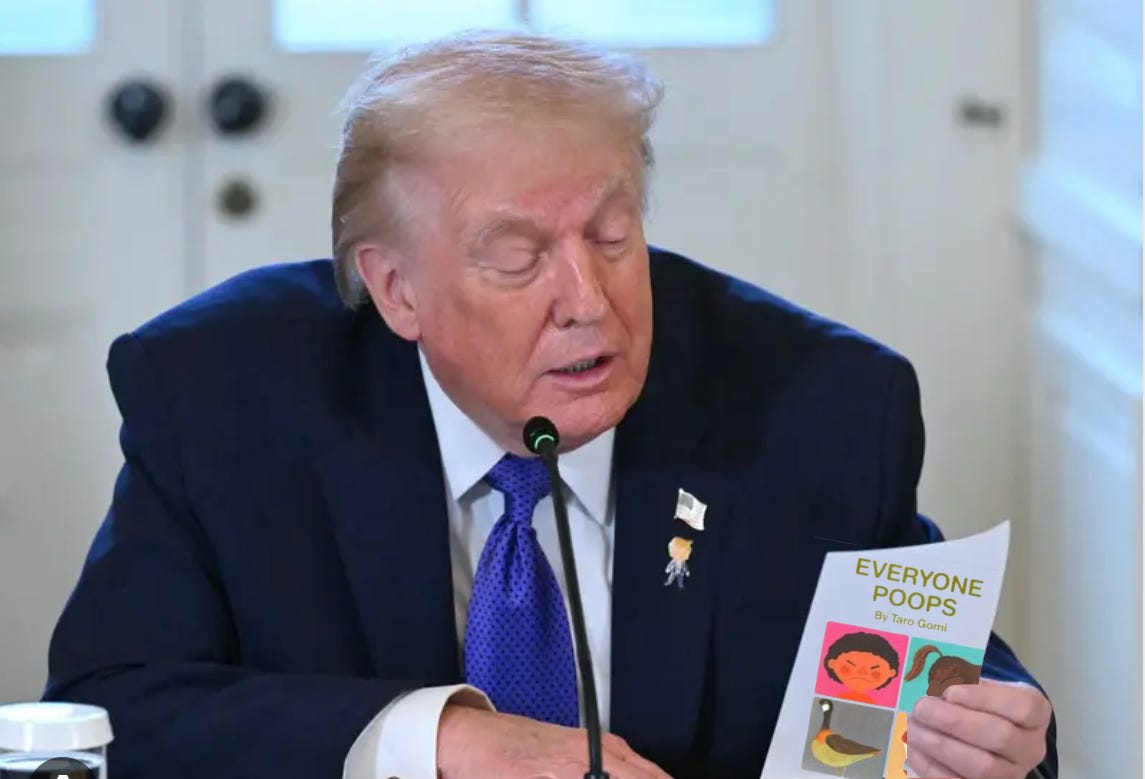
What I did not expect was for the editors at the blog to reject the article outright. They didn’t ask me to remove the line. They just flat-out refused to publish the piece.
Not because I’d insulted the president.
Because I had insulted audiobook readers.
If you’ve been spending your time in places outside the internet for the last five years (you lucky dog), let me bring you up to speed.
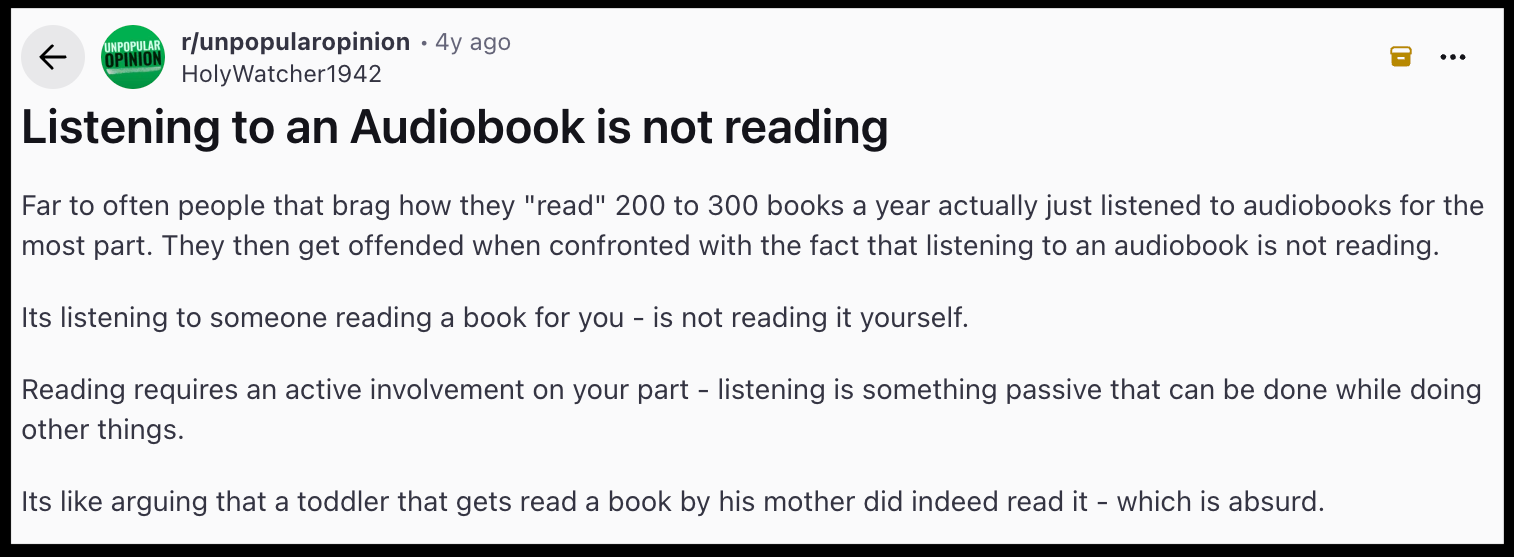
There are people out there who believe that listening to an audiobook doesn’t count as reading. Their argument goes something along the lines of, “Listening is an inferior way of consuming a book. You don’t retain it because you’re not paying attention. That’s like saying a toddler read a book when actually their mom read it to them.”
On the other side of this argument are people who say, “Consuming a book through your ears still requires you to pay attention. What about people with disabilities who can’t physically perform the act of reading? Oral dissemination of stories is a thousands-of-years-old practice. Fuck off, you prick.”
This is the argument, and it crops up on social media all the time.
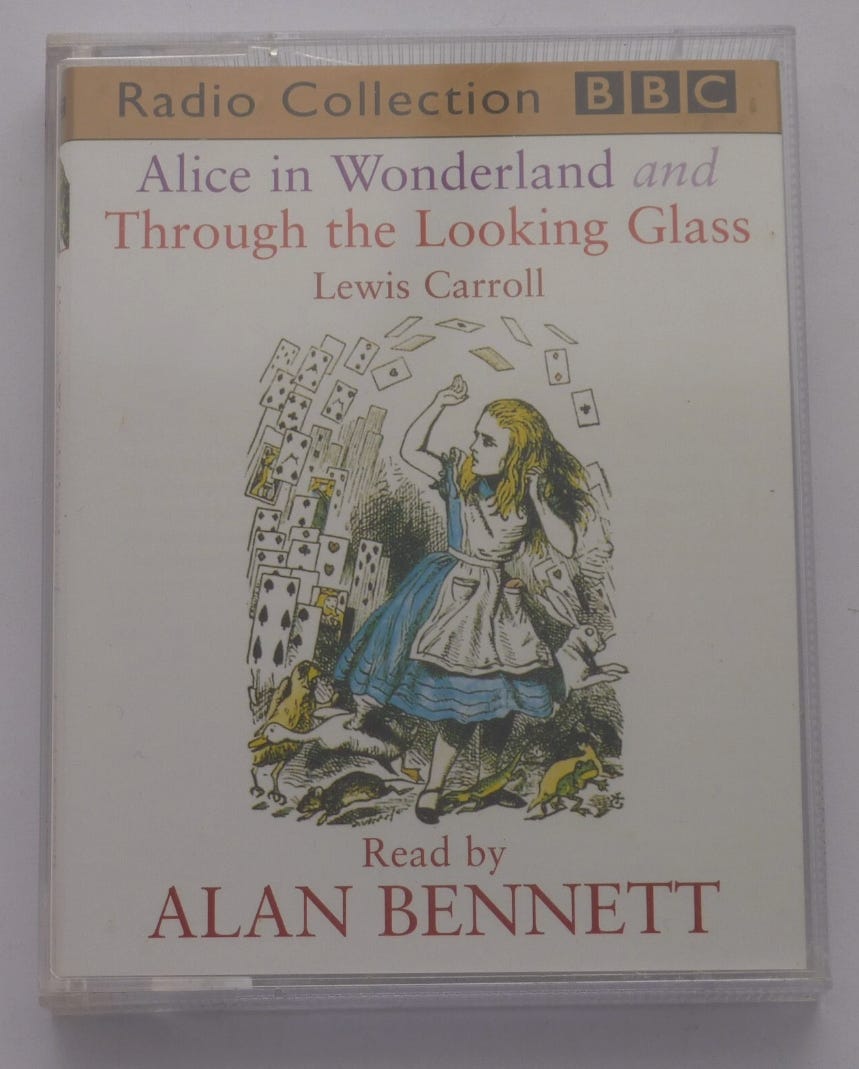
I grew up on audiobooks. Every single night, for almost ten years of my childhood, I fell asleep listening to books on tape. When my family moved from England to the United States, we listened to Bill Bryson’s Notes from a Small Island ad nauseum as a coping mechanism. I have massive passages from that book, plus chunks of Alice in Wonderland, The Wind in the Willows, Winnie the Pooh, The Marriot Edgar Monologues, and many of Roald Dahl’s short stories memorized to this day because of this.
I can hear Alan Bennet in my head right now saying, “Alice was beginning to get very tired of sitting by her sister on the bank, and of having nothing to do.”
In my twenties, when I was getting into exercise, what motivated me to go to the gym were the audiobooks of Ender’s Game and Ready Player One. The only reason I don’t listen to audiobooks these days is because my lifestyle changed.
Okay, by that I mostly mean I stopped working out, but that being said: I do now have the time to sit down with a book and read in quiet — a privilege many people don’t have, which is why lots of people read audiobooks.
Acknowledging that listening to a book is different from reading it doesn’t make one superior. It just makes them different things — both of which involve a person spending time with a book, which is the part that matters.
I love audiobooks. So to be completely honest, when my article was rejected because of that line, I was offended as an audiobook lover. Do they think we don’t have a sense of humor? Or that we need protecting from satire, for some reason?
Side Note: to anyone out there claiming that if you listen to a book you won’t retain it — could you please let my brain know? Because it is stuffed with pages and pages of toads driving motor cars and girls going down rabbit holes and boys bouncing around anti-gravity chambers, and I really could do with that space back for grownup stuff like taxes. Cheers.
Obviously I’m being facetious: I can understand why a blog aimed at readers wouldn’t want to publish that line.1 I knew when I wrote it that it could be misconstrued as me insinuating that audiobook readers are illiterate. An online publication that caters to readers can’t be associated with that insinuation, because the “do audiobooks count as reading?” debate is such a hot-button issue.
Here’s the thing, though:
I’ve been on BookTok five years. I’ve seen countless videos of people defending audiobooks. What I haven’t seen is a single video of someone attacking them.
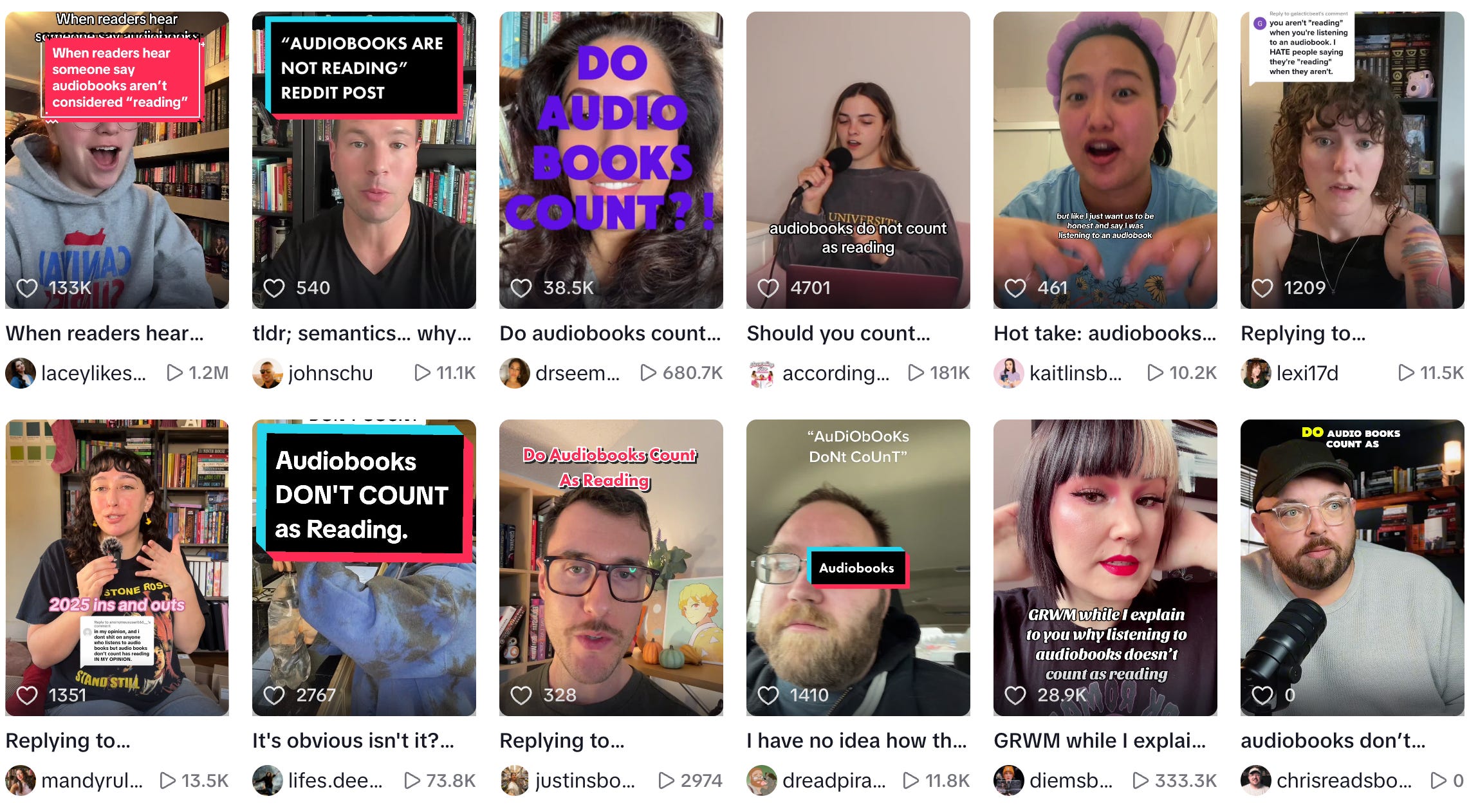
Like I said: I know the anti-audiobook people are out there. Here is a well-known Reddit post where someone argues that audiobooks aren’t reading (note: in r/unpopularopinion), and I’m sure there are more. There are probably TikToks — they just haven’t come across my feed (although when I tested this by doing a logged-out search of “Audiobooks don’t count as reading” it only returned videos arguing the contrary.)
There are a few posts. Some people in comment sections. A couple of folks on Substack.
What there is not is a widespread, organized dogma that poses any real threat to audiobooks or the people who consume them.
An NPR poll from 2025 showed that 40% of Americans don’t consider audiobooks reading — but that result was caveated by NPR to explain that the “Americans” polled in that survey were mostly white men over the age of 65 with a four-year degree. So to be clear: 60% of gatekeepers think they DO count.
A Goodreads poll conducted in 2018 showed that 95% of people believed audiobooks count as reading, vs 5% who do not.
That’s a pretty one-sided war.
And yet the “response” content exists at enormous scale. Thousands of videos. Multiple news articles. The New York Times. A Southern Living piece. An NBC opinion column. Scientists weighing in. A massive cultural debate assembled in response to a position that approximately…nobody is advancing.
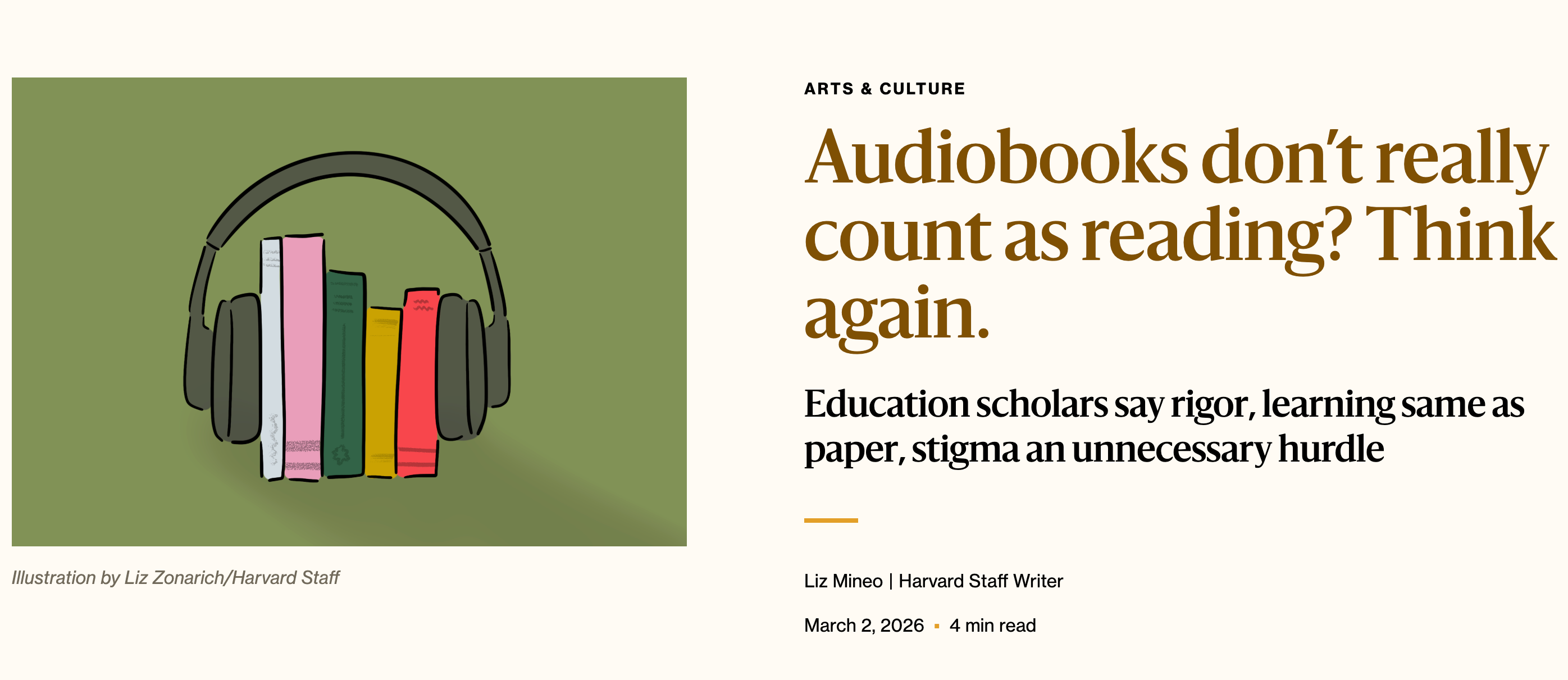
Outrage content requires a villain. And TikTok’s algorithm loves outrage. BookTok manufactures villains faster than authors do.
I heard someone say audiobooks aren’t reading, and…
When I hear someone say ‘audiobooks aren’t reading’…
POV: someone just told you audiobooks aren’t reading.
Who?! Who told you that? What was their name? Where do they live? Are they, perchance, made of straw?
The “audiobooks aren’t reading” villain is a convenient format: easy to dunk on, never fights back, guaranteed to generate likes and comments. And yes, within those comments will be some folks arguing the villain’s side, but the vast majority will be people agreeing that audiobooks count, and piling on their outrage that this mysterious “someone” would dare say otherwise.
How can I be so sure? Because a long time ago I made one of these videos.
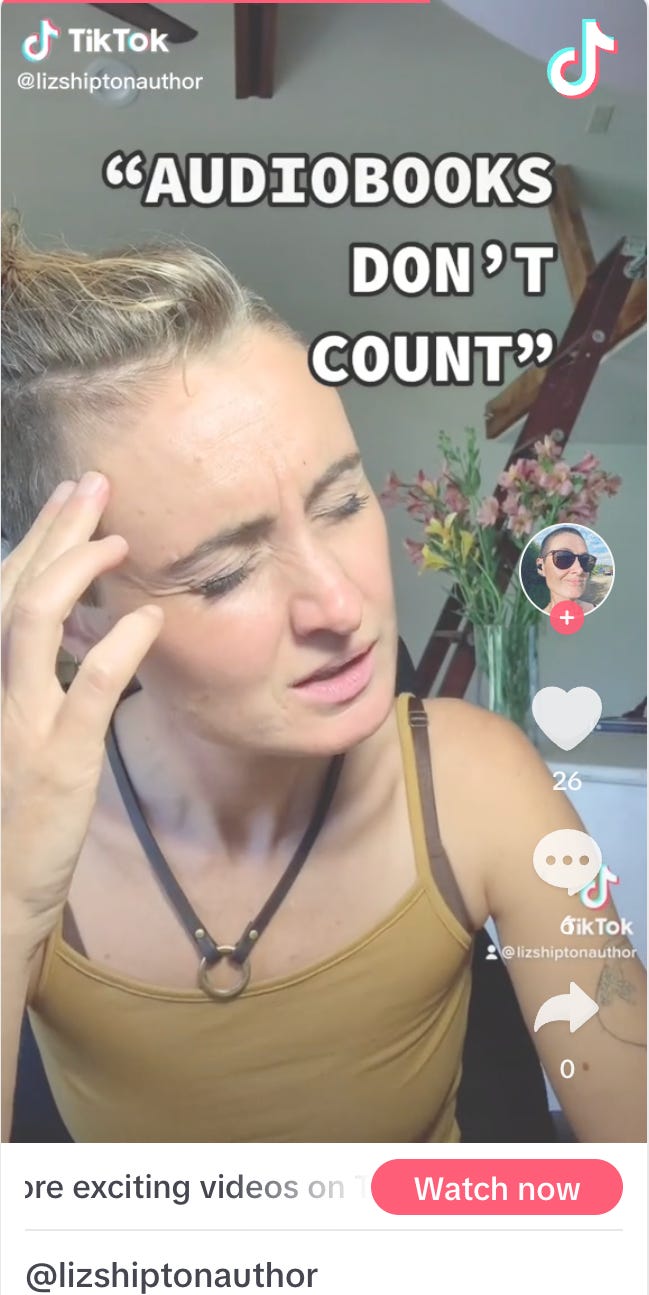
Am I proud? No, of course not. I was new to BookTok and desperate for engagement. WE ARE ALL DESPERATE FOR ENGAGEMENT PLEASE MOTHER BESTOW UPON US THY SWEET BLESSED ATTENTION FOR IT FEEDS OUR VERY SOULS.
This is not unique to audiobooks. The “romance isn’t literature” douchebag serves a similar purpose. So does the “you read too many books” villain and the “if you DNF’d it you didn't really read it” guy.
(They are all guys you’re picturing, aren’t they? Specifically: a white, college-aged asshole majoring in something like Middle Earth Fart Analysis, or whatever.)
These villains exist not because they’re common, but because they’re useful. A thirty-second video defending audiobooks requires the setup that someone, somewhere, attacked them. The vaguer that someone is, the better. A named person might fight back. A villain just absorbs the dunks.
Outrage content requires a villain. BookTok makes villains faster than authors do.
The studies people cite in these videos are also worth examining. The research on audiobook comprehension is mixed — the general consensus is that there’s no meaningful difference between listening and reading for narrative fiction, while there may be gaps of up to 28% for complex or information-dense material.2 But most of them have methodology problems significant enough that neither side should be citing them confidently.
But that’s fine. Nobody’s actually interested in what the research says. The research is just ammunition.
So where are we? Audiobooks are reading. Yep. Conceded. You win. Are we done?
Of course not. The argument will never be won, because the point was never to win. It was to make people angry. The anger rewards the algorithm. The algorithm surfaces more anger. Audiobook folks are too busy listening to their audiobooks to care, and TikTok continues to make money off people arguing over nothing.
For my part, I was fortunate enough to have my piece published by a different outlet (I removed the line about audiobooks.) You can read it on FanFi Addict. Trump probably can’t, but maybe I can send him a voice memo.
Liz Shipton is the critically-acclaimed author of Dot Slash Magic. Their female-rage-fueled dark fantasy satire Mother & Slaughter is available for Kindle here, or wherever else books are sold.
Why the blog rejected the article outright instead of just asking me to remove the line is less clear. I don’t want to believe it has something to do with them getting all huffy about it, but…I haven’t heard anything to the contrary, so that’s what I’ve assumed.
https://pmc.ncbi.nlm.nih.gov/articles/PMC12490814/
Comments
Nothing yet. Say the first thing.
Sign in to join the conversation.