
Dear friends, I greet you with care in these violent and uncertain times. In honor of Martin Luther King’s birthday, this month’s conversation is with scholar and activist Clayborne Carson. Hearing his story made me marvel at the unseen thread that weaves the events of our lives into an often unanticipated progression.
(Also, an unrelated invitation: please visit the EVENTS page of my website for some wonderful book-related offerings coming up this week, and beyond.)
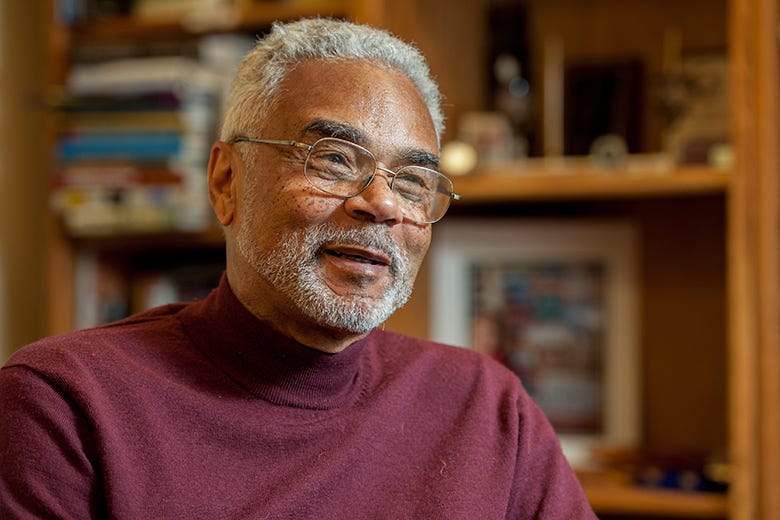
Dr. Clayborne Carson is best known as the founding director of the Martin Luther King Jr. Research and Education Institute at Stanford University, and a foremost scholar on King’s life and work. His many books include In Struggle: SNCC and the Black Awakening of the 1960s, Malcolm X: The FBI File, and The Autobiography of Martin Luther King, Jr. (compiled from King’s autobiographical writings). Carson grew up in Los Alamos, NM, where the atomic bomb was developed, and his was one of only a few Black families in the area. His father was a security inspector at the laboratory, and a young Clay worked there during the summers to earn money for college.
At the age of 19, he boarded a bus to attend the 1963 March on Washington for Jobs and Freedom. He heard Dr. King speak that day, but Carson was more drawn to the grassroots approach of the Student Nonviolent Coordinating Committee (SNCC). He had no way of knowing the turns his life would take, or that in 1985 Coretta Scott King would recruit him to edit and publish her late husband’s voluminous papers—sermons, speeches, correspondence, notes, and journal entries.
Along the way, Carson saw that both SNCC and Dr. King were seeking something much larger than civil rights reforms. As he writes in his 2013 memoir, Martin’s Dream, “They realized that the march and civil rights legislation that followed were only stages of a difficult, long-term experiment to determine whether this diverse nation could become truly just and democratic.” And, beyond that, whether it could be part a global movement for social and economic justice and human rights. He explained that King always saw the immediate issues in a broader context—recognizing the particular struggles they faced as part of a larger ongoing global struggle with deep historical roots.
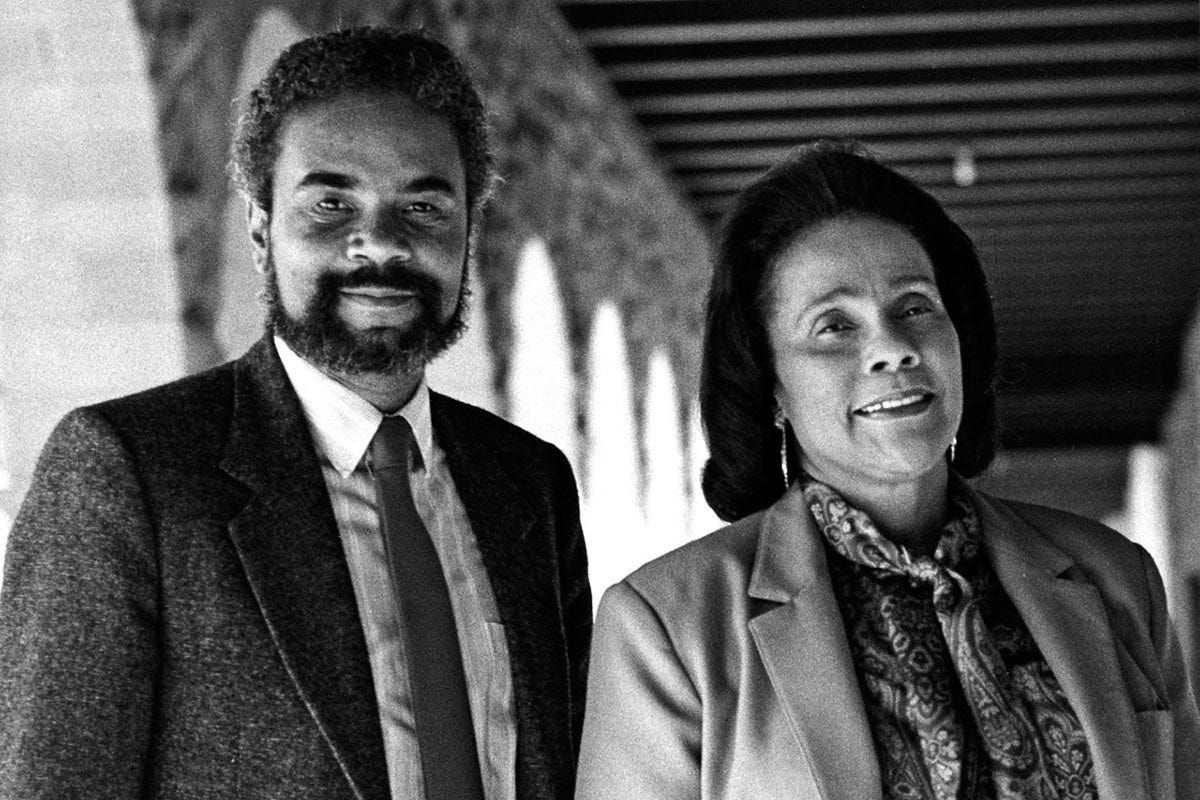
I first met Dr. Carson in 2007, through our mutual friend, the esteemed activist and historian Dr. Vincent Harding. We kept in touch from time to time over the intervening years, and when I reached out about featuring him in this blog, he quickly and graciously agreed.
Carson’s own activist involvement includes the Civil Rights and Black Power Movements, and protests against the US war in Vietnam. But I also count as activism his long career as a scholar and professor, and the countless lives he has reached through his teaching, lectures, publications, and creative works.
0:00
-1:08
One of the things that stands out to me most from our conversation is how Clay’s love for travel helped foster his commitment to an international vision for human rights. He tells me, “Since the time I was active in the Civil Rights Movement of the 1960s, I’ve always been pushing people to be more concerned about human rights on a global scale. I think part of it was probably just my wanderlust. I remember leaving the United States, I guess in ‘67 and traveling with my new wife, taking off around the world. Since then, I’ve been to about 40 countries. Part of it is I feel like unless we can connect globally, we’re not going to really have the change we need to see in the world.”
Dr. Carson is deeply committed to internationalism and cross-cultural relationships. His work has brought him to extended stays in places like France, South Africa, Tanzania, Zimbabwe, India, China, Zambia, and the UK.
Among his endeavors is a full-length theatrical production called “Passages of Martin Luther King.” In addition to performances around the US, the play was produced in both China (2007) and the Palestinian territories (2011)—translating and adapting the work, and using local actors, along with an ensemble of African American gospel singers. “In each of these places,” Clay points out, “I didn’t send a cast to do it. I came and lived in the West Bank, in East Jerusalem, lived in Beijing. Doing them was part of just really learning the culture, working on the language. I’m actually not very good at languages, but learning enough to get by.”
He said that hearing “Martin” speak in languages other than English, and seeing how audiences in different cultural contexts related to the material, gave him a greater understanding of the universality of King’s Dream and highlighted the global relevance of his ideas.
Carson recalls, “I wanted to do it as a docudrama, using real words where possible. And since I had done the King papers, I had a lot of words to work with! And then trying to look at the key events in his life.” He saw theater as another, perhaps more accessible way, to convey some of the research from the Papers Project to a broader audience, and to introduce Dr. King to other countries and cultures.

I ask Clay what stands out for him, as he engaged those audiences in China and Palestine? What aspects of King's thought spoke to folks in Beijing and the occupied West Bank, in a way that resonated with their struggles?
“They’re about the same thing,” he says. “They’re about human rights. It’s something that people feel around the world. When you look at it, what was really remarkable was that the governments allowed us to do it.”
Ramzi Maqdisi, the Palestinian actor who played Dr. King in “Passages,” also spoke to the relevance of the work: “All the speeches of Martin Luther King—when he’s speaking about justice, when he’s speaking about love, when he’s speaking about dealing with your enemy to gain the respect and the understanding of the other so that you can solve your problem—he’s speaking to me as a human being.” (Quote and photo below from the documentary film Al Helm: Martin Luther King in Palestine.)

0:00
-0:45
Dr. King saw nonviolence as a spiritual and ethical commitment. Gandhi’s perspective was deeply spiritual as well. However, Dr. Carson regards nonviolence as a tactic. He elaborates, “I’ve never really seen nonviolence as something you should accept on principle. I think if it works, fine. If it doesn’t work, you should get on to something else. I’m much more pragmatic about that. To me, the essence of it is, how can you build movements that transcend the borders of this country. I was a Gandhian and Kingian because they led movements. And, it worked.”
Early in 2008, Gandhian expert Dr. Prasad Gollanapalli visited Carson at the King Institute, and the two began a long-term collaborative effort to forge stronger ties between Indian Gandhians and American Kingian activists. In October 2019, the King Institute hosted a Gandhi-King conference at Stanford to celebrate the 150th anniversary of Gandhi’s birth. It was attended by more than 500 people including noted Gandhian-American activists Rev. James Lawson and Mary King, and family members of Gandhi, King, Cesar Chavez, and Dolores Huerta.
Clay recalls, “This [was] a special event . . . to bring together these people who represent such a long legacy—150 years after the birth of Gandhi—and here we are in the 21st century, reimagining what his legacy will be. Because I think for us, Martin Luther King is a continuation of the ideas of Gandhi . . . King proved that Gandhi’s ideas could work in different cultures—in a Christian culture as well as a Hindu culture. That it can work in the United States, as well as in India. And that’s very important for those who believe that Gandhi’s message was a message to the world.”
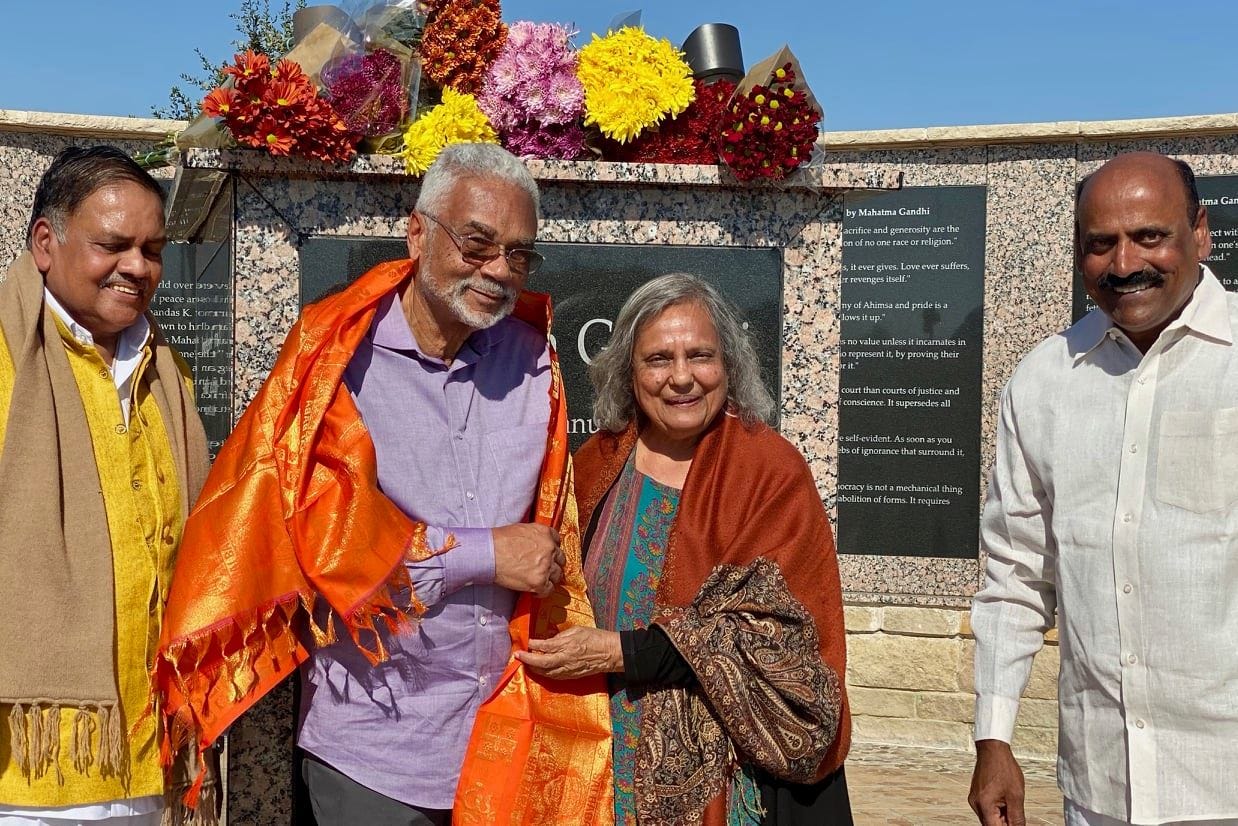
After retiring from the King Institute in 2020, Dr. Carson remained at Stanford as part of the Freeman Spogli Institute of International Studies. There, he co-founded the World House Project—a collaborative network of activists in the US and abroad. While the project draws inspiration from Dr. King’s visionary ideals, it encompasses the broader realms of nonviolence, liberation, community, and the ongoing struggles for peace and human rights. In recent years, and under new leadership, the Project has become an independent international NGO comprising institutes for research, education, and social action, alongside a global network of issue-focused working groups.
“The World House” is the title of the final chapter in Where Do We Go from Here: Chaos or Community?—the last book King published before he was killed. He used the term to describe our global condition as that of a single human family who must live together in one large house, “a family unduly separated in ideas, culture, and interests who, because we can never again live apart, must learn somehow to live with each other in peace.”
Martin Luther King, Jr. was only 39 years old when his life was ended by an assassin’s bullet. It’s strange to realize that Dr. Carson has spent more years working on King’s papers than King lived. But there’s a way that Carson’s work has extended King’s life and broadened his legacy by making his words and thought accessible through a variety of modalities.
Given his 60-odd years of activism, I ask Clay what has sustained him. Without hesitation he responds: “Fun! It’s like, I don’t see it as work that I do.” He loves exploring new places, taking photographs, meeting people, engaging with colleagues and students around the world.
0:00
-1:02
Carson describes himself as a risk taker in his travels, and I’m curious how that has shown up in his activism. “SNCC was certainly a risk-taking or organization,” I offer. “That’s a good example,” he nods. “I think seeing freedom as something that you work on, to express yourself. So for me, it’s been . . . first of all, just a way of seeing what I could get away with,” he smiles. “I mean, wherever you are, you push it to the edge. I want to go, and I want to have fun where I am. I want to learn. Usually, what has been said about me by people who are close to me is that I’m a risk taker. It could have got me killed. But that’s true for a lot of people in the world. If you believe in what you’re doing, you don’t think of it as a risk. You think of it as that’s your life.”
Carson’s life has brought him into relationship with people around the globe—from Stokely Carmichael to the Dalai Lama. His imprint as both an activist and a historian will reverberate for many generations to come. At the end of a 2013 interview in the Stanford Report, Dr. Carson was asked: “Knowing King’s work as intimately as you do, what messages do you think he would want to impress upon Americans today?” His answer is still relevant, “He would want people to know that his Dream was still unfulfilled at the end of his life and remains unrealized even now. He would be a persistent critic of any nation—and any president—that tolerated extensive poverty and continued to waste precious human and material resources on war.”
Please join the conversation by adding your comments below, or click the heart if you enjoyed this article!
To learn more about Dr. Carson’s work visit:
Bio (with photos): https://worldhouse-project.org/clayborne-carson/biograpy
King Institute: https://kinginstitute.stanford.edu
Dr. Carson’s Vimeo site (recommended!): https://vimeo.com/clayborne
Dr. Carson’s books: https://worldhouse-project.org/clayborne-carson/books
A Biographic Interview with Clayborne Carson (5:35):
Comments
Nothing yet. Say the first thing.
Sign in to join the conversation.