
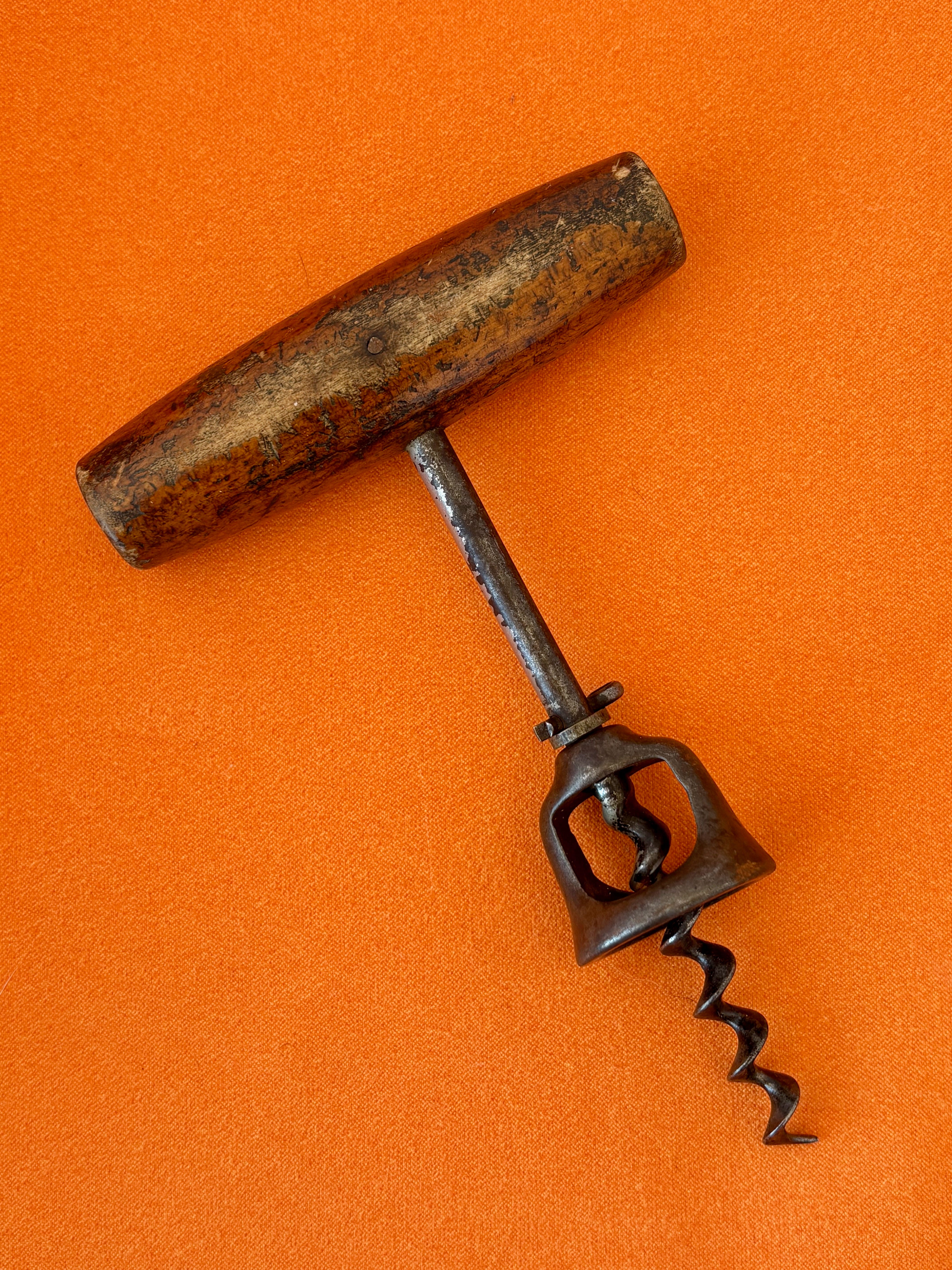
If you, like me, have moved house many times, you have probably thought about your possessions quite a bit. Our relationship to our possessions can be quite complicated. In a very early piece on Living Elsewhere called “The Dreams of Stuff”, I examined some of these complications, and even put forward a theory of sorts about them.
Here, however, I want to look at possessions from a different perspective. This time, rather than investigating our fraught relationship to material objects, I want to move to the far end of the scale and talk about our very favorite possessions.
In fact, I want to coin a term: personal heirloom. This inherently contradictory term is meant to highlight a special sort of possession: those few things that we keep because we love them, because they have special value or utility to us—even though others may not appreciate them at all.
Let me say a bit about the kinds of possessions I am not talking about. I am not talking about your Porsche or your Rolex or your motorboat, or anything else that you spent lots of money on. I am also not talking about your smartphone. If we made a list of our most useful possessions, it would be topped by smartphones and toilet paper. But that’s not what I’m after here.
I also exclude pets. I love my turtle Stjärna more than any object, but I don’t think of her as a possession, any more than I think of my girlfriend that way.
I am interested in those things that you make sure to take with you every time you move. Those things that make you smile when you look at them. Those things that offer you a graceful interface to the world. They don’t have to be useful, though they often are. They also don’t have to be beautiful, though they may well be. They can have sentimental value or practical value—or ideally, a bit of both.
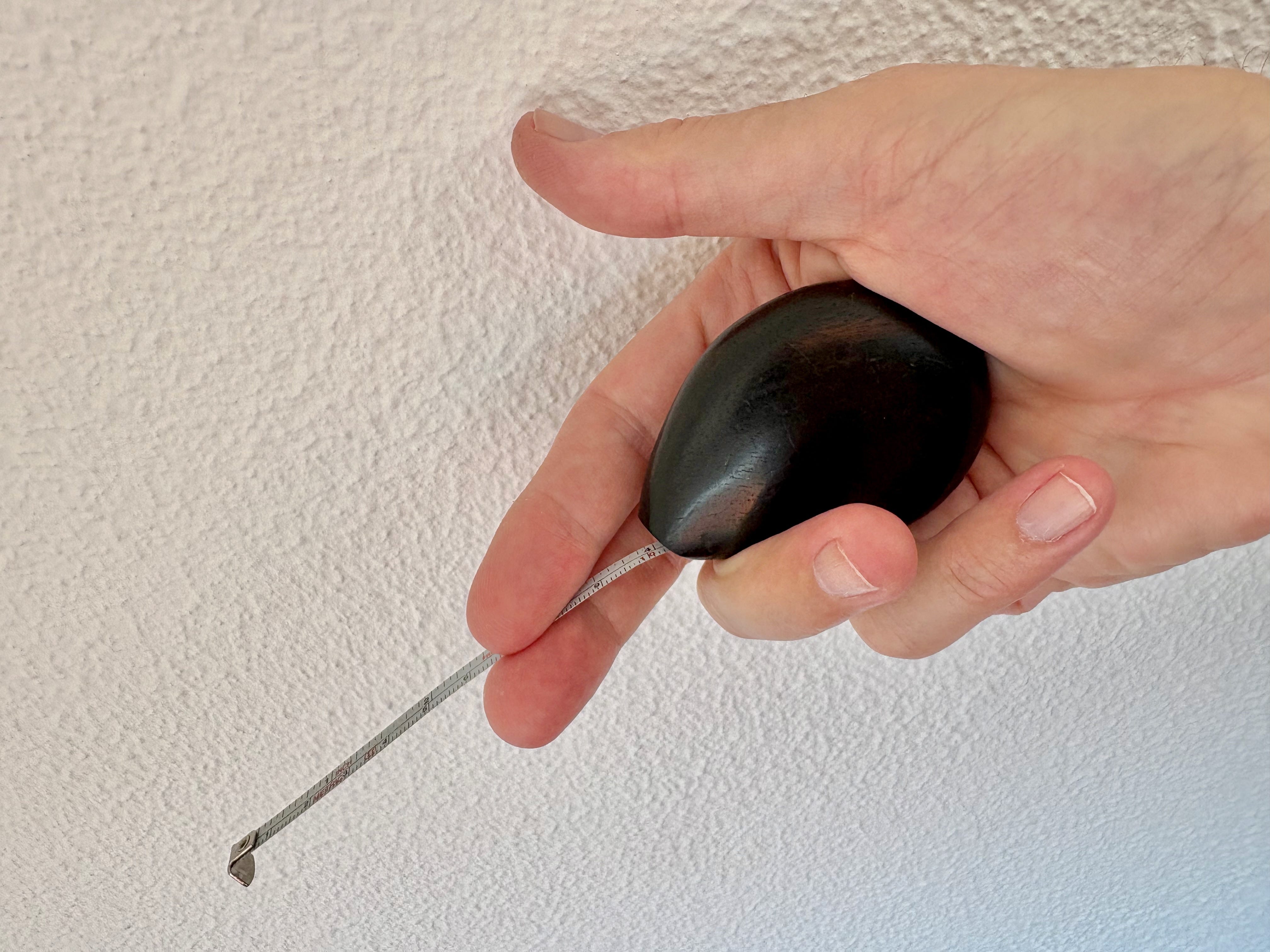
Perhaps it’s still not clear what kind of possessions I am talking about. Here are a few diagnostic questions:
For how long have I had this item?
How sad would I be if I lost this item?
How hard would it be to replace this item?
To what extent does this item represent who I am?
Thinking about it, I realize that I don’t have many items of clothing that could count as personal heirlooms, since they tend to get replaced semi-regularly, and in many cases with a nearly identical item. There seems to be a difference between things that signal one’s style and one’s personal heirlooms.
Why am I interested in personal heirlooms? Because they represent the physical manifestation of our values. We like some things because they are beautiful and others because they are useful. We like some things that represent smart design and others that represent good craftsmanship. We love some things because they are concrete symbols of the stories in our lives.
I believe that if we each made a little inventory of our personal heirlooms, it could serve for others as an explanation of who we are.
Having said this, of course, I feel compelled to use myself as an example. So, let me take you through a few of my own personal heirlooms and tell you why I love them. Maybe that will help to illustrate the sorts of things we stand to learn from each other when we share these favorite possessions.

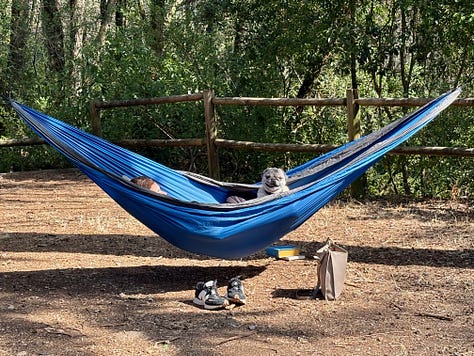




Among my absolute favorite possessions is my hammock. I actually own three hammocks, but this blue, nylon, two-person hammock has clocked the most use over the past decade. I have used it solo, with a lover, with a friend, with my turtle, and more recently, with my pug. I use it at home, in the woods, and at the beach. I have it set up right now in my study, so that I can rest in greater comfort than even a bed can offer.
In fact, I have become such a devotee of hammock use that I have stopped taking a tent when I go camping—assuming the weather will be warm enough. I love my hammock because of the freedom it offers me; because of the connection with nature that it affords; because it can act as a comfy haven in a rough environment; because it can be a nest of intimacy. For me, it represents the kind of lifestyle I aspire to: flexible, pleasurable, self-sufficient, spontaneous, adventurous.
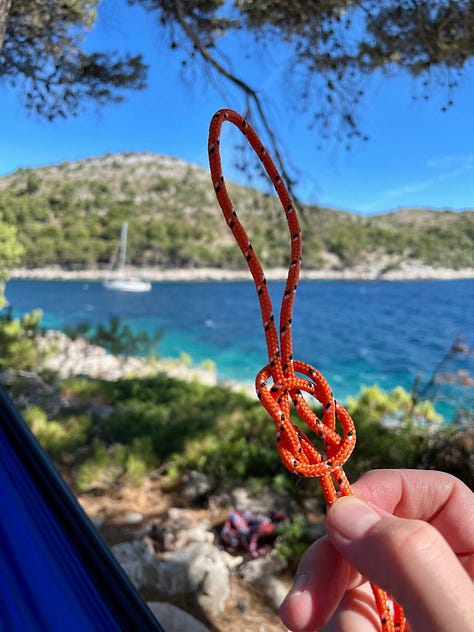
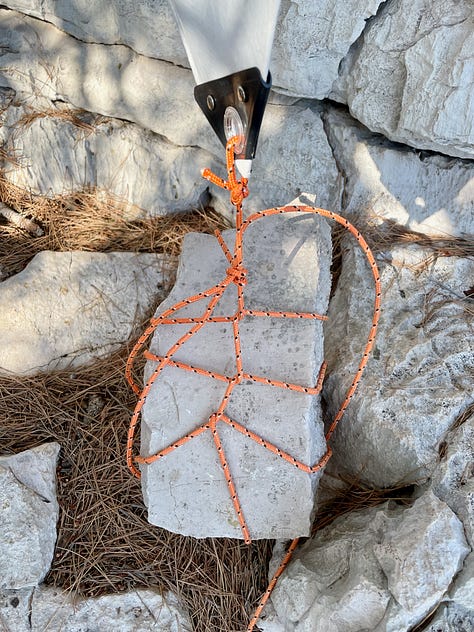
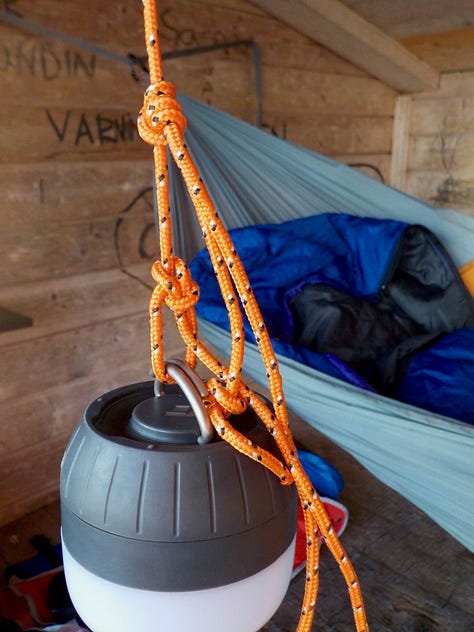
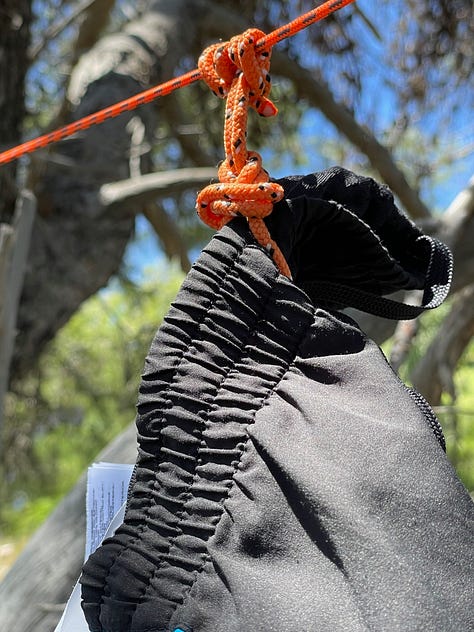


Another manifestation of my self-sufficient, adventurous nature is my love of tying knots. Ever since I first learned to sail, I have been fascinated by the infinite uses for cord and rope. As a consequence, I have learned dozens of knots by heart, and largely eschew modern fripperies such as bungees and velcro.
Of all of the types of stuff I tie knots in, my absolute favorite is my orange, four-millimeter, braided polyester cord—the most versatile thing in my closet. I purchased a large spool of this cord twenty-five years ago, and it has traveled the planet with me.
This cord has helped me to hang hammocks, to dry laundry, to dangle lanterns, to carry a water bottle, to keep my luggage together at airports, to hang rocks as weights for tarpaulins, to keep my water bottle from rolling around on airplanes, and hundreds of other nonce purposes. I have even been known to keep just a meter or so of it in my pocket, so that I can practice my knot-tying while waiting for a bus. (This is probably not a good way to impress women, but of course that’s not the goal.)
My orange cord is my heartstring—it binds me to the natural world and to the world of adventure. It is optimism itself.
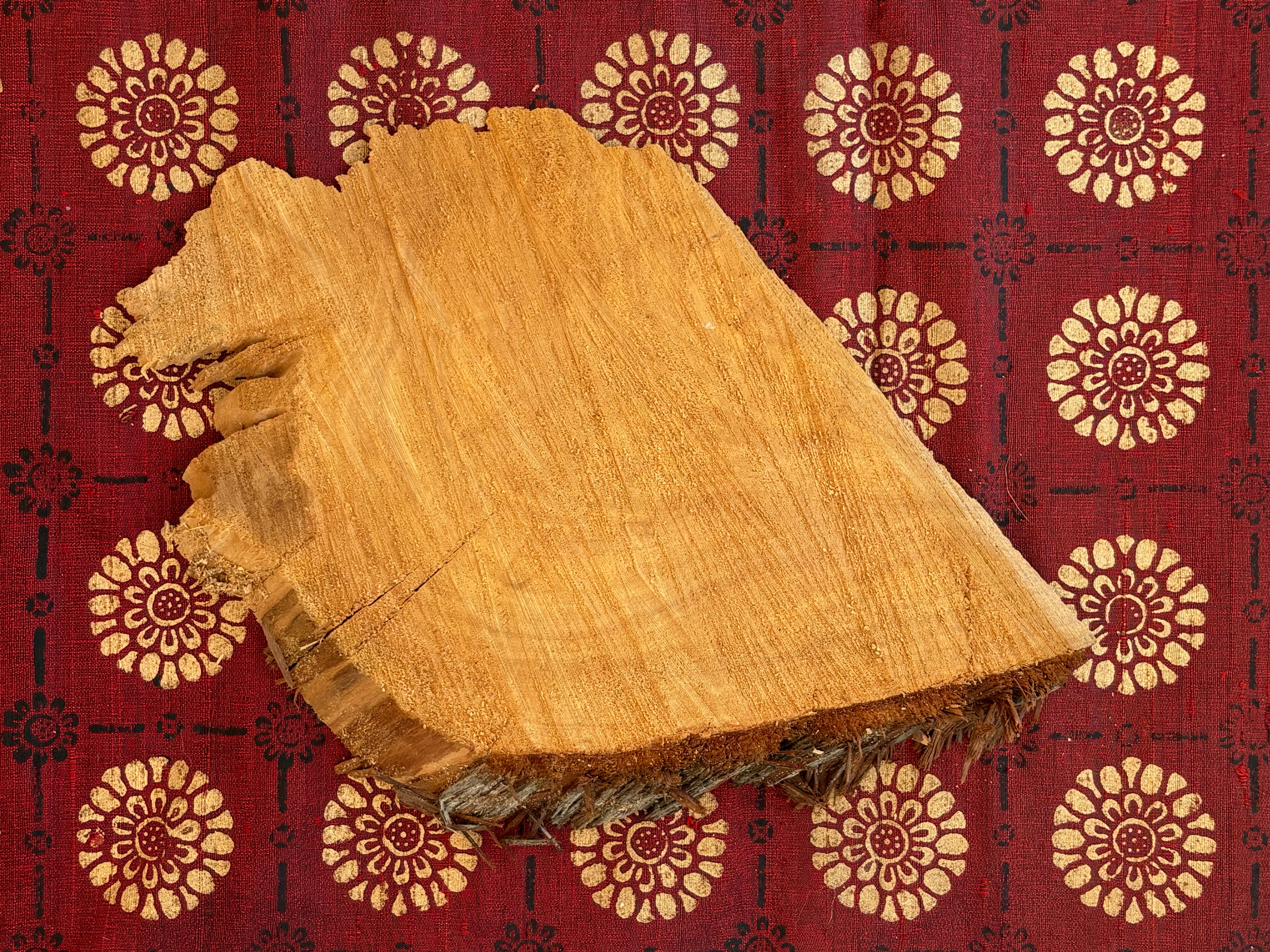
Lest you think that everything I cherish is highly practical, allow me to show you my secret slice of cypress wood.
Why secret? First, because I smuggled it out of a cemetery in my backpack. I was walking one day in my beloved Cemitério dos Prazeres, where I used to go regularly for “thinking walks”, when I encountered a stump where one of the hundreds of cypresses that adorn the cemetery had been cut down. There were a few large slices of wood strewn around, and I nabbed one that was a bit bigger than my hand.
Also secret, because it is not on display; I keep it in one of my desk drawers. I love the smell of cypress, but it is a rather intense scent. So I keep my cypress slice in the drawer, where it subtly perfumes the environment, and open the drawer occasionally for a pungent sniff.
My secret cypress slice lends its bewitching scent—like cedar, like sandalwood, like mint, like tar, like turpentine—to the room where I do my writing. It is the smell of life, but also of death—as the cypress is the tree of mourning. It connects me with the natural world, reminds me of one of my favorite places, and acts as the subtlest possible memento mori.
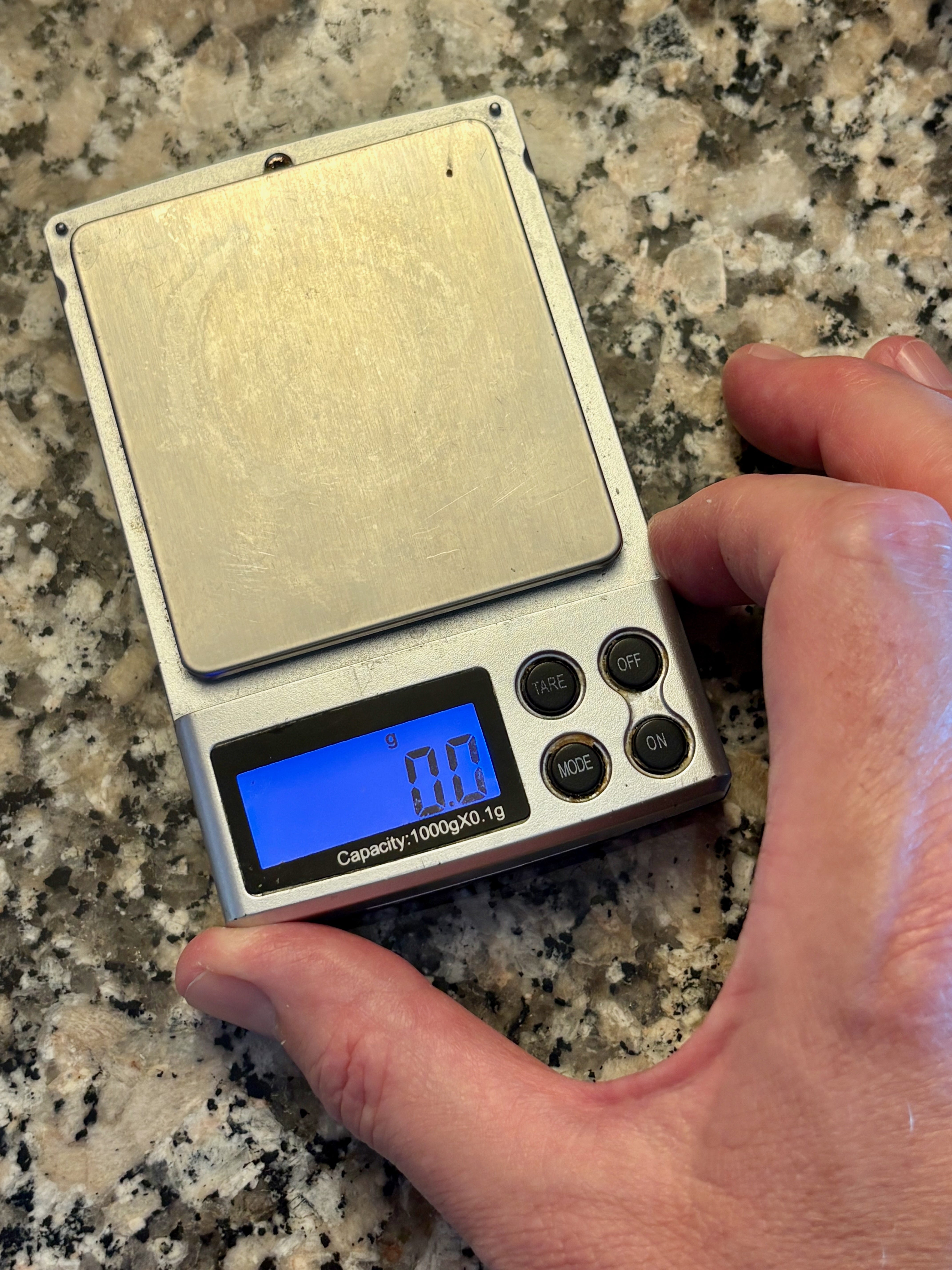
Every week, I bake bread—so regularly that my Portuguese friends call me “o padeiro”. I have a whole set of baking equipment that I love: bowls, whisks, scrapers, mats, lames, bannetons, cast-iron pots. But thinking about it, I realized that the one that most speaks to me is my mini-scale.
As is often the case here in Europe, I do virtually all of my cooking—and certainly all of my baking—by weight, not by volume. I have a large scale that helps me to measure large amounts of flour and water, but for precise work, I have my beloved mini-scale.
I bought this about a decade ago. It was actually sold as a medical scale, for measuring liquid drugs, cutting pills, and the like. But it works admirably for cooking. I use it nearly every day.
Why do I love it? For two reasons: First, it is extremely precise—to the tenth of a gram. This is wonderful when your recipe (like my famous hummus recipe) calls for 3 grams of salt and 2 grams of smoked pepper—it wouldn’t do to accidentally put in more pepper than salt.
The other reason is that it is so portable. I have taken this scale all over with me, so as to be able to cook and bake like a pro while traveling. As with the hammock and the cord, it speaks to my love of self-sufficient adventure.
Portable, reliable, and incredibly precise—what could be better?
“It is a mistake to confound strangeness with mystery.”
—Arthur Conan Doyle, A Study in Scarlet
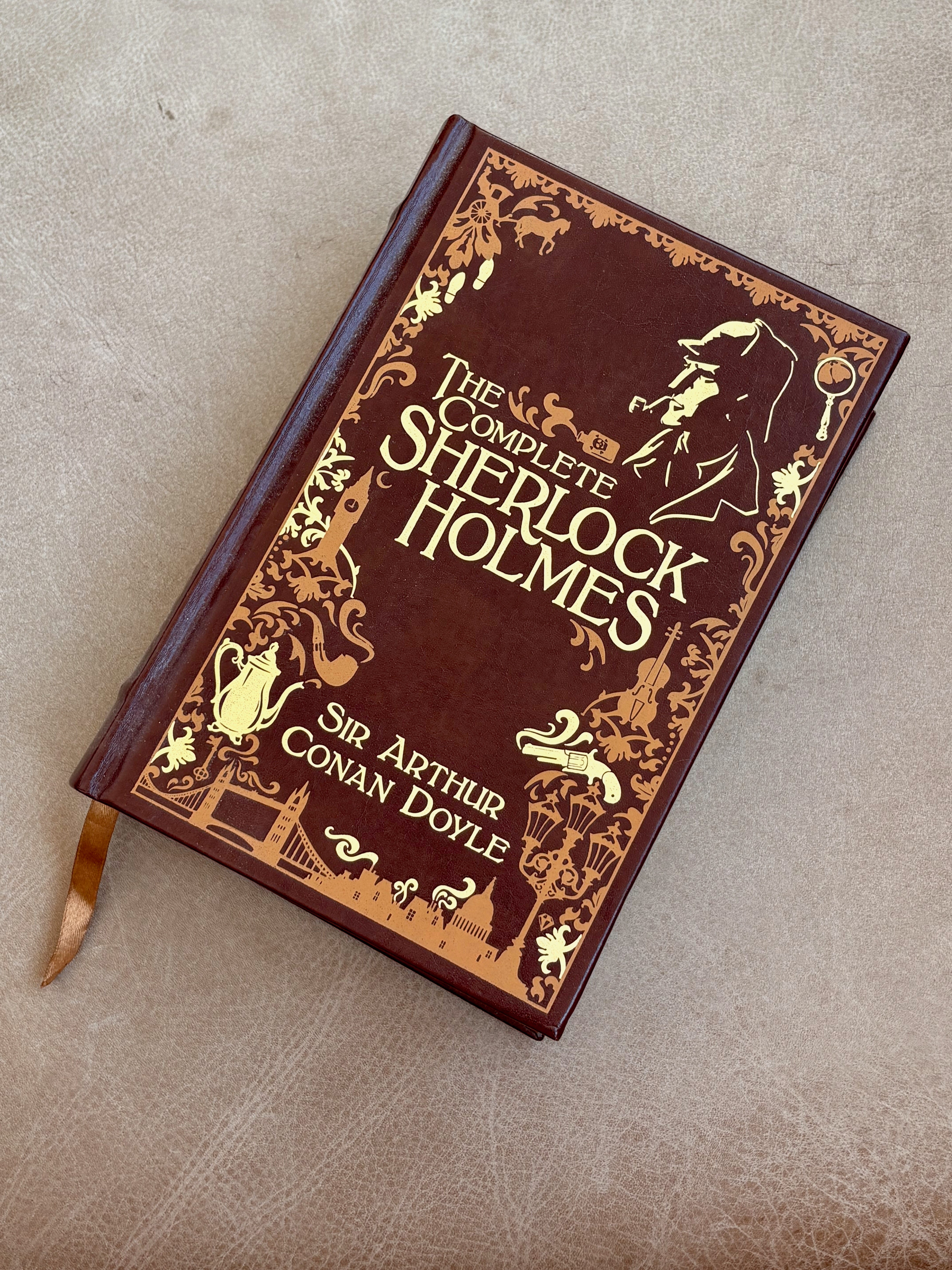
If there is a literary analogue to comfort food, then for me it is Sherlock Holmes. I love Conan Doyle’s sixty stories in a way I can’t adequately convey. I have read them—and also listened to the audio version read by Stephen Fry (highly recommended)—more times than I can count.

When I visited the Sherlock Holmes Museum in London about ten years ago, I splurged a bit and bought myself a leather-bound, gilt-edged complete edition of the Conan Doyle stories. Dipping into it and reading a story with a glass of port in hand is an utter delight. It lies year-round on a shelf in my nightstand. That way I know that if I have trouble sleeping, or need guidance in reducing mystery to strangeness, the great detective is always by my side.
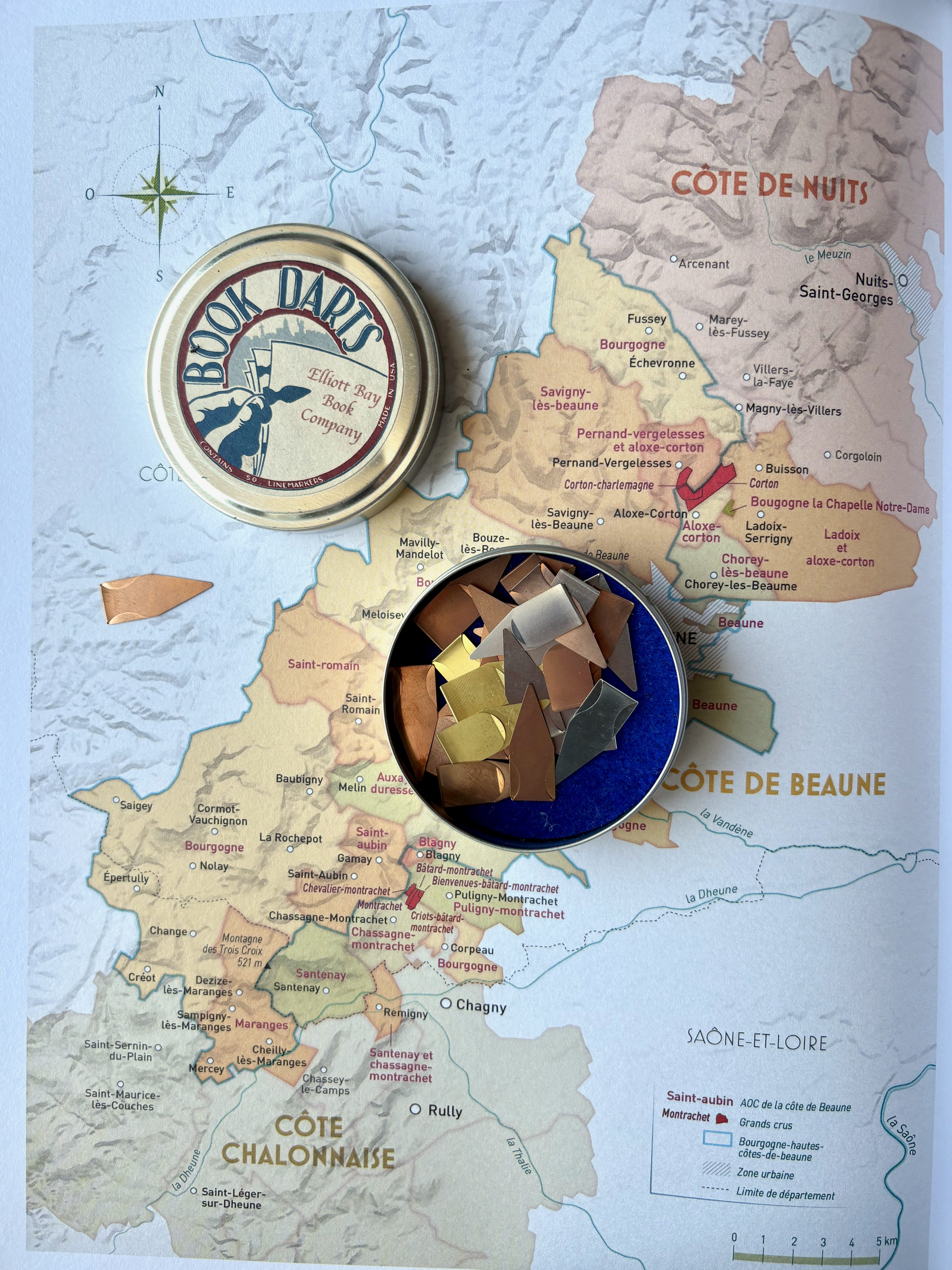
Book Darts are an elegantly simple product that I have loved for decades. These are a genius idea: tiny metal bookmarks that clip to the page. They are handy, durable, reusable, extremely lightweight, and kind to books.
I have purchased a couple of tins of these over the years, though the one I am fondest of bears the stamp of the Elliot Bay Book Company in Seattle. I bought that tin twenty-five years ago, on the occasion of my acquiring another personal heirloom: my copy of A Pattern Language by Christopher Alexander and colleagues. I love that book so much that I will surely dedicate a whole piece to it someday.
For now, let me just say why book darts are such a perfect fit for me. I am someone who would never write in a book with a pen. I am loath to write even with a pencil, though I do have my system for marking significant passages with relatively little aesthetic disturbance. I also dislike conventional bookmarks, which obscure the text and mark only a two-page spread.
Book darts are precise: You can use one to mark the exact line where you left off reading. They are also eminently reusable; being made of metal, they last forever. And they are beautiful, decorating the page in an elegant way.
A tin contains enough of them that you can put one in each book you are reading—which, in my case, is often a large number. Or you can go crazy and use them to mark passages. I sometimes use them to mark those passages I want to discuss with someone, to make them easy to find.
A product that takes reading—already a wonderful activity—and adds a dimension of practicality and beauty. Again, what could be better?
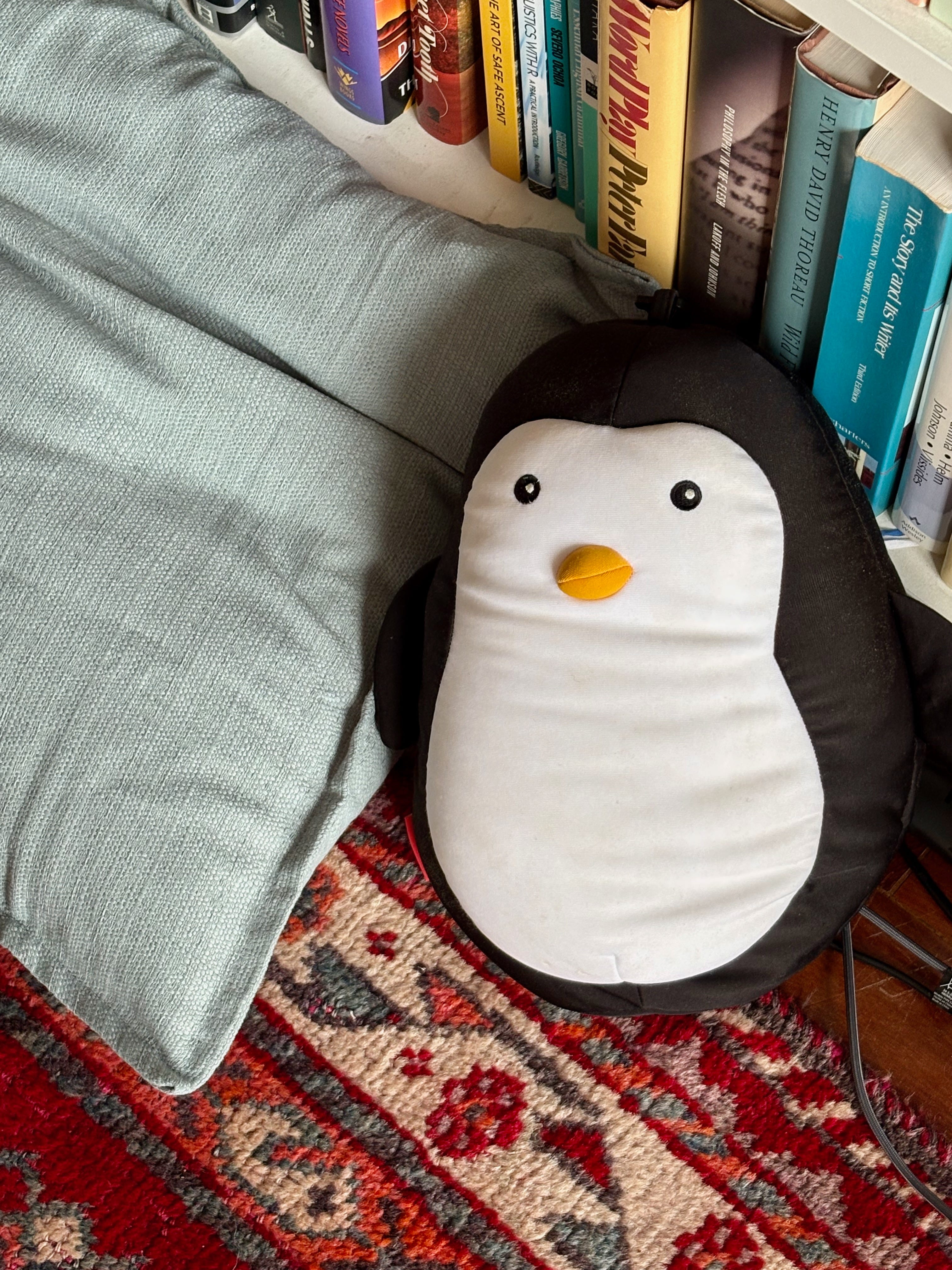
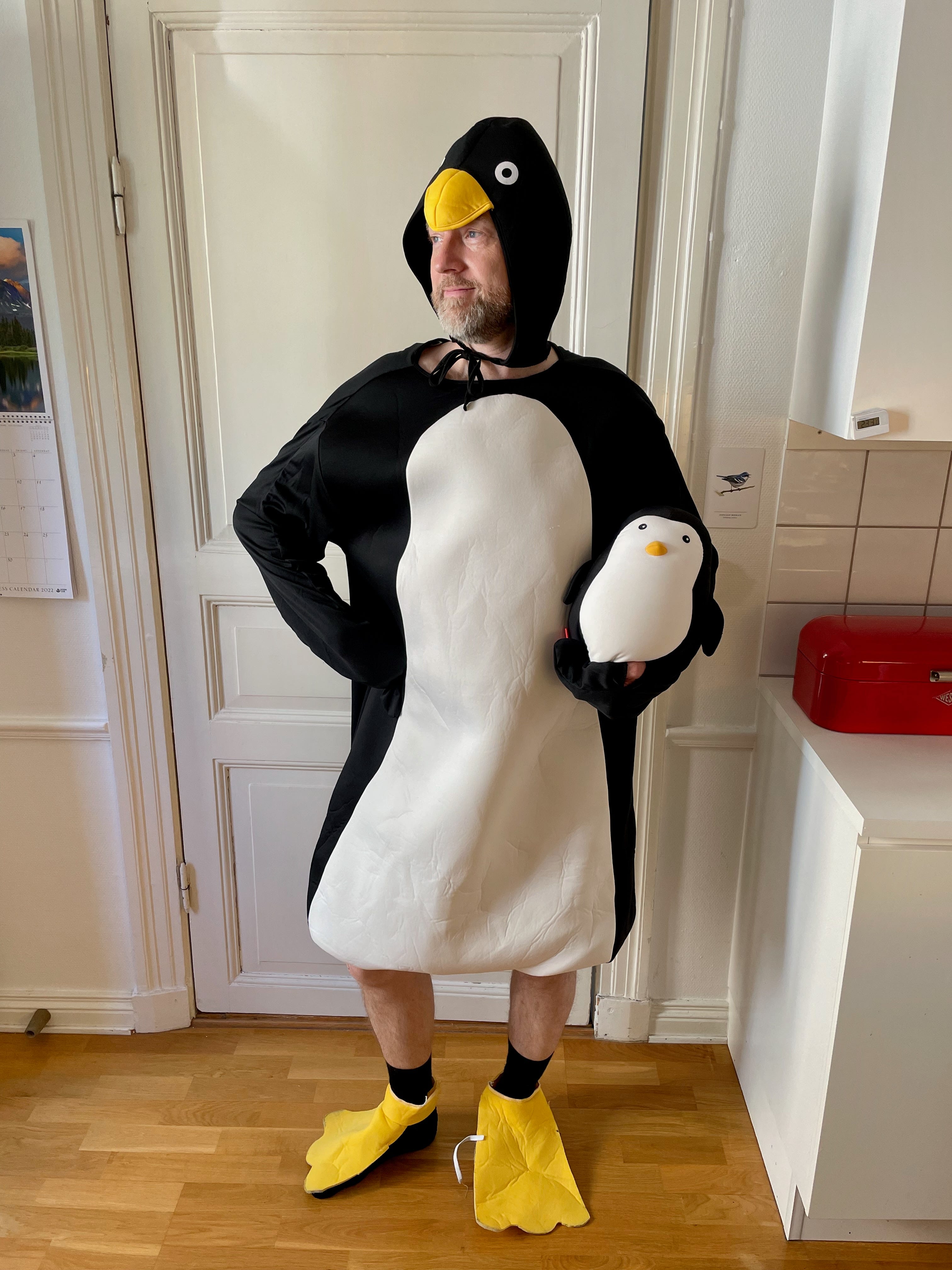
By now, most of my friends, and a great many of my students, have met my penguin. Originally a travel pillow, it is filled with styrofoam pellets and is very lightweight. It is extremely huggable. I nabbed it from a former girlfriend when I realized its potential utility.
When I facilitate workshops, I frequently use the penguin as a so-called “talking object”—only the person holding the penguin may speak. In fact, I take it to my Biodanza class every week, and our facilitator uses it in the same way. I have even used the penguin in exercises in the increasingly legendary parties that I throw here in Lisbon.
The penguin used to accompany me to lectures, too: I used to lecture to 100 students in a hall made for 250. To keep students from gravitating to the back of the room, I put the penguin on top of a box in the center and instituted the rule, “Nobody sits behind the penguin”. It worked.
My penguin—it doesn’t really have a name, though one of my colleagues suggested Doris—is the kind of teaching tool that I love: fun, quirky, lovable, multifunctional, full of personality. In other words, it represents my teaching style.
Also, I love to watch the ways in which people interact with the penguin while talking; some hug it, some poke at it, some massage its belly, some bounce it up and down. The penguin takes it all in stride. He never lets me down.
I have another half-dozen or so possessions that I could count as personal heirlooms, but I think that this list serves amply to illustrate the concept. I like the idea that our prized possessions say something about us: about our values, about the stories we have lived, and about who we aspire to be.
Now what about you? Is it easy or difficult for you to identify your personal heirlooms? Please tell us about one of them in the comments.
Now if you’ll excuse me, I’m going to go lie in my hammock and practice my knot-tying.
If you enjoyed this essay, here are some related pieces from Living Elsewhere that you may enjoy:
Comments
Nothing yet. Say the first thing.
Sign in to join the conversation.