
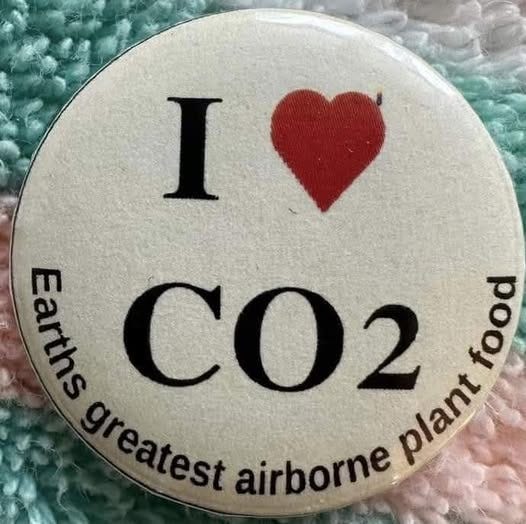
One of the characteristics of propaganda is that not only can it bend truth, but it can also completely reverse it. You probably remember Orwell’s statement WAR IS PEACE, FREEDOM IS SLAVERY, IGNORANCE IS STRENGTH. I found a recent example of this inversion in the book by Lewis H. Ziska Greenhouse Planet (2022). Ziska reports how William Happer, a senior director at the National Security Council and an emeritus professor of physics at Princeton University said at a Senate Hearing that “The demonization of carbon dioxide is just like the demonization of the poor Jews under Hitler. Carbon dioxide is actually a benefit to the world, and so were the Jews.” Dr. Happer reframed Orwell’s statement as “POISON IS HEALTH”
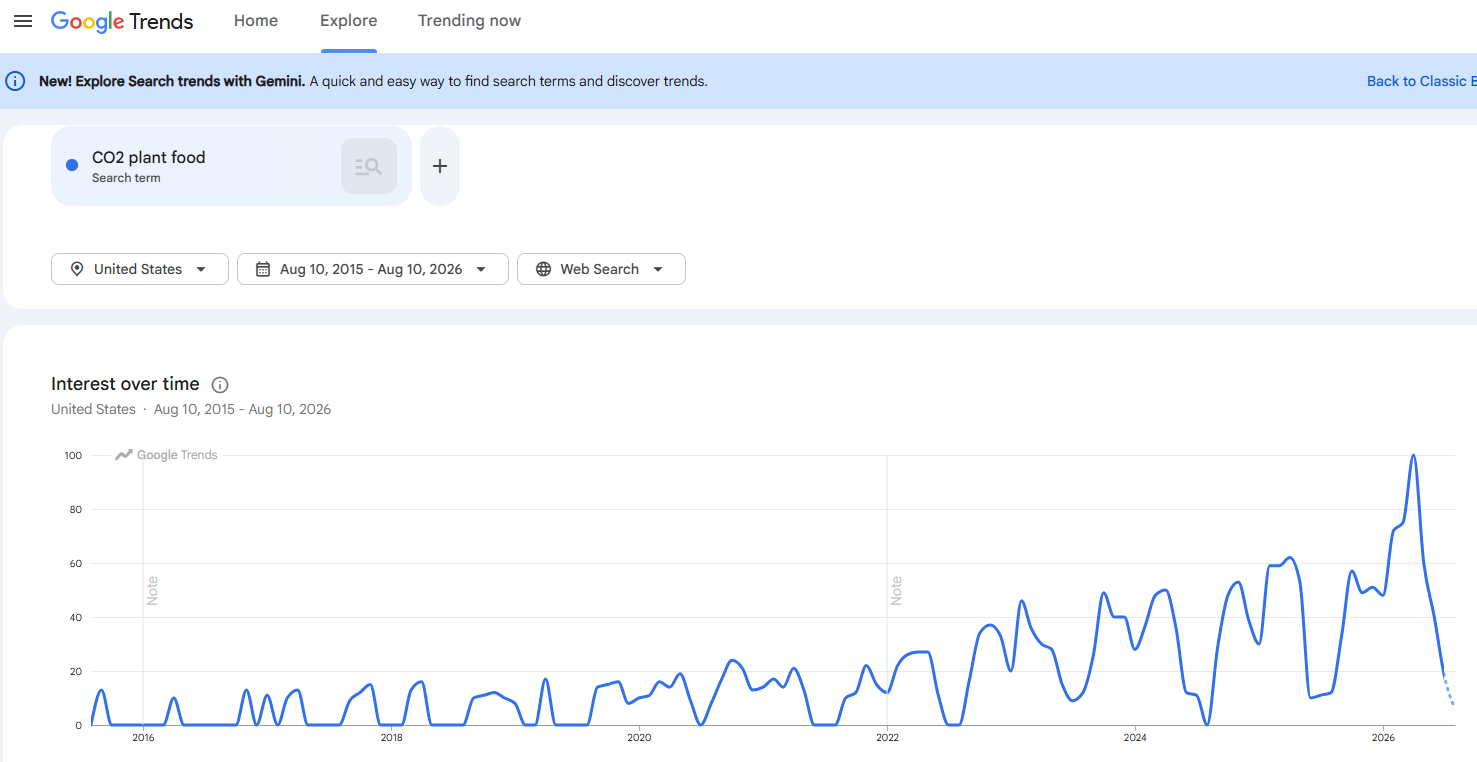
The “CO2 is Plant Food” campaign has been a remarkable success: its interest, as measured by Google Trends, has increased nearly 10-fold during the past 10 years. Few scientific memes can match this result. (Note: the oscillations are a typical seasonal phenomenon. In Summer, people do not search so much for scientific information)
But where did this campaign start from? The story is not easy to dig out of the Internet, but it is told in the book by Lewis H. Ziska, Greenhouse Planet (2022). In 1998, when he was a postdoc, he was interviewed for a film titled The Greening of the Earth Continues, a sequel to the earlier movie by Sherwood Idso in 1992, titled The Greening of Earth.
As it often happens when experts are interviewed for politically oriented documentaries, their statements are mangled, chopped, and framed in such a way as to be oriented along the purposes of the sponsors. A recent example is the interview with George Monbiot in Sofia Pineda Ochoa's documentary Greenwashed (2025). Monbiot tells the story here.
The same thing happened to Ziska. During the interview, he was asked about how high CO2 concentrations could make rice grow faster. But he wasn’t given a chance to say how CO2 could damage the rice yield, for instance by causing weeds to grow faster, too. So, he was made to look as if he approved the idea that increasing CO2 is good for food production.
Ziska was an early witness of the progression of the “CO2 is food for plants” slogan. Here is an excerpt from the book:
…. the message was simple: More CO₂ would be positive for plants, crops, the food supply, human health, and all of civilization.
That pro-CO₂ message from 1998 has not gone away. The “CO₂ is plant food” meme continues on, having provided an essential talking point for climate change deniers for the last three decades. Of course, the clumsy VCR videos have been replaced by YouTube, but the message remains the same. And rest assured that if any public testimony regarding climate change is needed, the “CO₂ is plant food” message will be repeated.
Who are the individuals and groups promoting this idea? We can begin with Sherwood Idso, the former USDA scientist who narrated both videos under the auspices of the Greening Earth Society. “Former” because with money from the Western Fuels Association—that is, the coal industry—he started his own institute, the Center for the Study of Carbon Dioxide and Global Change. While the
Greening Earth Society is now defunct, the Center for the Study of Carbon Dioxide and Global Change” is still operational. Sherwood’s initial efforts are continued by his sons, Craig and Keith, who run the website http://co2science.org, which takes all scientific papers regarding CO₂ and plant biology and interprets them according to their own ideology. Simply put, they remove any conclusions that don’t agree with the premise that an increase in CO₂ is wonderful and beneficial.The Idsos are only the tip of a climate-denying iceberg. The CO₂ meme is ubiquitous in conservative politics. It is an involuntary mental tick in deniers’ minds, as certain as a sharp tap on the patellar tendon causing the knee-jerk response. Should anyone utter, “Climate change is man-made,” the response will issue from a conservative’s tongue faster than any pulled string, “But CO₂ is plant food!”
….
Perhaps the most over-the-top, summa cum verbiage has come from William Happer, a senior director at the National Security Council and an emeritus professor of physics at Princeton University: “The demonization of carbon dioxide is just like the demonization of the poor Jews under Hitler. Carbon dioxide is actually a benefit to the world, and so were the Jews.” Uh-huh. Who knew that
being against “CO₂ is plant food” is the same as committing genocide?
Ziska’s book is well written, and I learned a lot from it. Even though I spent the past few years studying the complex biochemistry of photosynthesis, I lacked the insights of the botanist and I found them in this book. It contains a complete explanation of why more CO2 is not a good idea to improve agricultural yields. It is true that it makes plants grow faster, but it creates a host of collateral effects that make the whole idea counterproductive.
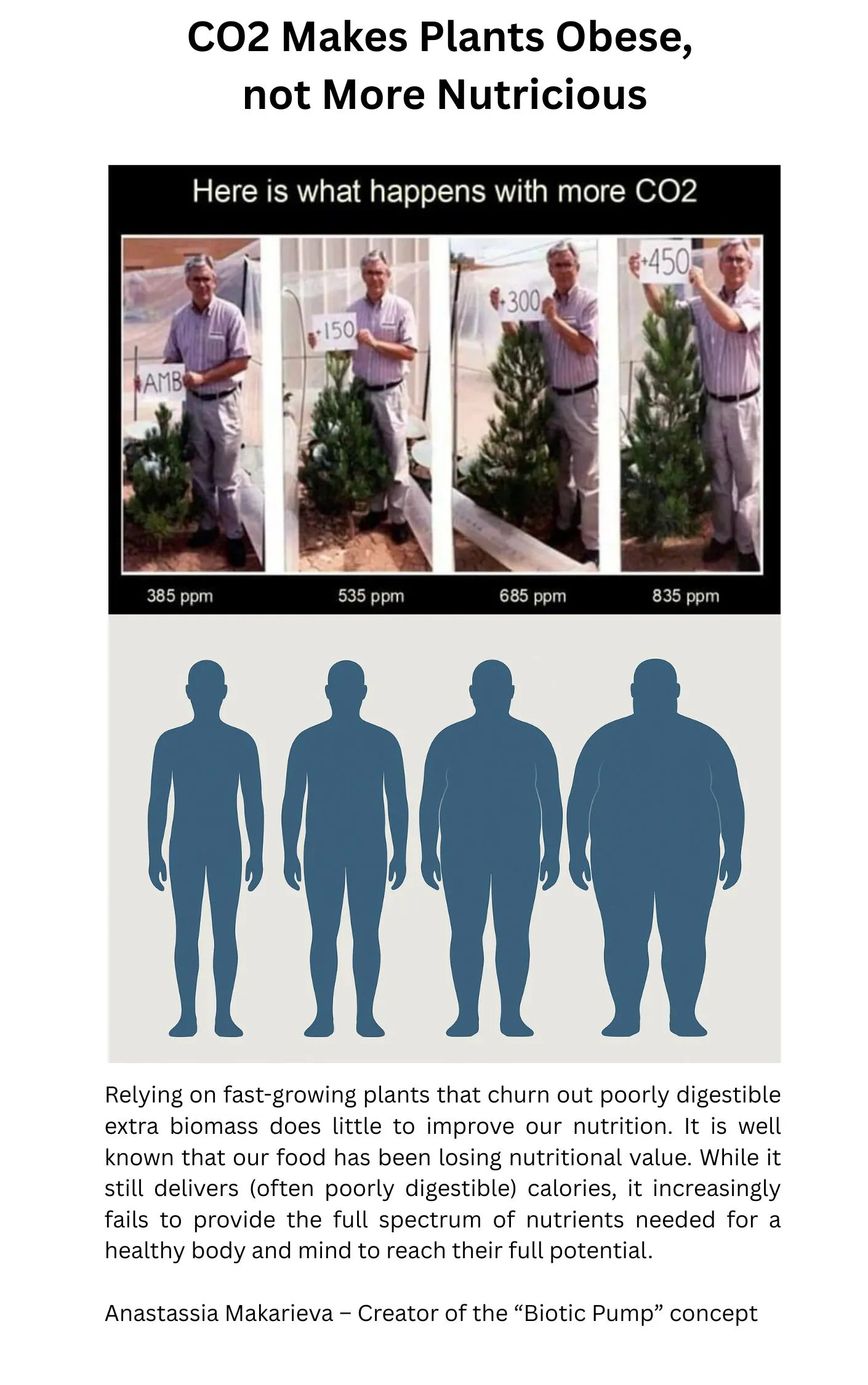
Saying that more CO2 is good for plants is like saying that more fast food is good for humans. Anastassia Makarieva noted the same thing, as many others.
And all that doesn’t take into account the deleterious effects that excess CO2 has on the whole ecosphere, as you can read in one of my papers.
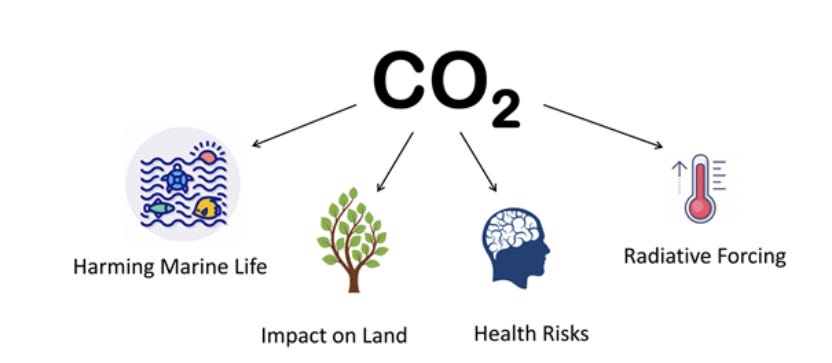
CO2 is not an inert gas, and its greenhouse effect is just one of its several effects on the ecosphere. CO2 is a true pollutant, negatively affecting, among other things, the functioning of the human brain.
Unfortunately, Ziska’s book has had very little impact on the debate. I can’t know how many copies it sold, but I didn’t see it widely cited. I had completely missed its existence until, by chance, I had the idea to look for “CO2 food for plants” on Google Scholar; and it appeared.
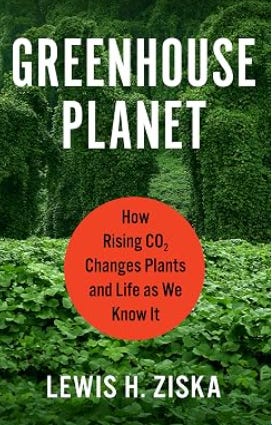
One problem is that the title is misleading. It just doesn’t tell readers what the book is about. Something like “Why more CO2 is not a good idea for food production” would have evidenced the author’s stance and intentions. In addition, it is not available in paperback, but only as an expensive hardcover version. There is a Kindle version, also rather expensive, and not everyone likes ebooks.
Probably this is the result of the publisher’s choices. They are perfectly capable of ruining a good book and, in this case, they seem to have been doing their best to do exactly that.
But these mistakes matter little. The way the debate is structured today, facing powerful and simple slogans, it is useless to respond by putting forward scientific reasoning. It is the same as trying to win an artillery duel using slingshots. Scientists just lack the virtual firepower that the powers that control the memesphere can muster.
And so our lot, as always, is to go into the future blindfolded.

Comments
Nothing yet. Say the first thing.
Sign in to join the conversation.