
St John Henry Newman is one of those saints who has been following me around for a while.
When I first began attending Mass in my late teens, I became familiar with the words of his beautiful and poignant hymn, Lead, Kindly Light. While all church music was new (and sometimes a little baffling) to me back then, the words of this hymn quickly lodged in my mind; I was struck by how my own experience of being guided by God into the Church as a convert, which I had assumed to be entirely unique to me, had been put into words so eloquently by another.
Later, when I entered the Dominican Sisters of St Joseph, I spent many fruitful years studying at the Maryvale Institute, formerly located at Newman’s home Maryvale House in Birmingham. There I became familiar with Newman’s call for a laity “who know their religion… who know just where they stand… who know their creed so well that they can give an account of it.”[1] Then in 2019, the year I made my first profession of vows, the Church celebrated Newman’s elevation to the ranks of canonised saints by Pope Francis.
It’s probably unsurprising that Newman has played a significant role in my spiritual life, given I’m both a convert and a Dominican. But he has also shown his influence in another area of my Catholic life: my work as a catechist.
Only last year, on the Feast of All Saints, Pope Leo XIV named Newman as a Doctor of the Church and Patron of Catholic Education alongside St Thomas Aquinas. “Newman’s impressive spiritual and cultural stature will surely serve as an inspiration to new generations whose hearts thirst for the infinite,” he said at the beginning of his homily, concluding with a prayer that Catholic education, under the patronage of these two great saints, “will help each person to discover their own call to holiness.”[2] The Pope was speaking primarily of the educational work that takes place in Catholic schools, universities, and institutes of further education. But another form of Catholic education of ongoing importance in the life of the Church, and one where Newman can also serve as an inspiration and guide, is catechesis.
In his 2021 letter Antiquum Ministerium (The Ancient Ministry), in which he created the instituted lay ministry of catechist for the universal Church, Pope Francis traced the history of catechesis back to the Church’s very earliest years. Within the New Testament, he wrote, we see that “certain baptised persons exercised the ministry of transmitting in a more organic and stable form related to different situations in life the teaching of the apostles and evangelists” (AM 2). This ministry of organic faith transmission, attentive to the differing circumstances of life but always rooted in the received teaching of Scripture and Tradition, over time became known as catechesis. The year before Pope Francis wrote Antiquum Ministerium, the Church produced the new Directory for Catechesis, in which catechesis is defined as an ecclesial calling characterised by teaching the faith, witnessing to the faith, and accompanying others in faith (DC 113).
This process of transmitting faith through teaching, witnessing and accompanying is a form of Catholic education that has always been important in ecclesial life, but especially so at a time when we are seeing remarkable increases in the number of adults seeking full communion with the Church.
“Newman’s impressive spiritual and cultural stature will surely serve as an inspiration to new generations whose hearts thirst for the infinite.” (Pope Leo XIV)
How, then, can St John Henry Newman help catechists - and those interested in becoming catechists - in their task? Given the sheer size, not to mention the intellectual depth, of Newman’s written work, we might be worried that anything he has to say to catechists is likely to go over many of our heads. But in fact, one of his key lessons for catechists can be found in the place where many of us, including myself, first encountered him: his hymn Lead, Kindly Light.
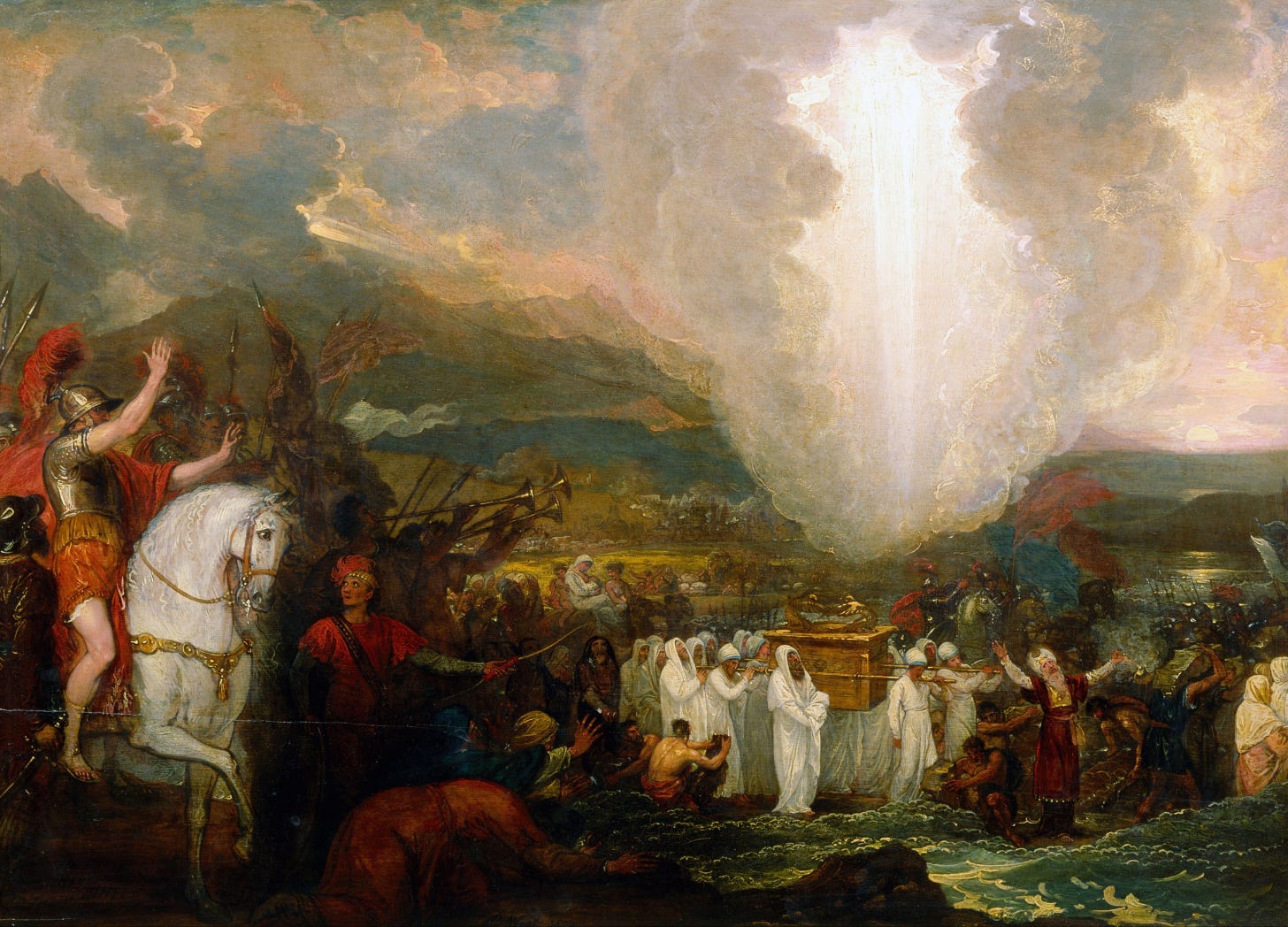
Lead, kindly light, amid th’encircling gloom, lead Thou me on, the hymn begins. The night is dark, and I am far from home, lead Thou me on. The text was, in fact, originally a poem which Newman composed in 1833, and to which he gave the title The Pillar of the Cloud. Pope Leo referenced these opening lines in his homily for All Saints; in this hymn, he said, “we come to realize that we are far from home, our feet are unsteady, we cannot interpret clearly the way ahead. Yet none of this impedes us, since we have found our Guide.”
This hymn has something profound to tell us about how God reveals Himself - not just to Newman, but to every human person. In turn, it has something equally profound to tell us about how we ourselves are called to lead others to God. The name of Newman’s original poem, The Pillar of the Cloud, is a reference to one of the most evocative and well-known scriptural examples of this gradual divine guidance: after the people of Israel are freed from slavery in the land of Egypt, God guides them through the wilderness journey to the promised land “in a pillar of cloud by day, to lead them along the way, and in a pillar of fire by night, to give them light, so that they might travel by day and by night,” and “neither the pillar of cloud by day nor the pillar of fire by night left its place in front of the people” (Exodus 13:21-22).
Not just in the Book of Exodus but throughout the whole of Scripture we find a God who reveals Himself gradually to the people of Israel, leading them step by step, with gentle care and firm guidance, through the course of salvation history.
Revelation, the Directory tells us, is nothing less than “the great educational work of God” (DC 157). In this work God acts “progressively and with patience” as “he leads the chosen people toward maturity” (DC 158). Then, in the New Testament, we see that Jesus Christ, God made man, reveals Himself to His disciples as “their only teacher and, at the same time, as a patient and faithful friend,” one who “taught them the truth through his whole life.” The teaching style which God reveals through His revelation, what the Directory, following a long tradition, calls “the divine pedagogy,” is something “capable of profoundly influencing the Church’s educational activity” (DC 157).
Not just in the Book of Exodus but throughout the whole of Scripture we find a God who reveals Himself gradually to the people of Israel, leading them step by step, with gentle care and firm guidance, through the course of salvation history.
In short, we are called to educate as God educates. This is why catechists are called to be witnesses and accompaniers in faith, as well as teachers - not because the Church dreamed up these categories out of nowhere, but because they are patterned on the educational style of God Himself: the pre-eminent teacher of truth, witness to truth, and patient accompanier towards truth.
This educational style of God, or divine pedagogy, is explained at length and with great theological precision in the Directory. But we also find it expressed with brevity, beauty and great intensity of feeling in Lead, Kindly Light. “The task of education,” Pope Leo proposed on All Saints Day last year, “is precisely to offer this Kindly Light to those who might otherwise remain imprisoned by the particularly insidious shadows of pessimism and fear.” The particular task of catechesis, we can say, is to offer the kindly light of God in the same way that the light first offered itself to us: patiently, gradually, through a loving and transformative relationship which accompanies us deeper and deeper into truth.
I know that many people who were brought up Catholic experienced catechesis as a handful of blink-and-you’ll-miss-them programmes leading up to the reception of a sacrament, easily forgettable and often artificially separated from the rest of parish life. This is a great shame, for in the Church’s teaching (and, thankfully, in the lived reality of a considerable number of parishes) catechesis itself, whether in the form of sacramental preparation or ongoing faith formation, is a profound, transformative, and Spirit-filled process. Pope Francis’ elevation of the role of catechist to an instituted lay ministry, together with our recent influx of new converts, demonstrates the urgency and importance of this task. We can ask St John Henry Newman, Patron of Educators, to intercede for us as we lead others through darkness and gloom into communion with the divine light, using God’s own pedagogy of patient accompaniment into the fullness of truth.
The particular task of catechesis, we can say, is to offer the kindly light of God in the same way that the light first offered itself to us: patiently, gradually, through a loving and transformative relationship which accompanies us deeper and deeper into truth.
Sr Carino is the author of the CTS book The Dignity of Women in the Modern World.
Discover faith formation courses and sessions led by the Dominican Sisters of St Joseph, online or in-person.
Learn more about the Dominican Sisters of St Joseph
[1] John Henry Newman, Present Position of Catholics in England, Lecture 9: Duties of Catholics Towards the Protestant View, 1851
Comments
Nothing yet. Say the first thing.
Sign in to join the conversation.