
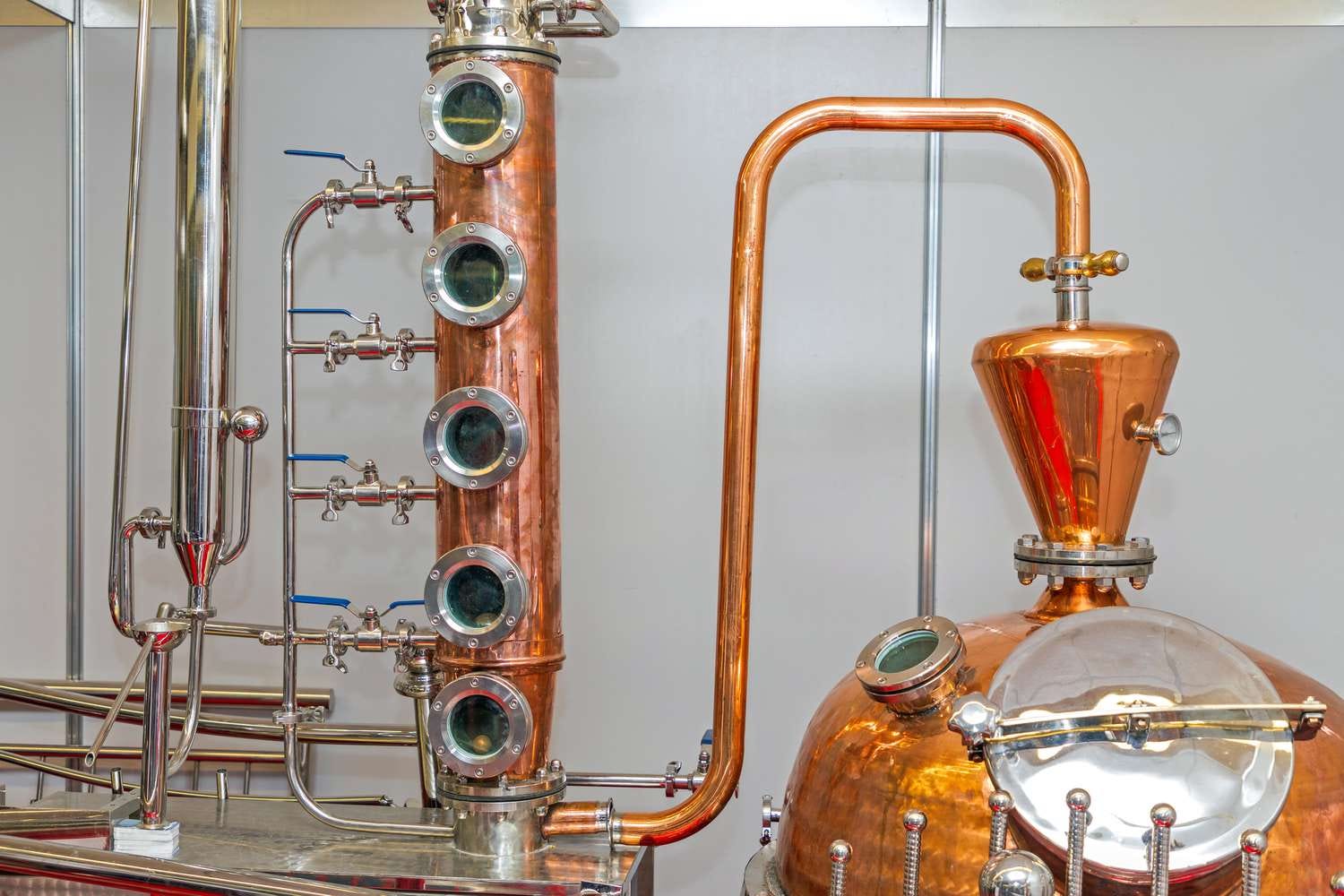
[“Liquor” is an easy example of how meaning can become narrowed or specialized over time. The root verb, Latin liquere, referred to any sort of flowing or state of clarity, not only for alcoholic drinks. French liqueur is even more specialized, since that sort of liquor has an added sweetener. The original Latin verb did not normally have any passive forms, meaning that Caesar probably never used it to write “been clarified” or “made to flow.”]
We are bedeviled every day with specialized uses of words - or the opposite, which are “generalized” meanings. How many of us have argued over a word like “guy,” which has traveled far from the name of that 17th-century regicide, Guy Fawkes, and the effigies still burned by the English on Guy Fawkes’ Day. Now English speakers use it, especially in the plural, to mean little more than “person” or “human being,” maybe because it is so short and easy to say - like the universal American expression OK.
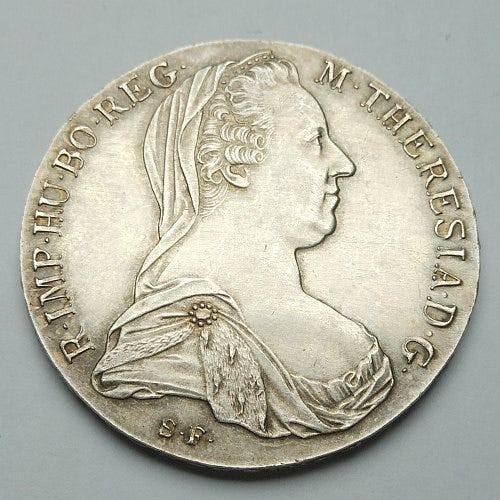
[“Thaler” showing the Empress Maria Theresa towards the end of her life, c. 1780: the artists or engravers have given her a stereotyped masculine image with strong nose and the beginnings of a double chin, perhaps in a bow to one element of political pragmatism. Think Margaret Thatcher as a contemporary of George Washington? In any case, Maria Theresa is NOT manifesting the typical prognathic or “Hapsburg” protruding jaw. Thaler to the more contemporary Dollar can also be seen as an example of generalization.]
The phrase pragmatic sanction comes from a now-obscure period of 18th-century history where an intense and often violent political dispute resulted in a woman - the empress we call Maria Theresa - taking power in Vienna. She then ruled for forty years over the extensive dominions of the Hapsburg Empire. The pragmatic feature of her family’s political solution - putting a princess in power - was that the Germanic tradition of allowing only males to gain control of a state was, by the early 18th century, going to result in the demise of their centuries-old Hapsburg dynasty. Several generations of inbreeding plus the high infant mortality that could affect even the poorest of Germanic guys left Austria’s ruling elite with little other choice. As it happened, the British - who were often allied with Austria in the 18th century despite strong religious differences - had already lived under three such queens. The third of those was Anne, whose reign was not long, only a little over 12 years, though she ruled during some highly consequential political changes, such as the Act of Union with Scotland in 1707. Maria Theresa lasted far longer than did Anne and thereby showed how the “sanction” arranged by her father, here meaning something like “permission to break a rule of state,” had been an effective policy idea after all.
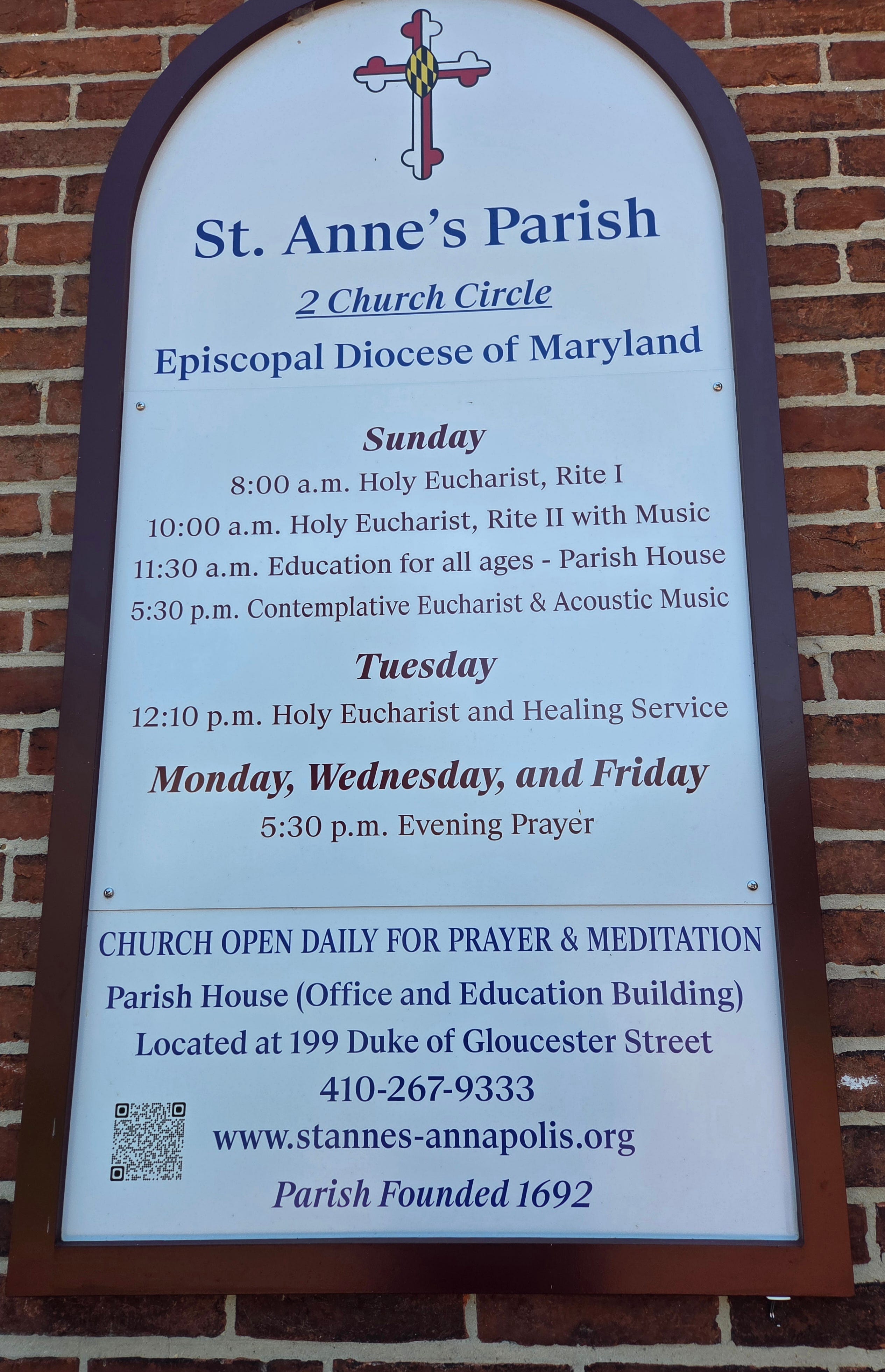
[The elegant old Episcopal church at the center of Maryland’s capital city is, like the city itself, named in honor of an Anne, the (purported but not “canonical”) mother of Saint Mary. The merely mortal Queen Anne died in 1714. Queen Anne County lies just on the other side of Chesapeake Bay, and all these place names evidence the approximate time of European settlement first taking hold in that region. The church today - a rebuild from the 19th century - shows signs of being carefully and expensively maintained and renovated since this writer first went there in the 1980s. Its clerical staff now includes at least four priests or deacons; the Maryland capitol building is still only a few feet away. One of the premier settings for modern sail-boat culture is only about a quarter mile down the hill from here.]
The Age of AI together with the all-knowing Internet presents us with intellectual, if not practical, challenges every day. What to believe, and how to believe it? This writer had not encountered an out-and-out error in those systems for some time, or at least not an error that jumped out from my screen; but it did so yesterday when AI announced that pragma meant “a matter of state.” So it did mean by the late-Classical era, long after Herodotus or Aristotle were using the word, which in Classical Greek meant more broadly a “thing done,” like factum in Latin. AI’s answer may have derived from an assumption that a specialization in the meaning of pragma should be taken as the common or accepted default meaning when one is trying to finish one’s final paper for Philosophy 101. Might there now be any point in trying to get the AI Universe to fix this problem? Would that not take thousands or even millions of writers using the word in the more generalized fashion that I think it should be, then making sure our more generalized meanings become commonly accepted? Specialization and generalization are such frequent phenomena (note: Greek plural form) in language that even the most energetic of writing guys might never be able to orchestrate - another generalized verb - such a fix. As has been true for over two decades in the land of Wikipedia, issues and interests have grown greater by the year if not by the hour and minute.

[This is supposed to be William James as a young man, but doesn’t it look like somebody trying to appear to be the later novelist James Joyce? How can such things, such “facts,” be verified, if at all?]
Pragmatism defined American life and letters even before the late-19th century when guys [sic] like William James and Charles Peirce came along to frame it as a formal school of philosophy. Does a question determine its own answer, or does reality work the other way around? Should we not begin with “facts” (pragmata in Greek) and then try to work our way towards Truth? The Reflecting Pool as the center of monumental Washington has long had problems with dirty water. The current Presidential administration decided to pay a golf-course contractor to paint the bottom of it blue and so deal with a century-old issue. The fact of this pool often looking nasty has been around for many decades. Is it the truly “pragmatic” solution to paint over the bottom, which has also leaked into low-lying soil almost from the time it was built during the 1920s? The pool is refilling even as I type this. We may soon see if this be pragma.

[In Italy, the push would have been to tile or otherwise decorate such a pool (“water feature”) in a more traditional way, ergo requiring even more time and expense. Which approach should we call truly pragmatic?]
No posts
Comments
Nothing yet. Say the first thing.
Sign in to join the conversation.