
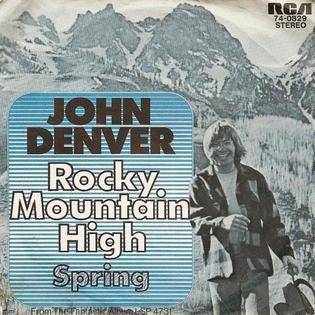
[It’s easy now to make fun of sentimentality such as that found in the lyrics of the late pop star John Denver, whose tune Rocky Mountain High is one of two official state songs for Colorado. The other one is a century-old ditty called Where the Columbines Grow, which conjures up painful memories of the defining slaughter of school shootings that occurred at Columbine High School in 1999. Columbine was not the first such mass killing, but it remains shorthand in American English for the random murder of students and teachers in what was once seen as the safe and even sacred place of the classroom.]
Not every US state has its own song, although some have more than one. A few are so mediocre as to be not worth singing let alone learning. Anyone ever warbled Rhode Island It’s For Me? Others are good examples of fine if simple American songwriting, including Indiana’s On the Banks of the Wabash, Far Away composed by one Paul Dresser - brother of the novelist Theodore Dreisser - during the 1890s. His lyrics included:
“Through the sycamores the candle lights are gleaming,
On the banks of the Wabash far away.”
As I’ve commented before, what strikes me about this couplet is that the author was not likely an arborist, because sycamore trees, for all that they grow well in urban environments, are notoriously dirty plants and don’t have much appeal other than to provide shade along city streets. But Dresser’s tune is highly singable, even by late-night crowds of inebriated undergraduates or auto-racing fans.
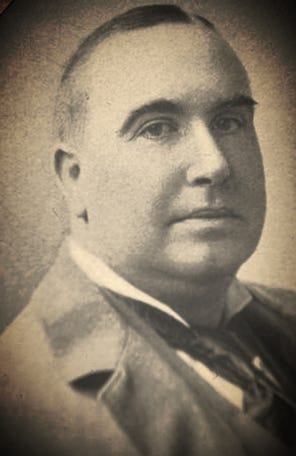
[Like his contemporary William Howard Taft, Paul Drersser became obese by early middle age. Unlike Taft, who had unique access to resources and the most advanced medical care of his era, Dresser was chronically unwell and only made it to age 48. He had a good income from sheet-music for a time - his was the generation before recorded music became available and generated sales - but soon ran out of money and died in relative obscurity.]
Although he attended Howard University, it’s not clear that James Bland, composer of Carry Me Back to Ole Virginie, ever set lived within the Commonwealth of Virginia. His family were free residents of New York when he was born in 1854. The lyrics of Carry Me Back came to be regarded as notoriously racist by the 1950s, although it was not until 1997 that the song was removed as my home state’s official song. When I listen to it now, I can’t stop being annoyed by its reference to growing cotton, which was a rare crop in Virginia during any era of our history. (It does not grow well here.) The painful use of a phrase such as “labored so hard for old Massa” was in origin little more than stock composition from the Jim Crow era of black-faced minstrelsy. Bland was in the music business, not an historian or a politician. He died of tuberculosis in 1911.
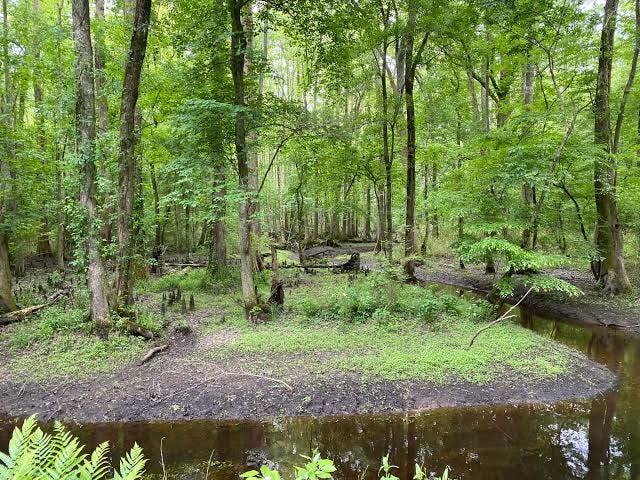
[One verse of Carry Me Back to Ole Virginie has a reference to the Dismal Swamp, a geographic feature of the far southeastern corner of Virginia that few know about and even fewer have traversed. The area is so unhealthful and even frightening that European settlement generally went around it, and by the 18th century it provided refuge for hundreds if not thousands of escaped African slaves and indigenous peoples. This writer drove through it once (in the 1980s) when a tornado was passing directly overhead.]
Nothing in modern Sicily has frightened the way that the Dismal Swamp or a random school shooting can. I’ve nonetheless returned to the USA and shall soon be in Virginia to take care of business and contemplate whatever it is that ought to come next. Stay tuned here and in my upcoming new blog, tentatively titled Eight Decades, for reflections on where in the 21st century we might take refuge from angry politics and a scary physical environment - plus whether it’s refuge that should be sought in any form or setting.
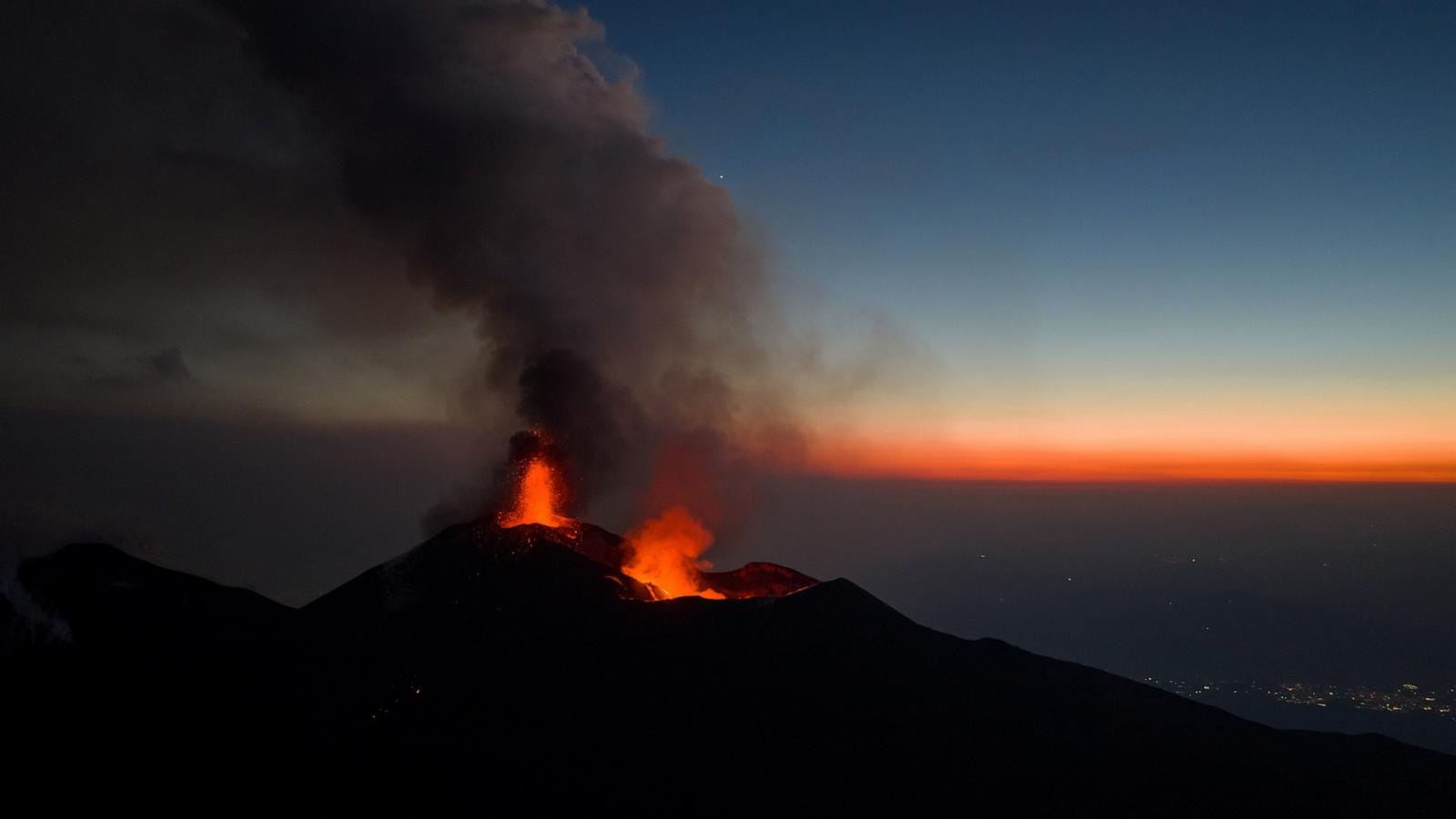
[Sicily’s Mount Etna is a stratovolcano that tends to give us warning of its eruptions, which have not been as explosive as that of Mount Saint Helens in 1980 or as deadly as Vesuvius in the year 79; yet taking refuge near Etna’s slopes may not be a safe place to hide from angry gods in the 21st century.]
No posts
Comments
Nothing yet. Say the first thing.
Sign in to join the conversation.