
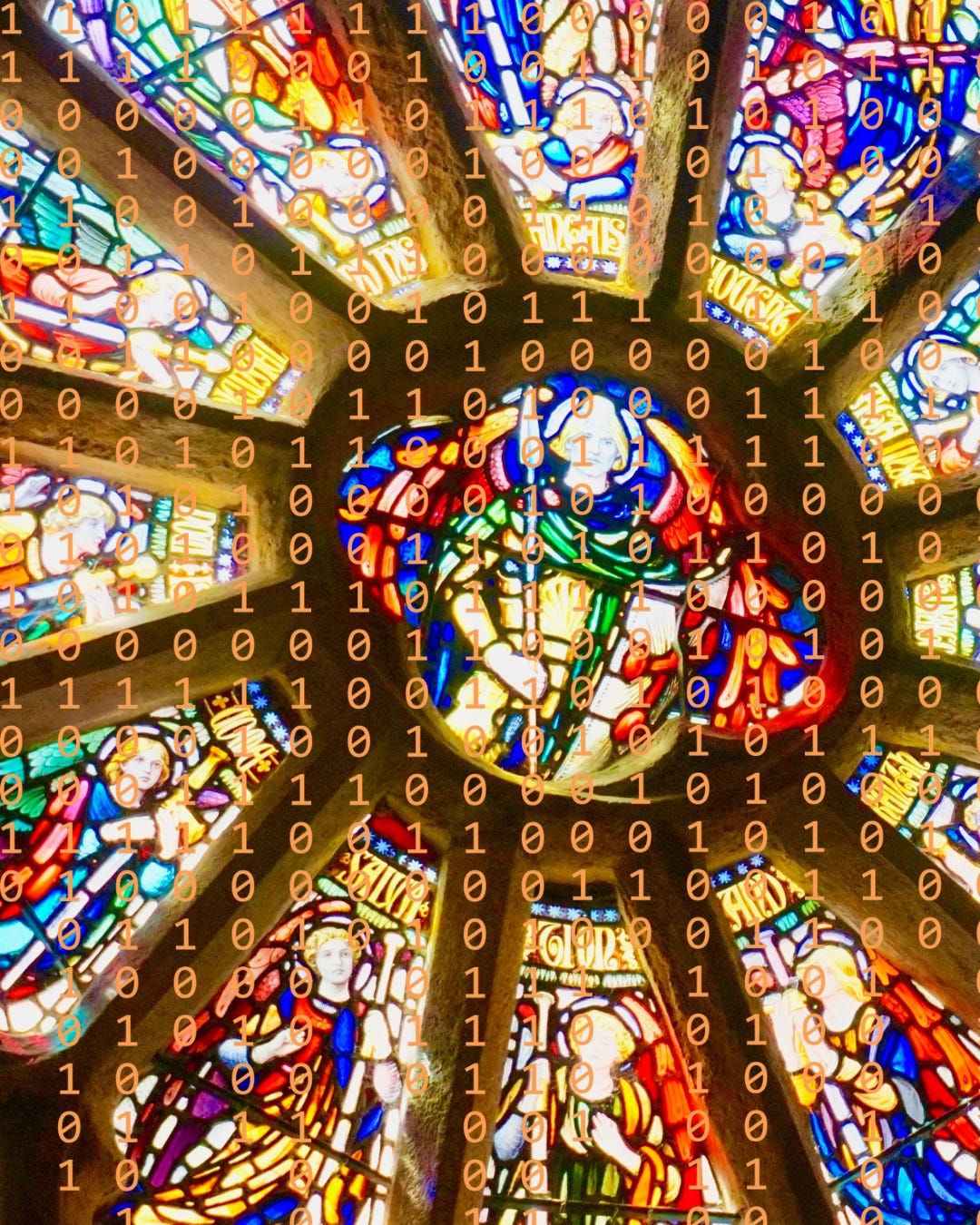
Wherever I decide to waste my time on the internet, I trip headfirst into nineties nostalgia. The artifacts of nineties culture haunt us everyday in video clips and references and reunion tours and airplane movies. The references resonate. If the nineties weren’t the golden age of culture, they were at least the end of it. To have a culture, you need a critical consensus of what’s right and what’s wrong from music to politics, morals to movies. Religion to recklessness, Nirvana to Nintendo, Simpsons to Clintons.
With the crumbling of gatekeepers and publishers in favor of pixels and privateers, culture has become personal. In this libertarian victory of endless potential, culture becomes personal. We become the first and last gatekeepers of our own values. But does that mean that modern culture is too personal to ever reach that same critical mass that gives us meaning, gives us history, gives us heroes?
Sociologist Philip Rieff (1922-2006) thinks so. In Charisma (2007), Rieff discusses how the corruption of charisma leads to the corruption of culture. Rieff, at least, believes that “culture” as we know it is over.
Here’s why:
No age is without wonders, so long as men continue to be immensely surprised at the change in their circumstance.
-Philip Rieff
In a free society, we chase our own dreams. Our own priorities and promises in our personal realities. Sometimes, those realities never touch. Modern culture has made it easy to lose our way, because we are told that every way could be our way. Everything is real, because everything could be real.
French sociologist Émile Durkheim explains that modern man lives in a “malady of infiniteness.”
As Rieff observes:
The torment of the infinite has grown so much more powerful and movements of terrible liberation have increased the intensity of destructive action…
Men’s constant desire, their most basic desire… is to open up possibility.
But in opening possibilities, Rieff says, men always end up in the wrong. Culture begins only where you decide the possible ends and the greater reality begins.
What is a greater reality?
The reality with the rules that everyone follows.
If you’re wondering how we can ever have a culture with a single set of rules, then you probably haven’t been to a church in a while. Charisma has a cover spilling with angels and clouds and light. It looks like a companion text to the New Testament. In some ways, it is.
In Charisma, Rieff writes that God is the source of true authority. With true authority comes true confidence. With no authority comes no confidence.
There can be no struggle between self and authority. Where there is not this supreme confidence in authority… the individual will lack confidence in himself.
We don’t become self-confident based on ourselves, in Rieff’s opinion. We get self-confident when we believe that something else is watching us from above because we believe in that thing more than ourselves. That could be God or maybe a fascist government or astrology or our specific Instagram algorithm or our comfortable ideology. It’s easy to be confident when being confident means being confident in some set of irrefutable rules. Those are the same rules from the same authority that sets the foundation for culture.
When too many people believe in too many different sets of rules, culture fragments. We’re way further than that. Today, we give supreme authority - and therefore our self-confidence - to the algorithm. We pick and choose what has authority over us: podcasters, gambling, horoscopes, numerology, memes, celebrity worship, TV shows, careers, purses, watches, followers, likes, digital profiles. There’s something for everyone, but not one thing for everyone.
Want to know how to find your culture?
Turn off your phone and walk out the door.
In Charisma, Rieff thinks a shared definition of ‘sin’ is critical to culture.
What ‘sin’ did, before its sense was dissolved by rational criticism, was to strengthen the truths of resistance to otherwise less resistible transgressions; sin enlarges the truths of resistances and supplies a certain unity to the style of our rejections.
As Rieff observes:
When all ethics can compete, and none win or lose, then disorder becomes institutionalized.
Do we have a culture any more?
The question can be reframed: can we agree on what’s right and wrong any more?
In “the modernist quest for meaning,” Rieff writes, everyone is on a quest for individual meaning.
Modern culture is something for which one can shop around: there are bargains to be had and the new ideal is that no ideal should be be priced beyond the reach of anyone who wants to have it.
Standards shouldn’t be customizable. In Rieff’s view, the ideal is always (and always has to be) just out of our reach. That’s what makes us strive to be better, forever. And feel bad if we fail to live up to those impossible standards. Guilt guides the path to greatness.
To attack guilt is to attack all those ordinary disciplines of obedience to renunciatory demands which produce not only the commonality of charisma but the basis of social order.
If we feel guilt, we are pushing against the guardrails of culture. If we react by setting new rules to build new disciplines, we are part of that culture. If we push past that guilt and say that it doesn’t matter, anyway, in the big picture, then we are pushing into a rationalist culture. A post-culture culture. Guilt, in Rieff’s credal order, is truth.
We have to consider whether the modern world is hostile not merely to any particular antiquated form of culture, but to culture in any form.
-T.S. Eliot
Charisma makes the case that rationalism is the ruin of culture. Everything breaks down under analysis. Rationalism is the antithesis of culture. With rationalism as our religion, Rieff writes:
We scarcely remember what the sacred is - and are horrified by what we have forgotten. Anything that is uniquely unalterable horrifies us even to imagine, because we are living, acting transgressions. We are the horror.
We are the horror.
Pretty cool, right?
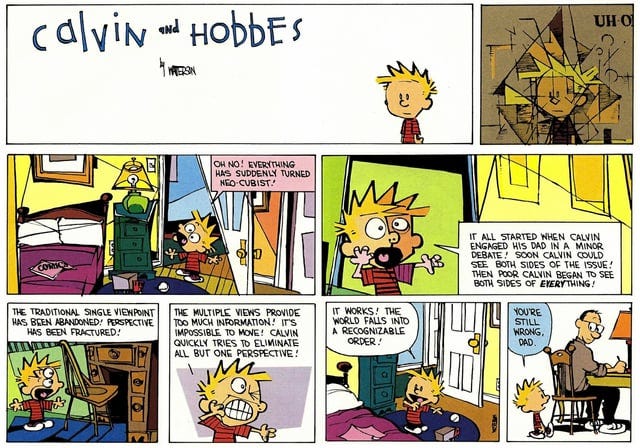
Why all the horror?
Well, the horror is the void. Rationalism, chased to the terminus, is a void of meaning. If we can’t claim anything is sacred, we can never claim anything has meaning. The more rational a culture becomes, the less a culture can claim. The less a culture can claim, the more it ceases to exist.
Our meaning is not our meaning.
Our myths are our meaning.
Can a person change within the paradigm we provide for them?
Can someone change the nature of their soul?
Rieff has a simple answer: no. He denies that anyone, ever, would have a soul that evolves. Writing:
Modern criminality, like the revolutionary act against the state, has taken on transgressive authority - the modern champions of “life” renovate the “infinite” in the persons of those who act out their indisciplines.
In Rieff’s utopia, your mistakes define you and your worth to society and the worth of your soul. Every sin is eternal. And Rieff gets to decide what’s a sin and what’s not a sin. Or is unforgiving judgement of how the world should be the essence of Charisma? Perhaps if we read it as a Calvinist companion text.
Rieff’s worst trademark is his grumpiness. Eventually, I had to ask myself why I should take someone seriously who, after ranting about the foreseeable future and the consequent consequences, removes himself by writing:
Luckily, for me, I shall not live to see exactly how a cultureless society works.
This isn’t just grumpy. It’s hopeless. Rieff fails in the conviction of his own thesis, because he believes everything he knows is destined to burn. In his defeat, there is no thrill. Only a soft sympathy. Rieff set off to write about charisma as a religious quality. He failed so badly I didn’t bother to mention the original thesis. But all he needed to find hope again is an editor. Because, in the vein of Blaise Pascal’s aggressive conversion or William Blake’s optional mythology, Rieff outlines the danger of secular infinity and emphasizes that to really be real, we all have to believe in something besides ourselves. Charisma starts and ends with what we believe to be true with no exception.
The rest is debatable.
Want more Litverse philosophy?
A Millennial Sees Chappell Roan and Thinks About Pascal’s Wager
No posts
Comments
Nothing yet. Say the first thing.
Sign in to join the conversation.