
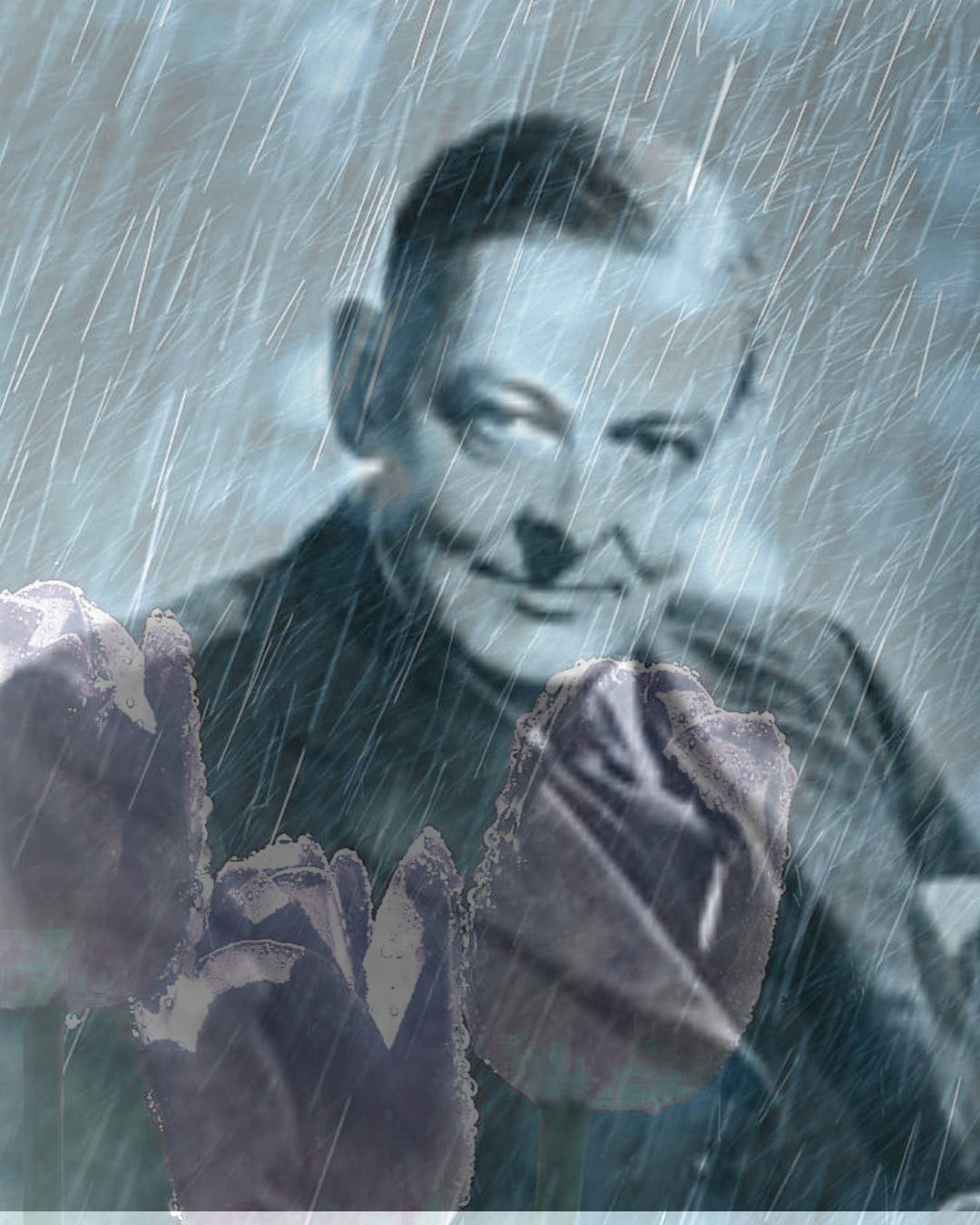
We had the experience but missed the meaning.
-TS Eliot, Four Quartets
At a pint-sized bookstore in Rockport, Massachusetts, I found a copy of T.S. Eliot’s Four Quartets (1943). Written two decades after 1922’s The Waste Land, Eliot considers the four poems in Four Quartets to be his finest work. In this, Eliot is a flawless artist: he believes that his latest (and last) work is a million times better than his previous and most popular work. As he reflects in the collection’s Little Gidding:
For last year’s words belong to last year’s language
And next year’s await another voice.
It’s funny to picture T.S. Eliot, one of the most famous poets to ever live, reaching an age where he loses conviction in The Waste Land, which is considered one of the most influential modern poems in history. As Charles Taylor writes in 2024’s Cosmic Connection, Four Quartets is Eliot’s attempt to find a new way to some universal truth.
If The Waste Land can be placed in the stream of… post-Romantic attempts to invoke and thus reconnect with a cosmic order occluded through disenchantment, then this is a path which Eliot abandons.
Taylor is a Waste Land hater, explaining that Eliot never managed to represent the cosmic order of life with the “empty marker of The Waste Land.” Only in Four Quartets does Eliot manage to prove that the cosmic order is both good and inescapable.
That’s why Four Quartets is so compelling. It’s a meditation on what happens when we look back on the things that once meant so much to us and now mean nothing at all. And it’s written by the guy who wrote The Waste Land. The Bob Dylan of the poetry scene.
Here are six life lessons I learned from Four Quartets:
An infamous American greeting is when we ask someone how they’re doing. The biggest party foul, as everyone knows, is telling someone an honest answer. Do we really want to know how life changes for everyone else? Or do we want to believe in bliss?
Just smile at the surface. Don’t ask about at the agony beneath.
As T.S. Eliot writes in The Dry Salvages:
People change, and smile: but the agony abides.
Is it better to find for forgiveness or wait for absolution when you’re dealing with a broken past? You can decide to feel something about what happened in your life. Or you can just, like, not.
Writing in Little Gidding, T.S. Eliot explains:
History maybe servitude,
History may be freedom. See, now they vanish,
The faces and places, with the self which, as it could, loved them,
To become renewed, transfigured, in another pattern.
In the early chapters of our life, we only want to turn the pages to new chapters. Over time, we start reading the world slower. We want to stay inside the covers of our understanding. We want to keep telling the same old story to ourselves. But to T.S. Eliot, the meaning of life is to explore to the end of life and back again.
We shall not cease from exploration
And the end of our exploring
Will be to arrive where we started
And know the place for the first time.
Through the unknown, remembered gate
When the last of earth left to discover
Is that which was the beginning.
Writing Four Quartets in his fifties, T.S. Eliot published Little Gidding in 1942. The tone we get is from an elder who derides the virtue of older generations, the wisdom of old age.
As Eliot tells it with heavy irony:
Let me disclose the gifts reserved for age
To set a crown upon your lifetime’s effort.
First, the cold friction of expiring sense
Without enchantment, offering no promise
But bitter tastelessness of shadow fruit
As body and soul begin to fall asunder.
Second, the conscious impotence of rage
At human folly, and the laceration
Of laughter at what ceases to amuse.
And last, the rending pain of re-enactment
Of all that you have done, and been; the shame
Of motives late revealed, and the awareness
Of things ill done and done to others’ harm
Which once you took for exercise of virtue.
Then fools’ approval stings, and honour stains.
From wrong to wrong the exasperated spirit
Proceeds, unless restored by that refining fire
Where you must move in measure, like a dancer.
In his disdain of fading generations, Eliot stays consistent. As he had written in 1919’s Tradition and the Individual Talent, when he was in his late twenties, there were was nothing worse than thinking that old people knew more about life just because they were old:
If the only form of tradition, of handing down, consisted in following the ways of the immediate generation before us in a blind or timid adherence to its successes, ‘tradition’ should positively be discouraged. We have seen many such simple currents soon lost in the sand; and novelty is better than repetition.
That’s not to say that tradition itself is wrong. Eliot only hated when tradition was followed for the sake of tradition.
Tradition is a matter of much wider significance. It cannot be inherited, and if you want it you must obtain it by great labour.
Think you want to share the traditions of some past history, some past belief?
You can only do that if you follow through.
In Four Quartets, T.S. Eliot wrestles the cold and naked truth of the world: everything is empty and dead and waiting for us to breathe life into it. If Eliot had read Litverse, he would already know that repression is much better than expression and necessary to finding meaning somewhere, somehow.
As Charles Taylor explains in Cosmic Connection, Eliot wanted to express that a life lived was bound to be “overfull” with parallel realities:
Alongside our ordinary lived time, we feel another, fuller presence is sharing the moment with us.
Our urge to understand all those lost lives we could have lived is what Eliot captures in Four Quartets. As creatures living in time, we. can never grasp eternity. We can only follow the shape of our final destination. We don’t find meaning in the fuzzy and far-off future. We find it when we slip, accidentally, in those glimpses of “higher time” that show us the past, present, and future all at once when we, just for a moment, decide that our reality is absolutely true and we renounce all the other realities shadowing our past, present, and future above us and below us and only see the beauty and the meaning and the purpose in front of us right here and now and forever. As it always has been.

Four Quartets is a rebellion against the idea that, as we get older, we are doomed to be bound by old beliefs, prisoners to the promises of yesterday. If today’s culture uses “boomers” as the generational scapegoat for everything, the youth culture from last century also thought older generations were pointless. As F. Scott Fitzgerald described the desiccated destiny of a middle-aged man in 1922’s The Beautiful and the Damned:
He had reached the stage where his value as a social creature as a black and imponderable negative. His ideas were the popular delusions of twenty years before; his mind steered a wobbly and anemic course in the wake of the daily newspaper editorials.
Read that description again and imagine the demographic of Fox News. Read it a third time and imagine the future past of what you think is relevant today. In the great unraveling of higher time, all beliefs become delusions. Only the things that burn the brightest remain. In Four Quartets, Eliot wanted readers to understand that we are the ones who decide the differnece between a delusion, a dream, and a destiny.
No posts
Comments
Nothing yet. Say the first thing.
Sign in to join the conversation.