
Welcome to Little Flames Contributor Series—a space for stories of resilience, reinvention, and creativity.
In this month’s piece, Lindsay and I talk about what it’s like living — and providing care — in Quebec’s northernmost region: Nunavik.

Name: Lindsay Lu
Superpowers: Cross-cultural translation, witnessing with compassion, adaptability.
My Favourite LL Quote: “My favourite part of living in the North is being part of a community. We have become so used to social distancing and focusing inward that we often forget that there are others around us … It is so heartwarming to live in a small community where people are genuinely happy to see you and greet you by name.”
THE INTERVIEW
Melissa: What first drew you to nursing, and later to working in northern communities in Nunavik?
Lindsay: I remember staying up past my bedtime to watch the “ER” TV show with my mom. I found the hospital atmosphere and drama to be very alluring. This childhood experience may have planted a subconscious seed within me to later enter the medical field, as I’ve had a calling to become a nurse for a long time.
The north has always been of interest to me and when I found out that my nursing career could allow me to venture there, I jumped on the opportunity.
My interest in Nunavik dates back to a video that I watched in a humanities class, back when I was a CEGEP student. The video was filmed by the National Film Board and explored the Inuit way of life in the 1970’s. I told myself that I would one day like to travel to Northern Quebec and learn more about Inuit culture.


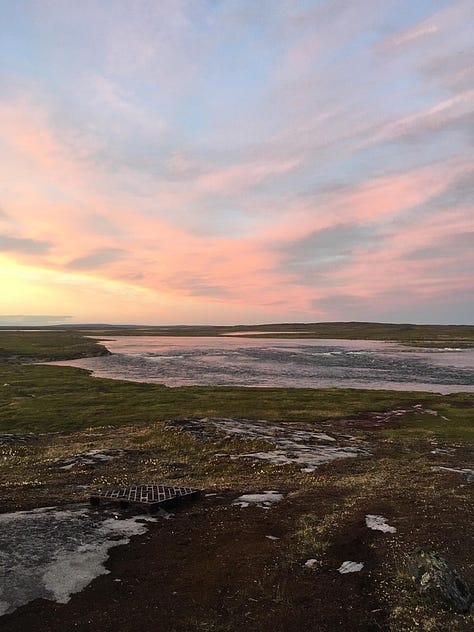


Melissa: You work closely with vulnerable communities. I imagine you witness hardship and strength on a daily basis. What have northern communities taught you about resilience and human dignity?
Lindsay: There is no doubt that residential schools have had impacts on Nunavik communities. Numerous patients have recounted to me the horrors that they lived through while attending these schools. Unfortunately, many have turned to alcohol as a coping mechanism to deal with the emotional and physical trauma of their experiences, which has had repercussions for the Inuit way of life, even across generations.
Northern communities are incredibly resilient. Many elders in these communities are working hard to reconnect youth with their lost culture. They encourage returning to and reconnecting with the Land. There are many elders who teach hunting, sewing, throat singing, berry picking and basket making as a way of coping instead of turning to alcohol.
I think that this is a beautiful way of taking back what was lost, and it has taught me that perseverance is possible even in the darkest of times.
Melissa: What does compassionate care look like in environments where resources are limited, and distance is vast?
Lindsay: In some ways, medical care in a remote community looks quite different from what one might experience in an urban area, but it is very much grounded in receiving care and support that is delivered with compassion, dignity, and cultural sensitivity. For example, we do not have access to CT scans, an operating room or medical specialists. If a patient requires advanced care, then we often need to send them to Montreal, which means removing them temporarily from their culture and support systems. I have on many occasions witnessed patients refuse care because they were either afraid of how their family would cope without them or because they feared being stereotyped once in Montreal.
Another issue that we commonly face is a language barrier, where patients have difficulty communicating with health care workers who aren’t from the region. English is the second language for most people living in the community where I work, and there are many Inuktitut words that simply do not translate to English. Even with a translator, it can sometimes be difficult to communicate and ensure that health care workers have all of the information they need to provide the best care possible.
On the other hand, however, working in a small community hospital has its benefits. Patients have access to a doctor or a nurse at all times. Working with a smaller volume of patients also makes it easier to create a bond with them, as well as monitor their progress or decline and react faster.
Melissa: When did knitting become part of your life? Do you see knitting as a form of meditation, balance, art or something else entirely?
Lindsay: I have always had a creative streak, but only started knitting in 2020 when I found out I was going to become an aunt. I had set a goal for myself to knit a dress for my niece and, after much trial and error, succeeded with a finished product that I was mostly happy with. This ignited a spark in me to continue knitting, and I have since created countless items from adult-sized sweaters to hats for newborns in intensive care units. Knitting provides an important outlet for me to relax after a long and sometimes stressful day at work, and is a nice way to enjoy some moments of serenity and quiet reflection.

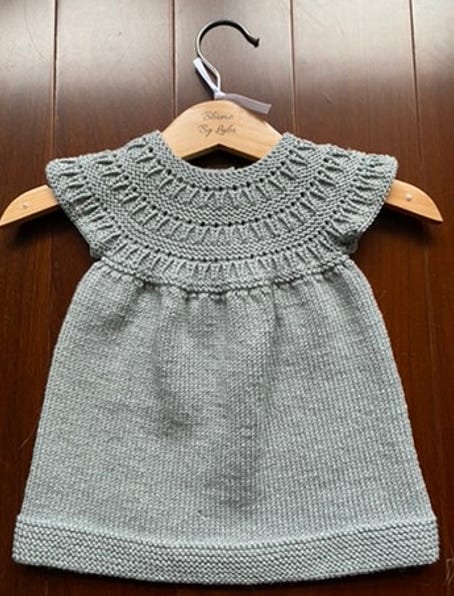
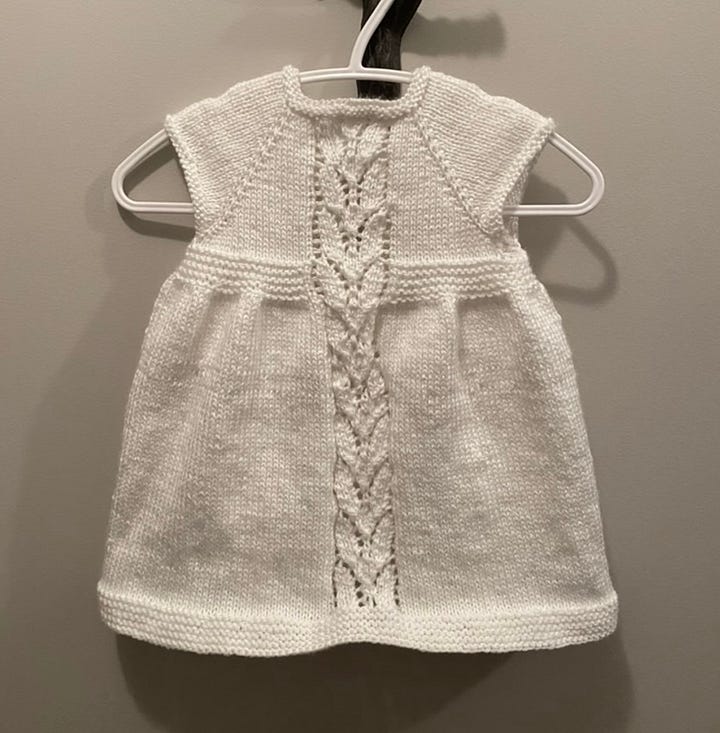
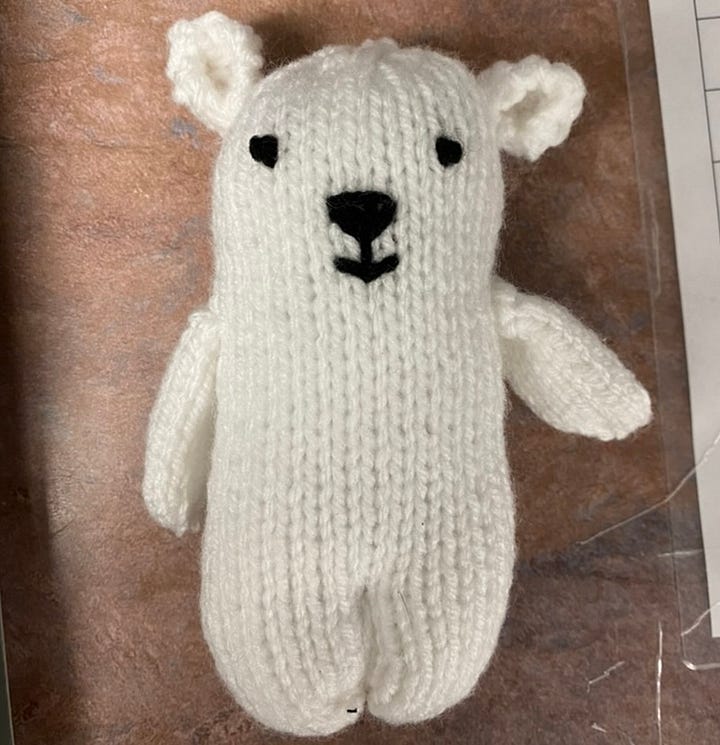
Melissa: I’ve seen your knitting up close and have been the lucky recipient and spectator of some of your other creative projects. Hand-crafted papier-mâché piñatas and Punch-a-Prize mystery boxes, to name a couple. You are very much an artist and creative spirit. I’m also so happy that knitting, in particular, gives you so much joy.
As a person who has never travelled to Canada’s north, I can only imagine the experience from photos and stories. What’s your favourite part of living and working in the region?
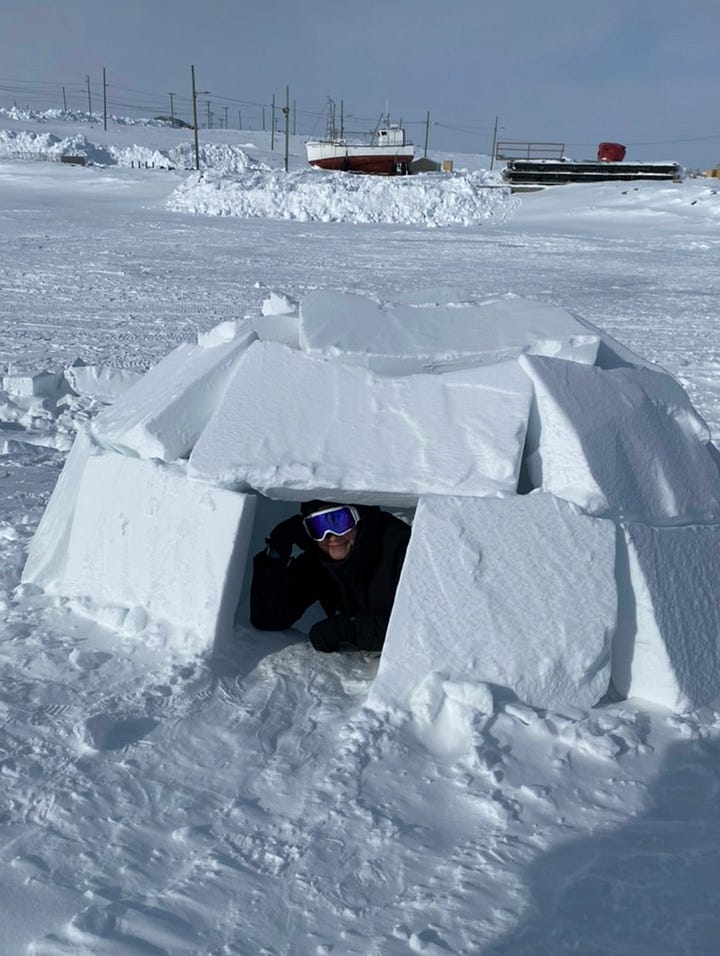
Lindsay: My favourite part of living in the North is being part of a community. We, as a society, have become so used to social distancing and focusing inward that we often forget that there are others around us—particularly in big cities. It is so heartwarming to live in a small community where people are genuinely happy to see you and greet you by name.
I also find that I am much more social and extraverted when working in the north. Seeing as everyone lives within walking distance from each other, there tends to be a lot of social activities, including organized dinners and board game nights.



Notes from Mel
Lindsay has a unique ability to interpret language, and also context—understanding why patients make the choices they do within the realities of culture, history, and distance. She bridges the gap between Western medicine and Inuit lived experience with respect and empathy.
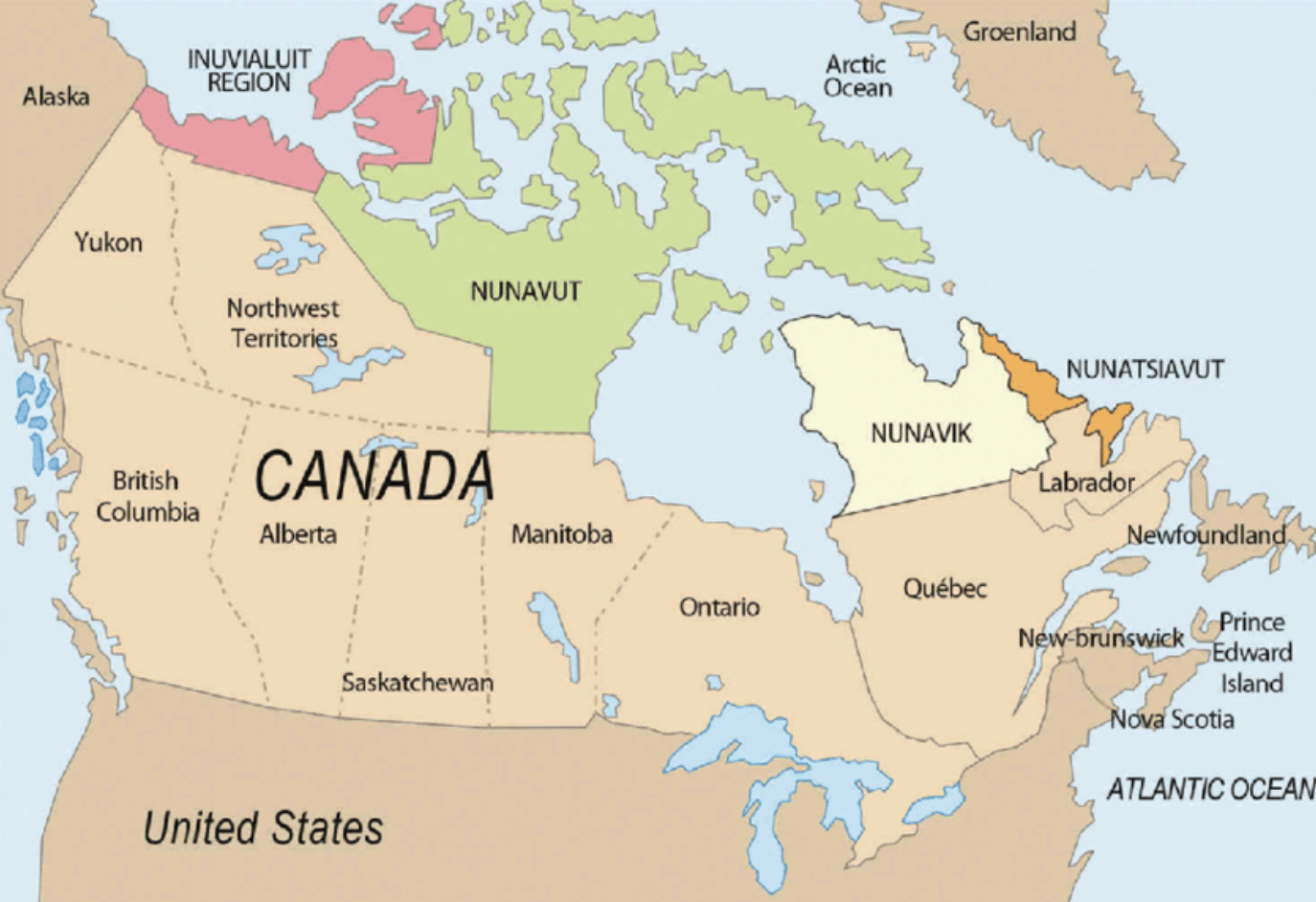
Here’s a map of Canada’s provinces and territories, including the often-confused territory of Nunavut and region of Nunavik. I’ve always had a place in my heart for maps—my undergraduate degree was in Environmental Studies, and my first job had me drawing a lot of digital maps. But maps create the illusion that we understand a place simply by locating it. As Lindsay’s story makes clear, knowledge isn’t just about understanding the geography.
If you’d like to be part of the 🔥 LITTLE FLAMES Contributor Series — or you know someone whose work or life has been shaped by trauma, illness, or disability — I would love to hear from you. You can reach out by leaving a comment, sending a chat message, or contacting me at: melissawilliams204@gmail.com.
Read more about my collaborative interview process here.
#HealthcareHeroes #HospitalLife #Resilience #Nunavik #CreativityInHealing #DisabilityAwareness #LittleFlames #Inuit #Indigenous #Canada #Knitting
No posts
Comments
Nothing yet. Say the first thing.
Sign in to join the conversation.