
In my last stack, FIFA, UFOs, and LFLs in Kansas City, I wrote about seeing Steven Spielberg’s extraterrestrial movie, “Disclosure Day”. We must be on a sci-fi roll and I am here for it, because we then had the chance to see an excellent production of short stories by two legendary sci-fi writers: Ray Bradbury and Kurt Vonnegut—so we jumped at it.
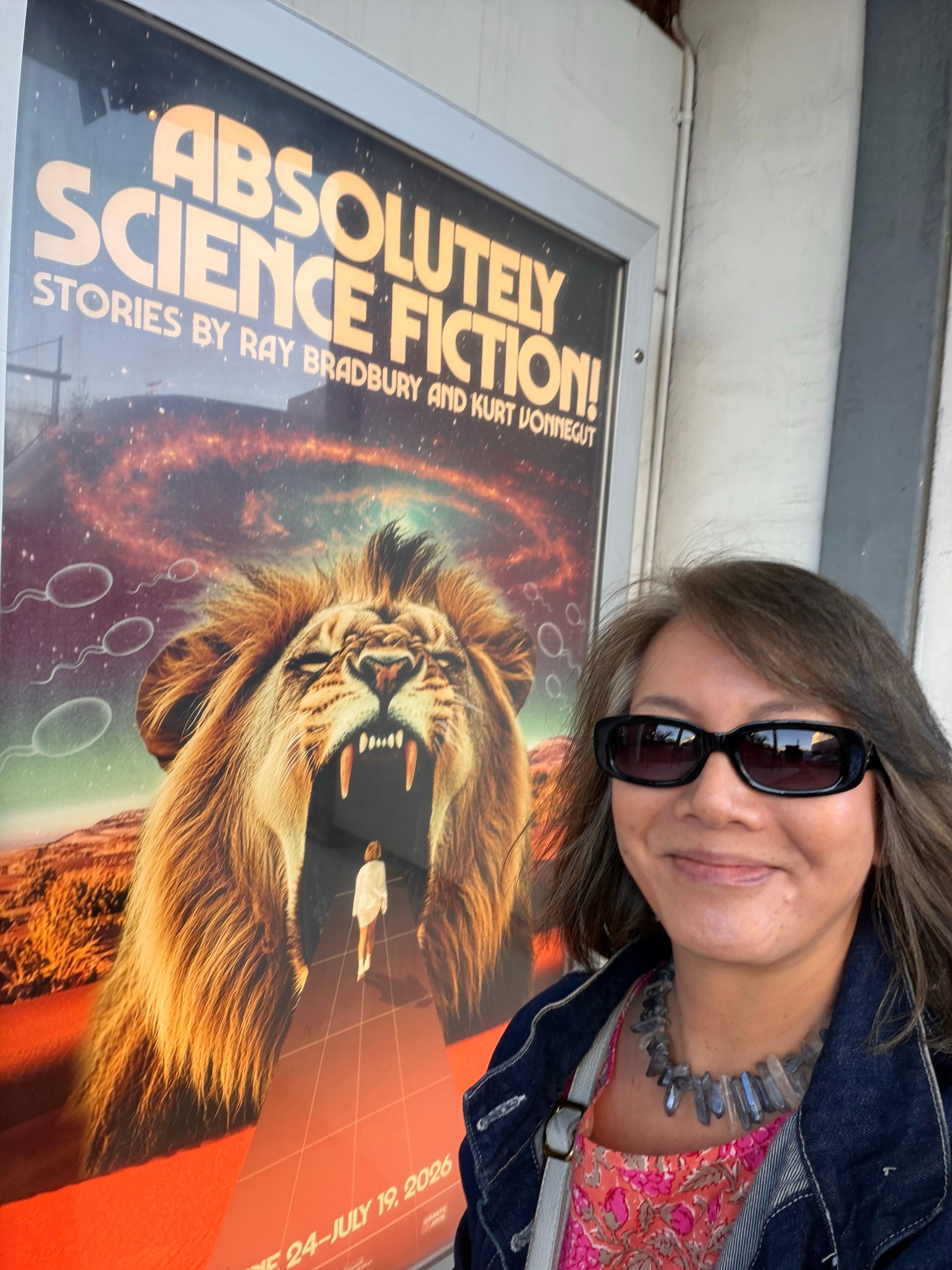
The first story was “The Veldt”, written by Bradbury in 1950. It is set in a community that offers “smart houses”—abodes that will cook your food, play your music, tie your shoes and even brush your teeth for you. Every task, no matter how small, has been relegated to a function of the house, leaving the family who lives in it, The Hadleys, free to enjoy their lives at leisure.
But mom Wendy is starting to have misgivings. She finally convinces her husband Peter that her uneasy feelings are real, not just an inability to relax. The cause of her disquiet? Their young children, Lydia and George, have been spending all of their time in The Nursery, which due to the technological magic of the house, is able to create any scenario that the children want to play in.
When the kids were young, The Nursery was the ultimate babysitter, as they could conjure up familiar tales like Aladdin to enjoy. But now the two have become obsessed with the African Savannah, specifically with a pride of lions feeding on bloody carcasses. The sounds of big cats roaring and crunching flesh and bone are grating on Wendy’s nerves and she convinces Peter to “turn off” the house for a week so they can get the kids’ attention back. Lydia and George, on the other hand, are upset by the idea of having to do anything by themselves since they have gotten used to having their every whim instantly fulfilled—and not by their parents.
Part of what makes a production by Word for Word (the theater company staging “The Veldt”), special is that the actors recite the entire story, word for, well, word. Narrative passages are spoken by the characters as they move around the set, creating a doubling effect that is unique and enchanting. As George says, “. . . the walls began to purr and recede into crystalline distance, it seemed, and presently an African veldt appeared, in three dimensions, on all sides, in color reproduced to the final pebble and bit of straw. The ceiling above them became a deep sky with a hot yellow sun.”, the audience actually sees the house change, the walls transforming from blank white into the dry tundra. Just watching it made me feel as if the theater was growing hotter!
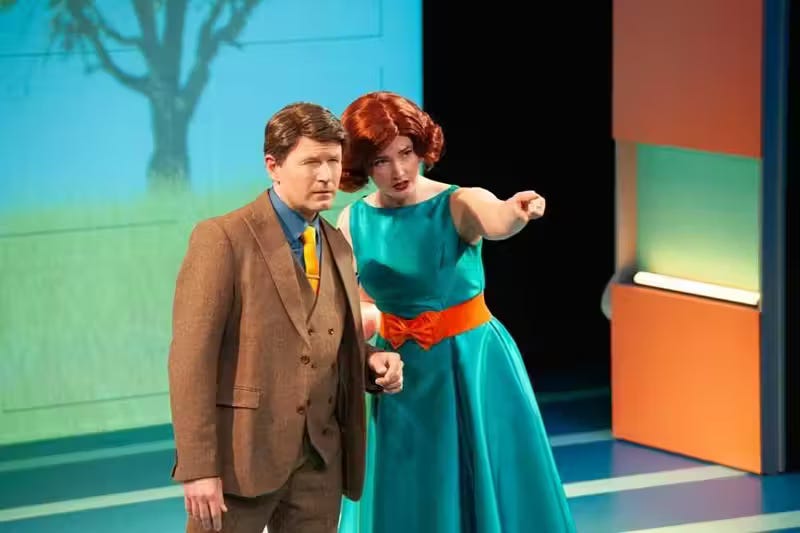
In a Word for Word production, I’m also made aware of the author’s language in a way that isn’t possible when only the dialog is spoken aloud. Though it might sound like an awkward choice for the cast to make, I often find WFW plays deeply moving in addition to being thought-provoking. The style casts a different kind of theatrical and literary spell.
After “The Veldt”, it was time for something completely different (as the Monty Pythons would say)—“The Big Space F*ck”, a 1972 short short story by comic futurist par excellence, Kurt Vonnegut. In this over-the-top vignette, the United States (and by extension, countries around the world) have effed up the environment so badly that it is becoming increasingly impossible to inhabit—sound familiar, anyone?
America’s solution to the disaster? The government works with scientists to fill a rocket ship with 800 pounds of freeze dried sperm in order to shoot it into the Andromeda Galaxy! Ostensibly, they think this is the best way to ensure that human life will continue somewhere in the universe, even if we destroy the planet we are on.
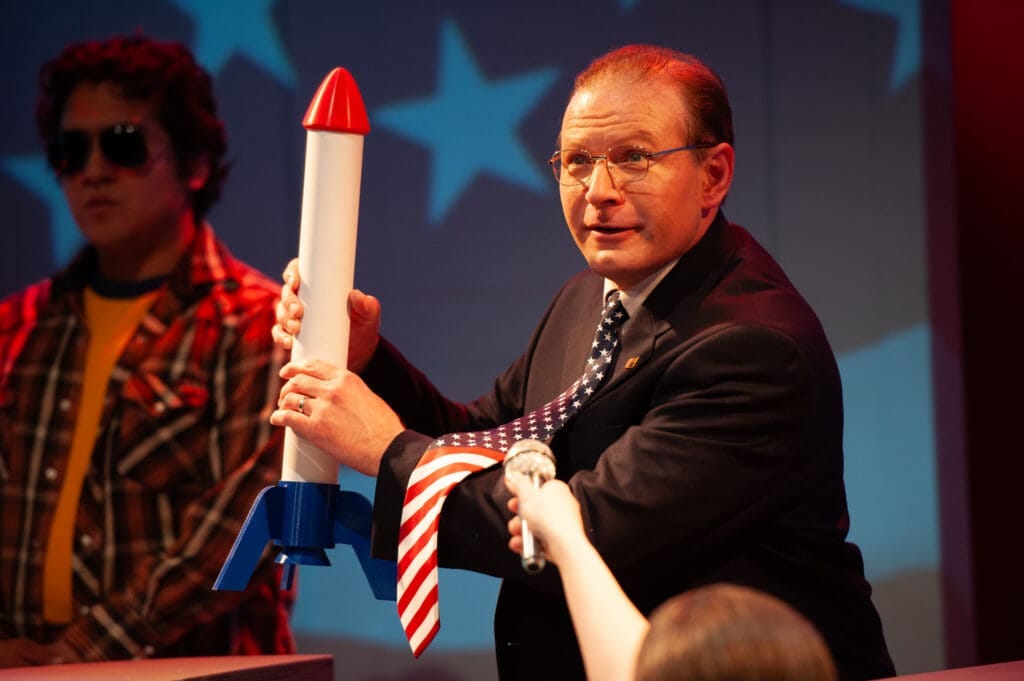
The absurdity of this premise captures the hubris of leaders with Elon Musk-sized God Complexes. The idea of a nation impregnating an entire galaxy is laughable on its face, but please don’t tell Elon—he might get ideas, lol. It’s the kind of outrageous thing you think is impossible, until you read what some of these guys are actually doing and why they feel completely justified in their actions.
The Big Space F*ck is a total hoot, with characters feeling bad about themselves because their sperm isn’t “good enough” to be included in the rocket ship’s “load”, and a big Fourth of July countdown (nice touch) that ends the holiday with a big bang. (Bang—get it? F*ck?) There are yahoo politicians, tail-wagging news media, and hapless everyday folks “farting around” as Vonnegut would probably put it. And if that weren’t enough hilarity for you, gigantic invasive lamprey eels make their presence known, adding that extra Vonnegutian touch to the proceedings. Vonnegut reads like a precursor to Douglas Adams (The Hitchiker’s Guide to the Galaxy), but with teeth. Lamprey eel teeth, to be exact.
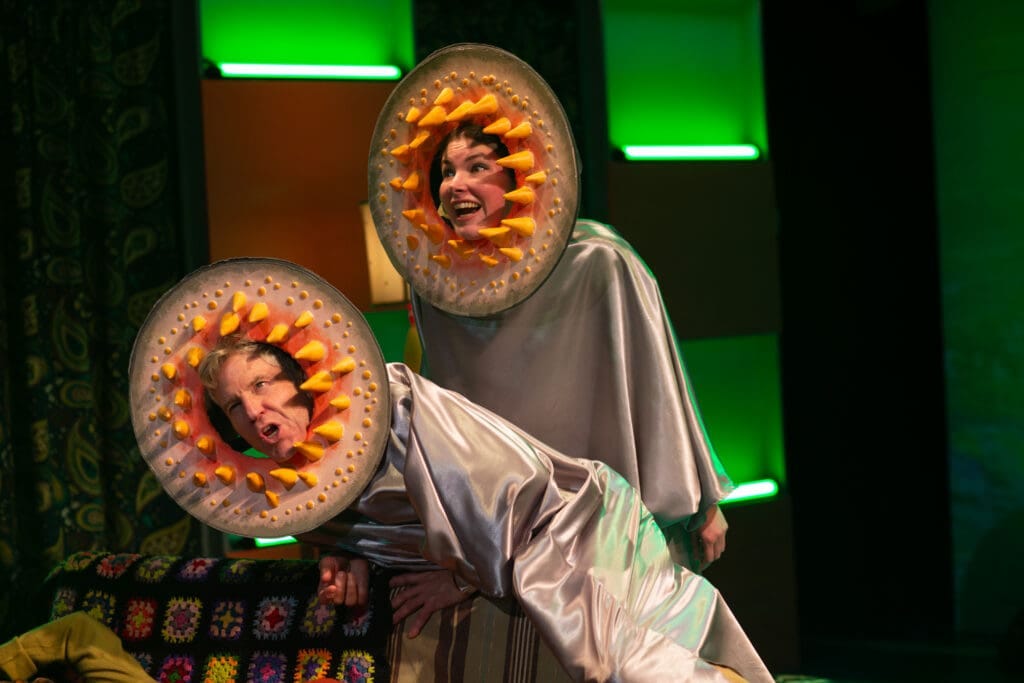
In the end, the couple we’ve been hanging out with for most of the story, Dwayne and Grace, get a shocking referendum on their parenting from their beloved (or so they believed) daughter, Wanda June. In both “The Veldt” and “The Big Space F*ck” modern parenting comes into the gunsights of their authors’ scrutiny.
Both stories also have a lot to say about technology, human nature, and societal pressures, which feels relevant today as we grapple with social media, screen ubiquity, and AI’s interference in our ability to engage with each others’ humanity.
There is a reason that Bradbury and Vonnegut are responsible for a significant portion of the sci fi canon. Bradbury’s books include the semi-autobiographical novel, Dandelion Wine, Something Wicked This Way Comes (made into one of the darkest Disney movies ever), The Martian Chronicles, and of course, his classic, Farenheit 451 (a cautionary tale for our times if there ever was one, considering the spate of book bans that are hitting schools and libraries around the country).
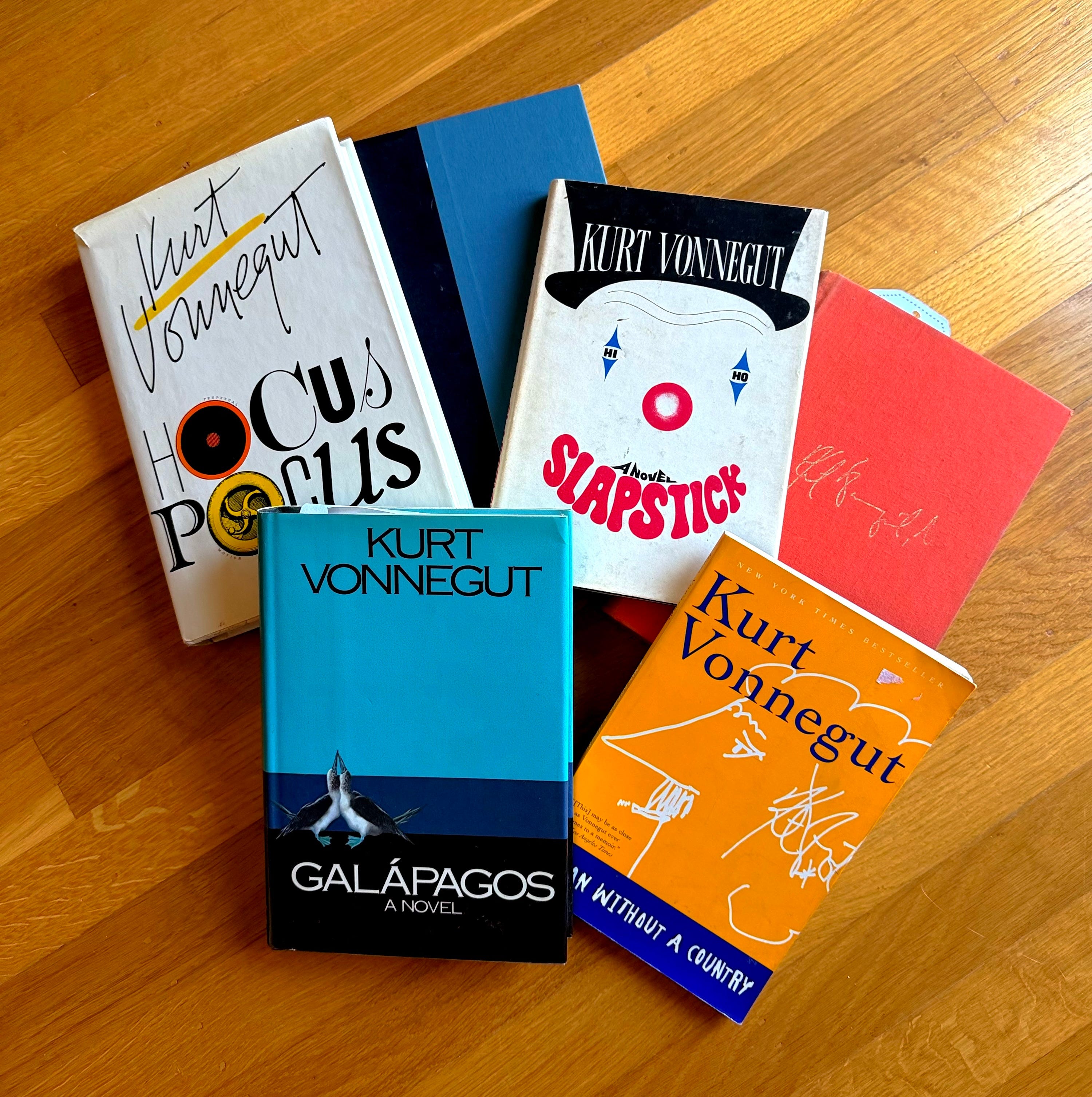
Where Bradbury took a traditional approach to the sci fi genre, Vonnegut wrote in a postmodern mode, with a blend of high art and low comedy (one of his books is titled, appropriately, Slapstick) in addition to the time and planet jumping of traditional science fiction. I’ve read most of his books over the years and my favorites are still Cat’s Cradle, Slaughterhouse-Five, Galapagos, and Breakfast of Champions. But all of his books are worth reading for their laugh-out-loud humor and deep humanity in the face of the larger systems (think war, government, capitalism, technology) hell-bent on dehumanizing us. While Vonnegut was critical about some of society’s ills, he was always optimistic that we, as individuals, could see beyond our differences and choose to be kind to one another.
And now we come to the Little Free Library portion of the stack! Word for Word works out of the Z Space theater, which is located on the eastern edge of the Mission District. It’s one of the few neighborhoods that consists primarily of large multi-unit buildings, whether condos or apartments, with small Victorians interspersed here and there. The area’s history is also one of industrial crafts—think print shops, and ironworks, that sort of thing—and the neighborhood retains that vibe, which makes it an interesting mix. When the warehouses started to close down, artists moved into the buildings for the cheap rent, and every year ArtSpan sponsors its annual Open Studios weekend where craftspeople and artists open up their live/work spaces for the public to visit.
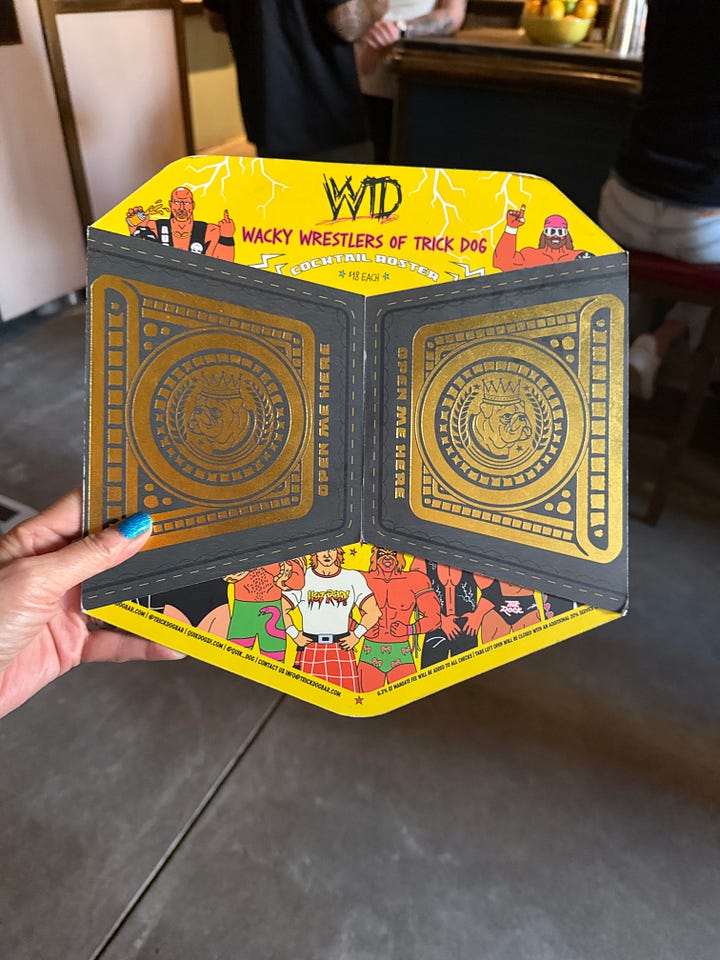
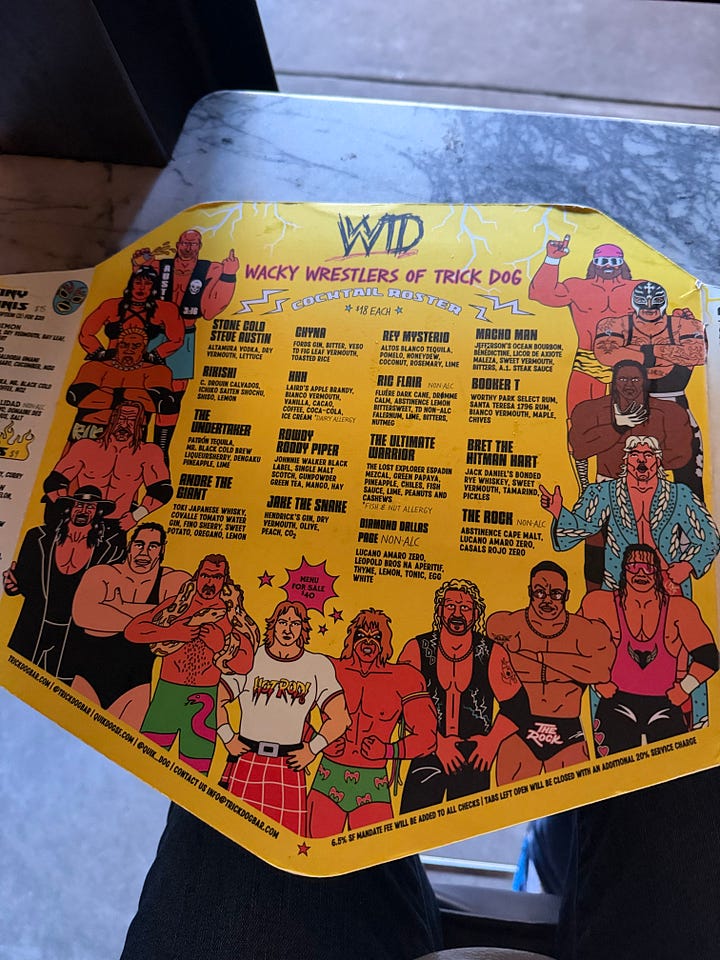
Among the area’s plentiful bars and restaurants is the popular Trick Dog, a fun place that we like to pop into when we are in the ‘hood. As we were heading over, I saw a Little Free Library that I hadn’t known about—right in front of the extraordinary rescue organization known as Muttville, that focusses on finding forever homes for older dogs, seven years plus.
Senior pooches need special care and attention to find the right folks who can provide a loving home environment for them, and Muttville has developed an innovative and nurturing program to unite these special dogs with their special humans.
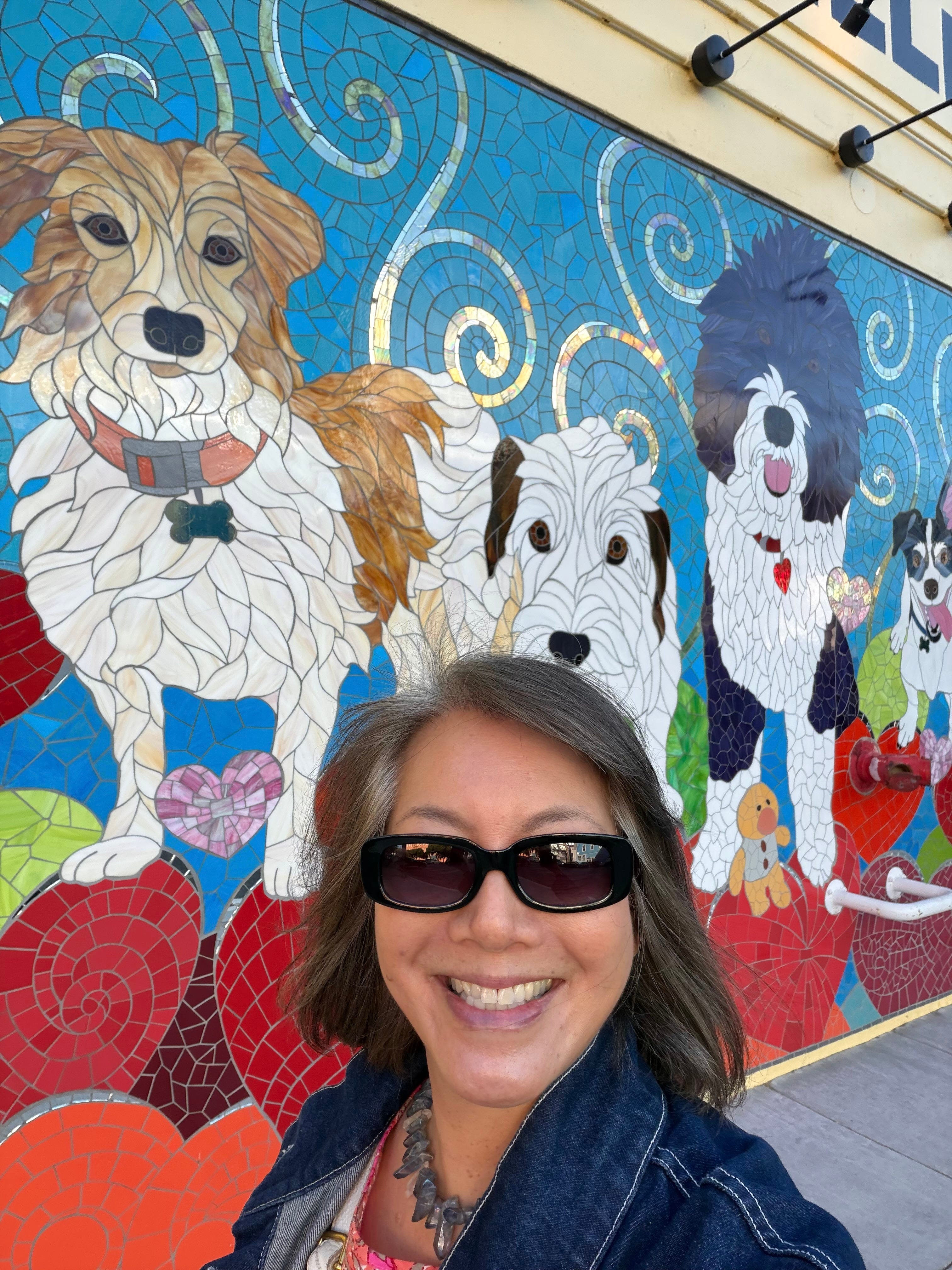
For one thing, the Muttville facility is completely cage-free, so the doggos can wander and hang out on sweet dog beds among the sofas and chairs. Muttville has a public cuddle time where visitors can come play with the wigglebutts, and they also sponsor programs like “Seniors Meeting Seniors”, where the dogs visit Senior Centers so older folks can get some quality time with their canine pals.
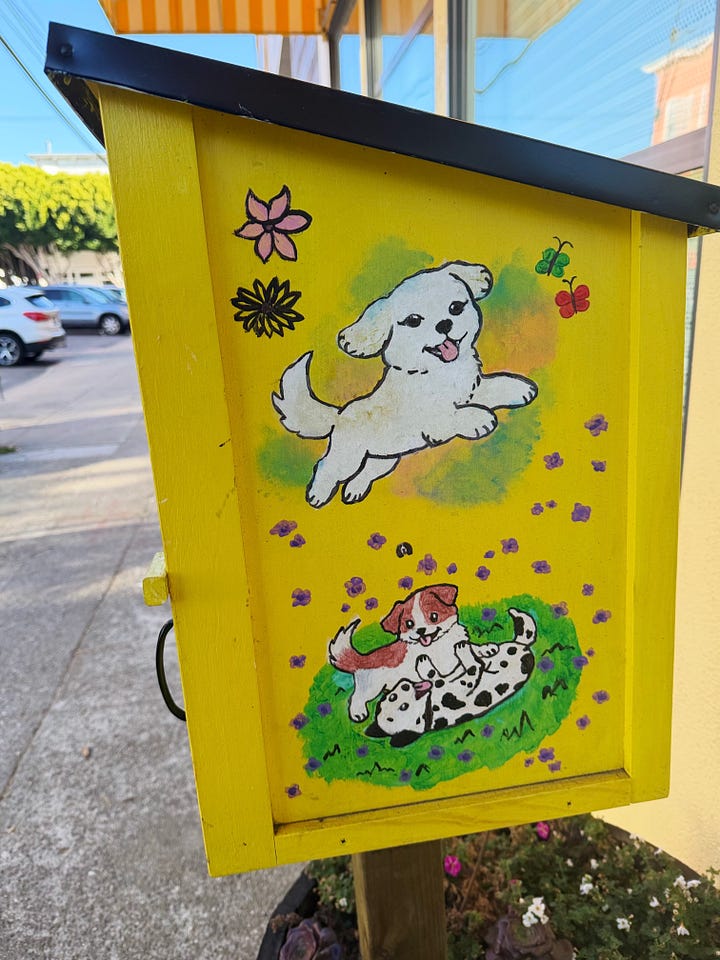
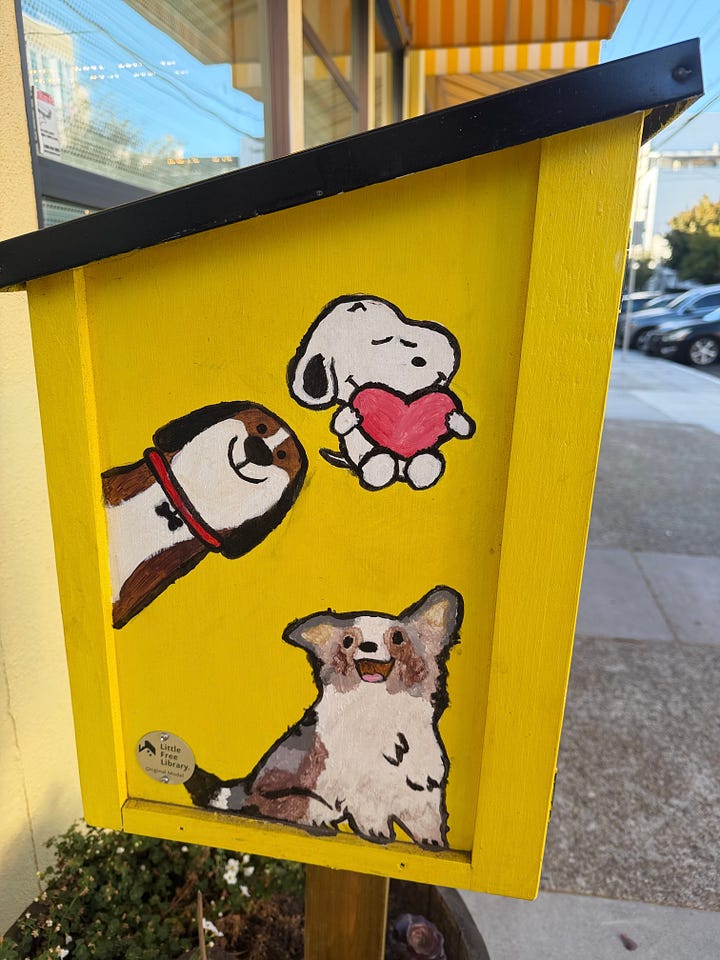
Right in front of Muttville, there is an adorable Little Free Library. It’s doggy themed, of course, painted in the same cheerful yellow as Muttville’s building.
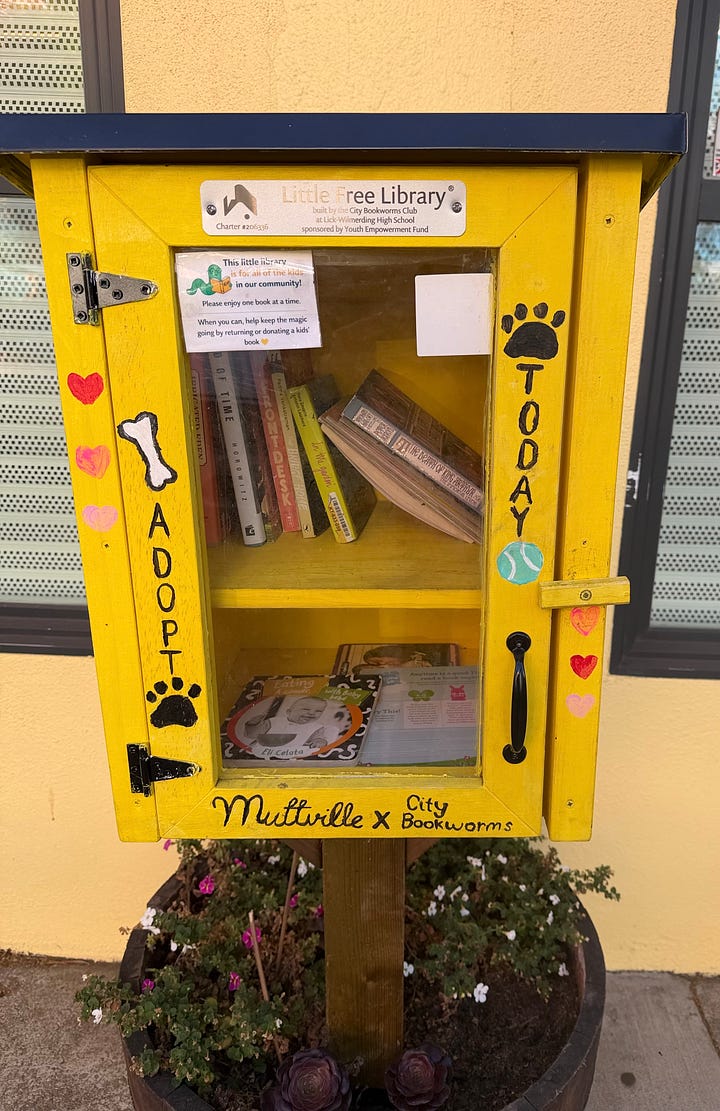
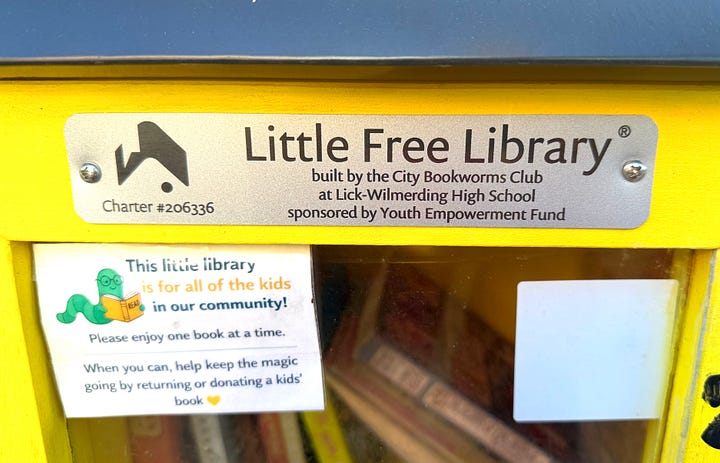
It warmed my heart that this LFL was sponsored by the City Bookworms Club at Lick-Wilmerding High School, whose motto is “a private school with a public purpose”. My daughter went to Lick and we appreciated that the students are required to take woodshop and electrical wiring and other vocational classes in addition to their academics. Lick’s mission statement also emphasizes community engagement and social justice, so I was happy to see that this part of their curriculum had resulted in a cute little free library!
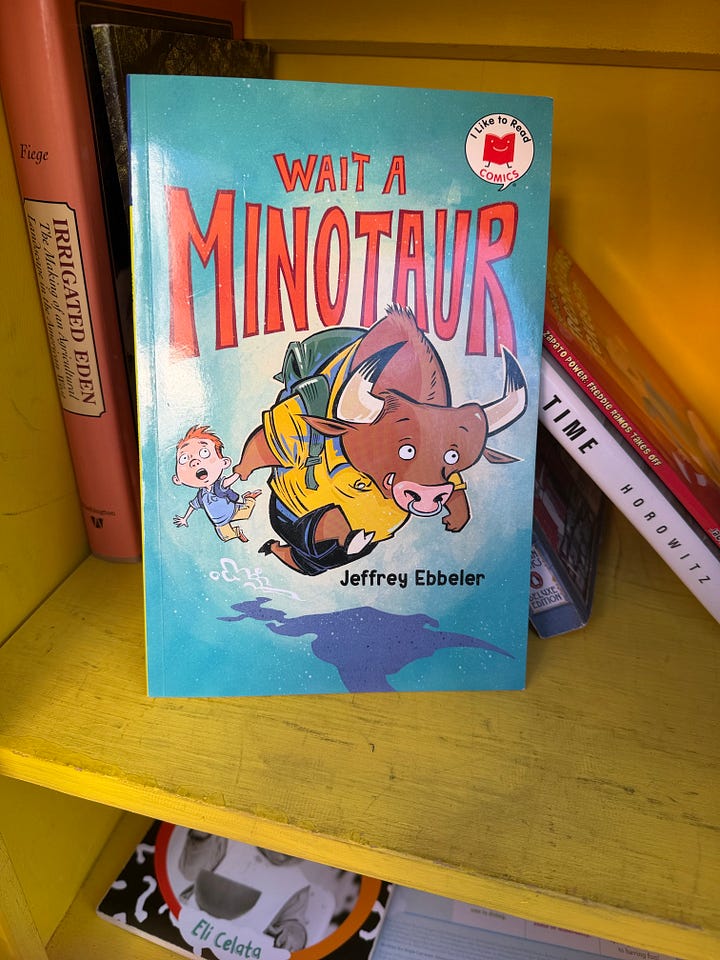
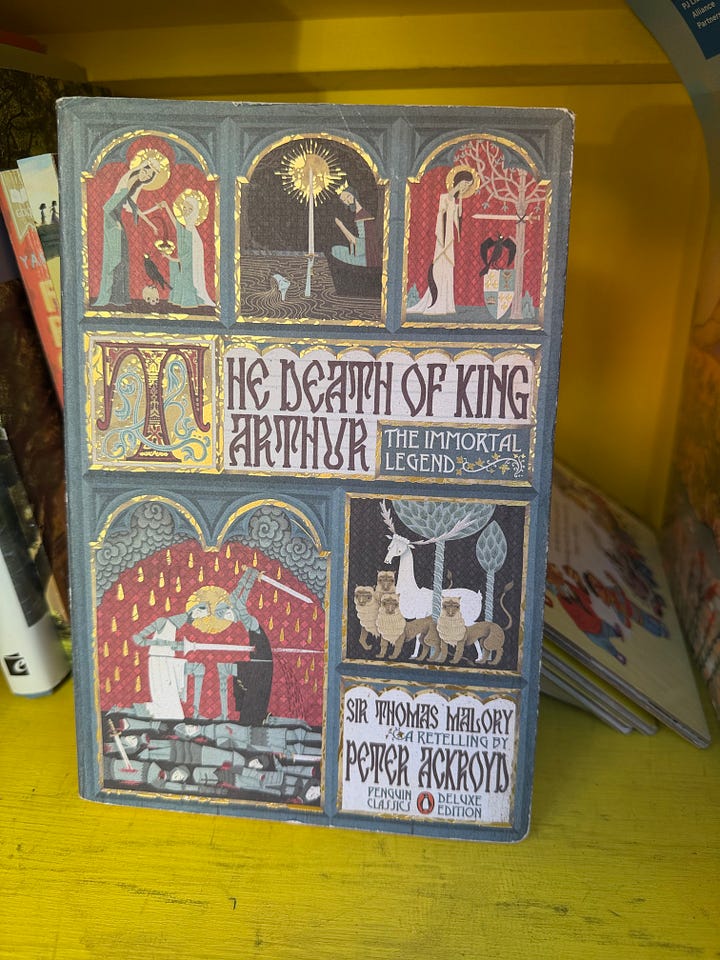
Inside the lfl, there were books for younger readers like Wait A Minotaur, Zapato Power: Freddie Ramos Takes Off, Front Desk, and The Bridge Home. Adults could peruse The Death of King Arthur, The Irrigated Eden and The End of Time.
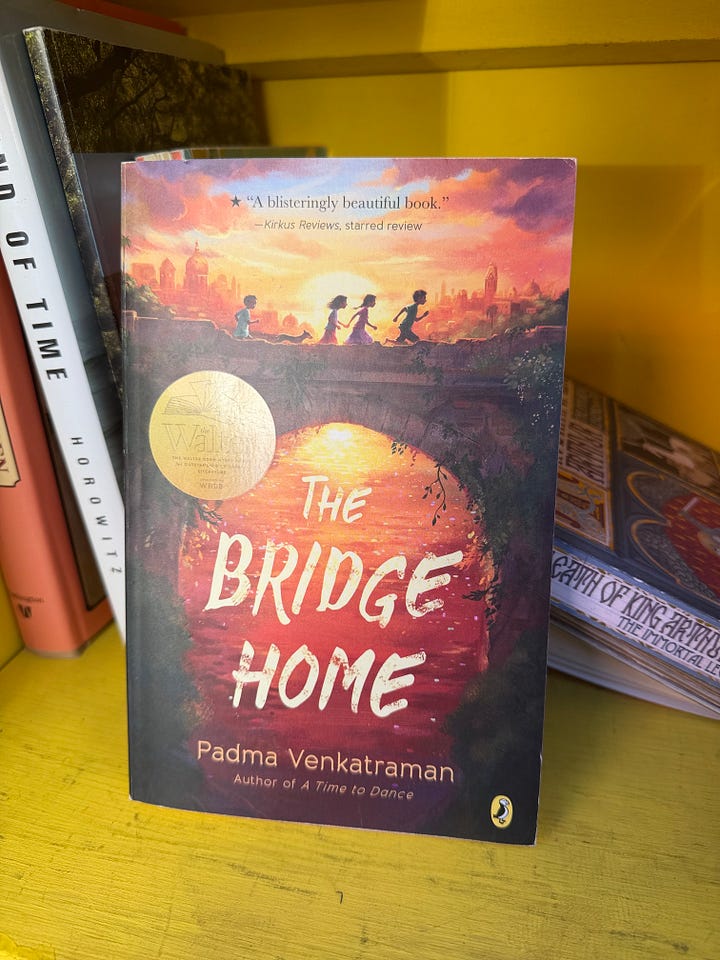
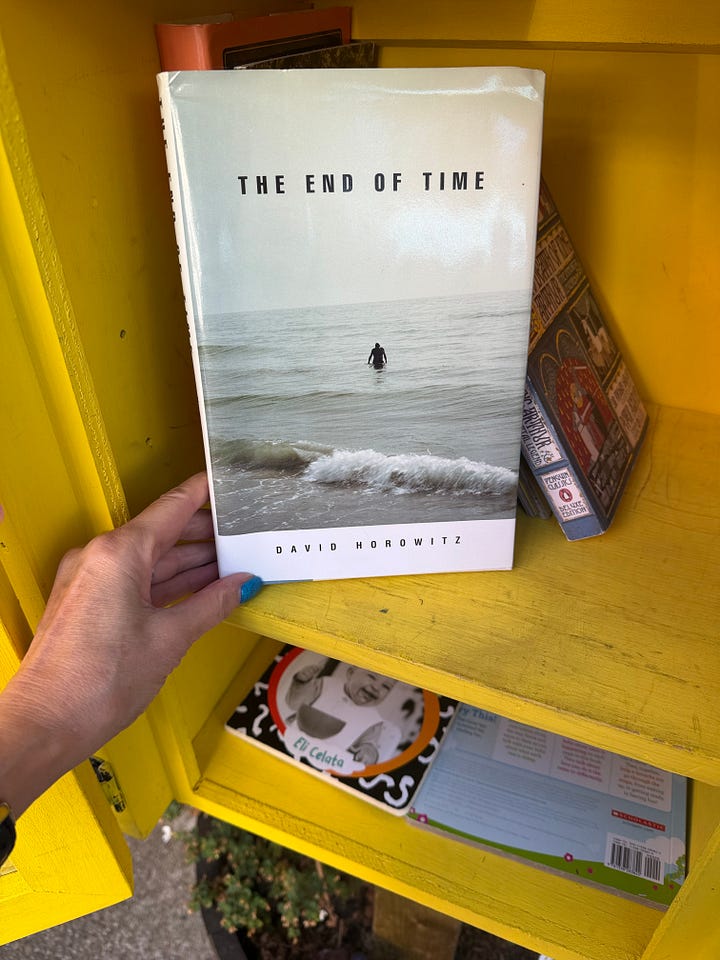
Like the Bradbury and Vonnegut stories, reading any of these books could take you to another place, time, or world, while resonating with your own life. I think this is what art does at its best—connects us with people from other worlds who share the same needs and desires that we have.
Ray Bradbury and Kurt Vonnegut often wrote about the dangers of advancing technologies that make us to lose touch with other people, even while they claim to bring us closer. But our walk through the Mission presented us with alternatives to being perennially online—seeing stories presented in an innovative, irl way, volunteering to help a furry friend, or building a little free library so folks can share the books they’ve read with other people.
That I go into the world and share what I find with folks online is an irony that doesn’t escape me. I’m privileged to be able to reach people beyond my little village via technology, and I’m grateful to be able to do so. I also know that the well of my soul is replenished when I go into the world and engage with my friends, family, and community. That overflowing of spirit is what I try to share in Little Book House.
I wonder what Ray and Kurt would think of the influence AI is having on our lives—especially the arts—and I wish I could read their takes on ChatGPT. I’m planning an AI experiment of my own for my next Little Book House—will be interesting (or horrifying) to see how it goes!
Until then, Happy Reading, whether ebook or irl book.
If you enjoyed this Substack, please feel free to subscribe for free, upgrade to paid, share, or contribute to my li’l coffee fund. Your support keeps my spirits up and my keyboard tapping!
Thanks for reading Little Book House! This post is public so feel free to share it.
Books mentioned in this post can be found at Bookshop.org: Bringing Stories Down To Earth.
No posts
Comments
Nothing yet. Say the first thing.
Sign in to join the conversation.