
August marks Women in Translation (WIT) Month, an initiative that brings readers across the globe together to celebrate the wealth of literature translated from one language to another. If you’re like me — a boring person who can unfortunately only speak one language — then translators are the unsung heroes you rely on to expand your literary horizons.
Women in Translation Month was started by Meytal Radzinski back in 20141 as a means to celebrate the diverse voices and experiences that remain underrepresented in the publishing industry. There’s an often-cited figure that 3% of books sold in the United States were originally written in a non-English language2, and though this estimate is nearly 20 years old, the point still stands: there’s a wealth of literature that English speakers simply cannot access through no fault of their own.
What’s worse is the disparate representation within translated literature, which predominantly features male voices from European countries. More recent estimates3 show that “only 36% of books translated into English come from non-European countries, and of these, a mere 31% were originally written by women”, which highlights the importance of Women in Translation Month. Unless we are intentional with our reading choices, it’s easy to neglect entire regions, cultures and histories!
Over the last few years, we’ve seen a deliberate broadening of what falls under Women in Translation Month. For example, the inclusion of transgender, non-binary, intersex, and other authors who fall beyond the typical Western gender binary is important. While my list is certainly not all-encompassing of every identity, language and country, I’ve done my best to give you a glimpse of the breadth and diversity translated literature offers. I’m always happy to hear of more recommendations that may have escaped my radar!
Similarly, while the month is intended to focus specifically on authors, I think it’s also important to celebrate the tireless (and often thankless) work of translators. Their credit is often relegated to a small shoutout on the cover (if they even appear on the cover at all, which is too often not the case), yet without their efforts, the book wouldn’t exist! I’ve become deliberate in explicitly referencing the translator in my Substack posts as a small but necessary way to credit them for their work.
The work of translators is inherently tied to publishing, and many women translators often translate a larger proportion of male-authored books than female-authored titles. For some, it can be contentious whether a work by a male author translated by a woman ‘counts’ as an eligible title for Women in Translation Month, and while I don’t intend to be the sole arbiter of eligible titles — I’m of the mindset that systemically excluding these titles can further devalue and underrepresent the work of women translators. I’ve included a list of these titles in a separate section of this post, but I’ll leave it up to you to decide if you want to read these!
If you’re eager to get book recommendations, reading guides, and reviews of translated literature all year long, be sure to subscribe. Posts like this take a lot of work, and your support makes it all possible!
For the bookworms looking for sad and melancholic reads…
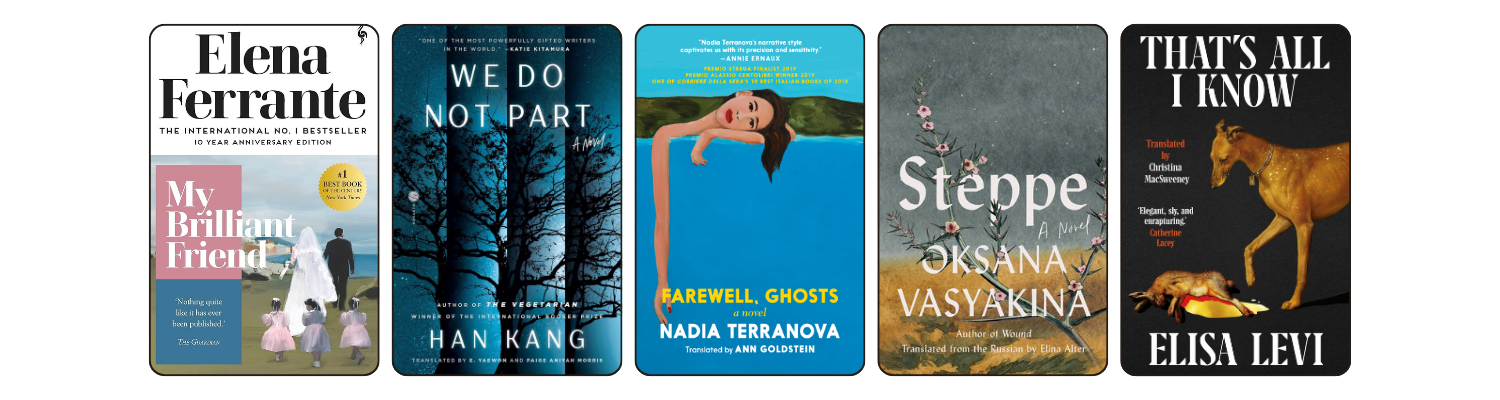
My Brilliant Friend by Elena Ferrante (translated from Italian by Ann Goldstein): I was late to the party in reading this, but I fear it was truly as good as everyone promised. The ending is perfection.
We Do Not Part by Han Kang (translated from Korean by E. Yaewon and Paige Aniyah Morris): My favorite Han Kang book, which seamlessly integrates real history with a story of loss.
Farewell, Ghosts by Nadia Terranova (translated from Italian by Ann Goldstein): An all-time favourite book about reckoning with our past, overcoming grief, and our relationship with home.
Steppe by Oksana Vasyakina (translated from Russian by Elina Alter): A queer woman embarks on a road trip across Siberia with her father as she grapples with his impending death and their tumultuous relationship.
That’s All I Know by Elisa Levi (translated from Spanish by Christina MacSweeney): A book about the stifling nature of growing up in a small town and the lived experience of being a glass child. Another book where the ending absolutely lives rent-free in my mind.
An exploration of social issues and gender-based violence (warning: these are disturbing!)
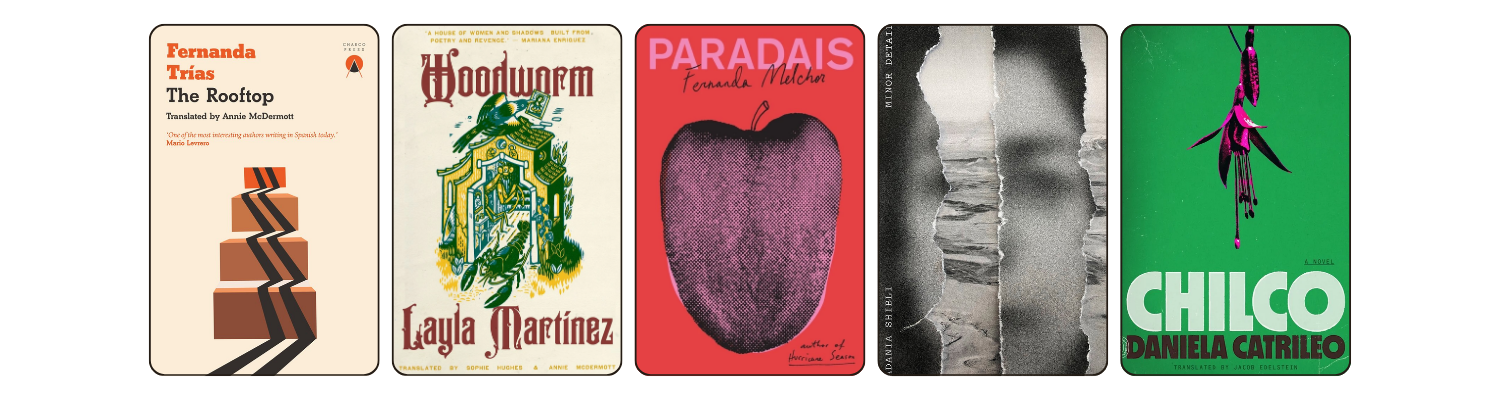
The Rooftop by Fernanda Trias (translated from Spanish by Annie McDermott): A claustrophobic, eerie novel about a woman who confines herself to a decrepit apartment with her ailing father and newborn daughter. Her only reprieve is the building’s rooftop.
Woodworm by Layla Martinez (translated from Spanish by Sophie Hughes and Annie McDermott): A twist on the typical haunted-house narrative, in which intergenerational trauma and class disparities take center stage. Plus, it doesn’t hurt that the cover is absolutely gorgeous!
Paradais by Fernanda Melchor (translated from Spanish by Sophie Hughes): An incredibly hard novel to stomach — Melchor doesn’t let the reader look away as she unflinchingly depicts violence against women and the consequences of misogyny that are systemically built into our society.
Minor Detail by Adania Shibli (translated from Arabic by Elisabeth Jaquette): A harrowing depiction of a Palestinian woman’s imprisonment, rape and murder that is only unearthed decades later. The type of book that fundamentally changes your perspective and leaves you staring at the wall.
Chilco by Daniela Catrileo (translated from Spanish by Jacob Edelstein): An eco-dystopian novel about climate change, colonialism, and displacement. One of my favourite books of 2025.
Short but powerful books for the busy reader!
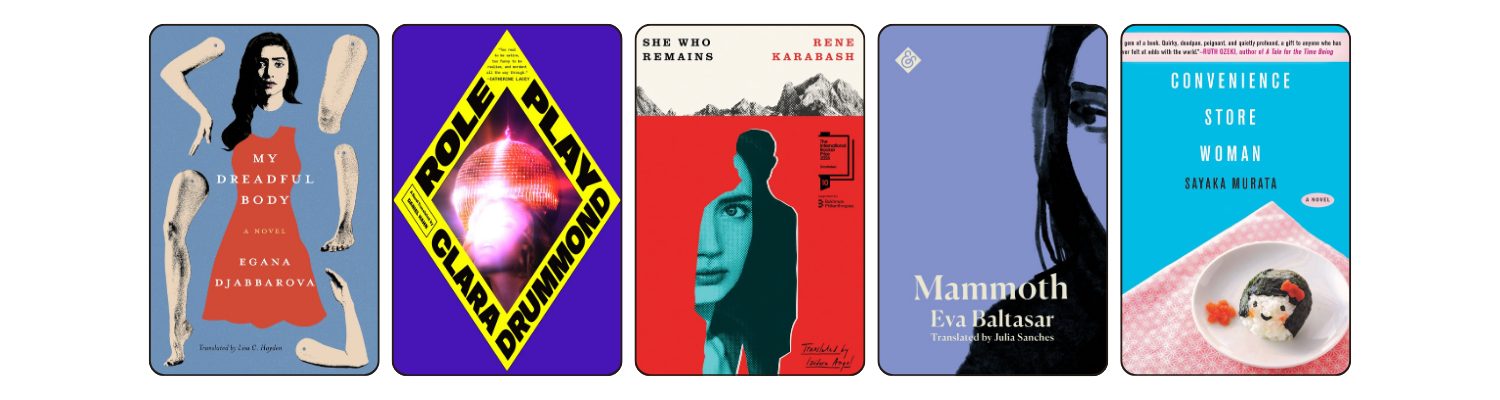
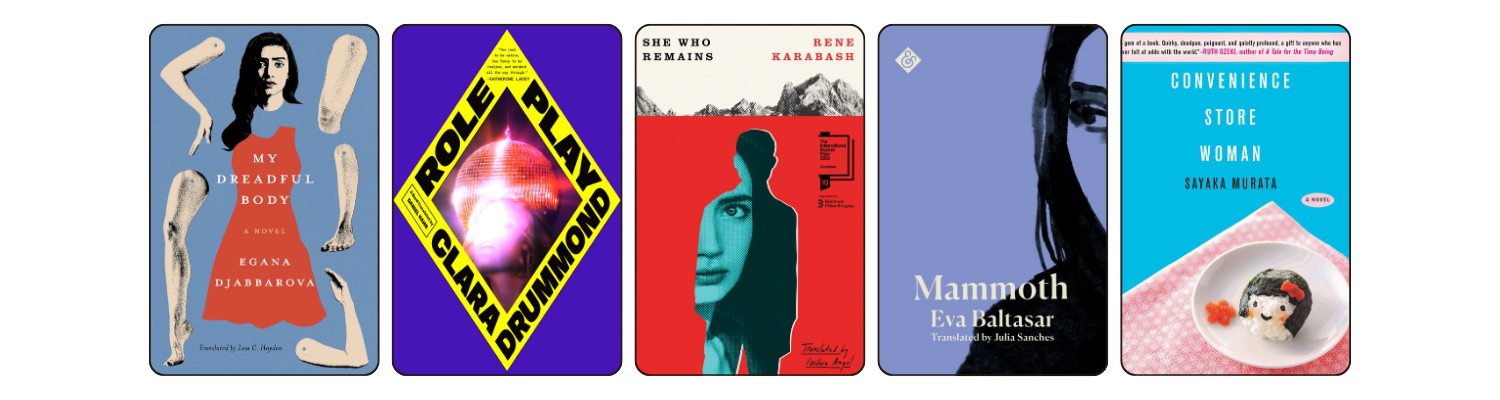
My Dreadful Body by Egana Djabbarova (translated from Russian by Lisa C. Hayden): This is still in contention for the best book I’ve read so far this year! It’s an intersectional portrait of disability, womanhood, culture, and religion that challenges our relationship to our bodies.
Role Play by Clara Drummond (translated from Portuguese by Daniel Hahn): A book that breaks the fourth wall and challenges the reader to reflect on our compliance with exploitation and its inevitable role in capitalism. Another all-time favourite that packs a punch.
She Who Remains by Rene Karabash (translated from Bulgarian by Izidora Angel): This has rightfully been everywhere after it was shortlisted for this year’s International Booker Prize. Special credit to Izidora Angel, whose translation is seamless and honors the original story beautifully.
Mammoth by Eva Baltasar (translated from Catalan by Julia Sanches): You can’t go wrong with any of the books in Baltasar’s triptych (which are only loosely related), but this is my favourite of the three. Fair warning that there is a graphic scene of violence against an animal, though. I didn’t like that.
Convenience Store Woman by Sayaka Murata (translated from Japanese by Ginny Tapley Takemori): Murata’s books are wonderfully weird and charming, and this is my favourite of her catalogue. It’s about a woman defying social norms and being her unapologetic, authentic self.
Books unlike anything else I’ve ever read
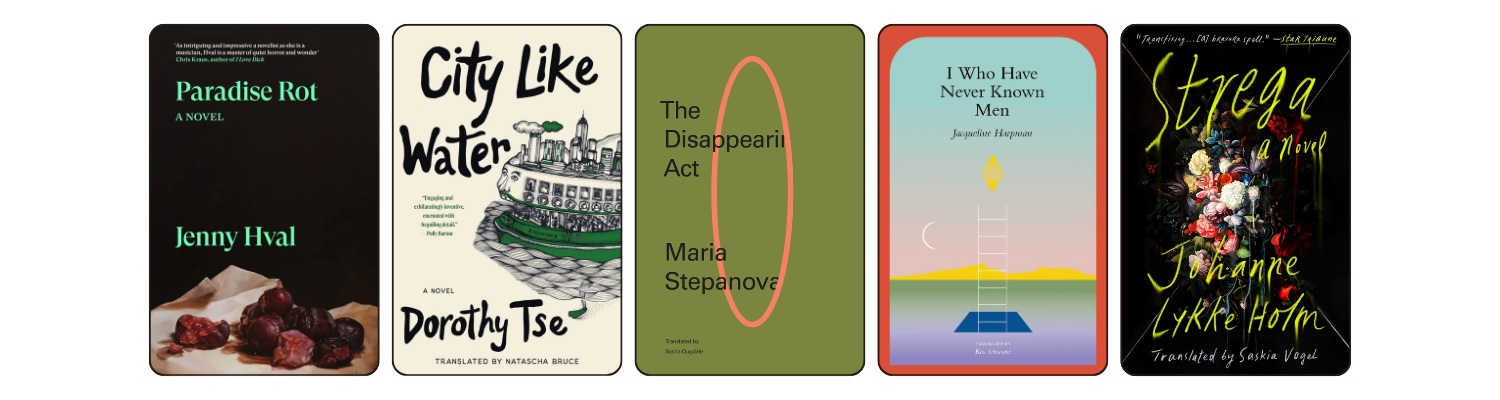
Paradise Rot by Jenny Hval (translated from Norwegian by Marjam Idriss): There’s a lot of pee in this book. Probably more than any other book I’ve ever read, actually. But it’s so atmospheric, weird, and it sinks under your skin.
City Like Water by Dorothy Tse (translated from Chinese by Natascha Bruce): An abstract, dreamy novella about Hong Kong and its unique political system that is slowly and deliberately eroding its autonomy.
The Disappearing Act by Maria Stepanova (translated from Russian by Sasha Dugdale): A book about our relationship to governments and institutions that defy our personal beliefs, yet provide us both privilege and opportunity. Definitely a thinker!
I Who Have Never Known Men by Jacqueline Harpman (translated from French by Ros Schwartz): This has been a BookTok darling for years, and as long as you’re okay with some ambiguity, I think it’s worth the hype. Bleak, unrelenting, and devastating — what more could you want?
Strega by Joanne Lykke Holm (translated from Swedish by Saskia Vogel): I didn’t really like reading this, yet somehow I really appreciate it. I understood nothing, but the vibes were perfect. My thoughts are mixed!
Underrated gems that I loved (and hopefully you do too)!
Hard Copy by Fien Veldman (translated from Dutch by Hester Velmans): Whoever did the marketing for this is a LIAR. It makes it sound much weirder and more unhinged than it is, so adjust your expectations accordingly. Very much a ‘woman versus the void’ book that reminded me of Ripe by Sarah Rose Etter.
Berlin Atomized by Julia Kornberg (translated from Spanish by Julia Kornberg and Jack Rockwell): A story about privilege, upheaval, and dystopia that seems to be polarizing, but I adored it. I hope this finds its target audience.
Bad Habit by Alana S. Portero (translated from Spanish by Mara Faye Lethem): A coming-of-age story set in Madrid from the perspective of a transgender woman. It takes time to honor and appreciate our queer elders, who paved the path for many of the rights and social privileges we have today.
Thirst by Marina Yuszczuk (translated from Spanish by Heather Cleary): Again, I blame the marketing for the poor reception to this one. It’s described as a sapphic vampire book, which isn’t inherently a lie, but neither are the main focus of the novel. Similar to Hard Copy, this is more of a ‘woman versus the void’ book that has some supernatural elements.
Space Invaders by Nona Fernandez (translated from Spanish by Natasha Wimmer): A political novella about growing up amidst government corruption and how we find escapism. It’s so short that I won’t give away more than this!
Male author, female translator, do they count? Up to you…
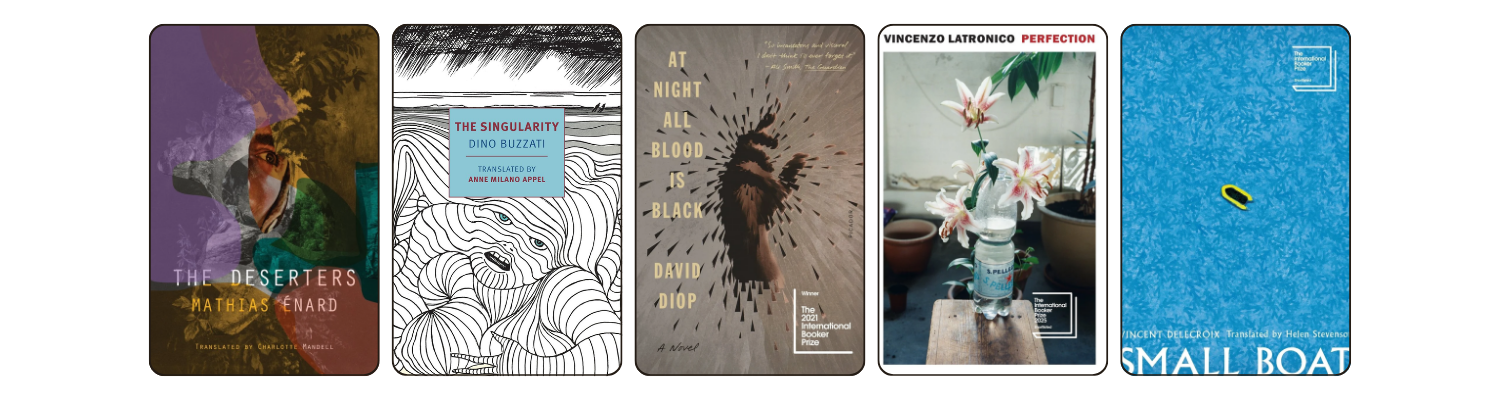
The Deserters by Mathias Enard (translated from French by Charlotte Mandell): A pair of thematically related novellas that explore war, violence, and collective grief. I could write a full post about how much I enjoyed this book and the duality that it explores.
The Singularity by Dino Buzzati (translated from Italian by Anne Milano Appel): An eerily prescient tale, originally written in 1970, about artificial intelligence and the inevitable endpoint (“singularity”) where technological growth passes the point of no return.
At Night All Blood is Black by David Diop (translated from French by Anna Moschovakis): A story about violence, brotherhood, and war set from the perspective of a Senegalese soldier in World War 1. The horror slowly builds until the very last page.
Perfection by Vincenzo Latronico (translated from Italian by Sophie Hughes): Okay, fine, I didn’t like this quite as much as everyone else. I thought it was fine but not remarkable. But I would be remiss not to include it for my fellow Millennials out there!
Small Boat by Vincent Delecroix (translated from French by Helen Stevenson): If you asked little ol’ me, this would have been my winner of the International Booker Prize in 2025. Such a powerful book about the migrant crisis that feels increasingly relevant today.
A lot of books that were originally written in Spanish, apparently!

The German Room by Carla Maliandi (translated from Spanish by Frances Riddle): I will forever be chasing the high that My Year of Rest and Relaxation gave me. I hope this delivers.
The Door by Magda Szabo (translated from Hungarian by Len Rix): This is me, on a very public platform, admitting I haven’t yet read any Szabo. I’m sorry. I’m fixing it.
Electric Shamans at the Festival of the Sun by Monica Ojeda (translated from Spanish by Sarah Booker): This feels like the perfect summer book, and though Ojeda’s books always make my stomach turn, I’m intrigued.
The Simple Art of Killing a Woman by Patrícia Melo (translated from Portuguese by Sophie Lewis): The people I trust most in the literary world have all given this glowing reviews. That’s all the endorsement I need.
Restoration by Ave Barrera (translated from Spanish by Ellen Jones & Robin Myers): I really expected this to be longlisted for the International Booker Prize (and it somehow wasn’t), so I delayed reading it longer than anticipated. My bad.
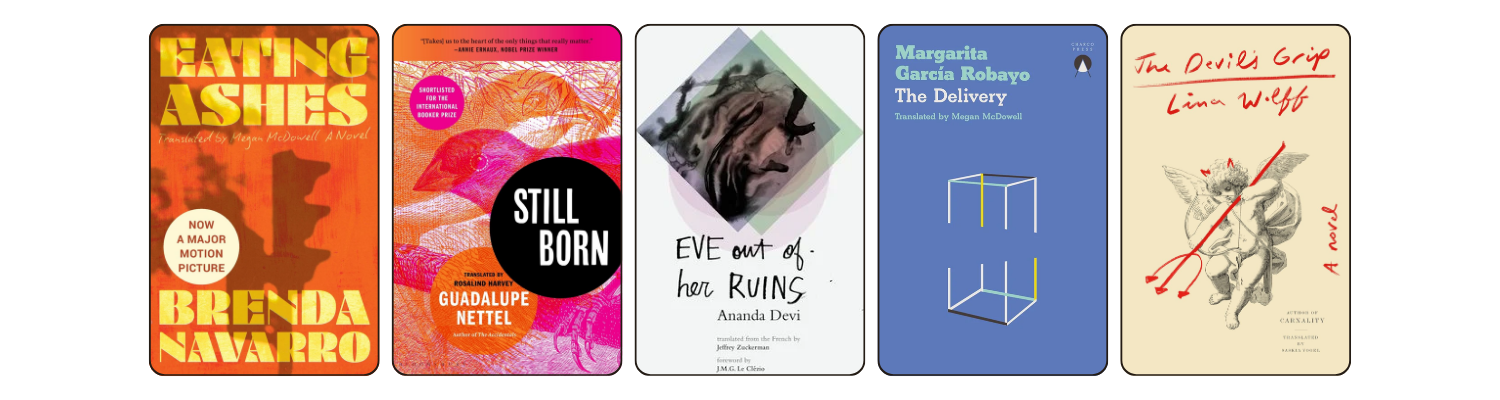
Eating Ashes by Brenda Navarro (translated from Spanish by Megan McDowell): This sounds like it will absolutely break my heart. So naturally, I want to read it ASAP.
Still Born by Guadalupe Nettel (translated from Spanish by Rosalind Harvey): This is another read I’m embarrassed to admit that I haven’t yet gotten to — it seems so beloved that I’m assured I’ll love it too. Or at least that’s what I tell myself.
Eve Out of Her Ruins by Ananda Devi (translated from French by Jeffrey Zuckerman): I have seen far too many vlogs in which this book devastates the reader. It has me morbidly curious — surely I won’t cry… right?
The Delivery by Margarita García Robayo (translated from Spanish by Megan McDowell): Charco Press so rarely misses for me that I picked this up at a used bookstore on a complete whim. Do I know what it’s about? Not really. But I’m sure it’ll be stellar.
The Devil’s Grip by Lina Wolff (translated from Swedish by Saskia Vogel): This has a low average rating on Goodreads, but I never let that dissuade me! Another title I haven’t heard much about from my circle, but I can be a trailblazer (is that how that works?).
What are you reading for Women in Translation Month?
What have you loved? Tell me everything!
Disclaimer: The links above are affiliate links through Bookshop.org, where your purchases contribute to independent bookstores. I earn a small (10%) commission from any purchases made, but there’s no obligation to buy!
Sources:
https://www.womenintranslation.org/witmonth
https://www.rochester.edu/College/translation/threepercent/about/
https://thebookerprizes.com/the-booker-library/features/women-in-translation-share-their-must-reads
No posts
Comments
Nothing yet. Say the first thing.
Sign in to join the conversation.