

This week on LG Presents: Short Stories, Emma Copley Eisenberg – author of the short story collection Fat Swim – presents a piece by the short story legend, Raymond Carver. If you are a fan of the cult-classic Stuck in Love, you may know Carver has the man Greg Kinnear quotes at The Party. It’s hard to talk about this medium without talking about Carver, so we’re thrilled to dig into this one.
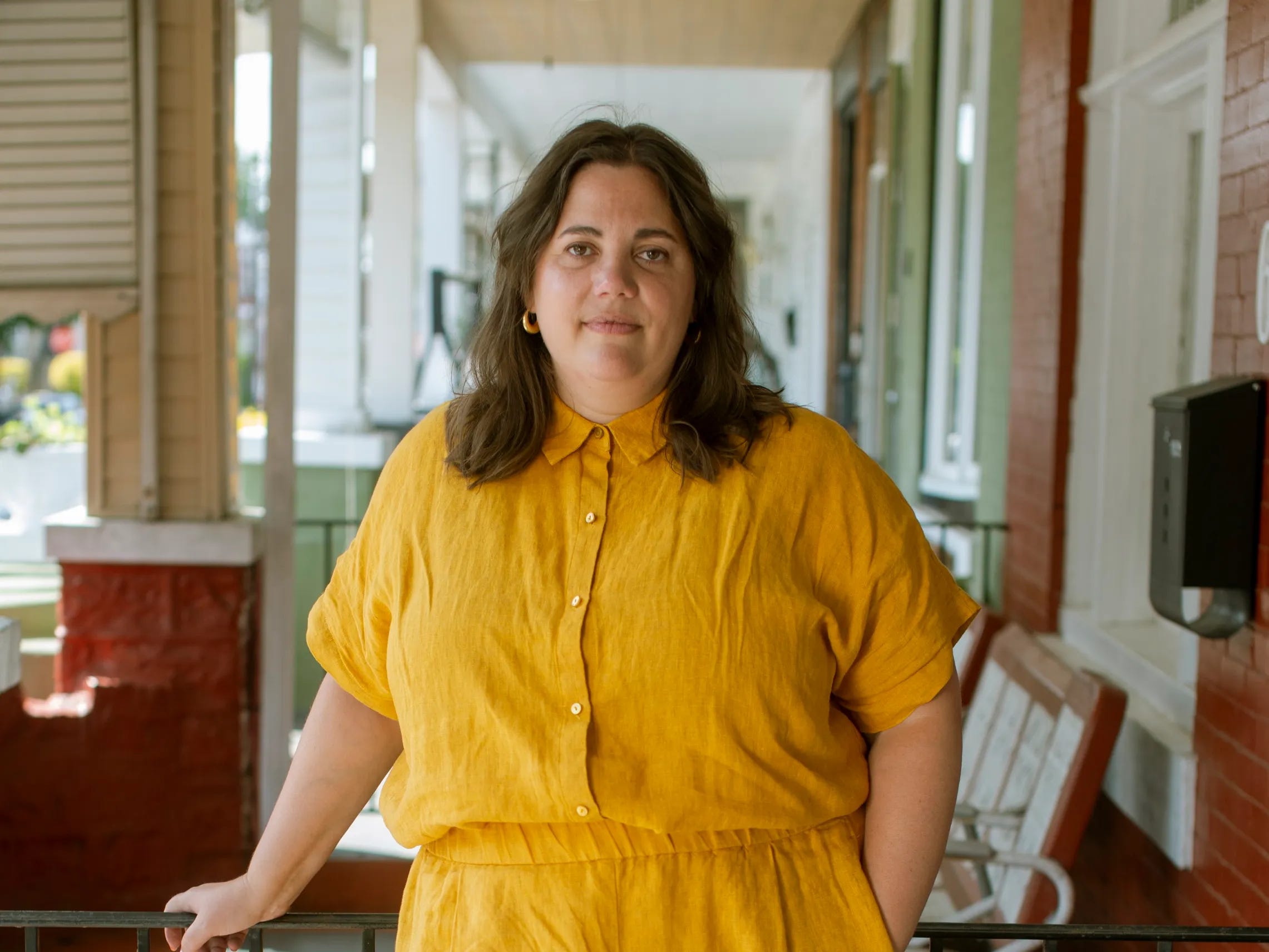
It’s hard to remember when Raymond Carver came into my life because what I know is that I wanted to write short stories like Carver’s before I wanted to be a writer. I didn’t know what it meant to have a writing practice, to revise, to create a character who had wholeness and potential, but I knew, from Carver’s stories, what it felt like to be on the receiving end of a blazing bomb of human insight, a line of prose that stabs like a knife, or an image so true it pops up at the strangest moments of living, inexplicable and urgent.
While “Fat” is not Carver’s most famous story or even, maybe, my favorite -- that honor might go to “Chef’s House” or “A Small, Good Thing” or, canonically, “What We Talk About When We Talk About Love” — it’s the story I point to that is doing the MOST Carver things in the smallest space and which, I think, is shockingly complex on the subject of the great mystery of being a human being with a body, the main concern of my recent collection of fiction, FAT SWIM.
Carver, a white straight man who died in 1988 and could fail in his full empathy for women and folks of color, was, though, always interested in people the world deemed expendable or disgusting—poor people, addicts, and people with disabilities. Many of his stories are about the working class laborers who power American industry and social life — waitresses, phone operators, loggers, truck drivers — and how their lives, despite or maybe because of, their attunement to the realities of paychecks, debt, sexual coercion, and work, contain rich emotional texture, ambivalence, and tension between hope and stagnation. Who gets to change their life and who doesn’t? is a real concern of Carver’s, but every single one of his narrators has the holy spirit in them, if we define that as the sacred flavor of a human being awake to their own experience.
“Fat” is a story not so much about a super fat man who sits down and eats a meal at a diner but about the unnamed thin woman who narrates the story and for whom meeting this man is a jarring call back into her own life and body. She has a job that pays the bills, a friend named Rita, and a husband named Rudy who is cruel to people who are different and less powerful—Rudy calls the character “tub of guts” and “a real fatty.” (The fatphobia in the story is stark and realistic; a lesser writer would use euphemisms or make the character’s experience of a public place more neutral, but Carver forces the reader to feel every derisive remark, every stare, how everyone but our narrator sees the fat man in question as fundamentally less than human).
What I find fascinating about this story is that it is structured as an oral account, it is told aloud from our narrator to her friend Rita, so it is not an accounting that we trust but a remembered “take.” Everything is so filtered through the lens of our narrator’s telling that it’s clear the story is not about a fat man at all, it’s about what witnessing a person who is openly hungry and taking up more space than is socially acceptable—especially within this environment where everyone is competing for literal scraps of the American dream - does for the narrator. This fat man is size, he is power, he is solidity and sweetness and care and decency, things the narrator lacks profoundly in her own life. It is fatness as stand-in for these things, rather than the things fatness is routinely a stand-in for, that puts Carver’s genius for projection, cruelty, and longing on display. I hope you enjoy.
***READ RAYMOND CARVER’S FAT HERE***
Emma Copley Eisenberg is the nationally bestselling author of two books of fiction— Fat Swim and Housemates, nominated for a Lambda Literary Award in Lesbian Fiction and the VCU Cabell First Novelist Prize — and the nonfiction book The Third Rainbow Girl, a New York Times Notable Book and Editor’s Choice.
Her fiction, essays, and criticism have appeared widely including in The Yale Review, Granta, The Paris Review, The New Republic, The Cut, TIME, The New York Times Review of Books, and The Philadelphia Inquirer. She lives in Philadelphia, where she co-founded Blue Stoop, a community hub for the literary arts, and is a 2026 Pew Foundation fellow.
No posts
Comments
Nothing yet. Say the first thing.
Sign in to join the conversation.