
This week on LG Presents: Short Stories, Pool House author Mary H.K. Choi starts us off with an unconventional format for the short story: Twitter (for our purposes today we’re using her maiden name). Jennifer Egan’s “Black Box” is unlike anything we’ve ever encountered and pushes the boundaries of how we present narrative works. A thrilling start to the series, no? We hope you enjoy it. Mary, take it away.
“Black Box” is a short work of speculative fiction by Pulitzer-winning author Jennifer Egan, first presented as a series of Tweets from the New Yorker’s fiction account. In its original serialized format, released over nine days in May, 2012, the short story was made possible by a relatively linear algorithm and a timeline that was populated only by the accounts you actively followed.
If you can imagine such a thing.
At the time, Twitter was six, there was this absurdist bot called Horse_ebooks that wrote the most beautiful poetry “everything happens so much,” Kanye West was tweeting in all caps to scream at various people, Elon Musk possessed a paltry $2 Billion (now clocked at $950 Billion to $1.1 Trillion) and all the brands weren’t yet creepily pretending to have a personality. Mostly we used it to yell at Delta.
“Black Box” was my first experience in appointment viewing or eventized dispatches from the platform and the story followed an unnamed “beauty,” who is later revealed to be a spy augmented with various surveillance capabilities. You have to also remember that in this halcyon era, there was a 140-character cap for each Tweet, and the limitations only lent tension and credence to the story being told. As though our spy who was reporting back to us from a Mediterranean compound at great risk might be interrupted at any moment because she could be discovered and duly dispatched.
Ahead of its publication, Egan told the New Yorker that she was interested in “fiction that takes the form of lists; stories that appear to be told inadvertently, using a narrator’s notes to him or herself.”
I believed all of it. And the surreptitiousness; the voyeurism, made it possible. Twitter was the place where we talked about the maple syrup smell permeating Manhattan. I found out there was a fire in New Jersey by reading the Tweets of the people in my Brooklyn neighborhood who were still awake. Sometimes we spoke directly to each other as though it were a group chat but mostly we contributed to a ticker tape of hyper-local, up-to-the-minute news of urgent and quotidian matters. That this other person’s transmissions could come through gave it the feel of a ham radio that had miraculously caught a distress signal. And the least we could do was collectively bear witness.
“I wrote these bulletins by hand in a Japanese notebook that had eight rectangles on each page,” Egan says in that same article. “The story was originally twice its present length; it took me a year, on and off, to control and calibrate the material.”
Yet to this day, it strains the imagination to think of anyone having written or edited “Black Box.” That the collected transmissions aren’t actual field dispatches from a beautiful cyborg spy in the future. It calls to mind radio programming in the thirties, how “The War of the Worlds” broadcast (written by Orson Welles) convinced some listeners that a real alien invasion was taking place. Or when audience members leapt out of the way of an oncoming train in early cinema. There is a collective suspension of disbelief when the form is so novel. A childlike wonder—a thrillin, no-fucks-given credulity—particular not only to the transportive nature of a story but the magic of being glamored and giddy as a group. That we can clasp hands and be spirited away together. It’s not only an astonishing feat of storytelling but a testament to the joy of being part of an audience. It’s a feat of astonishing storytelling and a rapturous example of a willingness to believe.
***READ JENNIFER EGAN’S BLACK BOX HERE***
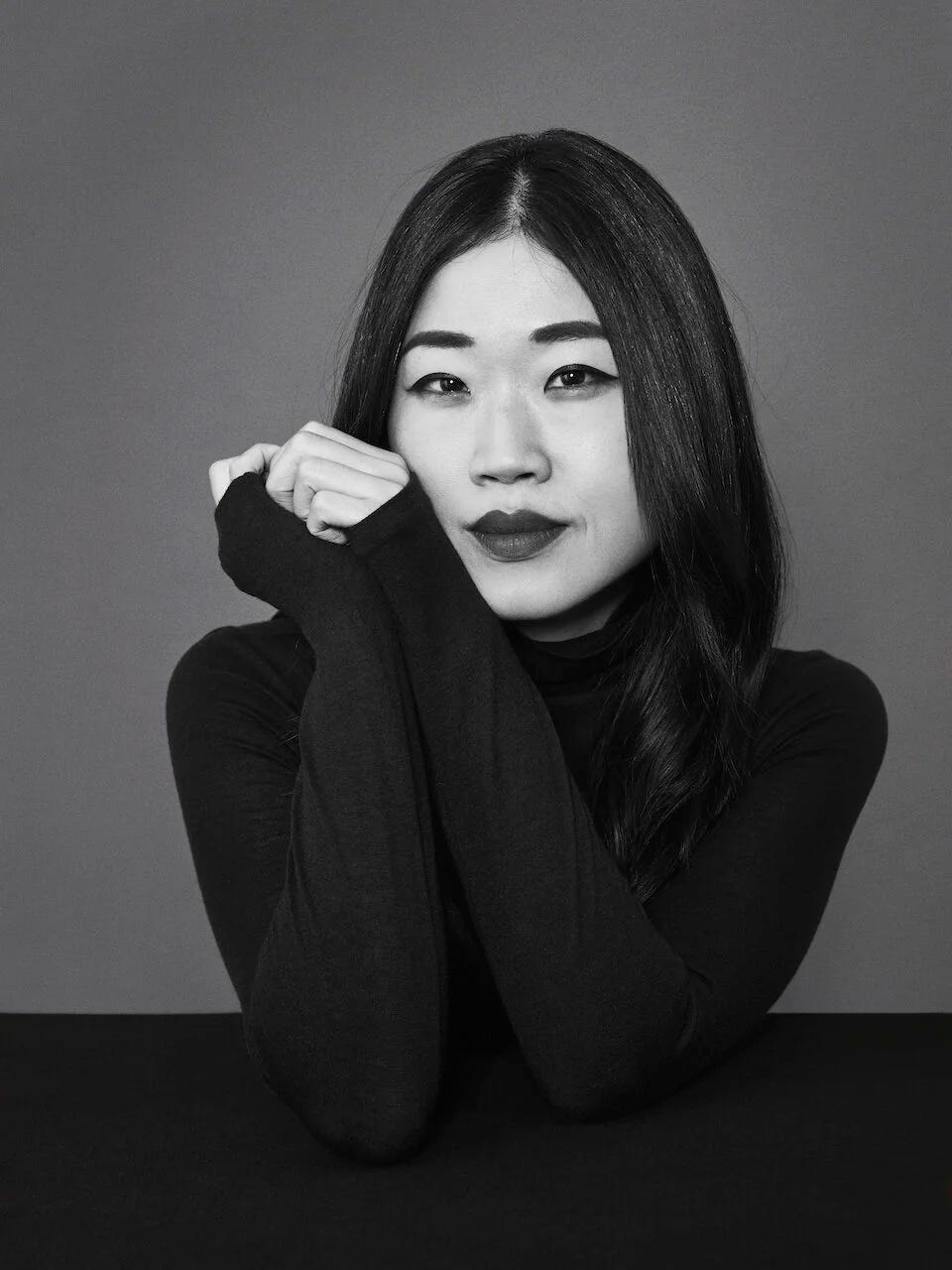
Mary H.K. Choi is the New York Times bestselling author of Pool House, Emergency Contact, Permanent Record and Yolk. She can be found on Threads or Instagram for more musings. Or else you can follow her newsletter right here on Substack.
No posts
Comments
Nothing yet. Say the first thing.
Sign in to join the conversation.