
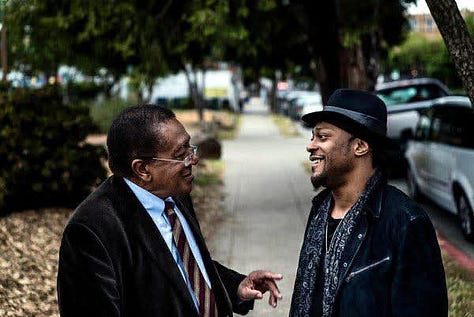
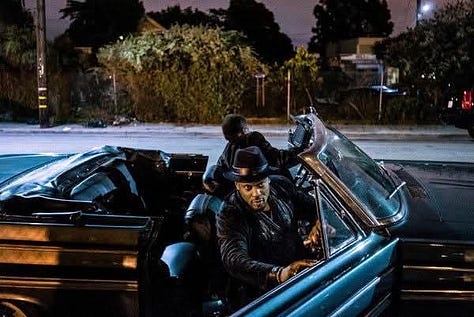
As fans worldwide continue to grapple with the ascension of D’Angelo, I continue to meditate on the stellar example he set for those of us in his generation regarding legacy upkeep and cultural/social responsibility.
Born between 1965 and 1980, Black Generation X is the first generation in this country to ever receive full rights as citizens. My entry into the world occurred in 1973, one year before D’Angelo and a few short years after the assassinations of Dr. King, Malcolm X, and the passage of the Civil Rights Act. The majority of us, including me, were the first Black children to attend formerly segregated schools in the South. Our childhoods are fused with both the successes of Black America as many entered into spaces previously restricted and the continued challenges of deeply entrenched systemic racism.
Between Reaganomics, the Cold War, HIV/AIDs, and the crack epidemic, Black Generation X faced a host of crises that defined our approach to living in a society that only offered a topsoil level of equality. We soon learned as we came of age that the roots were still rotten to the core. Hip Hop allowed us to craft a collective voice and the world was put on notice that the sons and daughters of the children from the Civil Rights Movement were loud and angry but also artistically astute, culturally aware, and socially/politically critical. Bearing witness to the revolution of Black cultural expression, Hip Hop used our Mama and Daddy’s records, recreating a signature sound that was wholeheartedly ours but definitely an extension of the legacy of the previous generation.
While I was in Mississippi, reading every single book I could find on the Black Experience, D’Angelo was in Richmond, Virginia actively involved in his father’s church as a choir director and musician. Our paths would never cross personally, but our realities as generational companions made us soulfully compatible. Through music, we bonded with him, understanding his assignment as a torch bearer within the domain of Black music and culture. His calling originated in the Black Church and later through the bridge that Hip Hop created between us and our Baby Boomer parents. His falsetto laden crooning and gospel-inspired vocal runs comforted us while his cornrows, baggy jeans, Tims, leather jackets, and cigarettes reflected us. He was and will always be a mirror image for Black Generation X.
To that end, D’Angelo took up the mantle of being a vessel as well as a preservationist for the Black Experience and many of us need to finally heed the urgency of this hour to do the same. As his generational counterparts, we are obligated to carry his legacy forward now but to also uphold the rich cultural workings of our elders and ancestors just as he did while here. For D’Angelo, his musical renderings were steeped in memory and meaning. Every single song, whether original or a cover, held a purpose. In like fashion, as we gather and celebrate, let us also ensure that our workings remain just that — ours. As we create, let us all send it on by simultaneously cherishing our not so distant past while speaking to our present and sealing our future.
For me, writing is at the center of my preservationist work but it is not the whole. I aim to uphold legacy through storytelling, intentionally purposeful events, services, and educational initiatives. Oh…and I will also urge and insist on gatekeeping because…
Pardon the conspiracy theorist angling of the title, however, let’s not be dismissive of the sentiment.
The sentiment is not as far-reaching as it initially seems. After all, once upon a time in humanity, European scholars, observing and studying the precision and structure of the Egyptian pyramids, reasoned that aliens built them. And, that’s just for starters. An inclusive and accurate historicizing of Black people has never truly existed within mainstream America (or the world, for that matter), but the bits that made it are persistently scrutinized if not just summarily dismissed.
In this nation, history textbooks and curricula are presently referring to our enslaved ancestors as servants, which is actually worse than the former retelling that was broad and sloppily managed. That basic account went like this: Black people were brought from Africa as slaves, Abraham Lincoln freed them because he was honest, Dr. Martin Luther King, Jr. had a dream and then everything was better for them. Racism is now a thing of the past— the end. Footnote: The Civil War was about states’ rights and not slavery.
Now, the attempt is to completely whitewash the facts in an effort to absolve any accountability from white society but to assert the undertone that we, as Black people, actually benefited from slavery. This warped thinking assumes we were saved from the so-called savagery and present-day struggle of ‘third world’ countries in Africa; just never mind the centuries of pillaging and plundering of those nations through colonization, though.
Now, with the onset of artificial intelligence, we are seeing even more deterioration of historical accuracy. With deliberate attempts to desecrate (for the sake of mere entertainment) the legacies of Black leaders from the past, shady individuals are keying in sophisticated prompts to produce clickbait and viral social media posts that are infuriatingly disrespectful.
Ok, that tangent was necessary but let’s get back to the premise of Black culture here.
Thanks for reading The Literary LightWorker! This post is public so feel free to share it.
For decades, white artists (Elvis Presley being one of them) took the songs of Black artists, re-recorded them and enjoyed chart-topping accolades and riches while those Black artists continued to live in abject poverty, never receiving one penny of royalties. Those songs were accredited to those white artists as the originators, too, thus leaving much room for historical error and lies to be offered as fact. This has occurred with every musical art form created by Black Americans.
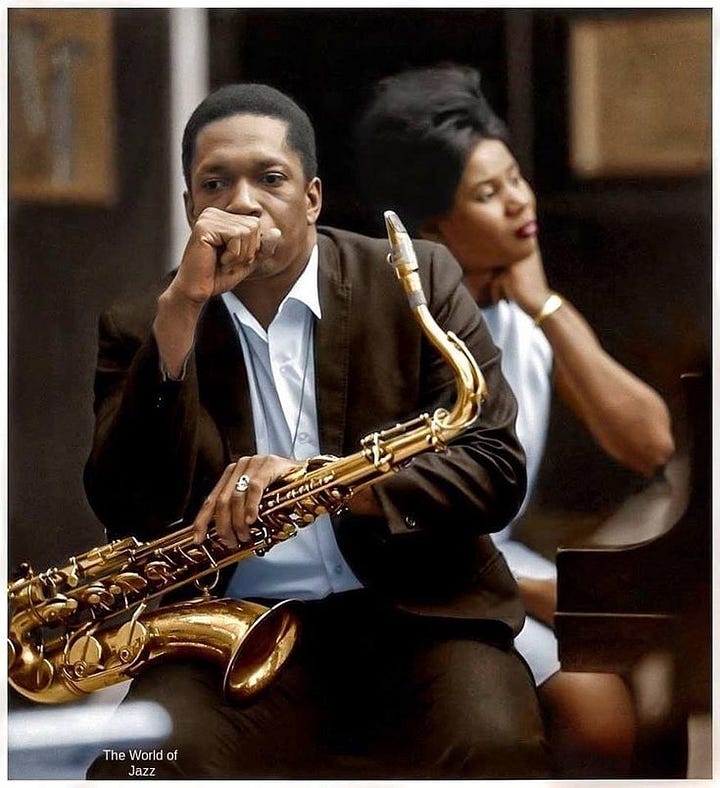
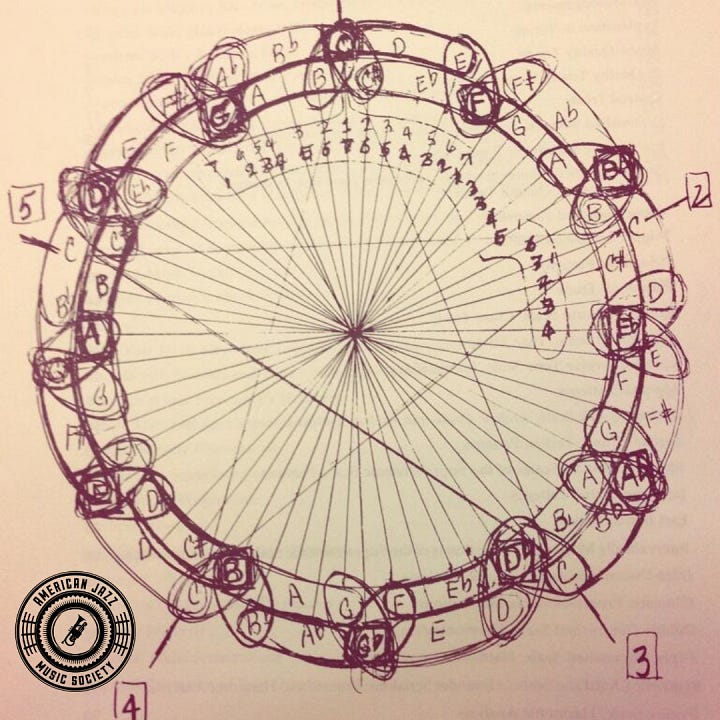
Undoubtedly, Jazz, as a Black American art form, has circled the globe countless times with its rich complexities of arrangements, influences and architects such as Miles Davis, Duke Ellington, Count Basie, Theolonius Monk, and of course the Trane — John Coltrane. Coltrane is held in the highest regard by Jazz aficionados and with great reason. His stylizing and musicality were ethereal. Although his presence on Earth was only 40 years, his legacy serves as the litmus test for anyone claiming that they are lovers of Jazz and to this day, he is still emulated (but never duplicated) by aspiring jazz musicians.
Thing is, the audience for Jazz is overwhelmingly white. Is that a problem? Yes and no. No, because anyone can have access to the art for their pleasure or otherwise, but yes if the art is being preserved and consumed by those other than the cultural group that created it. Then, it becomes appropriation. Jazz preservationists are mostly white and so, the voices that shape the narrative around Jazz belong to those who study the art form but are not connected to the culture. This leaves too much room for historical/cultural upheaval, extraction, and omission.
To be clear, some of this blame can be placed on the music industry itself and its’ greedy white executives who embody capitalism like a second skin. But then, some of this can be blamed on us, as Black people. I have observed, over the years, the tendency we have to treat our own culture as disposable. We have become so inundated with trendsetting that we let the real need of archiving and preserving fall into the hands of others. Then, we are reactionary with our discontent when our art forms are co-opted or appropriated. By then, it’s too late.
So, here we are, with a charge on our hands to be the lovers of ourselves. That’s what preservation work is all about. We have a due diligence to return cultural capital back to Black artists, rightfully, and to know our Gifted Ones because they are kinfolk. We should not just be producers and consumers of Black creativity but also its intellectual and spiritual rootworkers. See this as an act of social justice and a tactic against historical erasure and cultural distortion. Let us behave as righteous stewards.
This entry was inspired by a dream that I had about John Coltrane this morning. In this dream, I seemed to be watching a biopic about him and Denzel Washington portrayed the Trane. In a scene, John, Alice, and the children were in the living room of their home. Denzel’s portrayal of John was inaccurate as he raised his voice during a line of dialogue and forcefully slapped a newspaper down on the couch as Alice was entering the living room. I recall being bothered by this depiction, stating that this was not the right approach for John’s demeanor because in an interview I watched, Alice stated that John was a very gentle man and never raised his voice at her or the children.
After waking up from the dream, I thought about its meaning which led me to this point about accuracy in preservation work and the dismissal of sensationalism for the sake of entertainment. Then, I went to my record player, pulled out my copy of Blue Train, and sat down to write this piece.
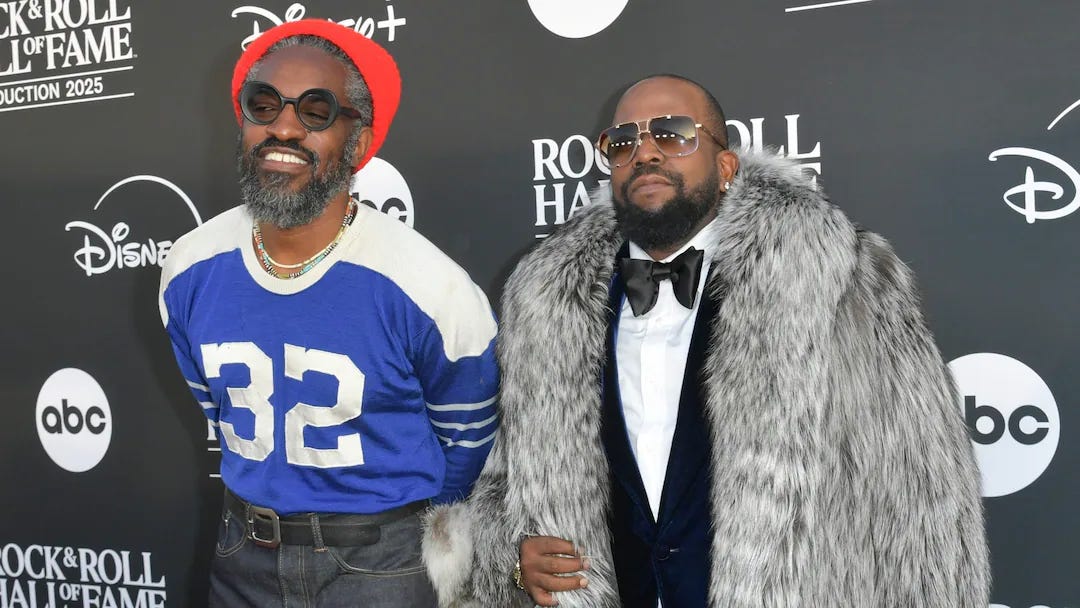
In 1995, during that tense Source Awards show, Andre 3000 set the South ablaze with inspiration and pride when he declared, rather nervously and visibly frustrated, that the ‘South got sum’n to say’. I was in my dorm room with my roommate and friends watching and we all, being Black Southern children, were completely amped after he said it. There wasn’t a need for a speech. The audience wasn’t interested in listening. They were too busy being pissed off (and booing) at the duo winning the Best New Artist award.
Looking back, those were strange times but what was clear is that ‘Kast officially put the South on the map ‘like Little Rock to banging’, in the world of Hip Hop. This wasn’t an easy feat because, at that time, if an artist didn’t come from New York, they were completely disregarded, which is partially, but not entirely how the West Coast/East Coast feud began. Nothing was gained from such beefing but the losses were monumental - both ‘Pac and Biggie succumbed to gun violence.
Southern Hip Hop didn’t start with OutKast. Prior to those East Point hitmakers arriving, seminal rappers like DJ Jimi, 8Ball and MJG, and the UGKs were making an impact on the Southern region. But OutKast took the South to the main stage and we are forever grateful. So, while New York is the Mecca of Hip Hop, the South is Hip Hop’s homestead. Southern Hip Hop opened the door for rappers from all over the country to become partakers in the burgeoning Hip Hop culture at the time. Today, it doesn’t matter where the rapper is from anymore, however, the South is still instrumental in keeping the essence of Hip Hop alive. Shout out to Big KRIT, Dear Silas, and Akeem Ali for instance. Out of all places, the Sip (Mississippi) is at the helm of this current drive.
The Black South has always been a birthing place for the Black Experience in this country. From the Black Panthers’ origins connecting to an activist organization based in Lowndes County, Alabama to the first utterance of the phrase ‘Black Power’ by Stokely Carmichael aka Kwame Toure in a cow pasture in the Mississippi Delta, the South has always been vocally resistant, despite its Hollywood depiction of greasy, inarticulate, subservient, downtrodden Black people. From Fannie Lou Hamer’s fiery quotables (‘I’m sick and tired of being sick and tired’) to Rosa Parks’ refusal to leave that seat on a Montgomery city bus, the Black South has held the power to agitate this country’s conscience for decades.
Share The Literary LightWorker
So, when Andre spoke life into us, we felt the familiarity of the uprising in our souls because we were born to it. Being Black and Southern born means you live with constant ridicule by Black and white folks when it comes to your existence…and most of all, your intelligence. We took those boos by the audience personally, just like 3000 and Dre did. With Hip Hop becoming such a dominating force at that time, we knew that the story could not continue to write itself without us.
On November 8th, OutKast was one of the inductees of the 2025 class of the Rock and Roll Hall of Fame. With seven platinum albums and one diamond-certified album, they became one of only fifteen rap artists to be graced with such an honor. Necessary to say, receiving such a level of distinction required a fan base that spans the globe, of all age ranges and ethnicities, but if you haven’t figured it out by now, the theme of this entire piece is cultural ownership. ‘Kast showed up from one of the region’s most populated cities of Black people, forging an artistic expression rooted in the influences of Black cultural iconography such as P-Funk, the realities of being Black down here in the land of Dixie, and lyrics tinged with Southern drawls and all.
“Now tho yo hands in the air-yer and wave ‘em like ya just don’t care-yer and if you like fish and grits and all that pimp shit, e’rybody lemme hear ya say oh ya’yer…”
Pride swells in me for these kinfolk, fa’ sho. The Souf is still talkin’, mane. Is you listenin’, though?
I gotta show love to Salt n Pepa, the Queens of Queens, and the OG Snoop Dogg for their inductions into the Rock and Roll Hall of Fame too!
Comments
Nothing yet. Say the first thing.
Sign in to join the conversation.