
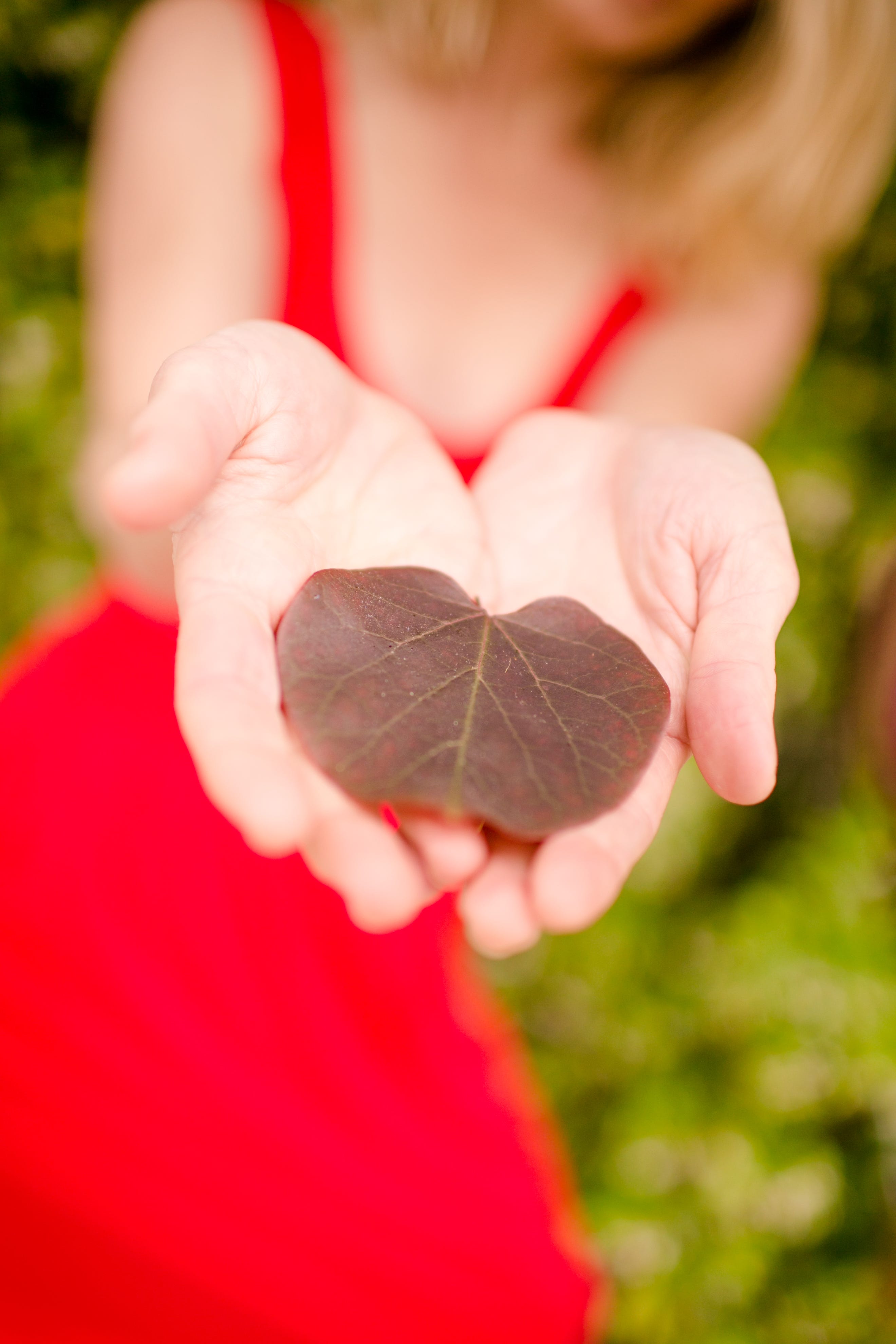
Yesterday, I got on a video call with Maria Shriver’s The Sunday Paper to answer eight questions they sent me via email about the intersection between spirituality and healing. Because this topic is so fraught for me, in the wake of deconstructing from both the scientific materialism of my medical school training and also the religious and spiritual indoctrination of my upbringing and the New Age, I took the time to answer each question in writing. That meant we could go deeper, and we had a very in depth conversation about how spirituality can both heal and harm those with medical illness. I’ll let you know when the article is published in September, but I thought I’d share with you my attempted answers.
First, let me clarify that I no longer speak about mind-body medicine or spiritual healing. Ten years of research for my book Sacred Medicine taught me that. Now, after doing my own trauma healing work and realizing how important healing trauma can be for those with medical illness, I talk about nervous system-body medicine, which can lead to spiritual experiences. When I’m talking about spirituality, I’m talking about feeling connected to a source of love inside our own hearts, which connects us to the source of love within the hearts of other people, of other living beings, of the plant and animal world, of the Earth and the cosmos. You might call that God or the Universe or Love. I call it my Inner Pilot Light, and I think of that source of love inside each of us as that drop of the ocean of consciousness that splits off to become YOU. I don’t know what happens when we die, but I imagine that drop going back to the ocean and merging once more with the collective consciousness.
As a practitioner and educator of the trauma healing modality Internal Family Systems, that source of love gets called Self with a capital S. The Self in me is connected to the Self in others and can be a powerful healer, inner parent, guide, friend, and source of comfort when we are sick, scared, or vulnerable. It can also be the gateway to experiences of awe, connection, and wonder.
When I talk about spirituality, I’m rarely talking about religion, although some people connect with their spirituality through formal religion. I’m talking more about an experience of mystery, meaning, and awe, something larger than our small selves. Maybe it’s a sense of being in communion with God, but it might just as well be a great piece of art or music, a beautiful sport like watching an Olympic gold winner pull off the impossible. It might be an act of moral courage or heroism, something in nature, synchronicity, a feeling of profound oneness and connectedness, an astronomical event like a solar eclipse or the Northern Lights, a deep, meaningful conversation, a peak mystical experience, or a sense of being connected to someone who has died or knowing something you wouldn’t have any logical way of knowing. I’ve cared for atheists who are deeply in touch with a sense of mystery and awe, and I’ve cared for very religious people who are profoundly disconnected.
When people experience great fear or loss because of medical illness or even a terminal diagnosis, they often come much closer to what really matters, and this can evoke awe-inspiring spiritual experiences for people. Even being close to someone sick or dying can be a spiritual experience for loved ones, so some people experience this by proxy.
Spirituality and religion can also cause great harm. Just look at the course of history to see how religion has been used to annihilate and oppress the masses while a few powerful, mostly white men dominated the world (and still continue to do so), exterminating entire civilizations of nature-worshipping Indigenous peoples. Even New Age spirituality can be very oppressive, fostering spiritual bypassing and causing people to avoid dealing with the kinds of core traumas that can make people sick and make it difficult to get well.
I spent a decade spiritually seeking, but I was also spiritually bypassing, using my spirituality as conflict avoidance in holy drag, as a way to avoid confronting people about behaviors that were not okay with me, as a way to anesthetize the pain of past traumas without dealing with them, and as a way to bypass accountability. But the path that really helped me was Internal Family Systems, which allowed me to continue my spiritual path, to connect with the source of love inside of me (which IFS calls “Self” and which I call my “Inner Pilot Light”), but to do so without avoiding healing my trauma or holding myself and others to account. That was a game changer for me because it’s a non-bypassing spiritual path.
Lately, on Substack, especially since Deepak Chopra showed up in the Epstein files, I’ve been calling out a lot of rot in the wellness and spirituality space, the culty dynamics, the commoditization of spirituality, and the ways certain spiritual beliefs and practices can be used to shut down people’s healthy protest of mistreatment, or to oppress marginalized groups, or to quell dissent. So some forms of spirituality can cause as much harm as healing. But when we learn discernment, we can keep the baby and throw out the muddy bathwater, when we can tap into awe and mystery, calm our nervous systems, and find healthy community to participate in rituals together, when we can use our IFS practices or other non-bypassing, trauma-informed spiritual paths to aid our healing, the comfort we can receive from coming into closer contact with the source of love inside our own hearts can have a profound impact on the healing process.
In my book Mind Over Medicine, I shared some of the evidence about how people who regularly attend places of worship have better long term health outcomes, not because church or temple or the mosque magically improve your health, but because they bundle together community connection, medicine to ease loneliness, sacred rituals, a connection to the holy, a sense of belonging, social support during hard times, a sense of purpose, healthier lifestyle habits, volunteering, gratitude, and nervous system regulating practices like contemplative prayer or meditation.
Dacher Keltner also presented some research on the science of awe and it’s relationship to health in his book AWE. When we tap into feelings of awe, we wind up less self-absorbed, more generous of heart, less narcissistic and entitled, more willing to cooperate and negotiate needs, and more of a sense of connection to each other and the natural world. Tapping into feelings of awe can lower inflammatory cytokines, reduce the frequency of chronic repetitive stress responses, improve vagal tone, bolster immunity, enhance psychological well-being, and deepen resilience.
But keep in mind that not all awe is benign. If people don’t have solid enough ego strength, unexplainable mysteries of experiences of overwhelming vastness can evoke fear, helplessness, or dissociation. Too much awe can make some psychologically vulnerable people psychotic. The line between awe and overwhelm may depend on whether the nervous system has sufficient safety and support to integrate the experience afterwards, which is often lacking in spiritual communities that might push someone to the edge and then fail to gently ground them back into the world.
To answer the question slightly differently, because my interest these days is primarily in the relational aspects of healing, I also view relational intimacy as a spiritual practice. The feelings of belonging, of being loved, of knowing you’re not alone in the world can be fulfilled as much by a close inner circle of beloveds as by some God in the sky. It brings to mind my friend Jarman.
I told Jarman’s story in my book Sacred Medicine:
After once being in peak physical form as a professional dancer, Jarman had wasted away to 130 pounds as the result of throat cancer, which left him unable to eat during grueling radiation and chemotherapy treatments. As part of his regular practice, Jarman had spent years dancing regularly alongside me and hundreds of others in a sweaty gym in Sausalito with Open Floor, a healing movement meditation practice founded by Kathy Altman and Lori Saltzman, based in part by the teaching of Gabrielle Roth.
Usually Jarman was out there in the center, showing off his Solid Gold moves and lighting up the room with his enormous grin and unapologetically unrestrained enthusiasm. But on this particular night, Jarman was frail, weak, pale, and barely able to smile because his lips were cracked and scabbed. Even so, he held his arms out in giant pseudo-hugs to all of us as we passed by to participate in the ritual we had gathered to co-create.
When Jarman was given his diagnosis, he told his best friend he wished he could attend his own funeral, and his friend nodded. “That can be arranged.”
So we were here to eulogize Jarman, to perform our music for him, to share memories, to raise money for the treatments he couldn’t afford, and of course, to dance.
Hundreds of us got all weepy through the numerous eulogies and live performances of world class music. We didn’t want Jarman to die, and he didn’t want to leave us, but it was a powerful testament to a well loved man to listen to all the things we often only say about someone after they leave their body. To feel how adored he was visibly moved Jarman, and we were all touched.
This set the tone for what came next. Jarman was invited into the center of a large clearing in the church. All chairs and pews had been removed, and the church had been transformed into a dance floor. The men stood in a circle along the edges of the room, while the women encircled Jarman garnished with colorful silk scarves. At first Jarman looked a little shy, but once he realized the women were all intending to flirt with him as a kind of sexy scarf striptease, his grin was back. We encircled him with our scarves, gyrated our hips, batted our eyes, and poured life force into him with our hearts and bodies, all the while feeling ourselves filled by the men who held space for us in an outer circle around us. The slow, sensual music sped up and we felt ourselves fill with Shakti, legs kicking, arms whirling, butts circling in a frenzied momentum that culminated into a kind of group energy-gasm. At one point, Jarman was arched across the chair that supported him, one toe pointed on the ground, the other extended high into the air in a full split, both arms thrown back in ecstatic surrender, his chest wide open to receive.
Then the swelling music faded off like a whisper and the women brushed Jarman with one last kiss of our scarves before drawing back to the outer circle and letting the men penetrate the center of the circle. Drums began to beat and the men pounded their feet in unison as they approached him, like warriors. The women stood in the outer circle now, swaying and pouring our hearts into the men, who poured their strength into Jarman. Approaching Jarman, they picked him out of his chair as one giant collective creature and lifted him over their heads, where he lay as if in a coffin, his arms crossed. The music became somber and I prayed with my whole heart we didn’t have to do this for real.
Then the music picked up, the energy shifted, and Jarman kicked one leg into the air and said, “If I have to do this, I’m dancing my way home!”
The man put him in the center and stepped back, giving him space by himself. Jarman danced like his life depended on it. This man who could barely walk into the church a few hours before undulated and kicked and arched and swayed and twitched those hips like Elvis on fire. Like kundalini on steroids, Jarman didn’t stop for almost three hours, and we all took turns fueling his reverie and being fed by it in return. At the end of the night, sweaty and pink in the face, Jarman said, “Heaven. This is heaven.”
As I went home that night, sweaty and feeling ecstatically connected and alive with all my senses, I thought, “This is medicine.” If only every cancer patient could receive this. I knew the way you just know things that Jarman would survive. This was Sacred Medicine.
That was ten years ago, and Jarman is cancer free and still dancing. That’s the kind of spirituality I’m talking about.
When we practice trauma-informed spirituality, not the spiritually bypassing kind, we don’t bypass our wounds; we heal them. When we get in touch with the authentic core of who we really are, as both spiritual and Earthly beings, we reawaken something within us that can have profound healing powers. My favorite way of practicing this kind of trauma-informed spirituality is through the spiritual practice of Internal Family Systems, but there are many other paths as well.
When we reconnect to the core of who we are and how belong in the world, we can experience awe, wonder, and mystery, in addition to love, gratitude, and transcendence. Tapping into these kinds of ecstatic emotions, especially if it happens in community, can create the nervous system regulation and hormonal milieu of healing. When we feel safe, loved, connected to something larger, a greater sense of belonging, and a sense of awe in the face of mystery, we move our nervous system into the ventral vagal state and out of fight, flight, freeze, and fawn. Stress hormones like cortisol, epinephrine, and norepinephrine drop and are replaced by the healing hormones of oxytocin, endorphins, serotonin, and dopamine. Inflammation can decrease and immune function can improve. The body’s natural self healing processes are no longer competing with chronic survival responses.
This stands in sharp contrast to those who live under a sense of threat, because of relational trauma, unresolved childhood trauma, ongoing abuse, profound loneliness, or the kind of uncertainty we all experienced during the pandemic and now during such intense political stress. Spiritual experiences can flip people out of that chronic threat physiology, opening up the possibility for not just bodily repair, but relief from psychological stress as well.
The key is to balance spiritual experiences with trauma healing. If we use our spirituality to bypass healing trauma, it can backfire. It might make us feel better in the short term, but if it’s used to avoid conflict, avoid holding abusers accountable, or skip over the deeper work of healing trauma, it can actually be harmful and lead to worse health outcomes. Especially if spiritual experiences are happening in cult-like power dynamics, oppression in the name of spirituality can actually make people “relationsick.” (Preorder RELATIONSICK: Why Putting Yourself Last Is Making You Sick—And How To Heal here.)
Healthy, well-boundaried, reciprocal relationships. In our book RELATIONSICK, Harvard psychiatrist and Princeton seminarian Jeffrey Rediger and I made the case that one of the most overlooked factors that predicts healthy longevity is a strong support network of people who help co-regulate you, whereas the health implications of unbalanced, non-reciprocal or narcissistic relationships can make you sick. If you give until you’re depleted and you’re draining your life force, you won’t have the energetic resources and nervous system regulation to fight off things that can make you sick and activate healing.
Beyond that, a sense of purpose, a spirit of play, tapping into creativity, active community, and a feeling of belonging to a place, to the land, to each other. And we can’t forget the systems that make us sick- white supremacy, patriarchy, homophobia, ableism, poverty, war, and other systems of oppression. Healing is not an individual phenomenon. We can only heal so much inside oppressive systems we only have so much control over.
Absolutely. When I first took a job as an integrative medicine doctor in Marin County, my very sick, way too young patients were mostly health nuts. They were eating vegan diets, doing green juice cleanses quarterly, working out with their personal trainers, going to yoga and meditating, getting the best conventional medical care at Stanford and UCSF while also seeing their acupuncturist, their naturopath and their herbalist, and taking 100 supplements.
I’ve met Olympic athletes who are getting abused by their coaches, yoga teachers whose nervous systems are on high alert all the time because of what greets them at the door when they leave the yoga studio, and corporate executives with expensive wellness programs at work whose biomarkers look perfect while they’re selling their souls in businesses that are not congruent with their values.
We sometimes ask patients, “What are you eating?” when we should be asking “Who are you eating dinner with?” Optimal health is relational. No amount of kale salads can override the impact on our bodies of chronic, ongoing relational trauma. Optimal health is inherently relational. No amount of kale can protect us from the chronic repetitive stress responses caused by relational trauma, along with the nervous system dysregulation, immune system dysfunction, and chronic inflammation that accompanies not feeling safe, loved, and connected relationally. The same goes for systems of oppression. No amount of supplements can counterbalance the impact of racism on a BIPOC American or the impact of patriarchy on women around the world or the impact of poverty on access to health care, healthy food and water, and other influences that can greatly impair health.
There’s a vast difference between healing and curing. When we talk about healing a fracture, we usually mean curing a fracture (the broken bone grows back together). In this instance, they mean the same thing. But the etymology of the word “heal” is the Old English hǣlan, which translates as “whole.” To heal is “to become whole.” To be cured means to be free of disease or symptoms. It’s possible to be healed but not cured, and it’s possible to be cured but not healed. Ideally, healing and curing happen together, but this isn’t always the case.
So what does it mean to be healed? Through the lens of Internal Family Systems, healing means recognizing that we’re all a bunch of parts that don’t necessarily agree with each other. That’s why we all make New Years Resolutions that we break two weeks later, because one self-improving part of us made the resolution and another rebellious part never had any intention of sticking with the program. In the same way, some of us can have some parts that want to be cured but other parts that think they’re protecting us by keeping us sick. For example, cancer might take hold because it’s the only way we can get care instead of being expected to give it. Or migraines might be the only excuse we have to avoid our toxic mother in law. Or an autoimmune disease might be the only thing that slows us down enough to practice self care, because otherwise we’re over-functioning, caregiving others, and depleting ourselves.
With IFS, we become whole by getting to know all of our “parts” and bonding them to the wise, mature divine aspect of our being, which IFS calls “Self.” Then we can start making Self-led decisions that are negotiations between many parts. It’s kind of like the soul retrievals we see in shamanic medicine. Sometimes parts of us get split off from the rest of us, and we have to bring them back home, into our own hearts, under the care of the divine Self, back into wholeness.
I don’t believe anyone is ever 100% healed, and I wouldn’t trust anyone who said they were. But when you have done a lot of healing work, wholeness can sometimes be restored at a level that transcends but can also include the body. Whether or not your illness resolves, healing is possible, as anyone who has witnessed a beautiful death can verify. You can be healed and still die, and you can be cured and still largely fragmented and under the weight of a lot of unhealed, bypassed trauma.
When you’re dealing with an illness, the process of being sick can be a spiritual or psychological wake up call, and when we wake up to what’s true about ourselves and our lives, when we can face and deal with current or past traumas that might be impacting our body’s ability to self-repair, when we can integrate the fragmented parts of ourselves that can be the result of trauma, we have the opportunity to come closer to returning to our natural state of wholeness. This state of wholeness can restore the nervous system and body to an optimally relaxed state so the self-repair mechanisms of the body can best do their job and life force can course through you, bringing with it the conditions that help the body repair optimally.
If that’s the case, why doesn’t everyone who does the hard work of healing wind up cured? Why does one person experience radical remission and another doesn’t? The truth is that nobody knows the answer to this question. Some believe that all illness is the result of disordered thinking, that even if your conscious mind believes you can get well, you’ll be sabotaged if your subconscious mind disagrees with you. Some believe that disease is the result of blocked energy in the “biofield,” with energetic interference preceding the physical manifestation of disease, and if the biofield stays blocked, no intervention that excludes clearing this block will lead to the desired outcome.
Others believe that illness results from harmful behaviors committed in past lives, which must be atoned for in this one—that it’s karma which much be expiated. Still others cite divine destiny or believe that your soul chooses to experience certain hardships in a body in order learn lessons here in “earth school” as a way to develop one’s consciousness over lifetimes. Some believe that unavoidable tragedies simply happen at random, rationalizing that our psychological or spiritual attempts to make meaning out of our suffering are just a cover for our discomfort with the uncertainty of an uncontrollable universe and that there’s simply no way to avoid having bad things happen to good people.
I’m not here to discuss theology or spout off about things I don’t fully understand, but I also don’t want to skirt the issue altogether. So what’s my point of view? Why some are cured when they heal and others aren’t? All I can say is this: when my patients have been ready and willing to engage in deep inquiry regarding psycho-spiritual trauma-healing work, stayed open to lifestyle modifications aimed at living a more aligned life, and remained willing to sacrifice comfort, certainty, and security in favor of authenticity, self compassion, relational and spiritual healing, and a commitment to life purpose, seemingly miraculous feats of physical self-repair have sometimes happened.
Of course it would never facilitate healing to blame someone for their illness. If someone says “Your thoughts created your illness and your thoughts can cure you,” the law of attraction way of thinking, that can be very shaming—and it’s also just false. Most illnesses are multi-factorial. You can get sick because of genetic mutations, living next to a toxic waste dump, eating garbage while smoking two packs of cigarettes per day, never exercising. You can also get sick because childhood relational trauma and ongoing stressors keep the nervous system chronically dysregulated and put the body is a constant fight, flight, freeze, or fawn state that makes physiological self repair nearly impossible.
You’re not to blame for your illness, but you are responsible for doing what is within your power to try on your healing journey. Making that move from “It’s your fault” to “There are behaviors you have the power to change” can make all the difference. Some people do not want to take responsibility for healing. They just want a pill or a surgery and they don’t want to be any more involved than that. Which is fine. Everyone is entitled to their own journey, and we shouldn’t pressure or judge someone who doesn’t want to do the hard work of change.
The truth is that we never know what’s going to happen if someone embarks upon a healing path. Changing your diet might do the trick. Leaving a toxic relationship or working on your boundaries and getting into couples therapy might lead to symptom resolution. Getting in touch with your true purpose and being willing to give up soul-sucking ways of being in the world could turn everything around. Giving up smoking and drinking and training for a marathon might be the solution. But you never know. It’s always a gamble. You could make all the sacrifices, try all the tricks, get all the therapy, and spend a lot of money trying to get well, only to stay sick or even die.
Healing trauma, regular spiritual practice, and non-culty spiritual community can help quiet the nervous system and support people in feeling safe, loved, supported, and open to awe, wonder, mystery, and the healing properties of ritual, so their physiological self-repair mechanisms can function optimally. But even people who do everything “right,” including not just lifestyle choices but spirituality, healing trauma, and avoiding toxic relational dynamics cannot control who stays sick and who gets cured, who lives and who dies.
It’s comforting to some people to believe that they have 100% control over their lives, that there’s no such thing as random suffering. But no matter how much it comforts them to believe this, it’s just not true. Bad things happen to good people who do everything “right,” and sometimes, there’s no explanation for that at all.
What can be empowering, however, is to take responsibility for what you do have the power to control, so you’re not just a helpless, powerless victim of your illness, and to restore some agency. You get to exercise your agency to change the things you choose to change, and then to let go of the handle of control and trust that you’ve done what you can.
I wouldn’t even talk about spirituality with someone like that. I’d say “What makes you come alive?” I’d talk more about vitality, life force, and joie de vivre than spirituality. Anything that helps us get in touch with the will to live is a spiritual experience.
That might be feeling the wind in your hair as you walk beneath redwood trees. Or gazing into the eyes of your newborn grandbaby. Or letting your heart blast open while listening to music that moves you to the core. Or losing time because you’re so in the flow of a creative project that you forgot you were sick. It could mean fighting the good fight protesting injustices in the world that leave you outraged and make you feel like you’re living in alignment with your core values. Going on a retreat by the sea. Giving thirty gifts in thirty days to feel more generous. Volunteering.
If you’re more of a giver and you need to learn to receive, that could mean surrendering yourself into the loving arms of a caregiver who takes joy in making your days beautiful. It could mean staring at the night sky and remembering how small we are, but also how precious. It could be attending a workshop where you feel seen, heard, and loved, without judgment and with full openness of heart. It could mean being inspired by people with the moral courage to do brave things that benefit the world, reminding us that we can all choose to become morally courageous people whose lives have meaning as well.
The healing aspects of spirituality have nothing to do with religious or New Age beliefs. People with vastly different belief systems can still benefit from the increasingly sophisticated body of scientific research linking health and trauma-informed spirituality.
I’d love to hear how YOU would answer these questions! Post your comments below and let’s crowd source this.
*Photo credit Monique Feil
Comments
Nothing yet. Say the first thing.
Sign in to join the conversation.