
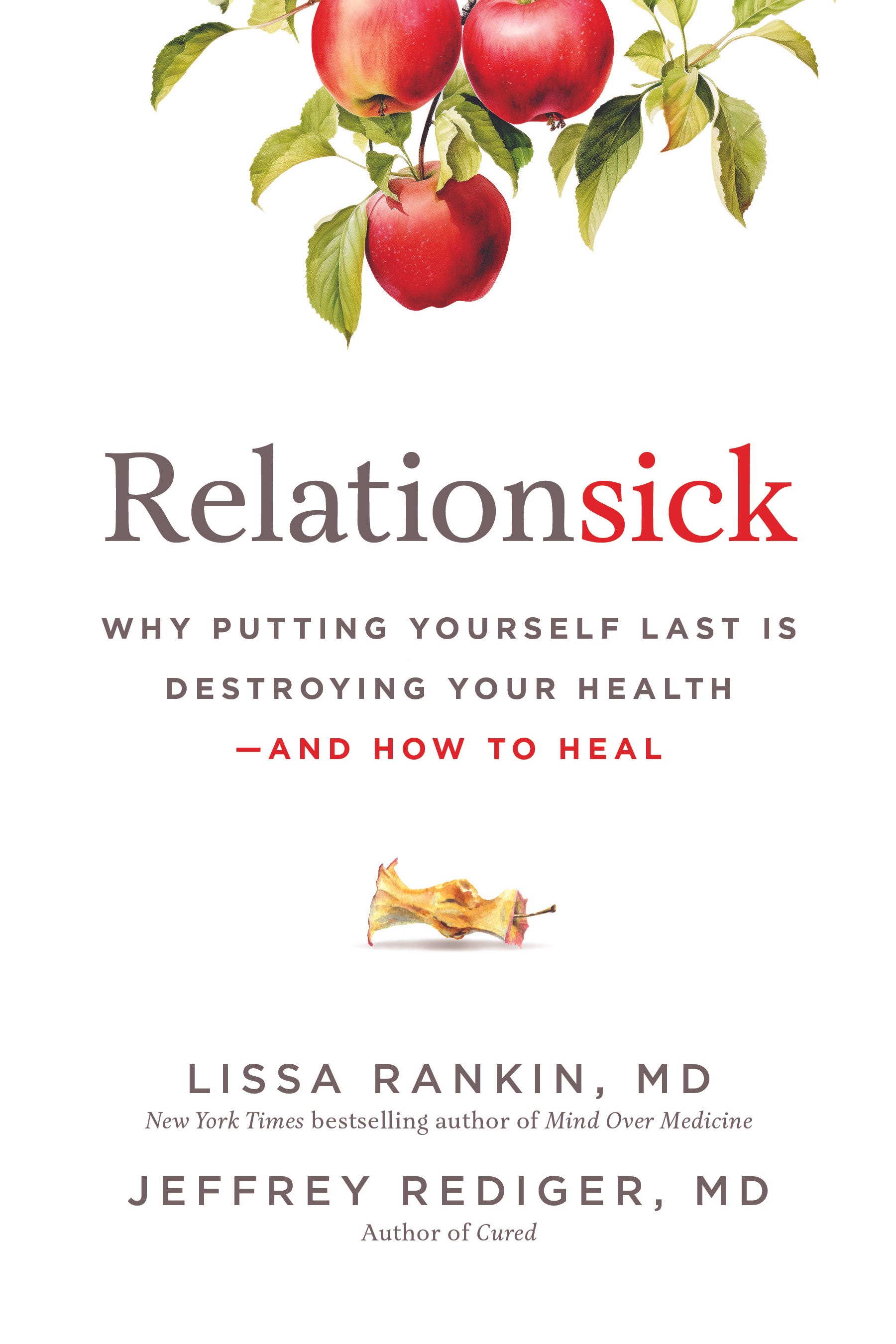
Yesterday, I gave y’all the back story about why my co-author of Relationsick Jeffrey Rediger and I included Chapter Six in our discussion about why some people give too much, receive too little, get exploited, and wind up relationsick. (If you didn’t read it, read this first.)
How Tolerating Exploitation In Relationships Can Get You Relationsick
·
Jul 24

My co-author Dr. Jeffrey Rediger and I are busy preparing to birth our book RELATIONSICK, which you can preorder here. If you don’t know Jeff, he’s a super interesting, brilliant, funny, and kind Harvard medical school professor and psychiatrist who also went to Princeton seminary, making him an authority on talking about all things at the intersection …
Today, as promised, I’m sharing with you an excerpt from Chapter Six explaining how religious and spiritual indoctrination can set us up to tolerate relationships that aren’t balanced or healthy. So let’s dive in!
You can preorder RELATIONSICK here.
While this book was originally inspired by the radical remission survivors from our research, the kinds of relational trauma that lead to relationsickness, and the belief systems that cement them in place, are very personal for Jeff, the coauthor of this book. Jeff grew up on a farm in Indiana, in a house where chores were done early, the Bible sat open on the kitchen counter like a command, and nightly Christian readings were followed by kneeling by their dinner chairs for long, droning prayers. Jeff’s mother followed her church’s interpretations of the Bible’s teachings like she was steering a ship through a storm.
But it wasn’t just the Bible she followed; it was also cult leader Bill Gothard, founder of the Institute in Basic Life Principles (IBLP). Gothard’s teachings were treated as gospel in Jeff’s house, even more than the scriptures themselves. Gothard had a formula for everything: how to raise children, how to handle sin, how to be a godly man, and especially how to break the will of children in order to keep them in line.
By the time Jeff was six, he knew how to sit still as stone in church with a smile plastered on his face, even as his stomach was in knots. He knew that boys obeyed their parents, and mothers were supposed to obey their husbands, even though his iron-fisted mother seemed to be the one who wore the pants in the family.
Maybe Jeff’s mother believed with her whole heart that she was protecting her boys, that she was saving their souls from the ruin of willfulness. But those teachings hollowed her children from the inside out. They were designed to separate children from their bodies and from their natural instinct about right and wrong, to install an inverted morality of obedience and conformity, rather than a morality built on dignity, justice, or the belief that all human beings have equal value. Having feelings, opinions, or your own perception of reality was dangerous and ungodly. Good little boys and girls bowed to whoever dominated, keeping any sense they had that something was “off” to themselves.
During the normal stages of childhood development when children practice setting boundaries, saying no, and asserting themselves, Jeff was beaten by both his mother and his father, trained to fawn—to please, submit, comply—or else face physical and emotional consequences. Otherwise, they told him, he would bring shame to the family and burn in the endless fiery flames of eternal damnation. Questioning authority was framed as rebellion against God Himself. Self-sacrifice was seen as holy. In IBLP’s teachings, martyrdom isn’t a tragedy—it’s a goal.
Along the way, Jeff internalized the idea that his body was not his own, and that his unique thoughts and feelings were a threat. So when physical, emotional, or other lines got crossed, when things got dark or confusing, he didn’t fight or flee. He performed. Until he started dissociating and couldn’t concentrate anymore, he wowed the teachers, got straight A’s, and won the spelling bees. He also got quieter, shyer, and more obedient. He tried his best to become the good son, the respectful Christian boy, and later, the dutiful husband. He wore the mask so well, no one ever thought to look behind it and wonder who he really was. Because he was trained not to draw attention to himself, he told no one when at age sixteen he had severe chest pain in the basement of his house, later diagnosed (when an EKG showed the resulting permanent changes) as a heart attack. He also developed chronic, debilitating back pain.
Comments
Nothing yet. Say the first thing.
Sign in to join the conversation.