
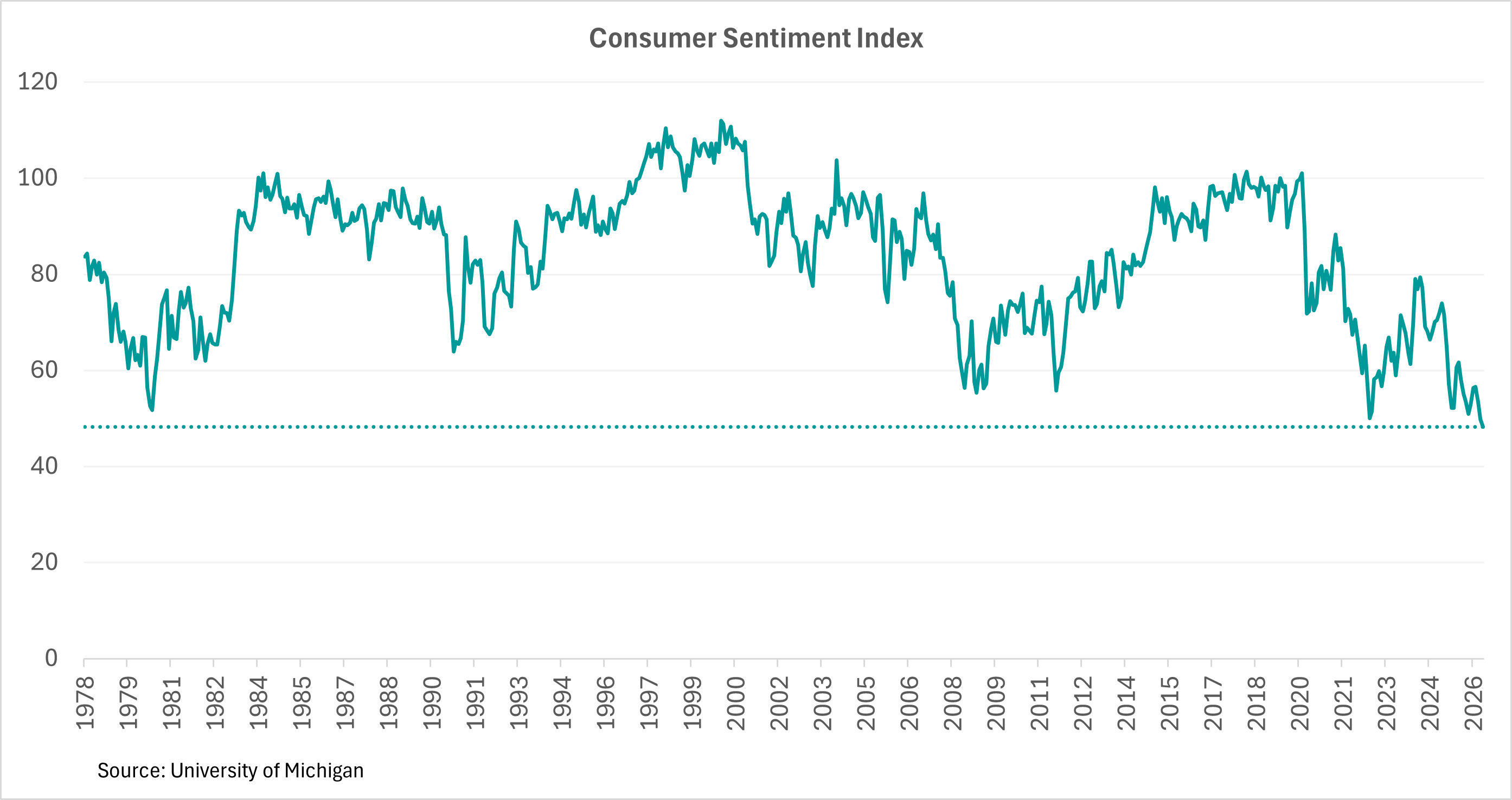
Consumer confidence hit a record low in May. According to the University of Michigan’s Consumer Sentiment index, people are feeling more pessimistic now than they have at any other time since the index started in January 1978. People feel less confident about their personal finances and overall economy than they did during the oil crisis of the early 1980s or the Great Recession or the global COVID-19 pandemic.
Today’s malaise is different from different periods of low consumer confidence. Instead of a “crisis of employment” that characterized previous lows, we are in a “crisis of affordability.” In the spring of 1980, for example, when the Consumer Sentiment Index fell below 60, the unemployment rate was on the rise as major layoffs hit workers in the automotive and steel sectors. In 2009, Consumer Sentiment fell again as the unemployment rate rose to 10% amidst significant job losses in the construction, manufacturing, and financial services sector.
In the spring of 2026, however, consumer confidence is low even as the unemployment rate has remained around 4.3%, the labor market remains relatively tight, and layoffs are occurring in specific niche industries but are not systematic. So, if the economy is running along just fine, why are we so depressed?
The “Crisis of Affordability”
In the early 1980s or even in 2009, people who had a job generally felt optimistic. With a decent job, you were almost assured a place in the middle class. But in 2026, having a job simply is not enough. Years of rising home prices, gas prices, and grocery prices have exhausted American families.
Between January 2021 and April 2026, the cumulative increase in prices (as measured by the Consumer Price Index) has been about 27%. In other words, if something cost $10 in 2021, it now cost $12.73. And even though wages had been outpacing inflation for the last year or so, those increases have not repaired the damage from the 2021 to 2022 period when inflation ran above 8% and wages were only growing at about 4%. Consumers are still dealing with years of cumulative price increases.
There is probably no stronger market of reaching the U.S. middle class than buying a home, and the cost of homeownership has escalated in recent years, fueling the crisis of affordability and low Consumer Sentiment measures. Home prices continue to rise in most markets even as mortgage rates remain in the mid-6% range. Many individuals and families—particularly moderate-income households and potential first-time homebuyers—have simply just been priced out of the market.
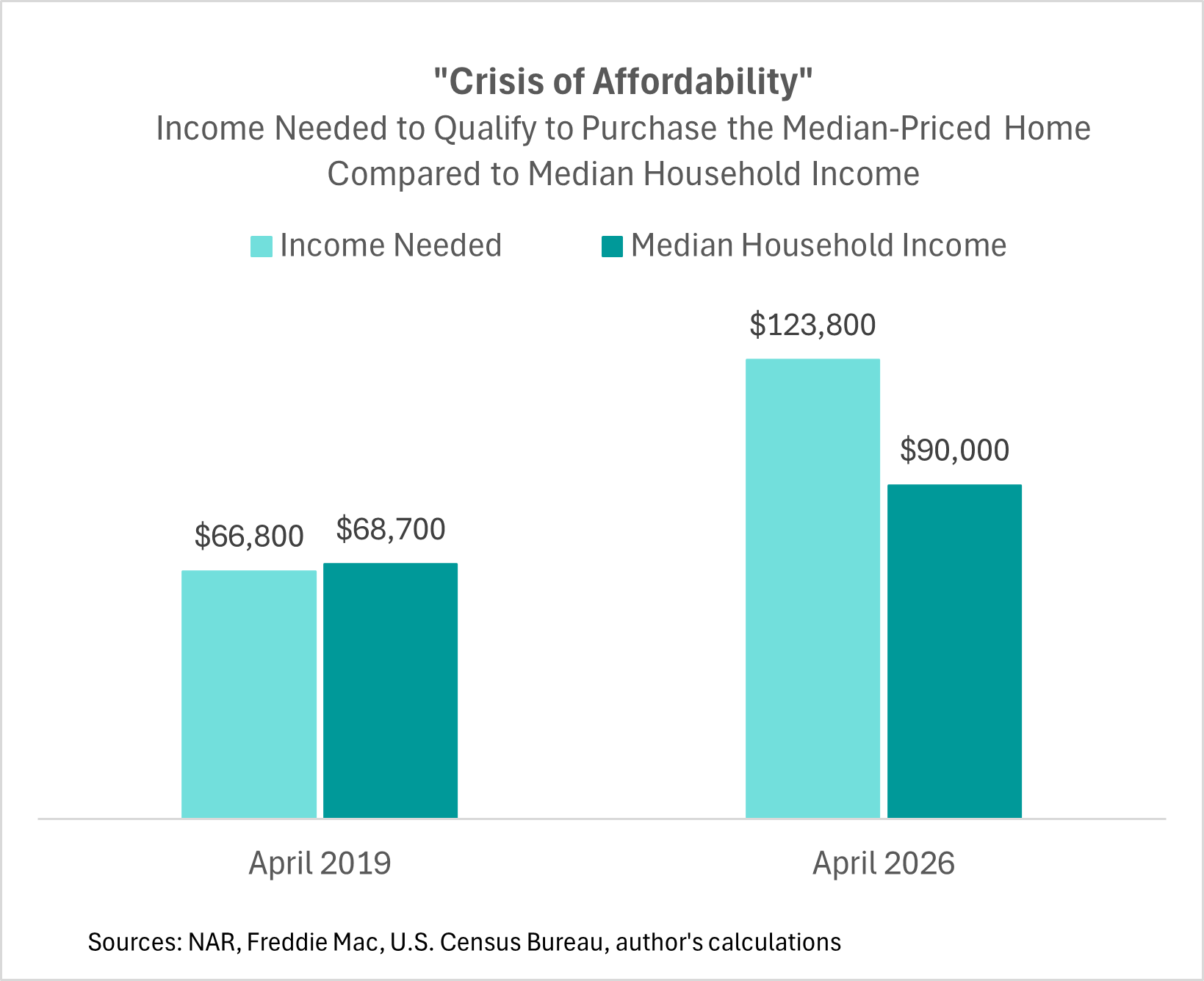
In April 2019, the median price of an existing home was $267,000 nationally, according to data from the National Association of REALTORS®. The average rate on a 30-year fixed rate mortgage that month was 4.1%. Assuming a 10% downpayment and average property tax and insurance payments, and assuming a home buyer spent no more than 28% of their income on their monthly mortgage payment, a buyer would need an income of $66,800 to purchased the median-priced home. In 2019, the median household income was $68,700, according to the U.S. Census Bureau.
In April 2026, the median price was $417,700 and the average mortgage rate was 6.4%. Now, a potential homebuyer needs an income of $123,800 to qualify to purchase the median priced home. Estimates of the median household income in 2026 put it around $90,000.
How People Feel Matters
We often talk about the fact that buying a home is biggest financial decision that an individual or family will make. But buying a home is also emotional. How people feel drives whether or not they are prepared to make an important decision or make a big change. Purchasing a home can be stressful. A Zillow survey found that half of homebuyers cried at least once during the process.
Historically, low levels of Consumer Sentiment have foreshadowed economic recessions and a persistent Consumer Sentiment reading below 60 has tended to be associated with a slowdown in home sales activity. How people feel about their economic situations has traditionally been an important signal for forecasting where both the economy and the housing market might be headed.
Improved Affordability = More Home Buying Activity
We are in an unprecedented period, however, and the old rules may not apply. Unlike periods of low Consumer Sentiment in the past, consumer anxiety is not being driven by unemployment or fears of job loss, at least not primarily. The affordability-driven pessimism of today does not mean people don’t want to move or buy a home, but it does mean that they are waiting for things to become more affordable.
So, the good news is that even a modest improvement in affordability could draw out home buyers. Home price growth has slowed considerably in most markets across the country, easing some of the affordability crunch. If wages continue to rise faster than home prices, and faster than the overall rate of inflation, we could see a resolution to the “crisis of affordability” and the current basement-level measures of Consumer Sentiment might not be an early warning signal of slower transactions.
No posts
Comments
Nothing yet. Say the first thing.
Sign in to join the conversation.