
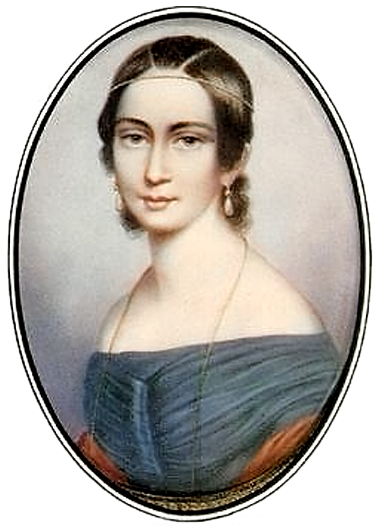
Clara Schumann, née Wieck, was a complicated woman. She was a composer, a world-renowned concert pianist, a mother of 8, and a wife to the troubled composer Robert Schumann. She was born in Leipzig in 1819 to a talented musical family and received intensive training in music, languages, composing, and piano from a very early age from her father.
Perhaps because of her father's incredibly strict and even cruel ways, she debuted at the Leipzig Gewandhaus when she was just 11 years old. Clara's performing career continued under the stern and controlling eye of her father throughout Germany and abroad, with her first performance in Paris at the ripe age of 12.
Her father controlled every aspect of her life. He even wrote many of her diary entries. When her younger half-brother died before a performance, her father forced her to travel to Dresden the next day to perform. She became an expert at performing through illness, violence, pain, and despair. There is no question that her father's intense and authoritarian teaching style paved the way for her to balance motherhood, performing, and taking care of Robert.
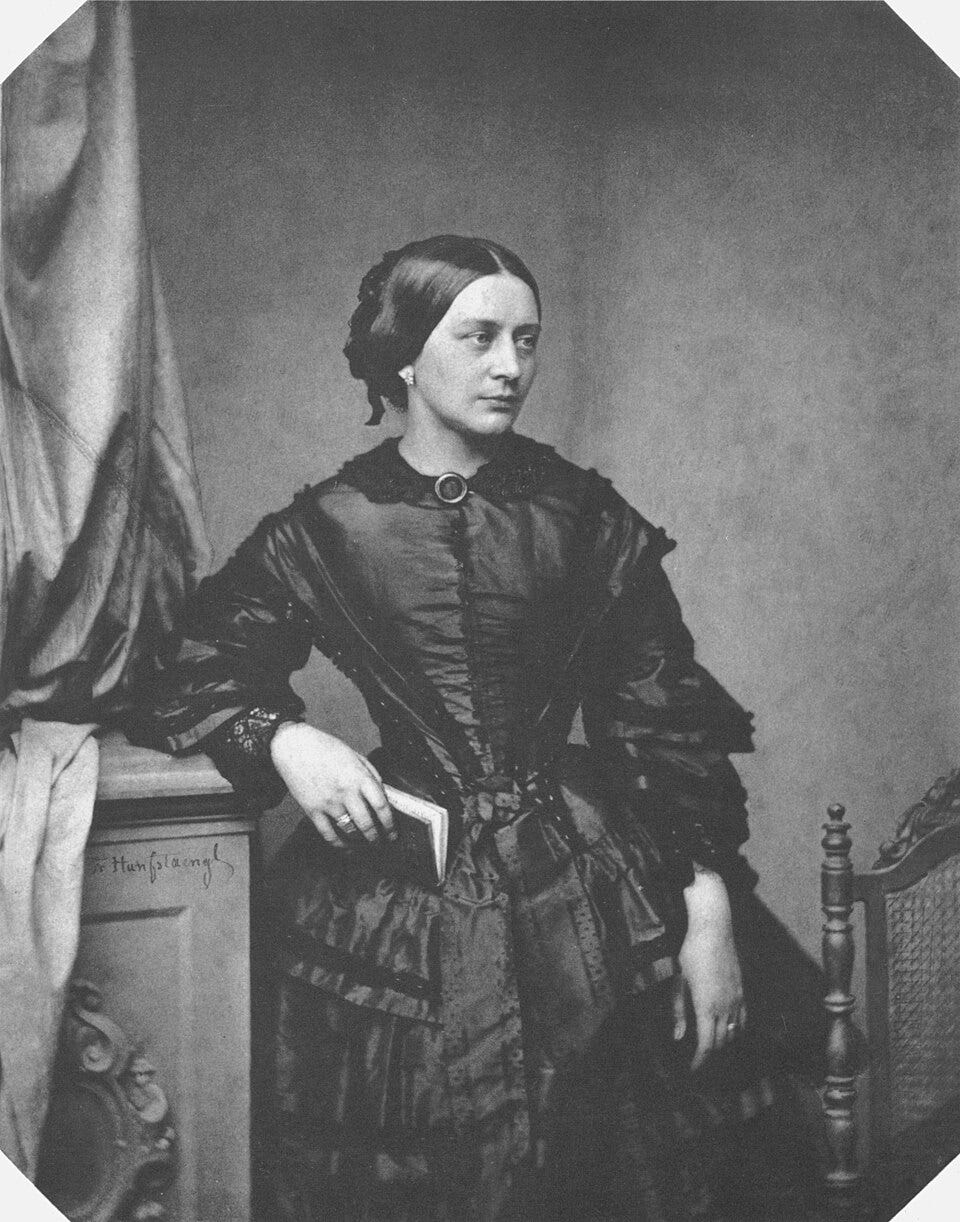
In 1828, when she was merely 8 years old, Robert Schumann entered her life as a live-in student of her father's. By the time she was 13, they were in love. Although he became a proponent of her composing, her was also her harshest critic. He never truly believed that she was a "full artistic genius" or that she could succeed as a composer on her own. Instead, Robert insisted that Clara dedicate herself, both emotionally and musically, to him. She followed this idea completely - even going so far as to legally challenge her father for the right to marry Robert in 1840.
After her marriage, it became difficult for her to find the time to compose - or even to practice. Robert's composition was the most important thing to him. Clara was, of course, responsible for raising their eight children, keeping house, and cooking. She also took on the burden of financially supporting the family. He was not happy when she went on extended tours to keep the family in the black, but it was unavoidable. Robert believed that "the creative artist had higher status than the performer" (Sounds and Sweet airs, p 225).
Despite everything, Clara continued to be a pillar of support to Robert and his music, even to the detriment of her own piano playing and composing. After his death, she dedicated herself to the interpretation of others' music and to preserving his legacy, only composing one piece herself.
Clara found it difficult even at the best of times to compose, so perhaps it is no surprise that she did not publish much music. However, as she grew older and the societal view of women's role in music in Germany became more close-minded, she too came to believe that women should not create music, writing that "a woman must not wish to compose - there never was one able to do it". In my opinion, this belief that became pervasive in the 19th century was an incredibly destructive one; we have lost so much music because it was never allowed to become an idea, let alone be published. We should celebrate what little music exists today from these women - and I believe Clara Schumann's music is worth celebrating.
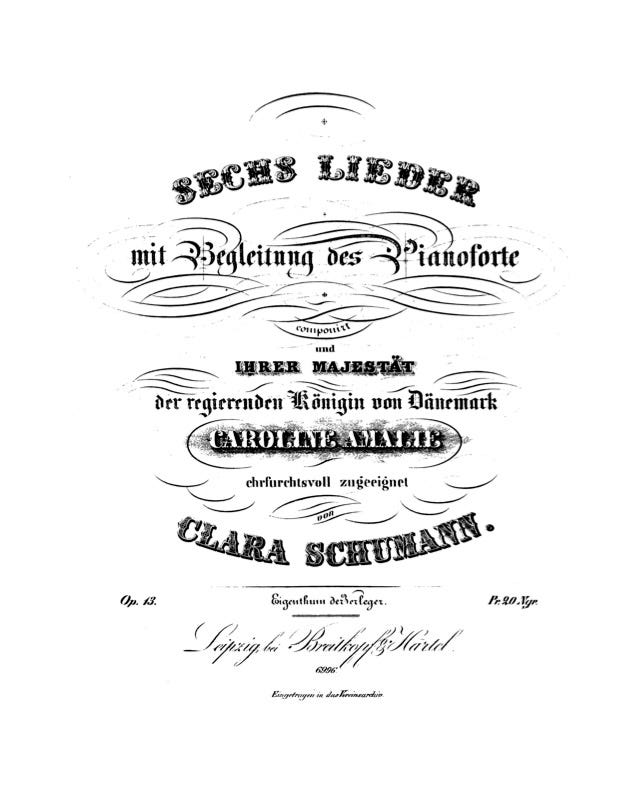
Some of my favorite music of hers is from her 6 Lieder, Op. 13. Check out our live stream concert from 14 April 2020.
English Translation by David Wishart
I stood in dark dreams and gazed at her portrait,
and that beloved face furtively came alive.
Around her lips a wonderful smile appeared
and as if from melancholy tears her two eyes gleamed.
My tears also flowed down from my cheeks, and ah, I can't believe,
that I have lost you!
They both loved one another, but neither
would confess it to the other.
They glared at each other so coldly,
yet wanted to die of love.
They finally separated and saw each other
only occasionally in their dreams.
They were already long dead
and hardly even knew it.
Love sat like a nightingale
in the rose bush and sang;
the wondrous sweet sound flew
all across the green forest.
And as it sounded, there rose in a circle
perfume from a thousand flowers,
and all the treetops rustled softly,
and the air went even more quietly;
The brooks were silent, they hardly
rippled down from the heights
The little deer stood as if in a dream
and listened to the sound.
And bright and ever brighter flowed
the sun's brilliance,
around flowers, forest, and canyon
a golden red glow poured.
I, however, was walking along the path
and heard the sound too.
Alas! From that hour on, what I sang
was just its echo.
The moon comes silently
with its golden shine,
meanwhile in beautiful splendor
the tired earth sleeps.
And on the skies sway
from many a faithful mind
many thousand thoughts of love
over the sleepers.
And down in the valley
the windows of my beloved’s house sparkle;
I, however, am in the dark
silently staring out into the world.
I have seen in your eyes
the shine of eternal love,
I saw on your cheeks
the roses of heaven blooming.
And though the shine in your eyes is extinguished
and though the roses are scattered,
their reflection, eternally refreshed,
has stayed in my heart,
And never will I look at your cheeks
and never gaze in your eyes,
without the roses blooming on them
without them sending the shine to me.
The silent lotus flower
rises from the blue lake,
the leaves flicker and flash,
the cup is white as snow.
On it, the moon pours from the sky
all its golden shine,
it pours all its rays
into the flower’s bosom.
In the water around the flower
a white swan circles,
it sings so sweetly, so softly
and looks at the flower.
It sings so sweetly, so softly,
and wants to perish in singing.
O flower, white flower,
can you understand the song?
Sources I used for this blog post include Anna Beer's Sounds and Sweet Airs and the article on Clara Schumann in Oxford Music Online. Much of her sheet music is available on IMSLP - please go and sing and play as much of it as you can.
Comments
Nothing yet. Say the first thing.
Sign in to join the conversation.