
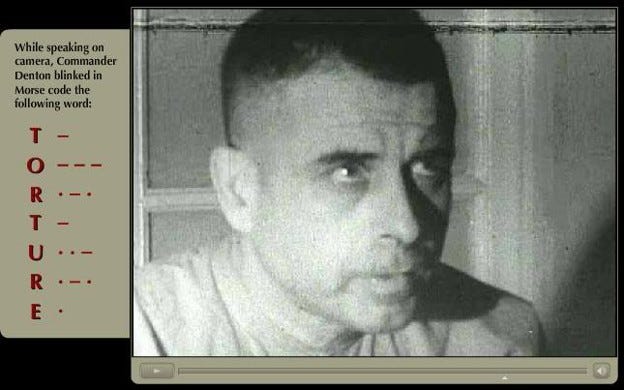
In 1966, during a forced televised propaganda interview in North Vietnam, U.S. Navy Commander Jeremiah Denton found a remarkable way to communicate what he could not safely say aloud. As cameras rolled, Commander Denton deliberately blinked the word T-O-R-T-U-R-E in Morse code. His courageous act provided the first confirmed evidence that American prisoners of war were being abused.
His eyes revealed what his voice could not.
Perhaps that’s why we’ve long repeated the saying, “The eyes are the window to the soul.” Whether or not its origin is known, the expression endures because it contains a profound truth. Our eyes reveal not only what we feel, but also what we value. More importantly, what we repeatedly choose to look at gradually shapes our hearts, our habits and ultimately our character.
Scripture returns to this theme again and again. In Psalm 101:3, King David declares, “I will not look with approval on anything that is vile.” David understood that guarding the eyes is far more than resisting temptation — it is about protecting the heart. Our attention is never passive. Whatever repeatedly occupies our gaze gradually influences our thinking, our emotions, and ultimately the people we become.
My then 89-year-old Aunt Juanita practiced this wisdom for decades. In her gentle Southern way, she shared how much she preferred wholesome television, with The Lawrence Welk Show being one of her favorites. “I keep myself away from smut,” she said matter-of-factly, “and I ask the Lord to take care of the rest.” That was in November 2013, yet her words have stayed with me because they reflect something increasingly uncommon: the quiet conviction that we become better by being careful about what we consume.
The opposite is equally true. We can also choose to look for what is noble, beautiful, and good.
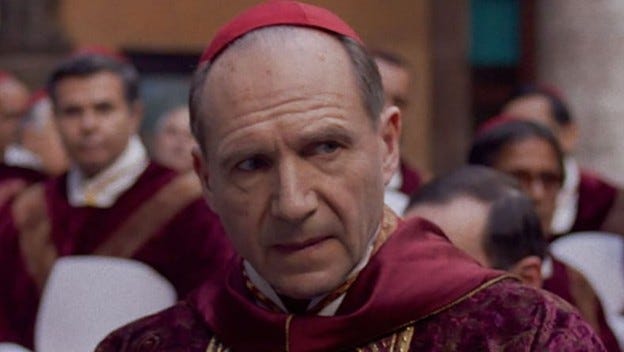
British actor Ralph Fiennes demonstrates the remarkable expressive power of the eyes in the film Conclave. As Cardinal Thomas Lawrence, much of what he communicates is never spoken. Doubt, grief, responsibility and conviction pass across his face through the slightest glance or pause. His performance reminds us that our eyes not only reveal what is within us – they often reveal us more truthfully than words ever can.
Audrey Hepburn expressed a similar truth from another perspective: “For beautiful eyes, look for the good in others.” It’s more than an elegant sentiment. It is practical wisdom. We eventually become skilled at finding whatever we train ourselves to seek, whether kindness or cynicism, beauty or bitterness.
“For beautiful eyes, look for the good in others; for beautiful lips, speak only words of kindness; and for poise, walk with the knowledge that you are never alone.”
– Audrey Hepburn
Closing Reflection
In a world that profits from outrage and competes relentlessly for our attention, perhaps one of the quietest acts of wisdom is deciding where not to look. Every day we decide what deserves our attention, and those quiet decisions gradually shape the people we become.
What kind of person are you becoming by what you choose to look at?
No posts
Comments
Nothing yet. Say the first thing.
Sign in to join the conversation.