
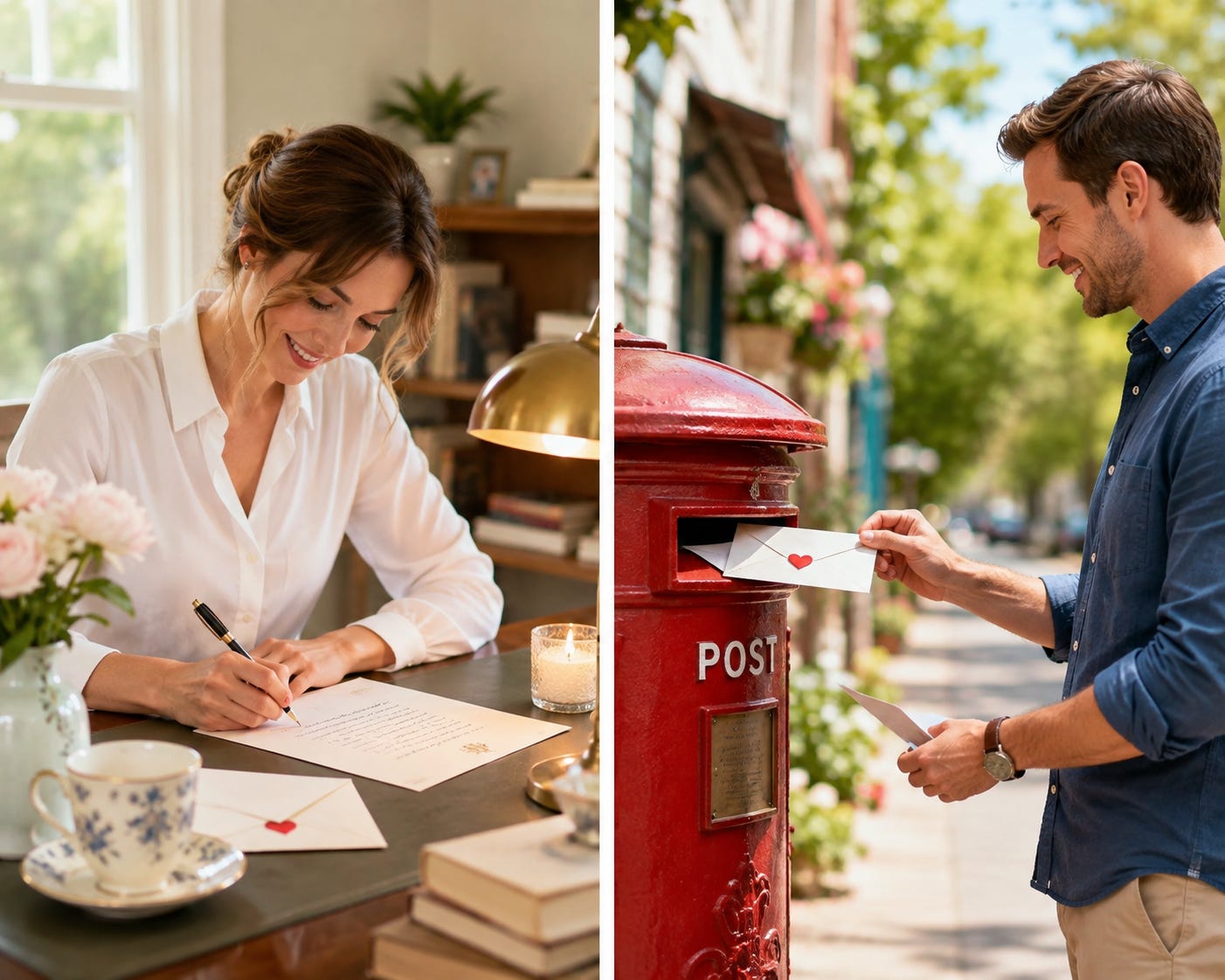
There was a time when getting to know someone often began with a letter.
Before photographs appeared instantly on a screen and before a first impression could be formed in seconds, two people might begin with nothing more than a name, an address, a sheet of paper — and curiosity about the person on the other end.
That is the essence of epistolary writing: Communication carried through written correspondence. Traditionally, it meant handwritten letters, but the form reaches further. Postcards, notes, journals exchanged between two people, emails, and even thoughtful messages can become epistolary when they create an ongoing conversation in writing.
Perhaps its greatest gift is that writing asks us to reveal ourselves differently.
Franklin and Pam discovered this quite by accident.
Their mothers were friends and believed their children might be compatible. With a little maternal encouragement, Franklin and Pam began corresponding. They had never met face-to-face. There was no first date, no immediate assessment across a crowded room, no deciding within moments whether there was a “spark.”
There were simply letters.
Over several months, one letter became another. Questions grew more personal. Stories became more revealing. They learned each other’s interests, values, humor, hopes, convictions and ways of seeing the world. Somewhere among envelopes opened and pages unfolded, friendship deepened into affection.
And eventually, affection became love. They’ve now been married over 30 years.
We often speak of falling in love at first sight. Franklin and Pam experienced something rarer: Love before first sight.
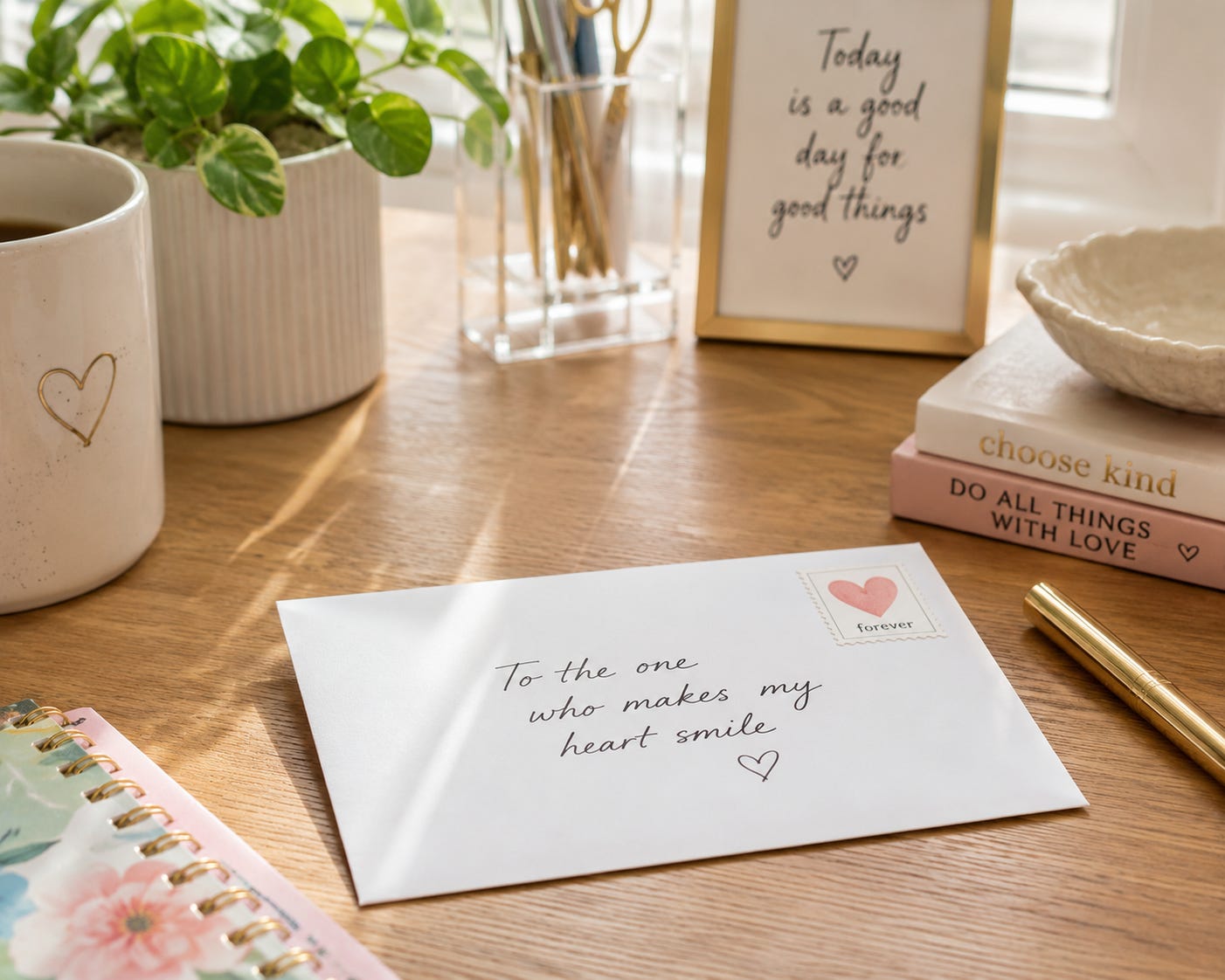
There is something remarkably pure about such a beginning. Neither had the advantage — or distraction — of physical presence. Franklin could not be captivated by the way Pam entered a room, nor could Pam make assumptions based on Franklin’s appearance. Each had to discover the other from the inside out.
Writing made character visible.
That may be one reason correspondence can create surprising intimacy. A letter gives us time to consider what we truly mean before saying it. It allows the recipient to linger over a sentence, return to it later and recognize nuances that hurried conversation sometimes loses.
The medium matters less than the intention. A handwritten letter carries the unmistakable evidence of time and touch. A postcard offers a small window into someone’s day. Email permits longer conversations across great distances. Even digital messages can deepen a relationship when they move beyond fragments and become thoughtful exchanges.
What matters is the willingness to resist haste.
Franklin and Pam’s story reminds us that some of the strongest relationships may begin not with attraction, but with attention—with the patience to listen, the curiosity to understand and the willingness to discover another person slowly.
Their story also leaves us with a beautiful possibility: that when appearances are removed from the beginning, we are given the rare opportunity to encounter another person from the inside out.
Final Reflection
What might we discover if we allowed the heart to make the first impression?
No posts
Comments
Nothing yet. Say the first thing.
Sign in to join the conversation.