
She first graced this planet on January 19, 1946, the fourth child of 12, and grew up in Locust Ridge, Tennessee on the north side of the Great Smoky Mountains. Her parents were Avie Lee Caroline and Robert Lee Sr., better known simply as Lee.
She would grow up into one of the kindest human beings on the planet, become a prolific singer, songwriter, multi-instrumentalist, actress, author, humanitarian, businesswoman, angel, and all-around icon. All with a take-no-shit attitude.
Meet Dolly Parton.
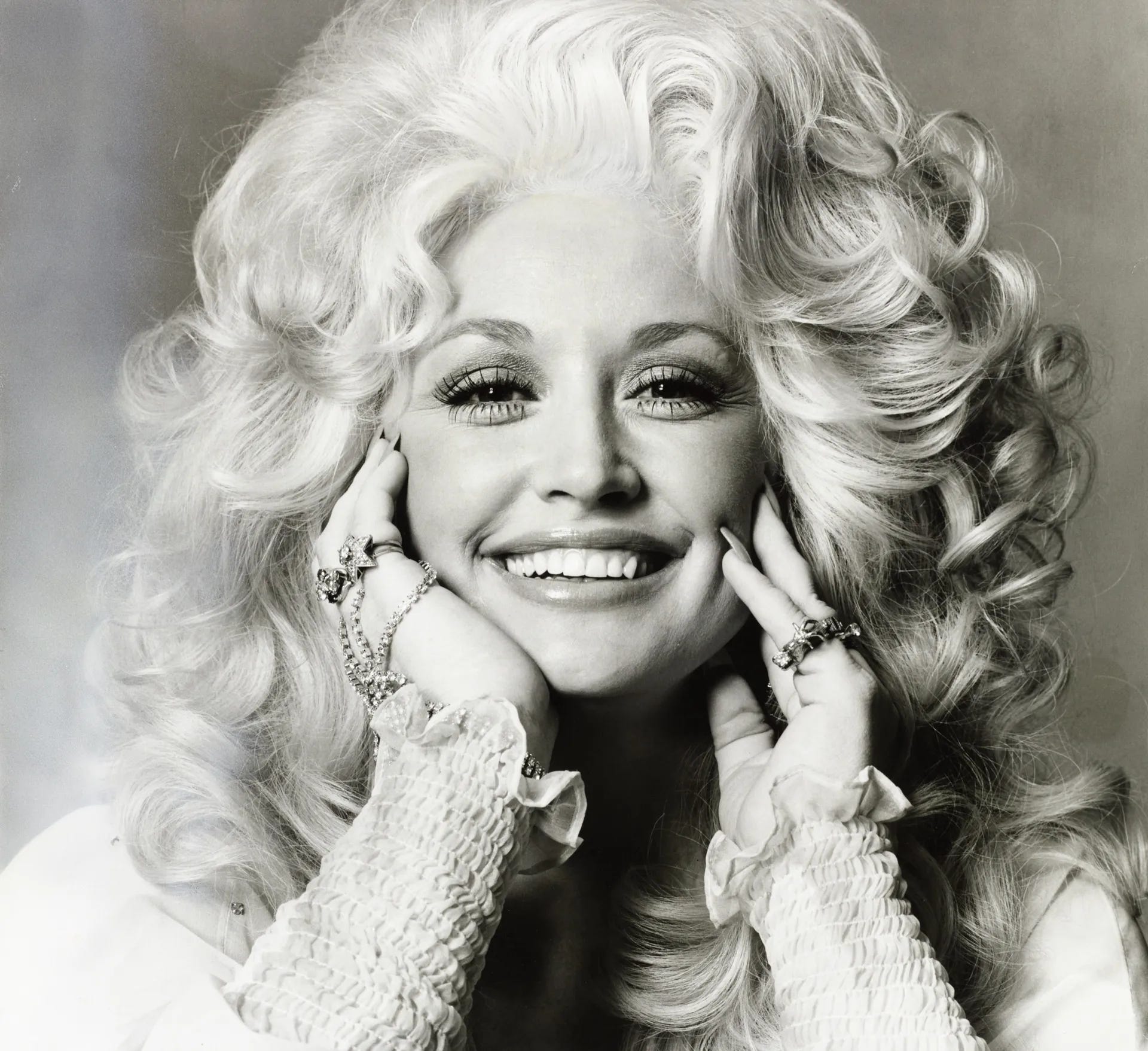
Dolly Rebecca Parton was born in a one-room cabin on the banks of the Little Pigeon River in Pittman Center. Her father worked as a sharecropper in the mountains of East Tennessee before tending his own small tobacco farm and acreage, while also working construction jobs for extra money for the family. Despite her father’s illiteracy, Parton has often commented that he was one of the smartest people she ever knew when it came to business and making a profit, and she credits him with her business acumen.
Her mother, Avie Lee, while often in poor health, was loving and kind, managing to take care of her large family just fine despite her ailments. She entertained her children with Smoky Mountain folklore and ancient ballads that originated from her musical Welsh family.
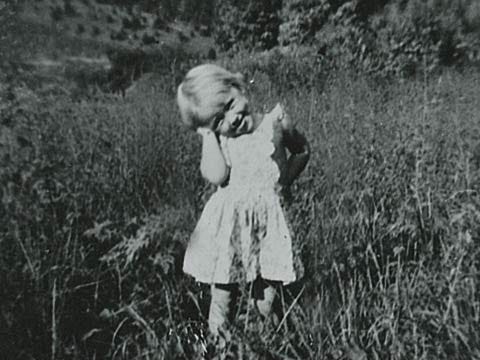
Parton has often described her family as being “dirt poor.” Living in a predominantly Pentecostal area, music played an important role in her early life. She and her siblings were raised in the Church of God in a congregation where her grandfather, who played fiddle and wrote songs, was the pastor, and by the age of 6, this natural-born entertainer was performing for others at the church.
Around the same time, Parton started playing with a guitar she made with an old mandolin and two strings she found, and after she showed an affinity for the makeshift instrument, her Uncle Billy bought her first real guitar the next year. From there, Parton began singing on local radio and television programs in the East Tennessee area, and she also appeared on The Cas Walker Show in Knoxville.
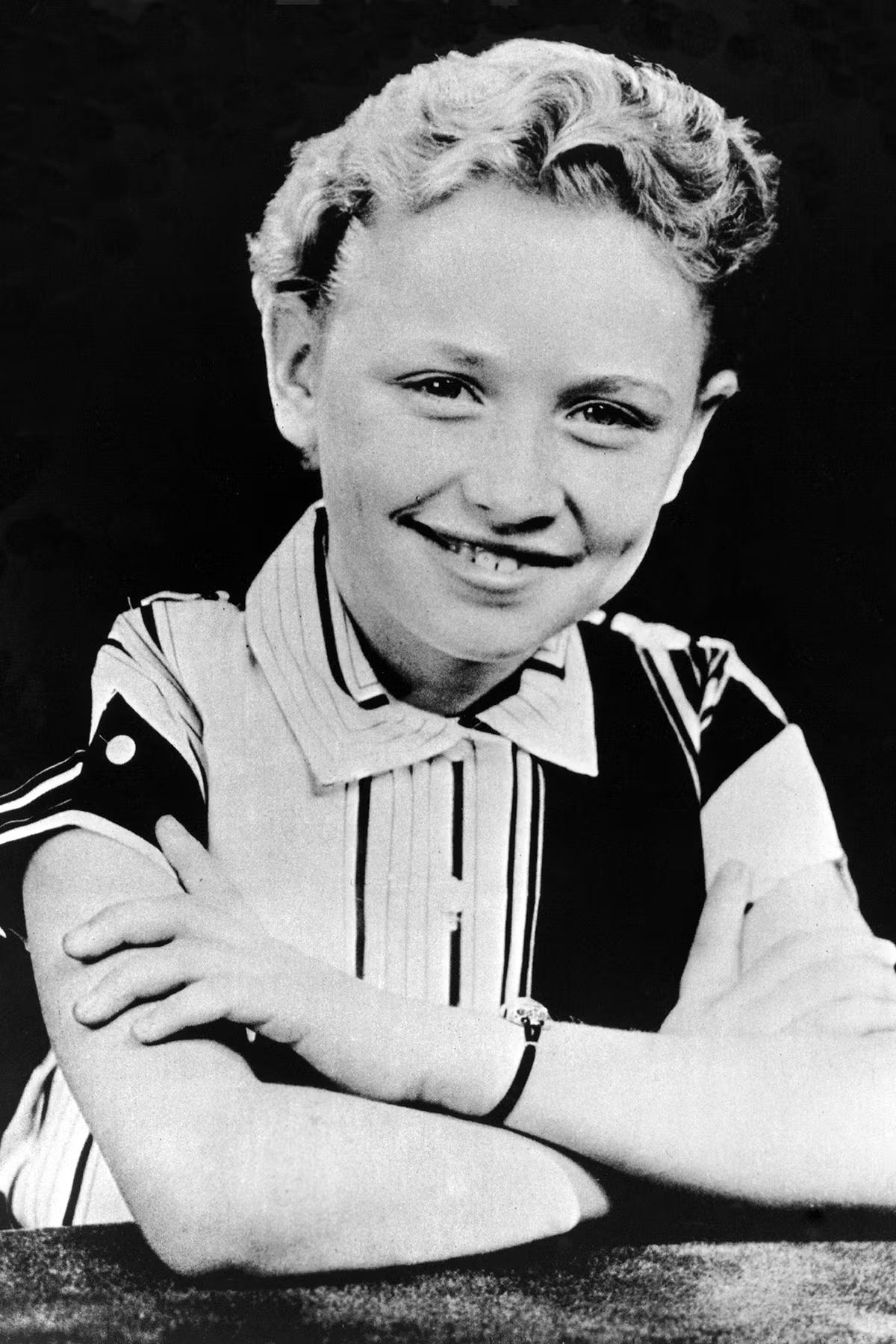
At 13, she recorded her first single, “Puppy Love,” which she wrote with Uncle Billy, and appeared at the Grand Ole Opry. While there, she met Johnny Cash, who was “a total gentleman and very kind,” as she recalls. He encouraged her to trust he gut regarding her career and blaze her own path.
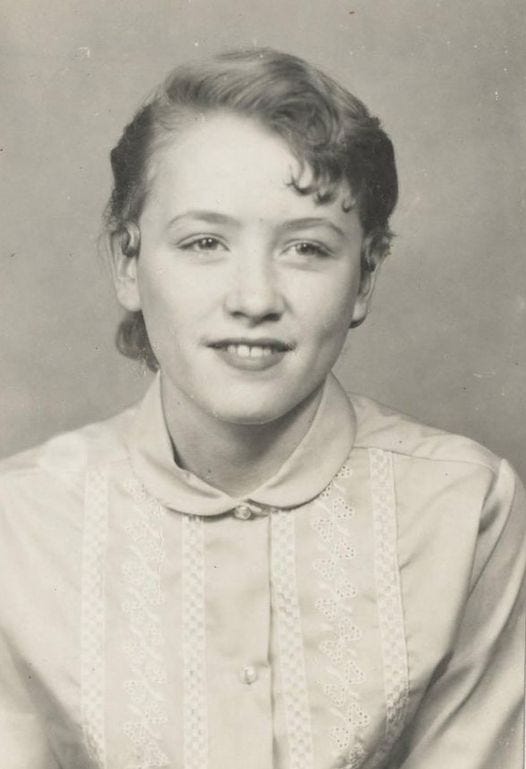
Parton said, in her 1994 autobiography My Life and Other Unfinished Business, that alongside music and religion, sex was the third formative pillar of her life. One of her favorite things to do as a little girl was to creep around in a nearby abandoned chapel. In that chapel sat a broken piano, and “dirty drawings” littered the walls. Under the porch were condom wrappers left behind by teenagers who also found inspiration in this discarded property.
Parton wrote that, in that space, “a space of music, sex, and God,” she experienced a spiritual epiphany that “it was all right for me to be a sexual being.” She’s described herself as having been unapologetically “hormonally precocious” both inside and out. She began recognizing the attention she started getting from men, which clued her in to her own sexual power. She embraced it, dyeing her lips with iodine from the family medicine cabinet in place of the lipstick she was unable to afford.
In the eyes of her people’s strict patriarchal religion, her sexy behavior did not honor her father and her mother. Her family was worried that the devil had led Parton down a “Jezebel’s path.”
Parton wasn’t hearing it though, and she pierced her own ears to hang feathers from them and ratted her hair. When her mother suggested she’d been possessed, Parton told her to give credit where it was due; not to Satan but to Parton herself.
Where Parton was from, she’s said, the way she expressed herself was less about attracting boys and more about claiming her femininity in a place where everyone of any gender played-up “masculine” attributes and deemphasized “feminine” ones in order to survive.
“Womanhood was a difficult thing to get a grip on in those hills, unless you were a man,” Parton wrote.
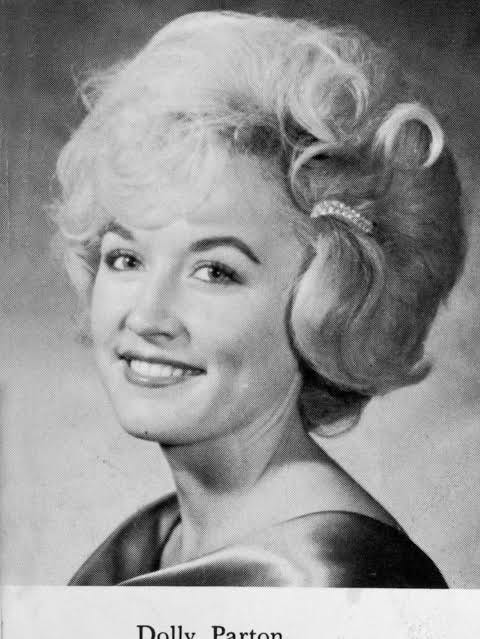
In 1964, Parton graduated from Sevier County High School, and the very next day, she picked up and moved to Nashville. Shortly after her arrival, she signed with Combine publishing and found initial success as a songwriter. She wrote songs with her frequent songwriting partner, her Uncle Bill, including Top 10 hits for Bill Phillips with “Put It Off Until Tomorrow” and Skeeter Davis with “Fuel to the Flame.” Parton wrote songs that were recorded by other artists during this period, including Kitty Wells and Hank Williams Jr.
But she intended to be a singer, and in 1965 she signed with Monument Records at the age of 19. Parton wanted to record country material, but her record label balked at that idea, thinking that her voice wasn’t suited at all to country. She recorded multiple singles, no real chartbusters.
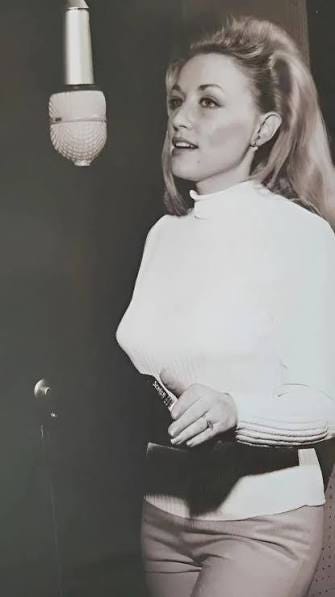
Parton disagreed with Monument’s assessment that she wouldn’t succeed in the country genre, and, as we know, she was correct. In 1966, a song she wrote called “Put It Off Until Tomorrow” was recorded by Bill Phillips and featured Parton on harmony. It went to number six on the country chart. Her label saw that glimmer of success and relented, allowing her to record country.
That same year, she also married her husband, Carl Dean.
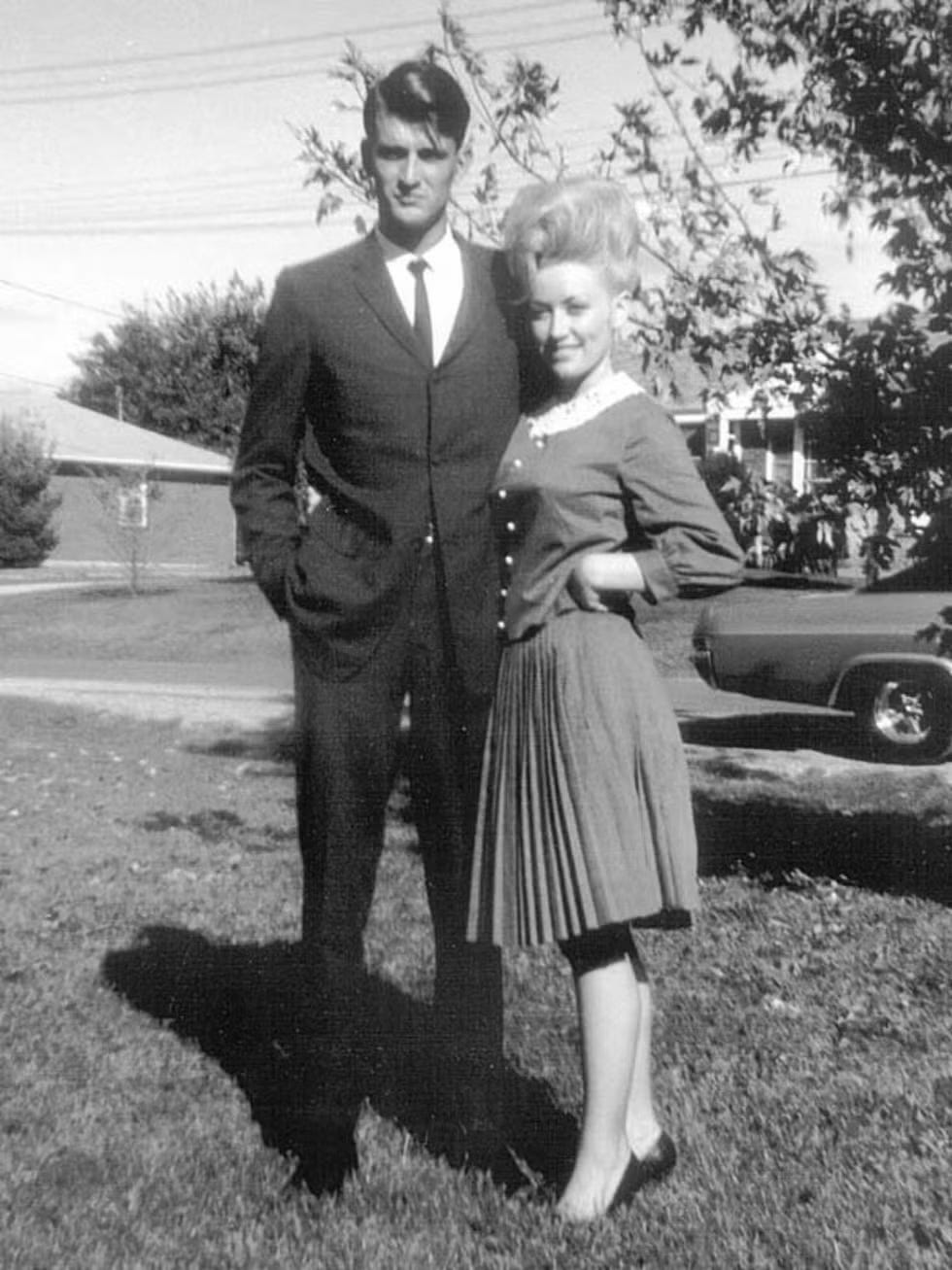
While it seems like he’s “never around,” it’s that he just doesn’t like to be seen publicly. In 2011 Parton said, “We’re really very proud of our marriage. It’s the first for both of us. And the last.” The couple, while not having children of their own, helped to raise Parton’s younger siblings and later she would become godmother to a little girl named Miley Cyrus.
In 1967, one of the few songs that Parton recorded but didn’t write became Parton’s first country single. “Dumb Blonde,” reached number 24 on the country chart, followed by “Something Fishy,” which went to number 17. Both songs appeared on her first full-length album with the apt introductory title Hello, I’m Dolly.
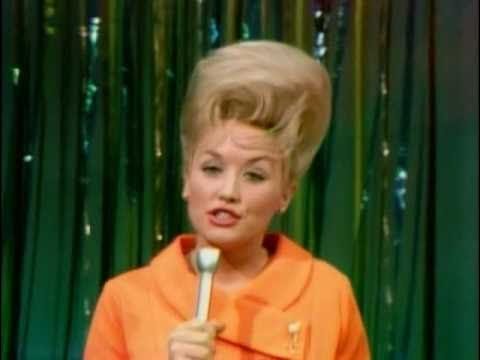
Later that year, Porter Wagoner, a flashy country star known for his blonde pompadour and flashy suits, invited Parton to be a regular part of his weekly syndicated television program The Porter Wagoner Show and also a part of his road show.
As it turned out, many of Wagoner’s following were pissed that Norma Jean Beasler, Parton’s predecessor on the show, had left to get married and start a family. Sometimes, with Parton on stage, they’d chant loudly for “Pretty Miss Norma Jean” (Wagoner’s nickname for her) from the audience.
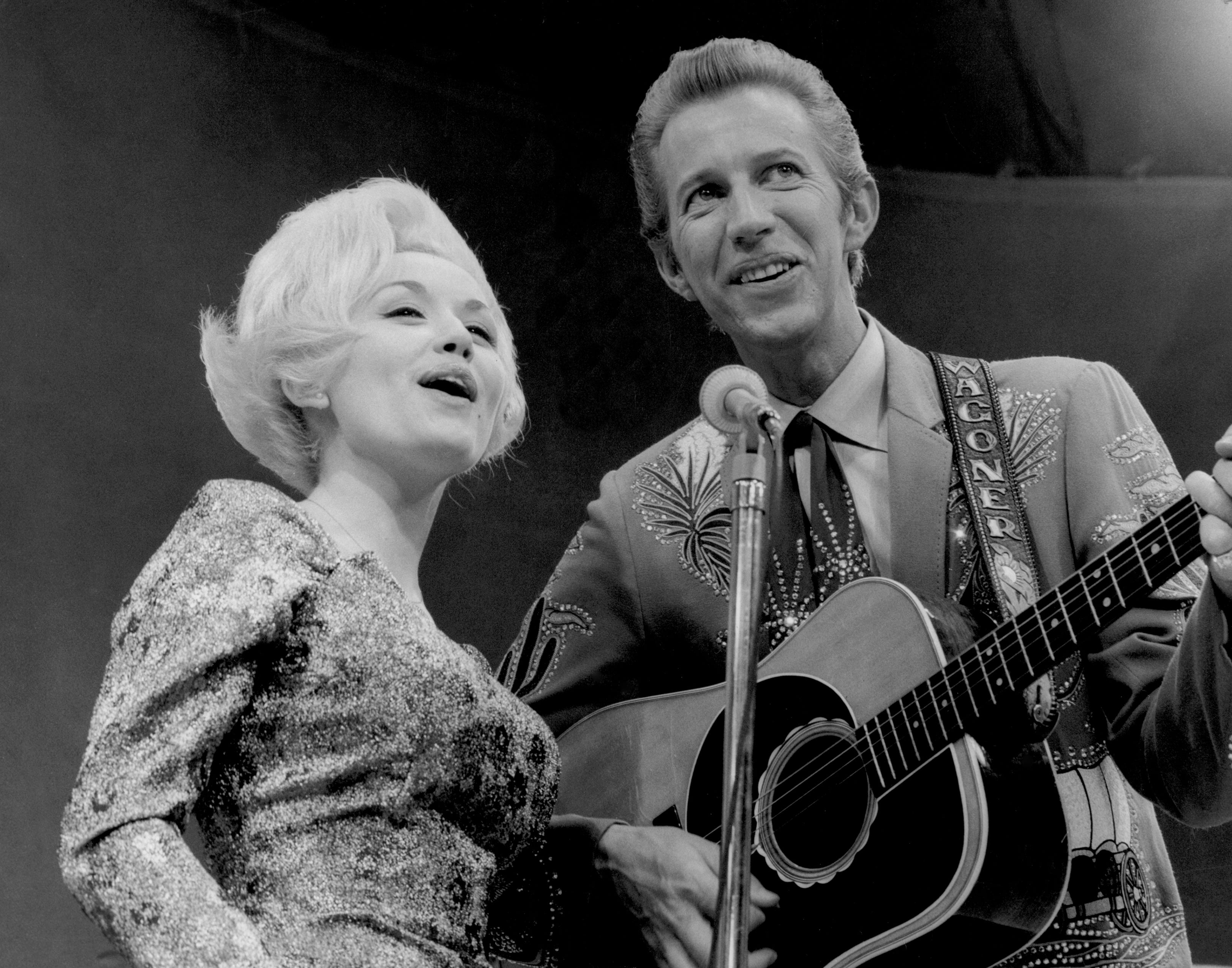
They finally snapped the fuck out of it, and Parton was eventually not only accepted but embraced.
Wagoner bargained with his label, RCA Victor, to sign Parton, to which they finally agreed. To protect its investment, Parton’s first single would be a duet with Wagoner, a remake of Tom Paxton’s “The Last Thing on My Mind.”
The song reached country Top 10 in January 1968, beginning a six-year streak of virtually uninterrupted Top 10 singles for Parton and Wagoner.
None of her solo efforts over the next couple years, not even “In the Good Old Days (When Times Were Bad)”, which later became a standard, reached the success of her duets with Wagoner. The duo was named 1968 Vocal Group of the Year by the Country Music Association while Parton’s solo records were continually disregarded, to the frustration of both Parton and Wagoner.
Wagoner persuaded Parton to record Jimmie Rodgers’s “Mule Skinner Blues,” a gimmick that finally worked, as the song shot quickly to number three on the charts, and in February 1971, she had her first number-one single with “Joshua.”
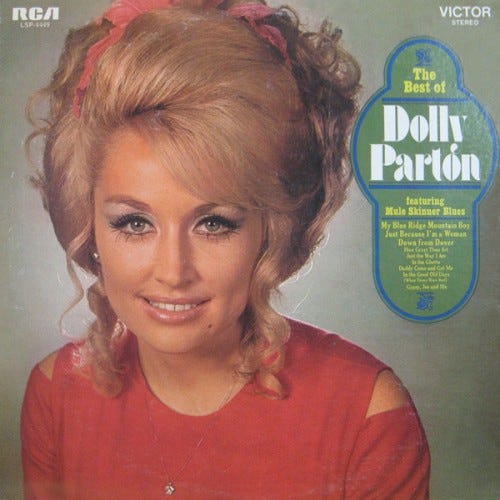
For the next two years, she had numerous solo hits—including her signature song “Coat of Many Colors,” a song written about cherishing the coat her mother sewed from rags, even though Parton was shamed for it at school, and she also continued to chart with the duets she recorded with Wagoner.
Soon Parton had the success of her biggest hit during this period. “Jolene” would top the country chart in February 1974 and reached the lower regions of Billboard’s Hot 100, and it reached number seven in the UK in 1976.
Parton, while enjoying her time and success with Wagoner, made the decision to part ways with him, performing their last duet concert in April 1974 and releasing her last album with him in 1975.
In 1974, “I Will Always Love You,” a song she wrote about her professional break from Wagoner, went to number one on the country charts.
Elvis Presley was so taken with that song that he wanted to record it himself. Parton was listening . . . that is until Presley’s manager, Colonel Tom Parker, told her that it was standard procedure for the songwriter to sign over half of the publishing rights to any song recorded by Presley.
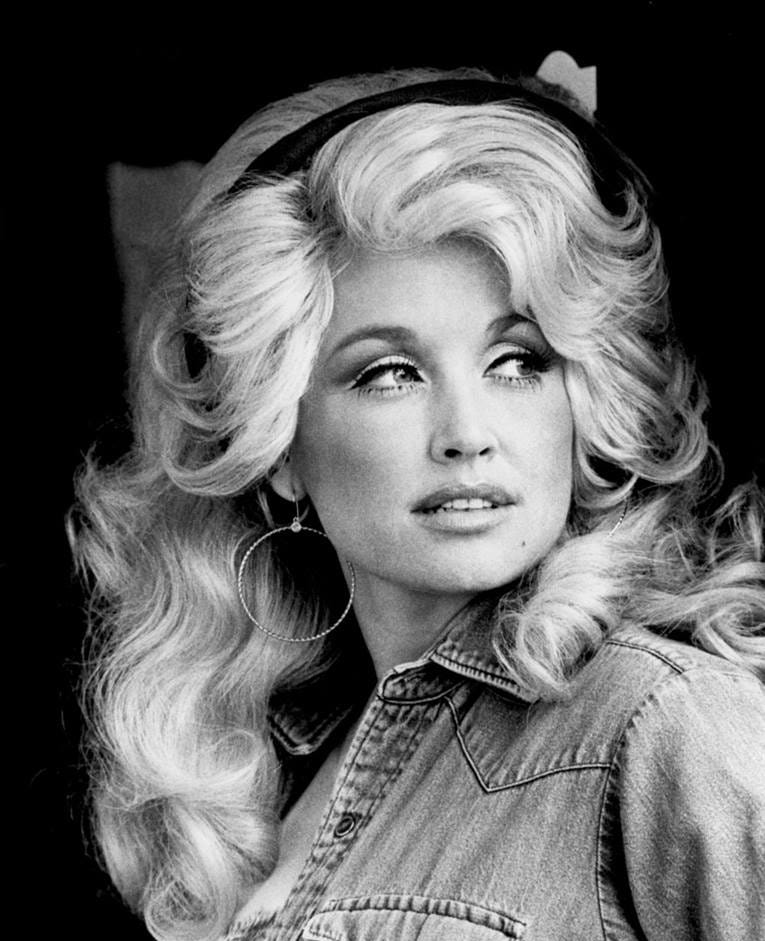
Parton was like “to hell with that,” a decision later credited with helping to make her many millions of dollars in royalties from the song over the years.
Over the next few years, Parton had a series of country hits, with eight of her singles reaching number one. After this, Parton began taking more of an active role in production and began specifically aiming her music in a more mainstream, pop “crossover” direction. For the remainder of the 1970s and into the early 1980s, many of her subsequent releases were hits on both charts simultaneously.
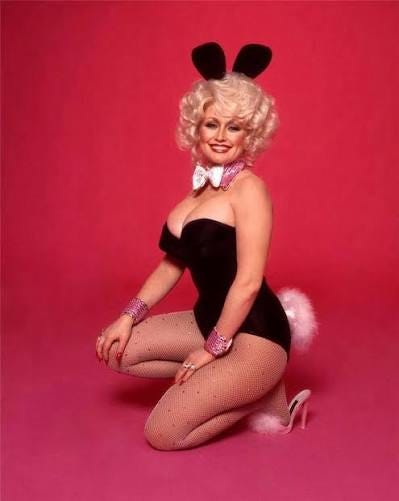
Parton, who at this point had a very famous figure, turned down several offers to pose nude for Playboy magazine but did appear on the cover of the October 1978 issue wearing a Playboy bunny outfit, MUCH to the joy of millions. Parton has repeatedly joked about her physical image and cosmetic surgeries, saying, “It takes a lot of money to look this cheap.”
She starred in the 1980 film 9 to 5 along with Jane Fonda and Lily Tomlin, and her title song reached number one on the country chart and, in February 1981, it reached number one on the pop and the adult-contemporary charts as well, giving her a triple number-one hit. Parton became one of the few female country singers to have a number-one single on the country and pop charts simultaneously. It also received an Academy Award nomination for Best Original Song.
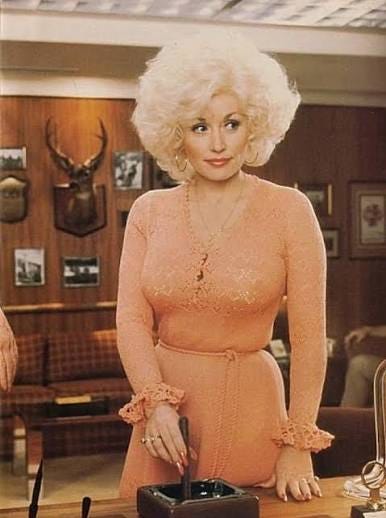
Between 1981 and 1985, Parton had twelve Top 10 hits, half of them reaching number one. A re-recorded version of “I Will Always Love You,” from her film The Best Little Whorehouse in Texas charted that year, and her duet with Kenny Rogers, “Islands in the Stream,” spent two weeks at number one in 1983.
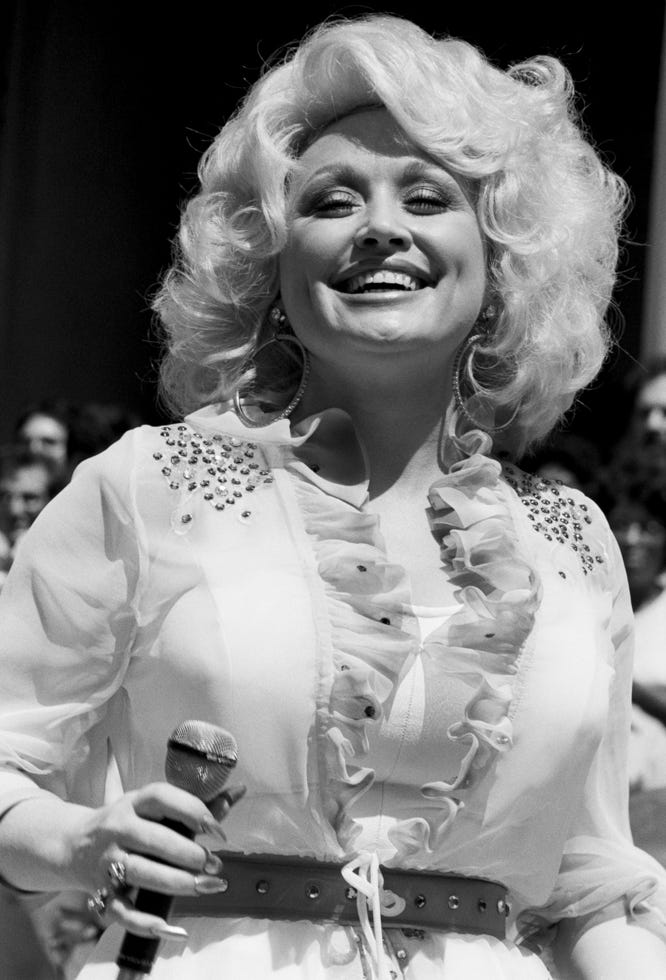
Parton continued her successful streak with projects like the Grammy Award winning album Trio, her collaboration with Emmylou Harris and Linda Ronstadt that was released to critical acclaim in 1987 and sold millions of copies. It spent five weeks at number one on Billboard’s Country Albums chart and reached the Top 10 on Billboard’s Top 200 Albums chart.
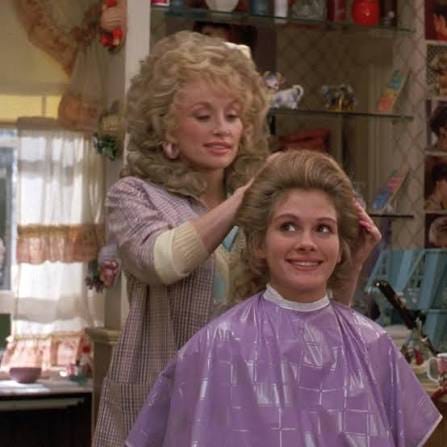
After a few more albums, Parton returned to film acting in Steel Magnolias in 1989, and has acted in several other movies, television shows, and stage productions as she’s seen fit.
Her hit 1991 album Eagle When She Flies highlights one the first inklings of Parton’s pro-LGBTQ stance, and features the memorable song, “Family,” with lyrics that were pretty progressive at the time: “Some are preachers / some are gay / some are addicts, drunks and strays / But not a one is turned away when it’s family.”
In 1995, Parton launched, on a local level for Sevier County, Tennessee, Dolly Parton’s Imagination Library. It was so well-received, that in 2000, an effort launched to grow this amazing program to a national level. By 2003, the program had mailed one million books to children around the US. The following year, it went global, and has since mailed many millions of books around the world.
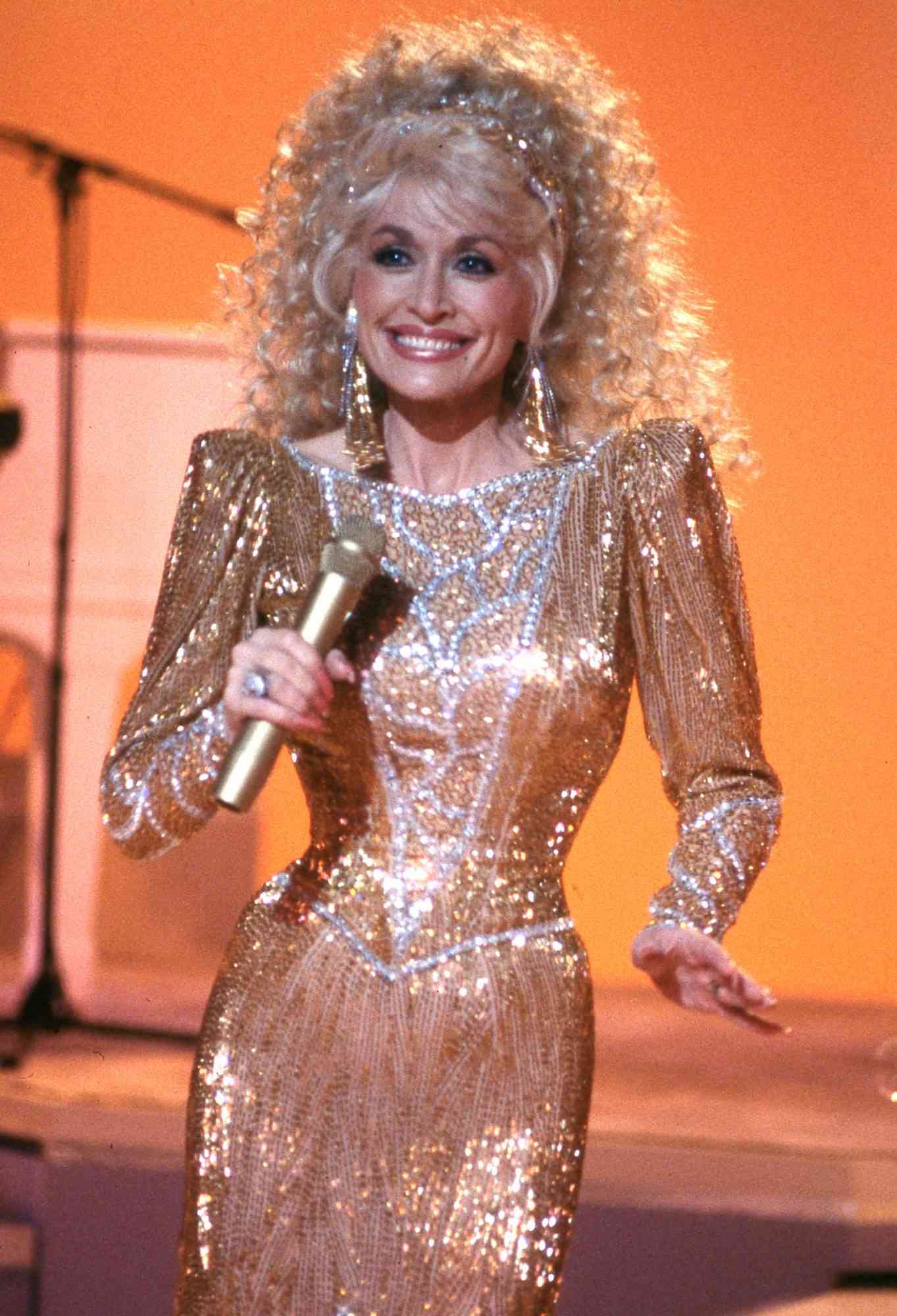
In 2005, Parton earned her second Academy Award nomination for Best Original Song for “Travelin’ Thru,” which she wrote specifically for the feature film Transamerica.
And because people are fucking terrible, Parton received death threats since both the song and the film celebrate the acceptance of a transgender woman. (WHO THE FUCK THREATENS DOLLY PARTON?)
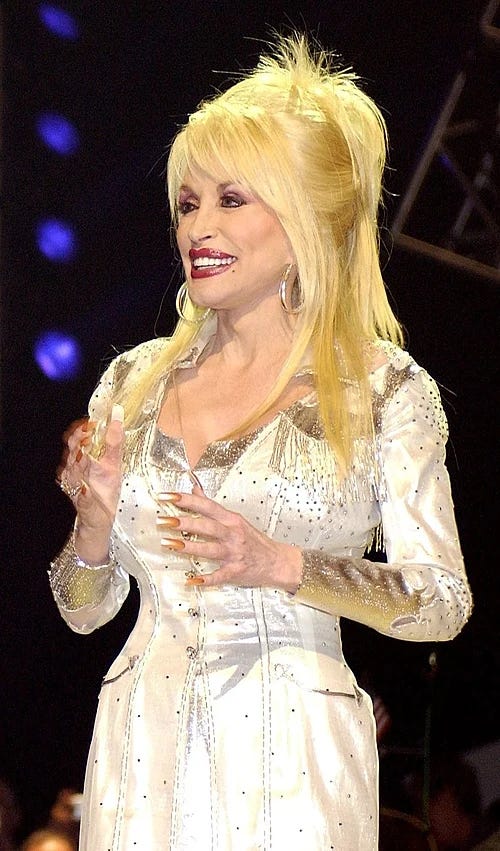
Since that time, Parton has continued to write, release, and celebrate the successes of her music. In 2014, she embarked on the Blue Smoke World Tour in support of her 42nd studio album of the same name. The album was first released in Australia and New Zealand on January 31 to coincide with tour dates there in February, and reached the Top 10 in both countries. Blue Smoke was released in the United States on May 13 and debuted at number six on the Billboard 200 chart, making it her first Top 10 album and her highest-charting solo album ever; it also reached number two on the US country chart and number two in the UK.
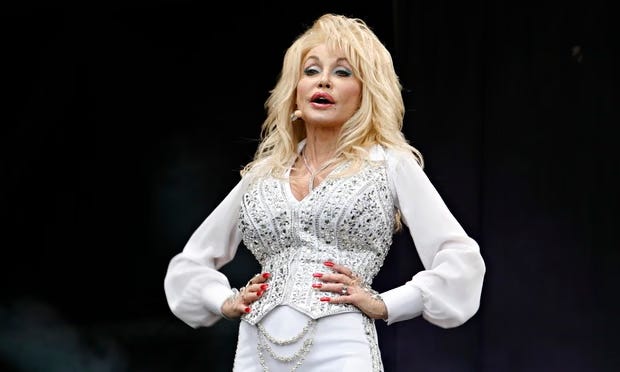
In an interview that year, Dolly spoke lovingly of her queer fans in an interview with Billboard. She added that those who criticize and judge LGBTQ people are committing their own kind of sin.
“I just don’t get it. Dollywood is a place for entertainment, a place for all families, period. It’s for all that. But as far as the Christians, if people want to pass judgment, they’re already sinning. The sin of judging is just as bad as any other sin they might say somebody else is committing. I try to love everybody.”
Vocally supporting marriage equality as early as 2009, Parton also declared her support for the LGBTQ community in Australia a few years later during an interview.
“Why can’t they be as miserable as us heterosexuals in their marriages?” Parton joked, before taking a serious tone. “Hey, I think love is love and we have no control over that . . . I think people should be allowed to marry. I’m not God, you know. I believe in God, I think God is the judge. I don’t judge or criticize, and I don’t think we’re supposed to.”
She’s also consistently supportive of the transgender community and has spoken out about the idiocy that is bathroom bans.
“I think everybody should be treated with respect,” Parton said, concluding with, “I hope that everybody gets a chance to be who and what they are. I just know, if I have to pee, I’m gon’ pee, wherever it’s got to be!”
Oh, and the rumor that Parton entered a West Hollywood Dolly drag contest—and lost —is true; Parton confirmed in a Good Morning America interview a while back.
“At a Halloween contest years ago on Santa Monica Boulevard where all the guys were dressed up like me and I just overexaggerated my look and went in and just walked up on stage . . . I didn’t win. I didn’t even come in close, I don’t think!”
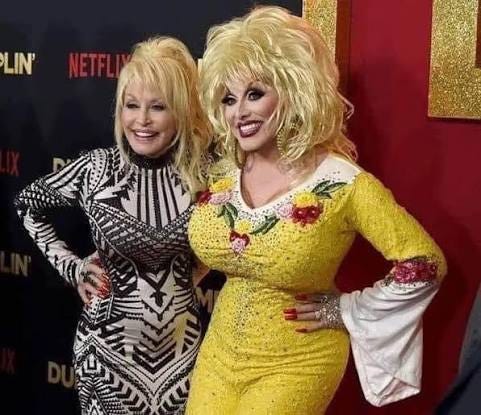
Most recently, she’s also been vocal about her stance on BLM, pissing off bigots masquerading as “conservatives” that she hadn’t already pissed off with her pro-LGBTQ stance.
“Of course Black lives matter,” Parton shot back during an interview with Billboard when asked about protests for racial justice following the murder of George Floyd. “Do we think our little white asses are the only ones that matter? No!”
The interview also mentions Parton’s easy decision to change the name of her dinner attraction from “Dixie Stampede” to “Dolly’s Stampede.” She said she changed it after realizing how offensive the word Dixie is to some people.
“There’s such a thing as innocent ignorance, and so many of us are guilty of that. When they said ‘Dixie’ was an offensive word, I thought, ‘Well, I don’t want to offend anybody. This is a business. We’ll just call it ‘The Stampede.’ As soon as you realize that something is a problem, you should fix it. Don’t be a dumbass. That’s where my heart is. I would never dream of hurting anybody on purpose.”
Parton has invested a lot of her acquired wealth into her native East Tennessee. She’s the co-owner of The Dollywood Company, which operates the theme park Dollywood, a dinner theater, Dolly Parton’s Stampede, the waterpark Dollywood’s Splash Country, and the Dream More Resort and Spa, all in Pigeon Forge. Dollywood is the 24th-most-popular theme park in the United States, with three million visitors per year.
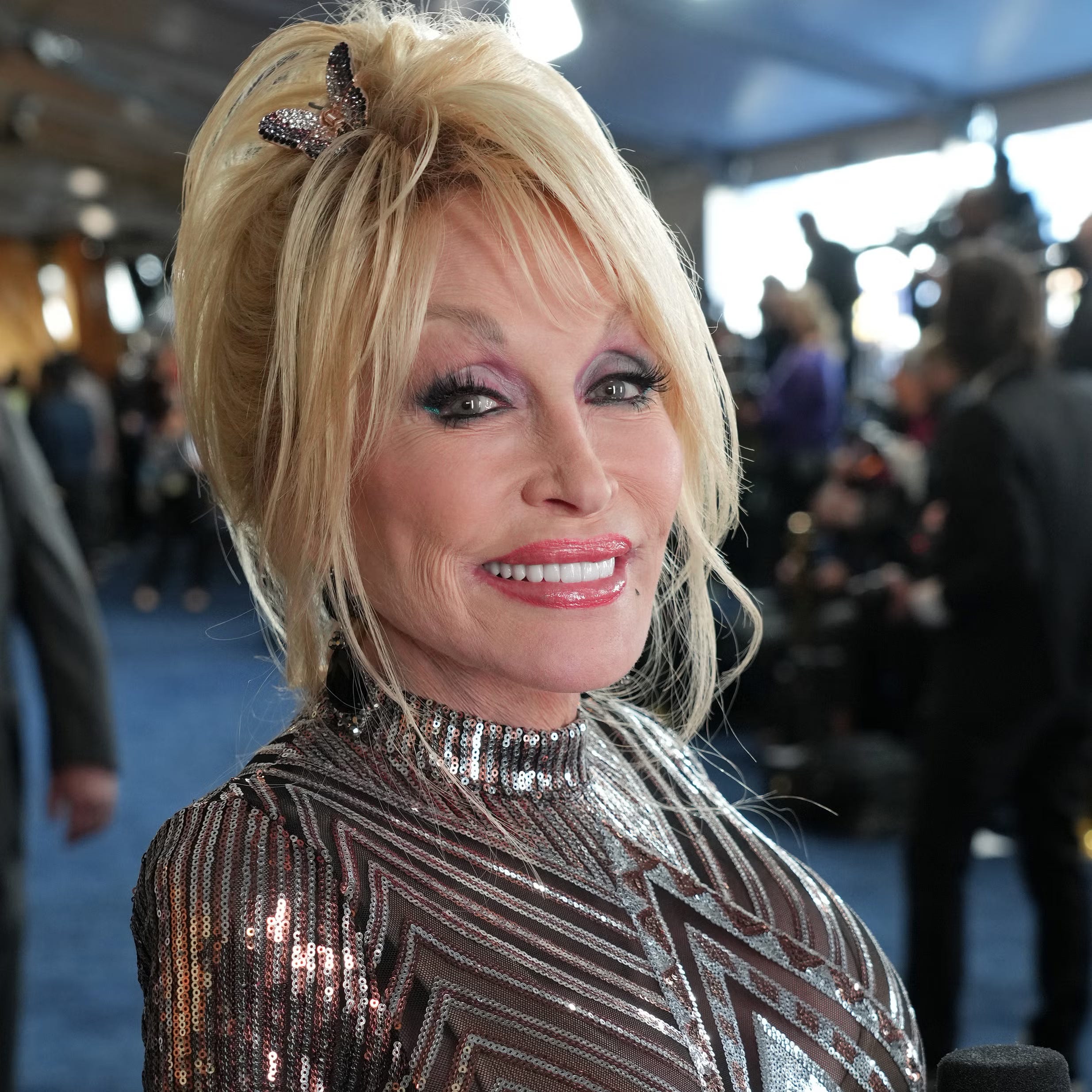
And then there’s that whole thing where she donated one million dollars for Covid-19 research at Vanderbilt University. Having already donated a million bucks to the university a few years prior to fund its children’s hospital, her latest donation granted Parton a vital role in supporting the development of the Moderna vaccine.
She was already a big financial supporter of health organizations in her home state that struggle to obtain funding, and Parton and her philanthropy are nothing less than lifesaving for Appalachians, who are disproportionately at-risk for chronic illness and disease.
And now to be an integral part of helping to end a global pandemic . . .
How can we even be surprised that she was involved?
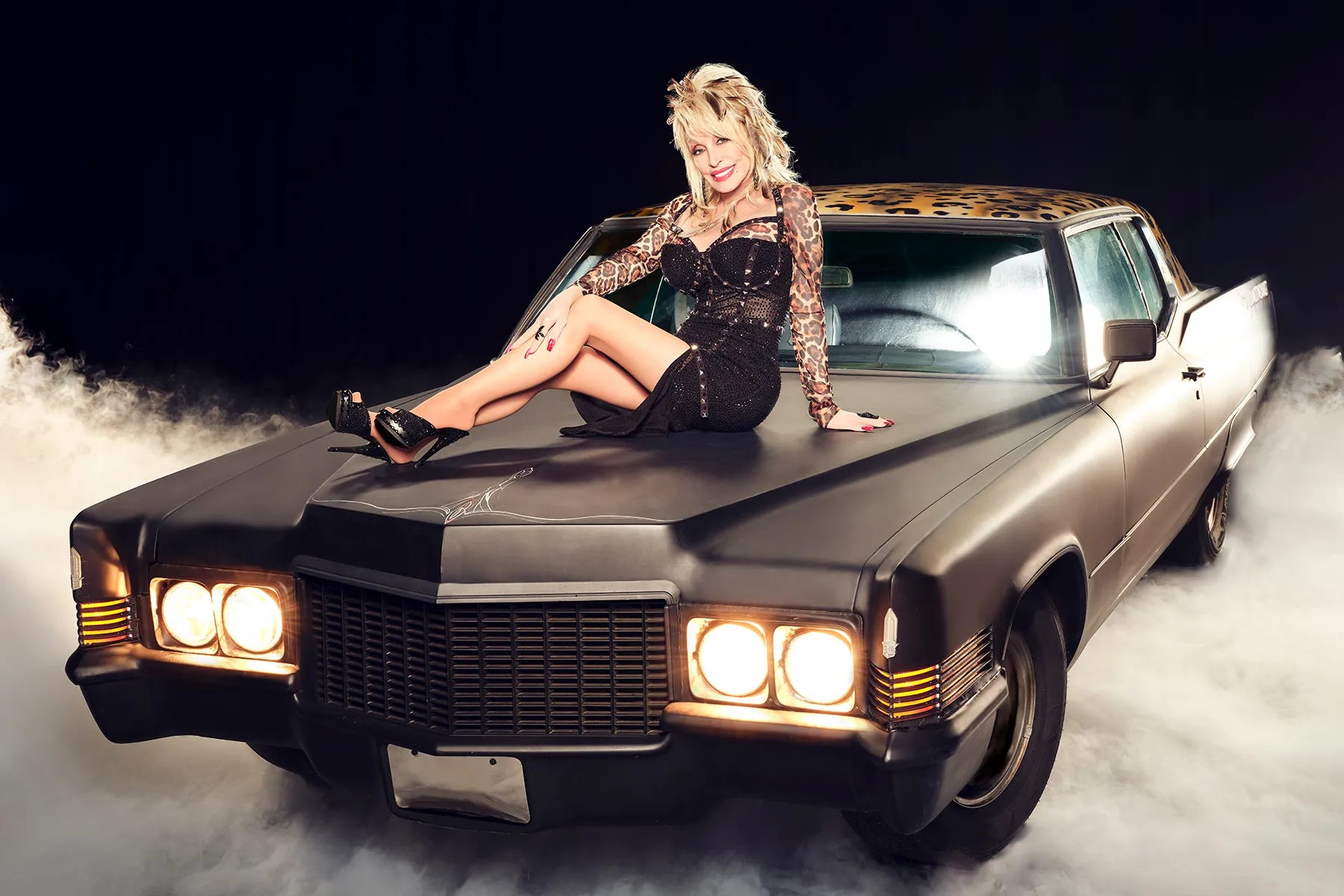
In 2022, Parton was nominated as an inductee to the Rock & Roll Hall of Fame. After first declining the invitation because she felt it was just for rock music itself, she reconsidered and said she would accept the nomination if chosen. In May, the Rock & Roll Hall of Fame made it a done deal, and Parton would be honored at the ceremony held in Los Angeles later that same November.
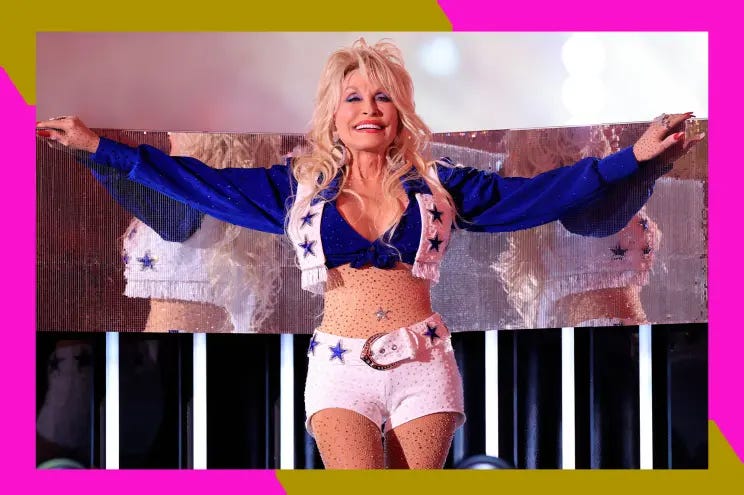
Dolly Parton left this realm on Tuesday, August 25th, 2026. She was 80 years old.
She joins her beloved husband, Carl, who passed in March of the last year.
Comments
Nothing yet. Say the first thing.
Sign in to join the conversation.