
My daughter, M., texted me a video link this week along with a short, sweet message. I recognized the video immediately. It was me, 23 years ago, talking into a camera about the dangers of a warming world. Fifteen thousand people have viewed it. I had almost forgotten it existed. M. had not.
On screen, I am my earnest, early-career self. I’m certain of my facts and keen to communicate the urgency of climate change. What the camera doesn’t show is the rest of my life: the six-month-old M. asleep next to my desk and the way I could carry her strapped to my chest and carry, at the very same time, my naïve faith: that if we simply made the danger clear enough, laid the evidence down plainly enough, the threat of global warming would abate. I believed the science would be enough. I believed it would make her world safe.
For twenty years I carried that belief into the rooms where it was supposed to come true. At the global summits I spent every waking hour inside a whole company of the willing, including scientists, funders, civil-society leaders, activists. I sought out the rooms where the passionate talk turned practical, where someone was tracing an actual path from here to a solution on the ground. The pathways were real. I kept a running tally. The summits laid out option after option for collective action, and I remember thinking, clearly, that if even half of what was on those tables came to pass, we were going to be all right.
It turns out less than half came to pass. And then less than that. M. learned to walk, to read, to drive, to leave home, and the global action I had staked my hope on did not happen. The hope that remained was small: local actions, neighborhood campaigns, the things people did for one another that were joyfully altruistic. I never doubted those things were good. But I am a scientist; I keep the tally of global solutions running in the back of my mind all the time. It’s that math that keeps me awake. How does a water cooler on a card table ever scale to meet a crisis the size of a civilization?
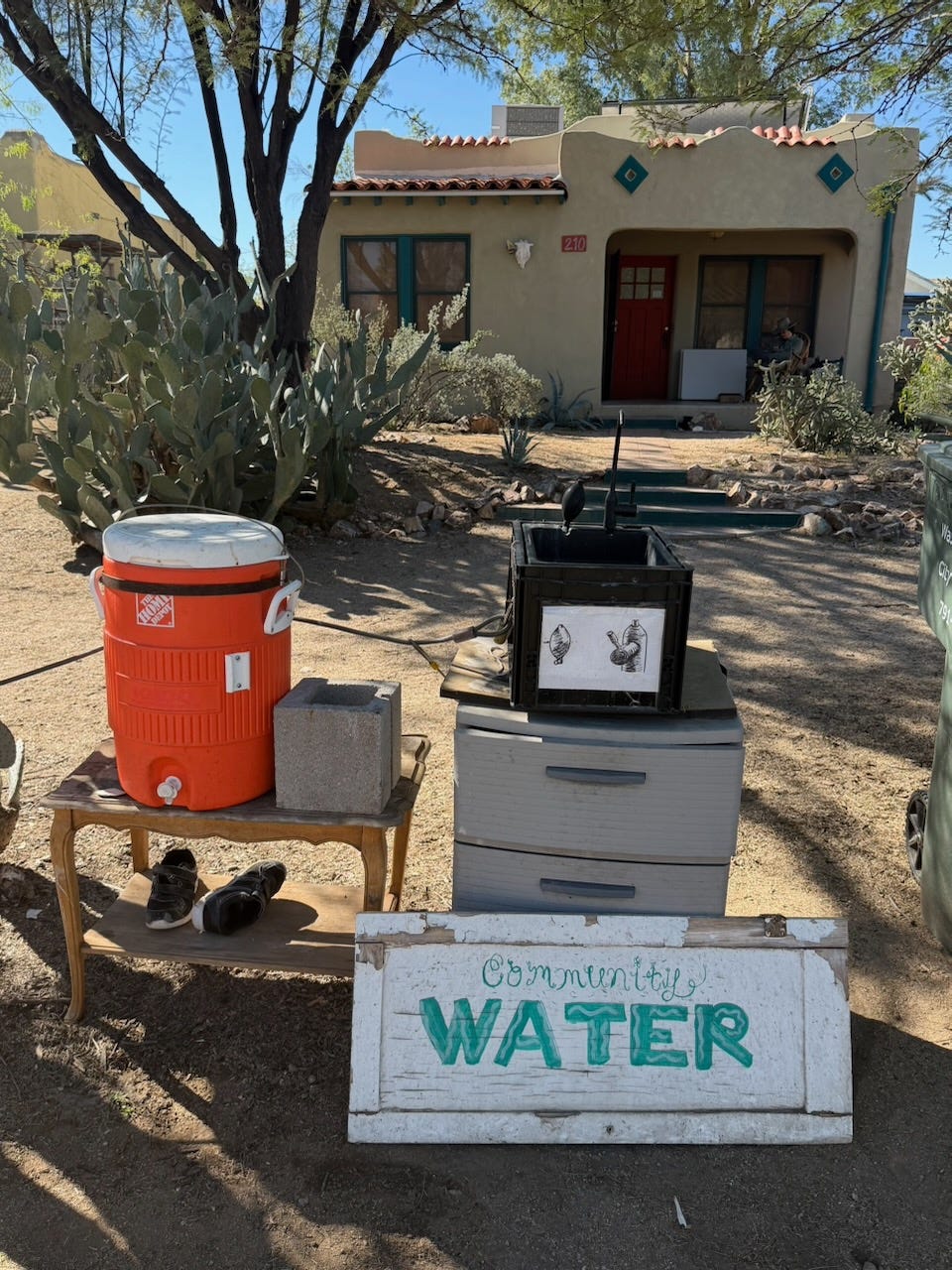
I brought that question with me when I moved to Tucson from Seattle in June 2024. Here, it stopped being an argument and became something I could see. I was keen to get to know my new home, and I walked everywhere, often early in the morning before the temperatures climbed above 100. Each walk opened my eyes. First to the stunning variety of cacti and succulents flourishing — flowering, even — in the heat. Then to the architecture, where thick adobe walls and shaded patios invite an outdoor life. Finally, the orange water coolers. Everywhere. In front of stores, churches, and homes. Often with friendly signs, aptly “community water”, maintained and refreshed with daily ice and water by local volunteers and shop owners.
And the best ones, by far, are the ones set up by my neighbors. Community water is not just to drink, but a small basin to wash up. Water to rinse your face, clean a wound, wash before you eat. The dignity of clean hands.
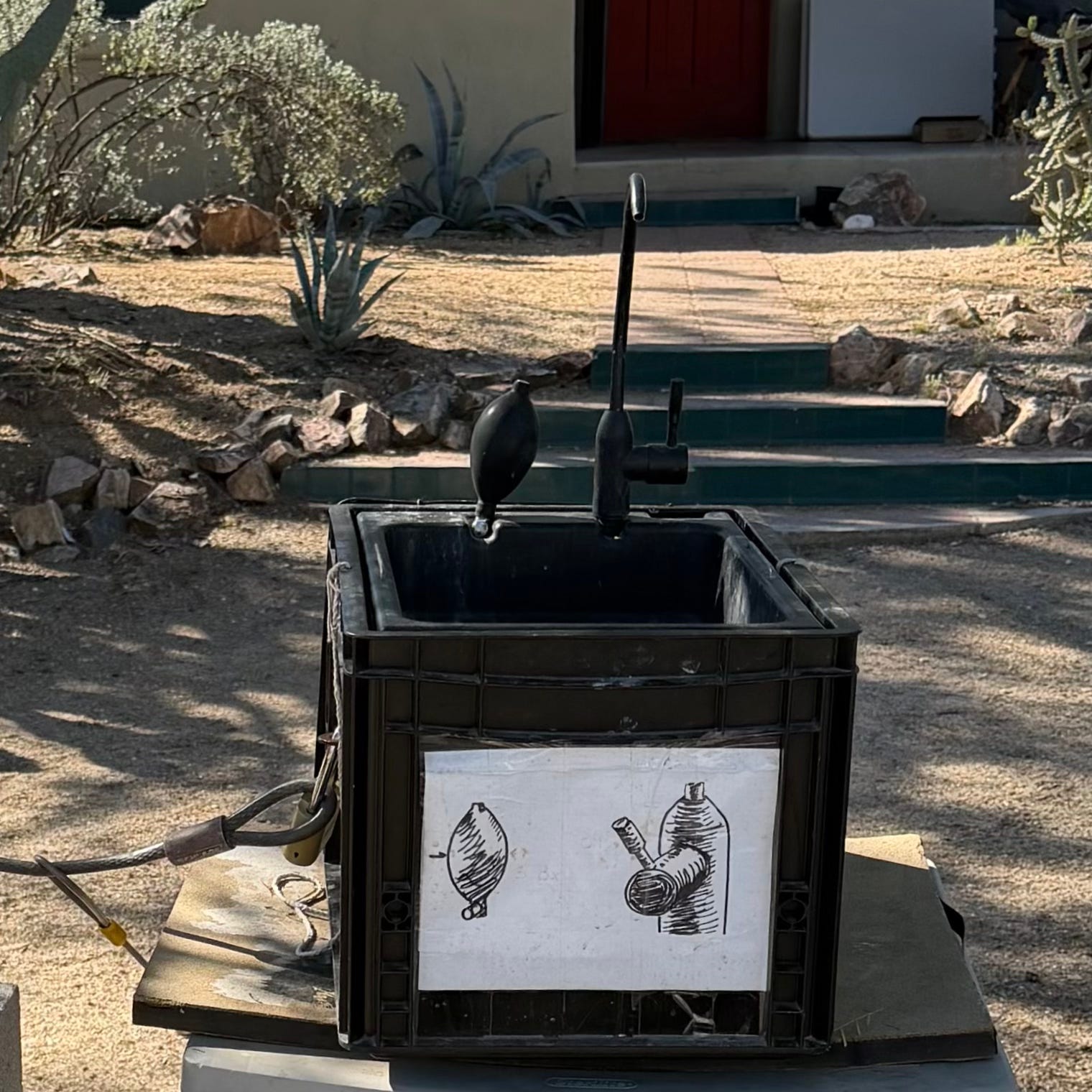
Our summer heat is relentless, and every year we prepare. We gather in church fellowship halls to assemble heat relief packs. The work is well organized, many hands making light work of hundreds of bags. No one in the room believes a snack and a cooling towelette are the policy and structural change this crisis demands; we can all do that math. We pack anyway. Because these small acts build a collective muscle, the one we will need to fight for the transformation we actually need. We don’t wait for the emergency to reach us. Anticipation and welcome are simply how we have survived here for millennia: the cooler filled before anyone is thirsty, the readiness of the prepared quietly extended to those who were never given a way to prepare for themselves.
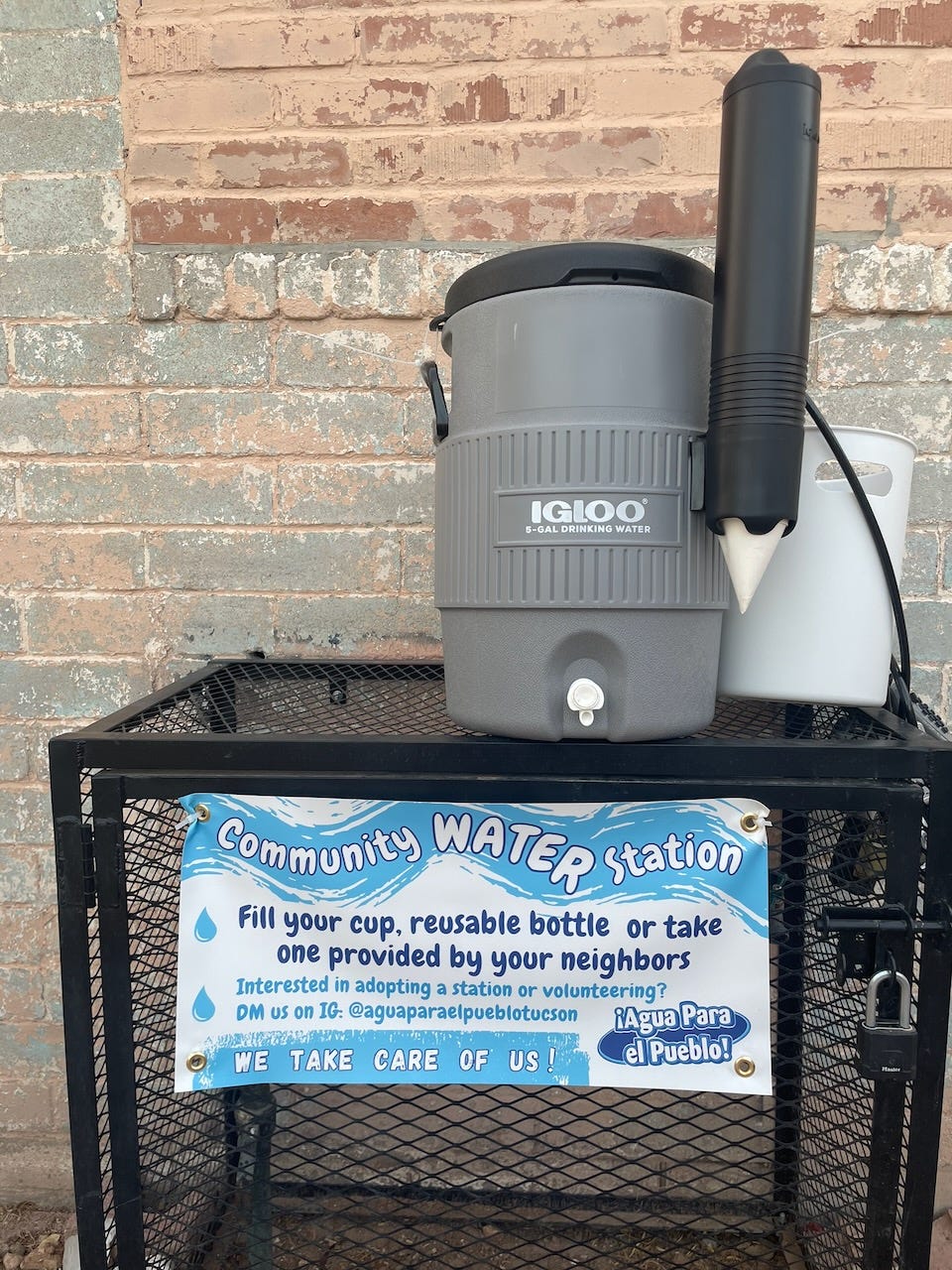
credit to @aguaparaelpueblotucson
Sometimes we need to be reminded how far we’ve come, and how far we have yet to go. And how can we possibly measure whether local actions will ever meet a crisis the size of a civilization? The video M. sent me woke me up. I’d been doing the math wrong the whole time. I was weighing relief bags against degrees, water coolers against heat domes, and of course that never closed. But that was never the equation. The number that actually moves isn’t bags or degrees. It’s people — changed, prepared, practicing empathy ahead of the need — against the politics of what’s possible. And that number is climbing.
I can’t retreat from the truth. Our country’s efforts are stalled while the rest of the world moves forward in fits and starts. I won’t promise M. that this will all turn out all right. But I can promise her this: I will stand shoulder to shoulder with her generation — to name what is happening, and to do the slow, unglamorous work of building the empathy that becomes courage, and the courage that becomes action. The coolers will never cool a civilization. But the people who fill them are the people who will change it. And I mean to be one of them, for as long as I can carry the water.
No posts
Comments
Nothing yet. Say the first thing.
Sign in to join the conversation.