
My daughter is entering her senior year of high school. After 16 years of watching my kids walk bravely to school dwarfed by enormous backpacks—starting with her older brother—our family is finally wrapping up our time in the district.

I love this school system. I feel genuine pride, loyalty, and belonging here. But what I want to decouple from that pride is our (most schools’) current spirit wear system.
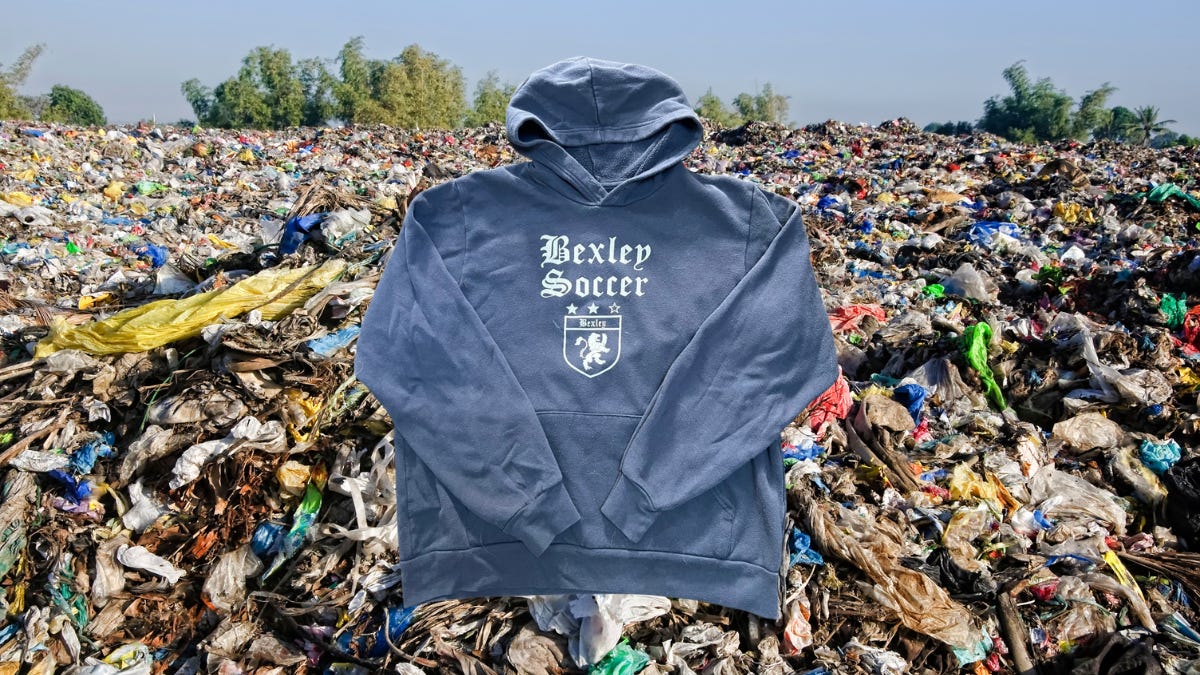
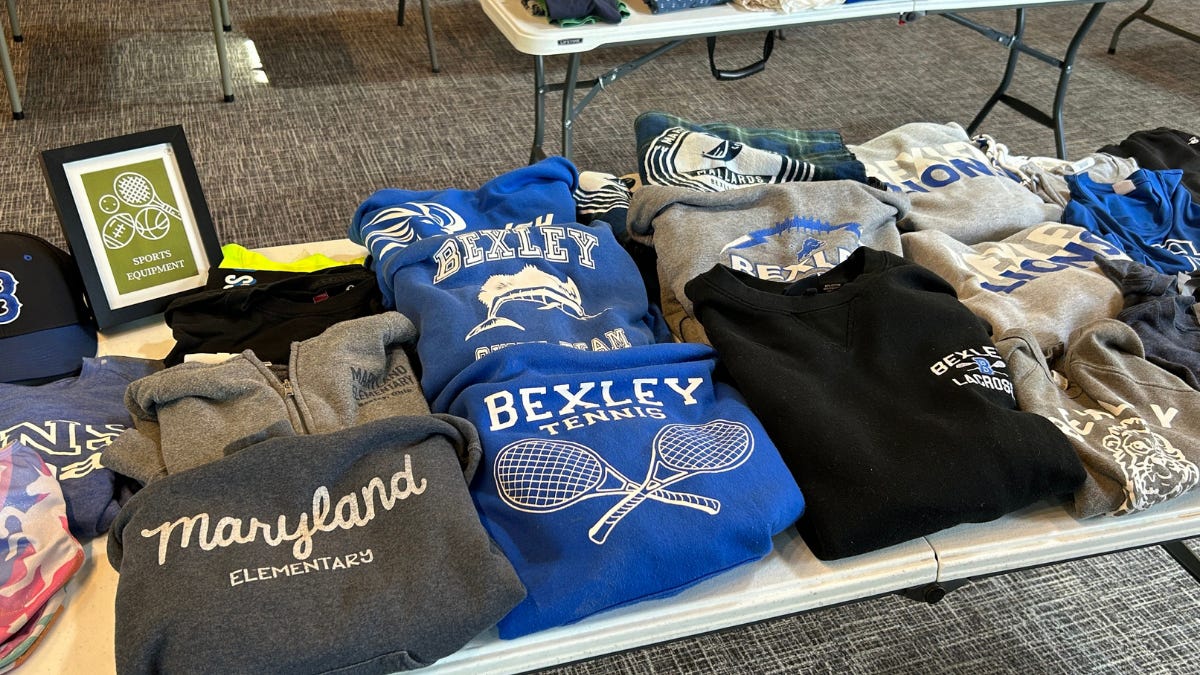
During the three-plus years I ran a hyper-local textile collection pilot in my town, I collected hundreds of discarded articles of school spirit wear. Looking through the piles, they broke down into four distinct categories:
Good-Quality Basics: Simple fleece or t-shirts easily passed down to another student.
Dated Garments: Items with a specific year printed on them, making them awkward for future students to wear.
Hyper-Niche Apparel: High-quality gear bound to a very specific club or sport (Bexley Theatre, Bexley Orchestra, Bexley Lacrosse).
Single-Event Apparel: One-off t-shirts from a specific readathon, 5K race, or rally.
The bottom tiers of this pyramid need to be retired, and the entire sourcing model needs a rethink.
In my interviews with PTO members across the country, not a single person has told me that spirit wear sales represent a significant or irreplaceable revenue stream. There is rarely a plan for how many SKUs to order, where inventory is stored, or what happens when items don’t sell.
Instead, discarded items get donated to national charities, shipped off, and ultimately passed over. Why would a family in a completely different community buy a hoodie for the Smileyville Salamanders or a 2018 middle school lacrosse team? When spirit wear leaves its home ecosystem, it loses all relevance. It creates a solid waste management burden, either here or elsewhere on the globe.
Nationally, there are roughly 4,000 school districts with demographic profiles similar to those where I live. If each district generates even 6,000 pieces of spirit wear a year, discarding just 10% creates a staggering volume of completely avoidable waste. These are conservative numbers.
We can do better than this. Imagine the shift if we:
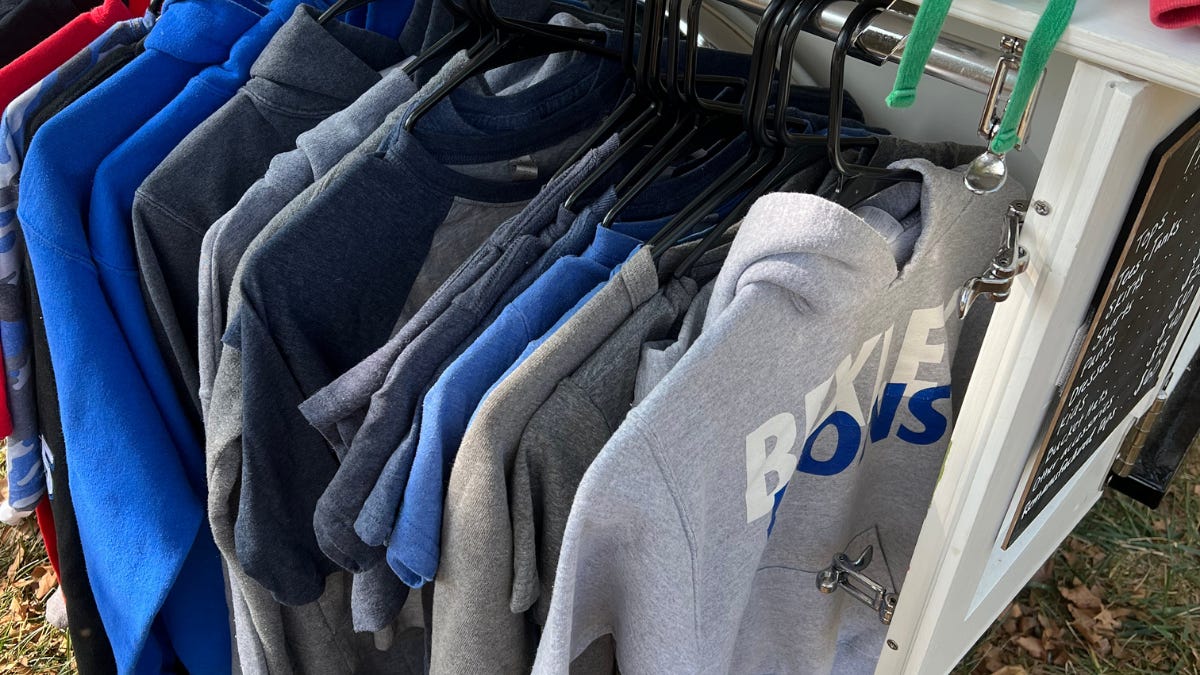
Give PTOs a new revenue model through a curated, “bougie” local spirit wear exchange.
Task high school environmental clubs with running a Life Cycle Analysis on apparel inside their own district.
Divert single-substrate garments directly into downcycling streams like industrial insulation.
Producing just 20% less hyper-local spirit wear nationally could offset:
384 million lbs of carbon emissions (equal to taking 38,000 gasoline-powered cars off the road for an entire year)
831 million gallons of water (equal to the daily drinking water needs for every single person in the state of Ohio for nearly 3 months)
174 million kWh of energy (equal to powering 16,000 average American homes for a full year)
The town we take pride in and the schools where our kids grow up shouldn’t have their names end up in a landfill. Fixing this doesn’t require a complicated seminar—it just takes three simple rules:
Make less product and make it less specific
Circulate it locally
Repair or downcycle the rest

Below the paywall is a calculator which you (or an environmental high school leader) can use to vet or calculate the impact of reduced garment production. If you feel a detailed sourcing checklist could be of use to your school, please reach out to me directly. I can create one for you. Thanks as always for reading! Good luck this fall Smileyville Salamanders!
Comments
Nothing yet. Say the first thing.
Sign in to join the conversation.