
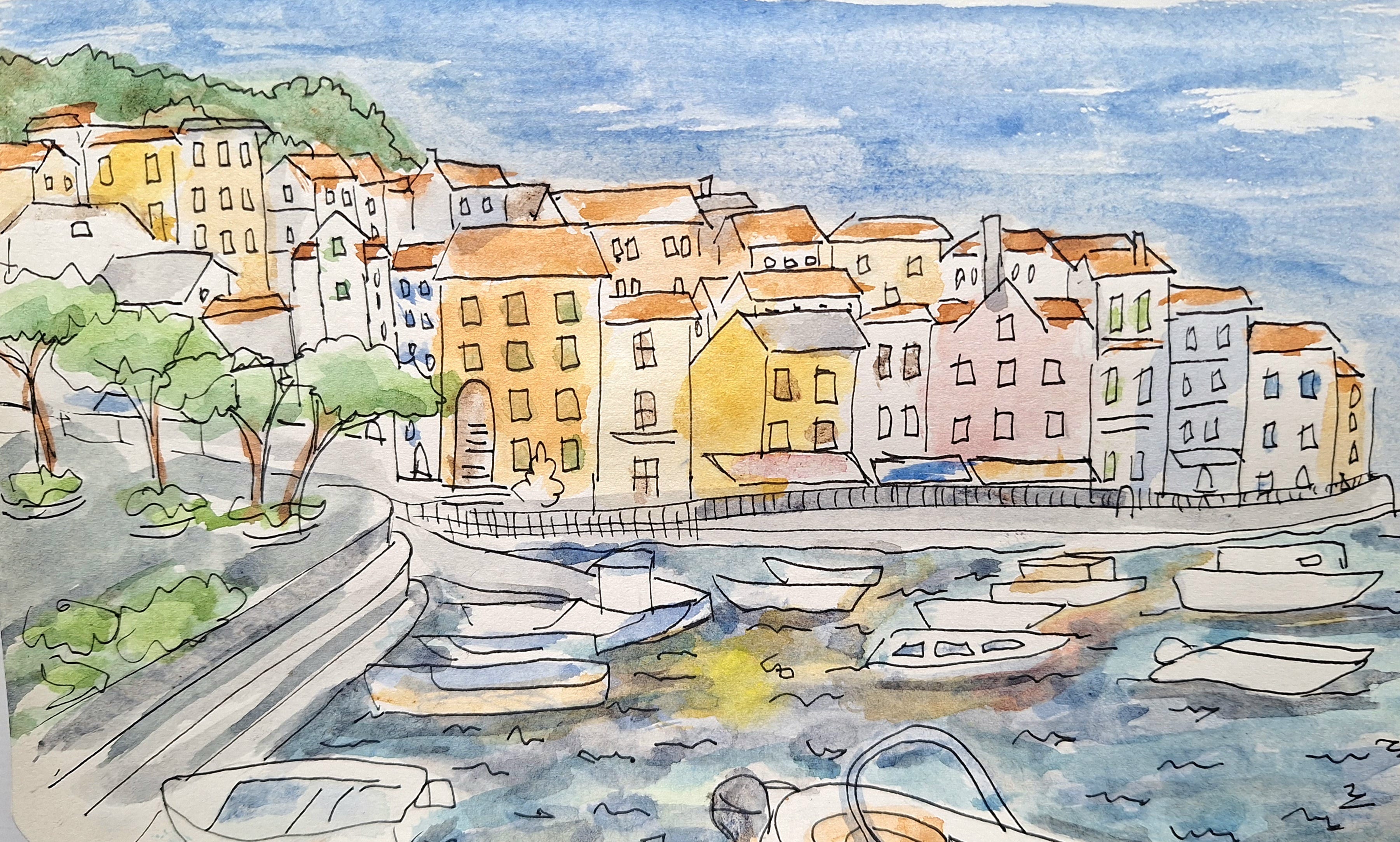
This is The Metamorphosis Map, where I explore change in life and at work, through the lenses of my passions: travel, sketching, culture, nature and learning.
If you enjoy this newsletter, please like, comment, send a one-off tip or consider becoming a paid subscriber and get a 1-1 creative change planning session.
The sign on the shore took aim at the beach hogs: “No saving spots by laying out towels and belongings”. It targeted tourists. But it didn’t put off the gulls.
As the clouds gather and the temperature drops from scorching to warm, human numbers dwindle on the coast - and birds take over.
This is the early autumn or “shoulder” season in Croatia. Along with late spring, it is also known as “velvet” season in the Black Sea and Balkan regions.
The term comes from Russian ladies visiting the seaside at the turn of the century, who wore velvet and other mid-weight fabrics in the cooler temperatures.
More than a hundred years later, I can appreciate why they liked it. Evidently, so can the increasing number of people who are traveling off-peak to avoid searing heat and infernal crowds.
The high season takes a huge toll in hot-spots all around the globe. Last year, more than 26 million people visited Croatia, about 10 million of them in July and August.
The Dalmatian coast is the most popular destination in Croatia. Loved for its mix of sunshine, beaches and heritage. Dubrovnik is king, partly due to its fame as the backdrop for the Game of Thrones TV series. It currently tops Europe’s “over-tourism” chart - with 27 visitors for every one of its 41,000 residents.
In the summer, the walled old town feels more like a theme park than a real city. Massive cruise ships disgorge thousands of tourists every day. They swarm around souvenir shops, expensive cafes and restaurants. It’s hard to spot a local person or an ordinary shop. And difficult to appreciate the architecture and landscape with so many people obscuring the view.
Croatia is famous for its rugged coastline and pristine waters. The Adriatic Sea is clear and warm. But mass tourism, along with extreme weather, puts a lot of pressure on water systems.
Recent floods in Kvarner Bay’s main city, Rijeka, caused damage to the sewage works. People had to drink bottled or boiled water. After rain along the coast, you can expect to see rubbish in the usually pristine sea. It’s a reminder that despite appearances, laws and regulations, pollution prevails.
Inland, the Plitvice Lakes also suffer from huge numbers of visitors each year. Soil erosion, plastic waste and disturbed wildlife are the main negative effects.
Some towns have responded by introducing on-the spot penalties for antisocial behaviour. The local economy thrives on tourist spend. But many locals are getting sick of visitors who treat their home as a backdrop for hedonistic sprees. Anyone urinating or vomiting in the streets of Split can now expect a fine of up to 300 euros.
Mass tourism pushes up the cost of living. Everything becomes more expensive. The average Croatian is 33 years old by the time they can afford to leave their parents’ home. Tourism is not the only factor, but it does contribute to the problem.
Even little things can have a big impact. Locals have been especially shocked by the rise in prices for their daily coffee. The average price of a cappuccino has risen by 18% in the last year. Summer treats like ice cream are worse, with the cost of a scoop doubling or tripling in the last couple of years.
Summers are usually hot in Croatia. It’s part of the appeal for sun-seeking tourists. But the past few years have seen a worrying upward trend in temperatures. Excess deaths are rising with the mercury, although the causes are complex and unclear.
By visiting in June or September, we usually avoid heatwaves. Conditions are more conducive to being active. There is less chance of heatstroke or sunburn. The air is fresh, not heavy and humid, and we don’t need to rely on air conditioners to stay cool.
There was no need for us to pick our way through a carpet of towels on our recent seaside holiday. There were more birds than people on the beach in September. Plus, the comfy sun loungers on the stony beach were free to use, since no one was around to collect the usual ambitious fees.
It was lovely to hear children playing in the school playground. Or pass locals having a drink in the cafe. Much better than getting stuck behind tourists staring at their Google Maps. And to hear more Croatian than German, Italian or English. It feels good to be in the minority rather than worry that you are taking over.
We usually drive to Croatia in an electric rental car, so we don’t see transport-related savings. Train and bus ticket prices don’t change much either. But for anyone flying to Croatia, it is likely to be a lot cheaper off-season.
In many restaurants, a normal menu replaced the over-priced tourist version. Most of our favourite activities are free at the beach - walking, running or swimming. We did lament that the SUPs and inflatable water slides had already been packed away. But we still managed to visit a water park on the last weekend of its operation, at a good discount.
There is less rubbish, congestion and general noise in the velvet season. You can hear the birds singing and the sound of the waves lapping on the shore. And the hub-bub of life rather than the loud backdrop of a summer frenzy of raucous fun.
Of course, one needs to be aware of the potential downsides. The weather is more likely to be changeable. It’s not like a British seaside holiday where indoor amusements may have to take over for days on end. But it is worth having some contingency plans.
The sea may be a little cooler. Although by the end of summer it has accumulated a lot of heat which takes a while to dissipate. We noticed patches of cooler water as we swam in the sea in late September, but nothing uncomfortable.
Huge variations in numbers of visitors versus inhabitants mean that many businesses close at the end of the high season. This can make for a quieter atmosphere or, at the extreme, a ghost town. On the island of Hvar 80% of businesses close in the winter.
But if you time your trip well and find a suitable balance of activities, this can be the perfect season to visit.
The question is, can increasing numbers of velvet season visitors help to spread the impact of tourism, or will it simply extend it?
What’s your view and have you or would you change when you take holidays?
Life is a journey and everyone’s map looks different. 🗺️
Thanks to Benthall Slow Travel for introducing me to the term “velvet season”.
Comments
Nothing yet. Say the first thing.
Sign in to join the conversation.