
This is The Metamorphosis Map, where I explore change in life and at work, through the lenses of my passions: travel, sketching, culture, nature and learning.
If you enjoy this newsletter, please like, comment, send a one-off tip or consider becoming a paid subscriber and get a 1-1 creative change planning session.
There is nothing like a road trip to put you in the driving seat for an adventure. Stop to admire a panoramic view or drop into a museum. Take a dip, hike or pit stop at a gorgeous spot. All at your own pace (and preferably in an electric vehicle).
I buckled up my seatbelt to write a chunk of DK’s 50 Road Trips in Europe, published by Penguin Random House.
The tours I describe in the book are:
Slovenia’s Julian Alps;
Albania’s Riviera;
Slovakia’s Tatra Mountains;
Croatia’s Dalmatian coast
This journey doesn’t just take you through old towns. It guides you around lakes that shimmer like jewels, winds along jade rivers and climbs over vertiginous peaks. The backdrop is Slovenia’s most beautiful landscape, Triglav National Park.
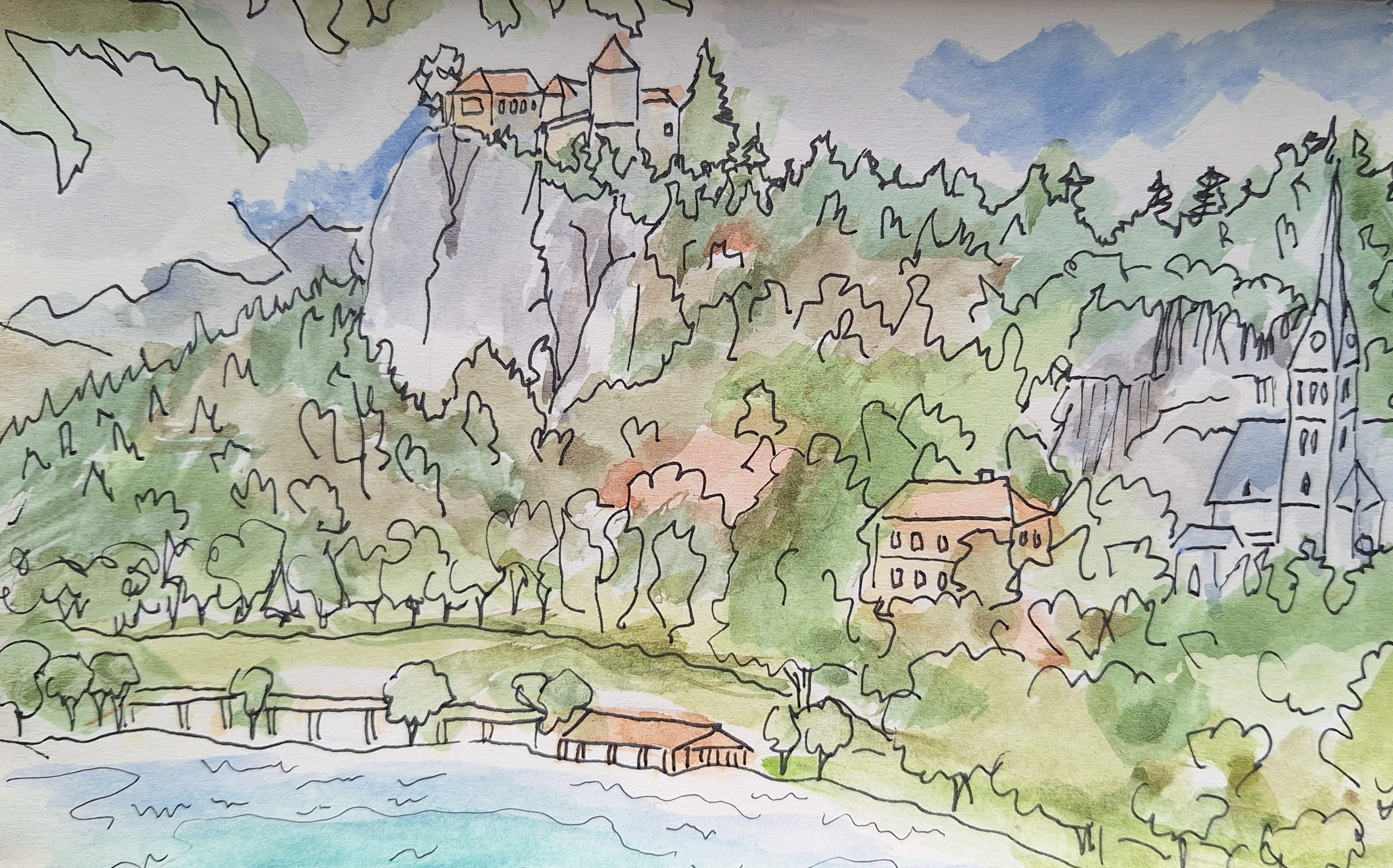
For this post, I want to hit pause at one of Slovenia’s most famous beauty spots, Lake Bled.
Bled - the town and castle, as well as the lake - has a long and chequered history. Its beauty is matched by its strategic significance, and over the centuries it changed hands many times. The Slavs first settled in Bled in the 7th century, while the castle on a cliff above the lake dates from the 11th. Over time, the town has fallen under Frankish, German, Illyrian, Austrian and finally Slovenian rule.
During World War II, the Nazis used the castle served as their headquarters for the entire region. Rumour has it that they threw the top secret Enigma code machine into the lake when they left - but it has never been found. In Yugoslav times, Tito and the Karađorđević royal family had residences in Bled. Slovenia’s government took full control of Bled at independence in 1991.
The area has always been famous for its outstanding natural beauty. English naturalist Sir Humphrey Davy described Bled as “the most beautiful place [he had] seen in Europe” at the turn of the 19th century.
Densely forested hills, snow-topped mountains, grassy banks and tree-lined paths surround the heart-shaped blue-green lake. A tiny wooded island with a church sits in the centre like an ornament. Steps down to the water make the approach by boat appear even more romantic. No wonder it’s a popular wedding location.
Bled’s thermal springs have attracted visitors since the 17th century. In 1855 a Swiss naturopath named Arnold Rikli put Bled on the map as a world famous health spa retreat. He created a programme of cold and warm baths, walks (often barefoot on grass) and sunbathing, with vegetarian meals for sustenance. All the while encouraging visitors to take in the spectacular scenery and clean air.
You can still experience treatments inspired by him at the Rikli Balance Hotel. Or DIY by enjoying nature and your choice of outdoor activities.
Admittedly, Bled is not without its flaws. Some visitors may find it a little too contrived and chocolate-box pretty, especially compared to the larger, wilder Lake Bohinj. One or two features at Bled can feel a bit kitsch, and it gets overcrowded in summer.
Ironically for a place famed for fresh air, the road that skirts its south eastern edge is choked with traffic at peak times. To avoid adding to congestion, take the train to Bled Lesce and pick up the shuttle bus from there down to the lake.
But I’m nitpicking. Bled is a fabulous spot, and one I always take visitors to see. And it’s not only visually impressive.
There are lots of ways to enjoy the lake and surrounding areas in summer or winter. All in typically sporty Slovenian style:
Walk around the lake (6km, mostly away from traffic) or up to the castle (130m);
Go hiking and rock climbing; or
Ski (downhill or cross-country) or snow-shoe in the surrounding mountains;
Swim (designated areas only) or row across the lake;
Go horseriding;
Cycle around the lake, to Vintgar Gorge or in the mountains;
Zipline over the trees and river nearby;
Hire a SUP or kayak to paddle around the lake;
Take a boat trip to the island and church;
Speed down the luge, enjoying panoramic lake views.
If you’re in need of a pick-me-up after all that, take a moment to relax with tea and cake on the terrace of the Park Hotel, on the shore opposite the castle.
The view is spectacular, as is the kremsnita, a classic cream cake and speciality of the house. Be warned, you may want to share it - it’s quite rich and you get a generous slice. Or else polish off the whole thing. Then throw yourself into some more activities to work off the calories.
Whether you choose to take it easy, be moderately active or go wild, enjoy Bled.
To find out more about the Julian Alps and other routes around Europe, or to order a copy for a Christmas gift, click here.
Life is a journey, and everyone’s map looks different. 🗺️
Comments
Nothing yet. Say the first thing.
Sign in to join the conversation.