
Last week I wrote about how the shipping industry approaches loss: you can read part 1 here. I talked through 'loss prevention': the practice of ensuring (and insuring) the absolute minimum of accountability, the legal process of preempting and attacking any possible friction along the supply chain. This week I want to think through the loss that overreaches any legal or financial articulation. I want to think about the losses incurred through the war on our species-being, the war waged through (and by) logistical capitalism, from the transatlantic slave trade to today.
Over the course of a few days in Winter 1781, somewhere to the West of Jamaica, slavers aboard the British ship Zong threw 142 abducted Africans overboard. Tim Collingwood, the ship’s captain, said that this was because the ship had got lost and they were running out of water. After it rained and they replenished their water stores, they threw more over anyway. When they arrived in Jamaica, they auctioned off the enslaved people and then filed an insurance claim for their 'lost cargo'.
How do you account for loss at a scale that goes beyond any of the contexts in which it's framed — when the law or processes of accounting aren't just inadequate to describe it, but actively involved in producing and sustaining it? I want to start with Zong! #11 from M. NourbeSe Philip's Zong!, a poem cycle composed from fragments of the legal text of Gregson v Gilbert, the case that followed after the slavers sued the insurance company for refusing to pay out.
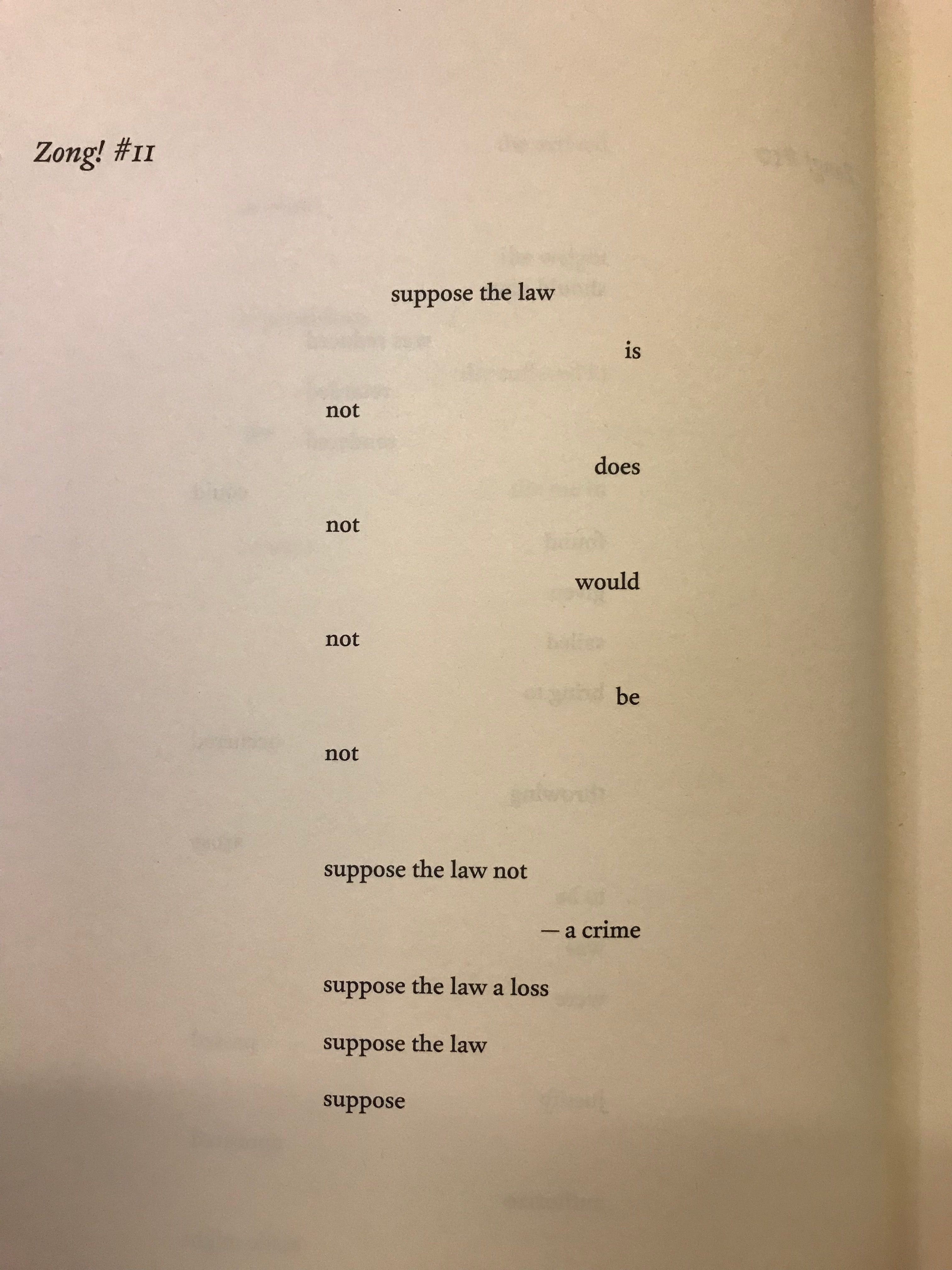
What does it mean to' ‘suppose the law a loss’? The case was one of maritime insurance; murder was never discussed. One reason the slavers gave for throwing them overboard is because the insurance claim did not cover ‘natural death’ of those kept in the hold. In her book In the Wake, Christina Sharpe asks “A natural death. What would constitute a natural death here? How could their deaths be natural? How can the legally dead be declared murdered?”. The courtroom here operates as part of the production line of loss: the conversion of unaccountable and unquantifiable horror into the metrics of capital accumulation. In a piece by Tim Armstrong (quoted by Sharpe) he notes that “Captain Luke Collingwood thus brutally converted an uninsurable loss (general mortality) into general average loss, a sacrifice of parts of a cargo for the benefit of the whole.” What is the whole here, or what is the relationship between the whole and the hold?
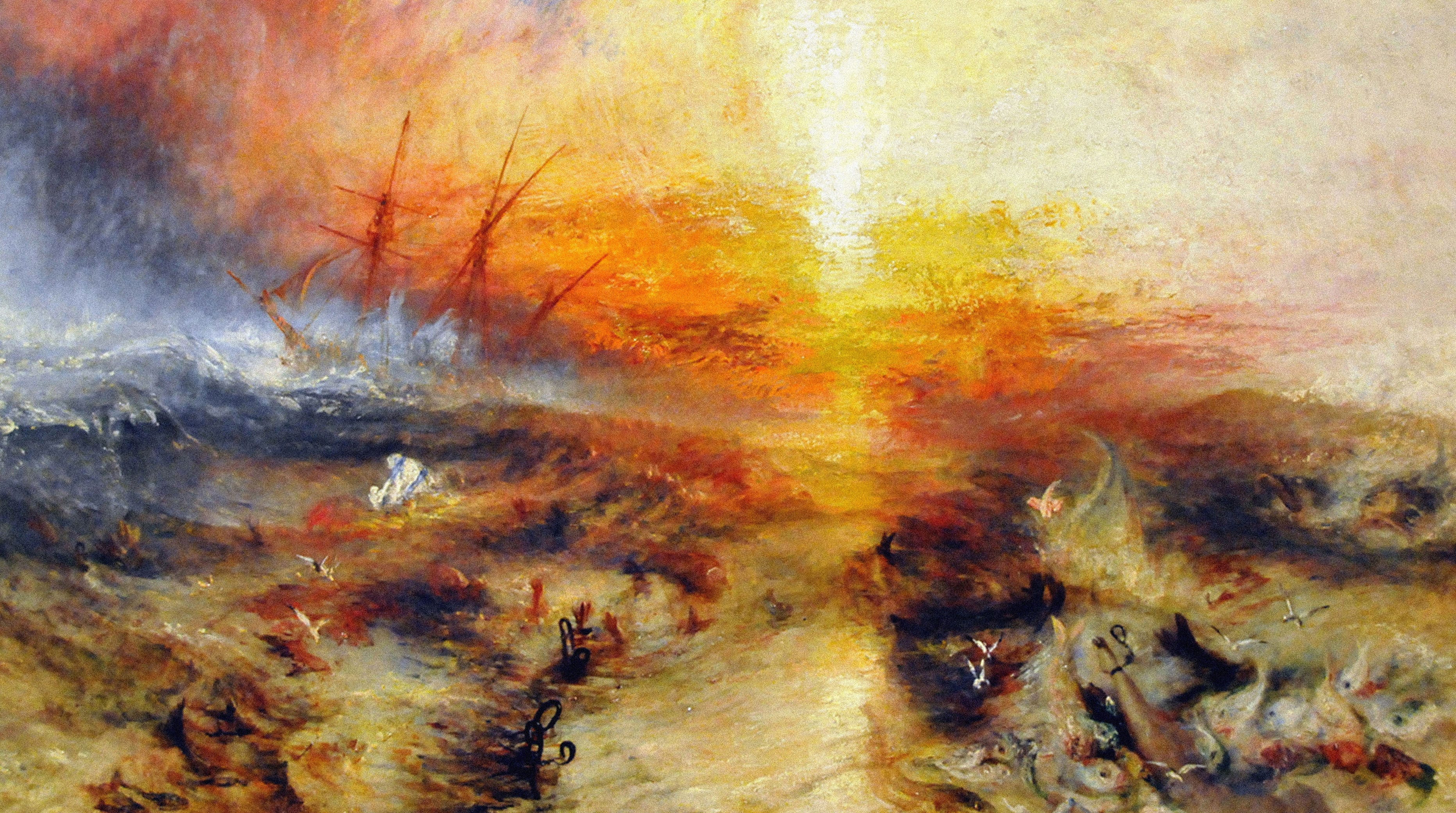
Turner’s painting is generally known as just ‘The Slave Ship’, but its ‘real’ name is ‘Slavers Throwing overboard the Dead and Dying—Typhon coming on’. He made it a year after The History and Abolition of the Slave Trade was published, in which he read about the Zong massacre, and its generally understood that the painting is about that. But why the addition of the typhoon to the course of events? What difference would a typhoon make to those already legally dead, already killed at the point of abduction? Who, once placed in the hold, isn’t already dying?
Christina Sharpe and M. NourbeSe Philip have already answered my question about how to account for the Zong’s unaccountability, way better than I ever could. But I do want to look at the wake of the Zong case, and its ripples in the practices of abandonment that are on the rise today.
Marine insurance was the first ‘developed’ form of insurance, the one that formed the general structure of capitalism’s safety nets today. Slavers required support from the British Navy and marine insurance, both of which expanded greatly through the transatlantic slave trade. One key architect of the law that accompanied (and facilitated) the insurance underpinning the slave trade is Mansfield, the Lord Chief Justice who presided over the Zong case. There seems to be a tract of writing that defends Mansfield, on the basis that he was carrying out his project of building a solid framework for commercial law (goes without saying that these scholars are not particularly critical of commercial law and who it serves): Kirkler, for example, notes that Mansfield’s handling of the Zong case was “not merely cruel but bizarre unless seen in the context of his life-long determination to protect the emerging system of law (particularly commercial law) and to ensure that the law remained as certain as he could make it.” One thing the Zong case did was firm up the ‘principle of abandonment’: “the principle by which owners could, as it were, abandon their all-but-lost property to the insurers and claim its full value.” (that’s Kirkler). But this analysis overlooks the key thrust behind the case, the legal climate that has become the Zong’s wake: the construction of mechanisms of generalised unaccountability that exclude the labour (or lives) of those who work the supply chain.
Cases of abandoned ships or stranded crews are dramatically on the rise. These cases, defined by cutoff of communication between a ship owner and seafarer, leave crews stranded on boats without pay, visas, food, or the means to return home. These abandonments take place in the nonspace of international law, where a ship can be owned in Japan, operated in Taiwan, handled in Germany, crewed by Syrians and flagged in Panama (such as the case of the Ever Given), a cherrypicking of maritime law and wage expectations to minimise risk and maximise profit. Laura Carballo, head of maritime law and policy at World Maritime University in Malmo, Sweden, notes that “The laws and regulations haven’t kept up with how modern and global shipping is now… The way shipping is set up makes these abuses possible.”
Since the Beirut port explosion (which was, incidentally, caused by Beirut port begrudgingly and improperly storing ammonium nitrate left on board an abandoned ship in 2013), ports have grown wary of allowing crews to leave the ships that they are no longer paid to guard. They opt instead to effectively impound the ships and their crews, leading to the proliferation of floating prisons. Rather than pay security to watch over the ships, they leave it to unpaid workers. I’m not suggesting a neat continuity (and definitely not an equivalence) between the transatlantic slave trade and the conditions of this new form of modern slavery, but the latter certainly exists in the wake of the former. Or maybe you could say that in the cases of abandoned seafarers, the whole ship is now the hold. Or that through abandonment, the entire ship is now in the hold of the new logistical capitalism, the modality of capitalism that the transatlantic slave trade built the foundations of.
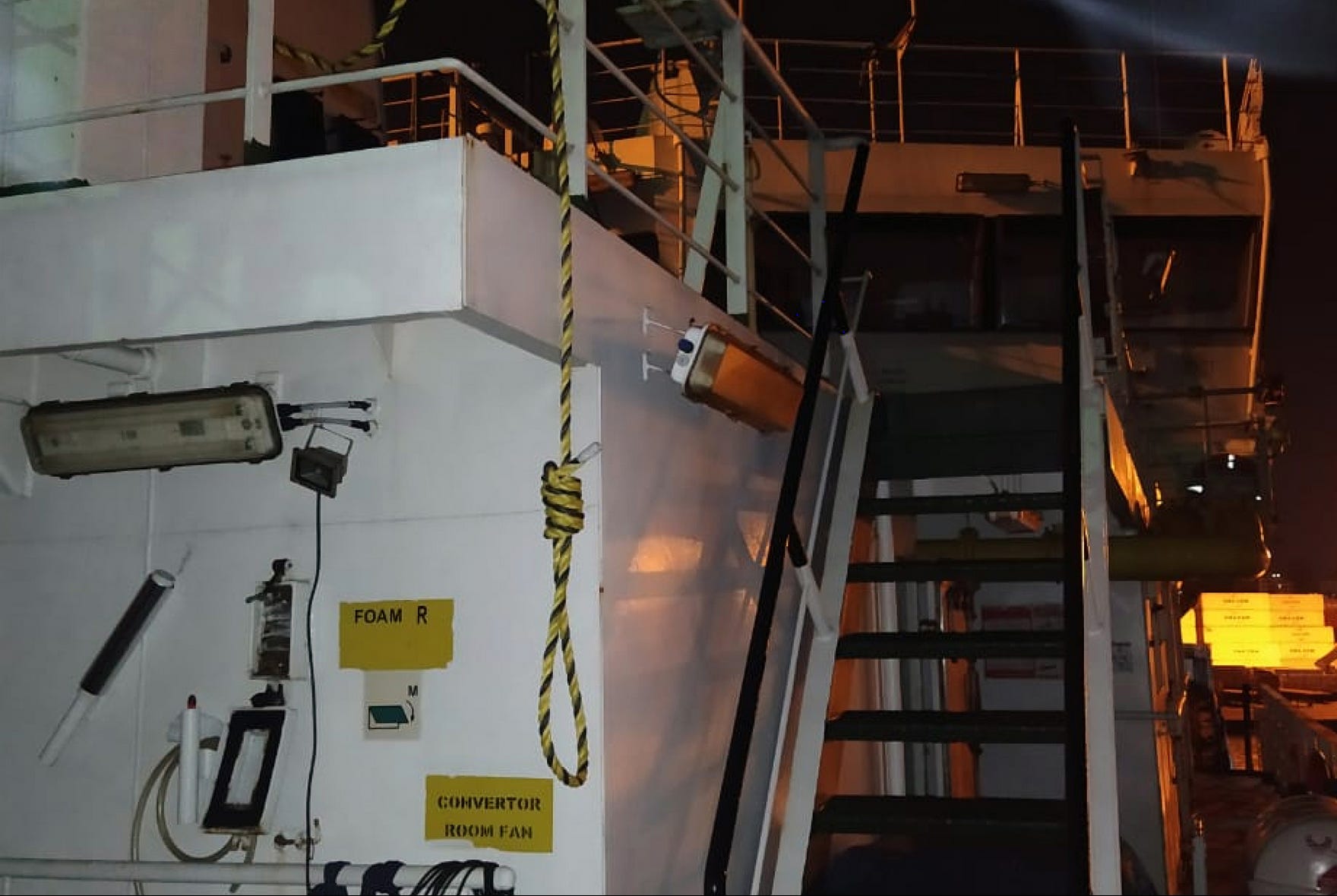
Samig Nabiyev, the captain of a ship called Captain Nagdaliyev, was moored up 900m out to sea when Beirut port exploded. They were there because they’d been abandoned by Palmali, a Turkish shipping company, who long ago had stopped paying their wages. The ship was abandoned in March 2020. Every so often The International Trade Federation drop off fuel and instant ramen. One day Nabiyev came down and found a noose hanging on the deck. Its unclear as to whether its a warning, an expression of the mood on the ship, or a kind of sculpture that generalises the entire situation of the ship and how its been put to death by logistical capitalism. The crew were eventually repatriated in March 2021, a year later, following a drawn-out dispute. It’s early December now, and the ship is still there.
No posts
Comments
Nothing yet. Say the first thing.
Sign in to join the conversation.