
Welcome back to Intersections,
In honor of Pride Month, this edition is a special feature from our Chinese-language sister publication Tian Jian (田間) about the China Rainbow Media Awards, a civil society initiative launched 15 years ago to build working relationships between journalists and queer communities.
While the awards ceremony has not been held in China since 2019, and restrictions on the coverage of LGBT+ issues have tightened, the community continues to publish an annual survey documenting the shrinking space for journalism on LGBT+ issues.
I hope you enjoy this insightful story. As always, I welcome your thoughts and suggestions. Please share this bulletin with others.
Happy Pride to all of you!
Dalia PareteCMP Researcher
dalia@chinamediaproject.org
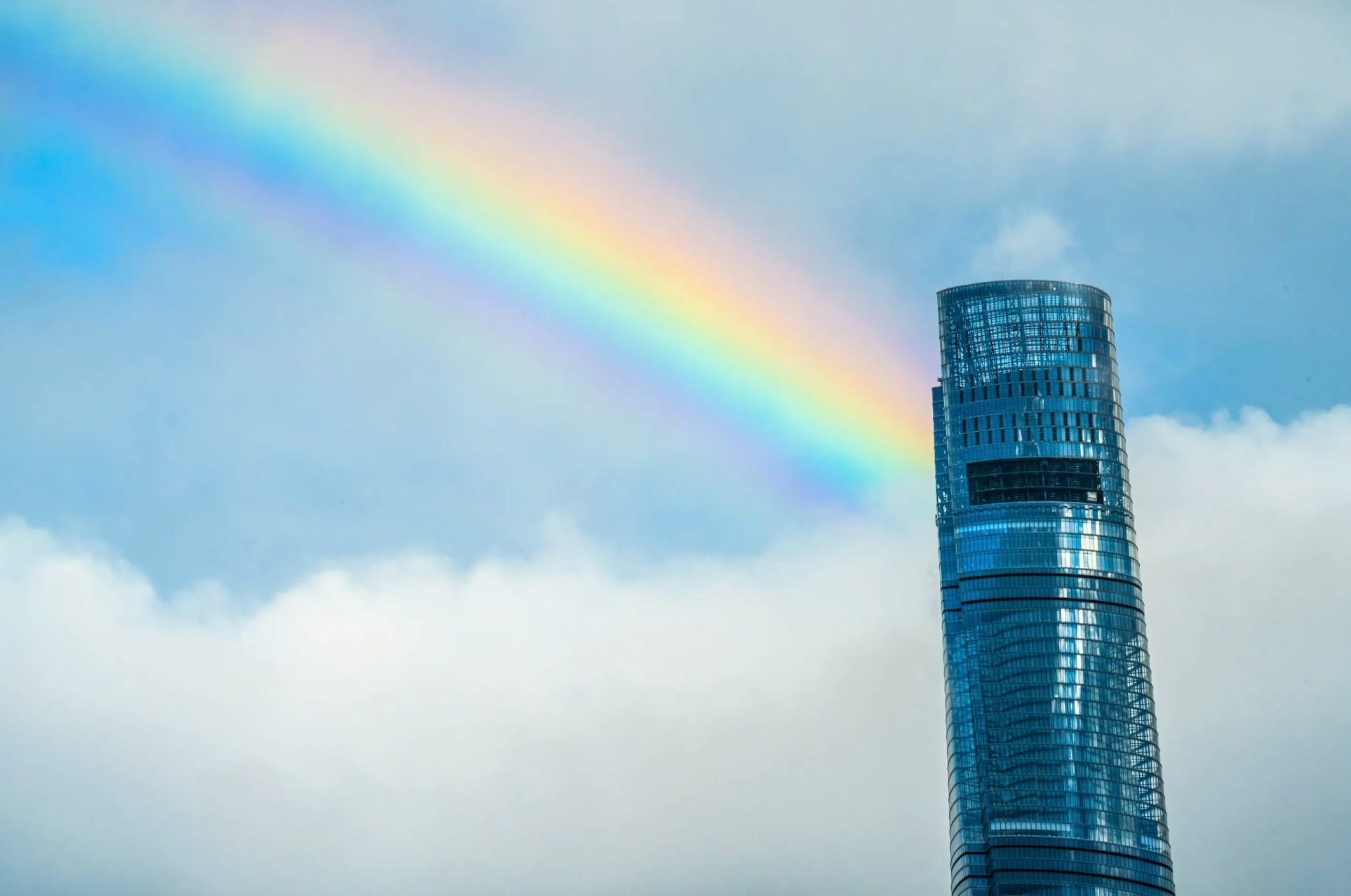
On May 17 this year, International Day Against Homophobia, Biphobia and Transphobia, the British Embassy in China published a post on two of China’s top social media platforms, Weibo and WeChat, that looked back on nearly three decades of developments for gay, lesbian, and queer communities in China. The post — “Is the Rainbow Over?” — immediately drew attention in China, with views on WeChat alone spiking to 100,000, the maximum permitted number of views that can be displayed on the platform.
One notable absence from that post was any mention of China’s first award recognizing media coverage of LGBT+ issues: the China Rainbow Media Awards (中國彩虹媒體獎).
Founded in 2011, the awards were established to recognize individuals and media outlets that gave voice to queer communities, and beginning in 2012 the organizers also published an annual media monitoring report looking more broadly at coverage of queer communities in China. While the annual awards ceremony has not been held since 2019, the organizers have consistently published their monitoring report. The 2025 edition was released on May 17.
Building a Bridge with Journalists
Xiaogang, one of the founders of the China Rainbow Media Awards, told Tian Jian that one of the key objectives in the 2010s was to better connect the queer community with media. A civil society initiative, the awards worked proactively with mainstream media journalists to build that relationship. “The biggest change around 2019 was to foster the collaborative relationship with journalists,” he said.
He noted that queer people in China at the time were looking for every possible avenue to expand their activities. “The media was of course a very important part of that,” he said. Pointing to examples like GLAAD in the United States, which conducts media monitoring, and noting that engaging government and society in dialogue requires data and evidence, the organizers decided to publish a media monitoring report.
Xiaogang recalled that in the early years of the China Rainbow Media Awards, media coverage of gay, lesbian, and queer issues tended to be negative, associating those identities with strangeness, danger, and even criminality. Around 2015 and 2016, however, a significant shift occurred. Not only did the volume of coverage related to LGBT+ topics increase, but reporting from a rights-based perspective also grew. As a result, a greater diversity of voices emerged. “That included transgender voices, and even the voices of people who had undergone gender reassignment surgery, gradually being brought into the conversation,” said Xiaogang.
Queer community organizer Miaoyan began participating in the China Rainbow Media Awards in 2015. He said the work at the time grew out of a desire to raise the visibility of queer issues, and involved helping NGOs navigate their relationships with the media. The awards served as a bridge, helping media better understand queer communities while also helping NGOs understand what journalists needed. “When reporters came to interview them, the NGOs always tended to talk a lot about ideas and principles,” he said. “But what mattered more was getting the people directly affected, or the community organizers, to tell a story.”
In the decade up to 2018, Miaoyan said, China’s media environment was relatively open. In those days, he added, queer issues were treated more as cultural topics, and because no large-scale social movements had coalesced around them, the political climate was milder by comparison. “A lot of media outlets were willing to and really wanted to cover these issues,” he said. Still, he acknowledged that early coverage often reflected a poor grasp of basic concepts, along with entrenched bias.
The awards served as a bridge, helping media better understand queer communities while also helping NGOs understand what journalists needed.
Making Space for Dialogue
Aside from fostering communication between NGOs and the media, the China Rainbow Media Awards ran training workshops for journalists. “We didn’t just want to critique problems in coverage,” said Xiaogang. “We wanted to do something constructive.” The idea initially was to bring together journalists who were already sympathetic to gay, lesbian, and queer communities and wanted to report on these issues well. That impulse led to the first workshop, held in Guangzhou in 2012.
Miaoyan said these workshops were held twice a year — once before the awards ceremony, for journalists attending the event, and once specifically for journalists interested in covering queer topics.
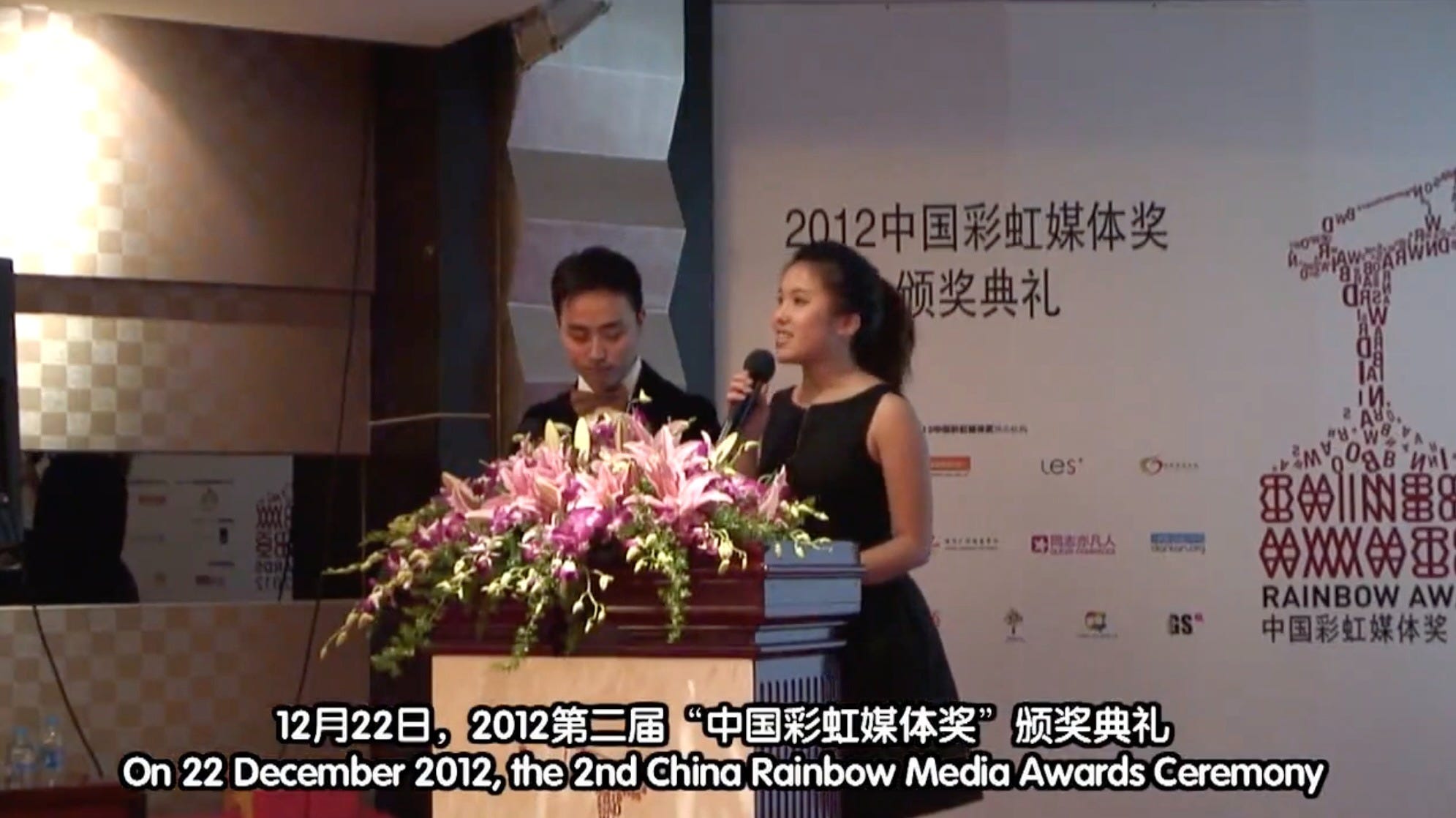
Xiaogang said this journalist training had a particularly significant long-term impact. “It was essentially building a network of friendly journalists year by year,” he said, “not just in major cities, but in third-tier cities too.” Some participants went on to play instrumental roles in their own communities by organizing related events.
Training always began, said Miaoyan, with a basic introduction to gay, lesbian, and queer issues, and subject-matter experts were brought in to raise awareness. Participants also heard directly from people personally affected by the issues being covered, as well as from journalists who had reported on them. They shared what they’d encountered during the reporting process, including how to handle pressure from editors and how to navigate censorship.
Thanks to these workshops, the volume of gay, lesbian, and queer coverage in Chinese media gradually increased. After 2018 and 2019, however, coverage declined. Miaoyan pointed to several causes, including the rise of social media platforms, a ban on public events held by queer organizations in China since 2020, and increasingly tight media restrictions. Together, these factors have driven a steady reduction in queer-related coverage.
On August 13, 2020, ShanghaiPRIDE, the longest-running annual gathering of sexual minorities in China, announced it was ceasing operations. That announcement marked the start of a wave of suppression that would affect gay, lesbian, and queer organizations and campus groups across China in the years that followed.
The restrictions have since extended beyond locally organized activities to foreign organizations hosting activities in China. Le Monde reported on June 10 this year that the Beijing office of the Institut Français, France’s cultural promotion agency, had planned to hold a film festival, screening films that explored gender identity and same-sex relationships. The phrase “Pride Month” in the program booklet reportedly drew the attention of Chinese authorities. According to the Le Monde report, the French cultural center refused police demands, which included checking the identity documents of audience members and screening the films in advance. The event was ultimately canceled.
On August 13, 2020, ShanghaiPRIDE, the longest-running annual gathering of sexual minorities in China, announced it was ceasing operations.
Angus, who chose to speak to Tian Jian under a pseudonym due to professional concerns, said he began paying attention to gay, lesbian, and queer issues around 2020, though by that point public activities were already scarce. He attended one China Rainbow Media Awards training workshop and one conference on queer issues.
“These kinds of workshops and training opportunities actually created a space where people could come together and discuss things,” Angus said. “That kind of discussion could spark new reflections, new learning, new feelings in people. It might then shape their future reporting.”
Losing Ground on Policy Coverage
Angus noted that gay, lesbian, and queer reporting in China often followed legal cases in the courts, such as the case brought by Qiubai, a student who sued China’s Ministry of Education in 2015 over textbooks that classified homosexuality as a mental disorder, and the case brought by Xixi, who sued a textbook publisher in 2017 over similar content, with the case finally tried in 2020. Once a lawsuit was filed, media often followed up with the individuals involved as well as relevant experts. Even when cases were not won, the process still shaped public discourse.
Both cases ended in defeat for the plaintiffs, but they generated important public discussion about the depathologization of homosexuality. Even this kind of lawsuit has now become rare, Angus said. Without a court willing to accept a case, there is no vehicle to drive public discussion, and media coverage follows accordingly.
Chen Liya, who joined the Chinese outlet Q Daily (好奇心日報) in 2017, noted that the same year, China’s Network Audiovisual Program Service Association (CNSA), a state-directed industry body that sits at the center of China’s online video and streaming governance, issued regulations on content review for online audiovisual programs. The regulations listed categories of content subject to censorship, and under the heading “promoting obscenity and pornography,” homosexuality was listed alongside incest and sexual crimes. “That was a pretty important turning point,” she said.
Chen told Tian Jian that when she first began covering queer issues, the restrictions “weren’t so obvious.” The topic wasn’t taboo, and coverage could take relatively pointed angles. It didn’t have to be soft, human-interest storytelling. But as the overall media environment tightened, the changes became unmistakable: gay, lesbian, and queer social media accounts were shut down, published articles were taken down more quickly, and the angles available for reporting shifted accordingly.
She noted that even now it remains possible to write about individuals, personal cases, and emotional experiences. But it has become very difficult to go further and examine what institutional structures, policies, or social systems have created the conditions these individuals face. “I think that’s still a problem with media coverage of queer issues today,” she said. “A lot of reporting still gets stuck at the level of sympathetic personal stories, without ever really getting into structural analysis.”
“If we’re talking about the media environment overall, it has genuinely gotten worse across the board,” Chen said. At least in earlier years, she noted, coverage hadn’t completely disappeared. Today, however, the spaces that once existed, even just as cracks, have become smaller, more hidden, and harder to see. “Many things are silenced before they ever truly enter public discussion.”
Chen told Tian Jian that when she first began covering queer issues, the restrictions “weren’t so obvious.” The topic wasn’t taboo, and coverage could take relatively pointed angles.
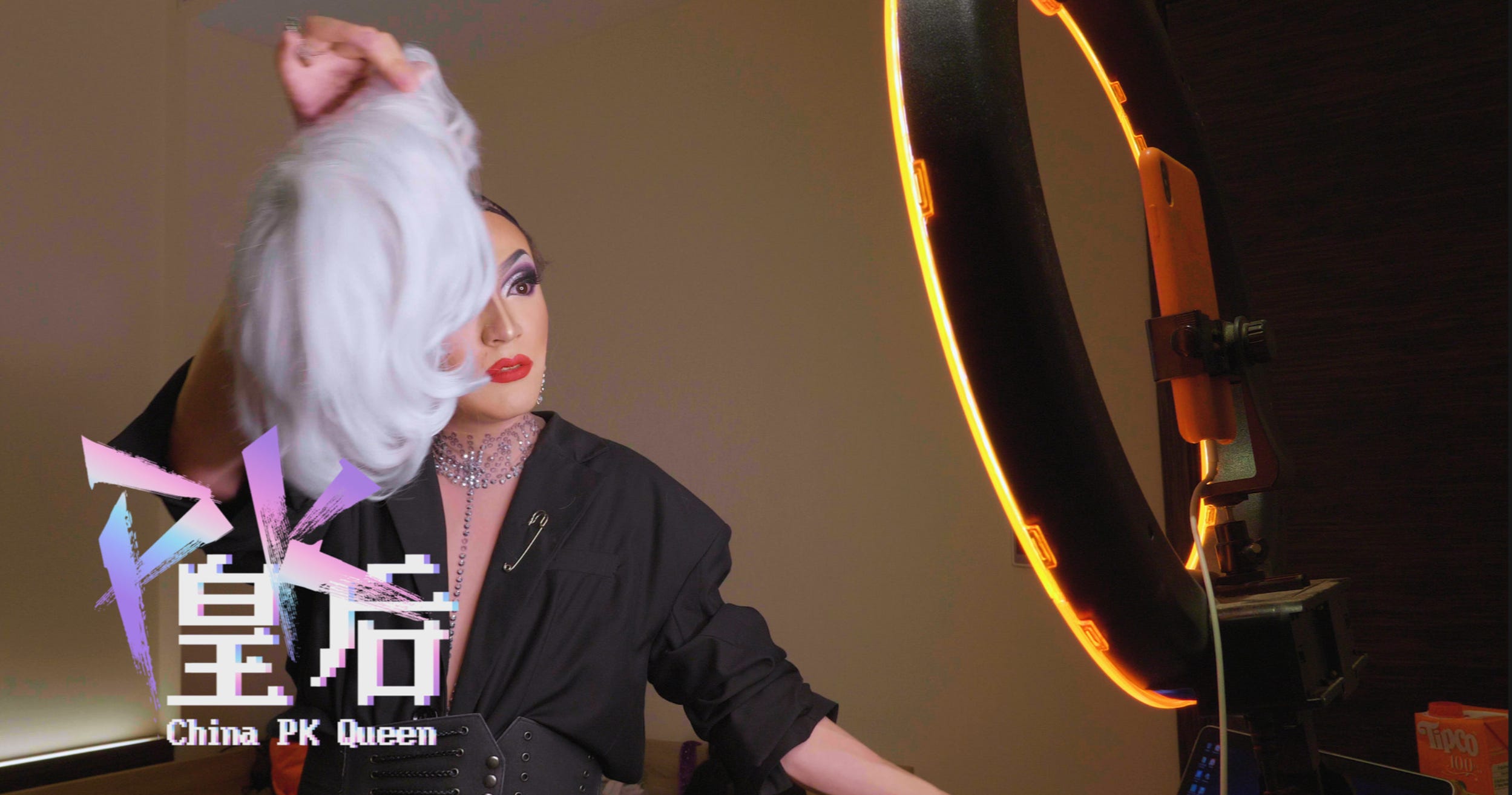
Chen’s 2018 piece on the #IAmGay hashtag, which gained 240 million views overnight before the topic was suppressed, was nominated for a China Rainbow Media Award. A piece by her colleague, examining a lawsuit that was never expected to win and the gay individuals involved who wanted to avoid stigma, won the Best Online Report award at the 2019 China Rainbow Media Awards. Q Daily faced several forced suspensions before ceasing operations entirely in 2020.
The Growing Importance of Social Media
“The volume of coverage actually reflects how much space existed in a given year,” Miaoyan said. “And that’s not just space for the media, but space for civil society.” Both he and Xiaogang noted that the increased visibility of gay, lesbian, and queer issues in earlier years had led them to believe that visibility would only continue to grow. Instead, the situation has reversed course, falling behind where things stood five or even ten years ago. “Comprehensive reporting that incorporates a rights and gender perspective is becoming increasingly rare,” Xiaogang said.
According to the monitoring report, original queer-related reporting reached 762 pieces in 2018. By 2025, that figure had fallen to 163. Miaoyan explained that the monitoring report counts only “original reporting,” meaning the first outlet to publish a piece, with subsequent reposts by other media counted as the same item.
Xiaogang noted that the monitoring report still focuses primarily on mainstream media, meaning outlets run directly by the Chinese Communist Party, because such media reflects the attitudes (態度) of the Chinese government. “And those attitudes are particularly important to us,” he said. “We keep a constant eye on them, pushing for change, and the process itself influences others.”
Ah Qiang (阿強), a queer activist who also contributed to the Rainbow Media Awards, said China’s Party-run mainstream media hold a natural advantage when it comes to influencing official positions, and that continuing to monitor it is essential if you want to affect those in power. There is no need, however, to exaggerate its authority, since the media landscape is constantly changing. “For the generation born in the 2000s, their primary news source is definitely not Such-and-Such Daily or Such-and-Such Daily News,” he said. “It’s Xiaohongshu, or Douyin, or something else.” When it comes to driving cultural and social change, he said, influencers and independent content creators are far more impactful than the official mainstream media.
No posts
Comments
Nothing yet. Say the first thing.
Sign in to join the conversation.