
Google engineers live on a ladder from Level 1 to Level 10. The top rung is Google Fellow: an honor the company says will follow you for life.
Above it sits a tier almost nobody reaches: Level 11. Senior Fellow.
In twenty-seven years exactly two people have ever held it: Jeff Dean and Sanjay Ghemawat. On Wednesday both resigned.
Hours later Nobel laureate Demis Hassabis stepped back from day-to-day leadership of Google's AI lab.
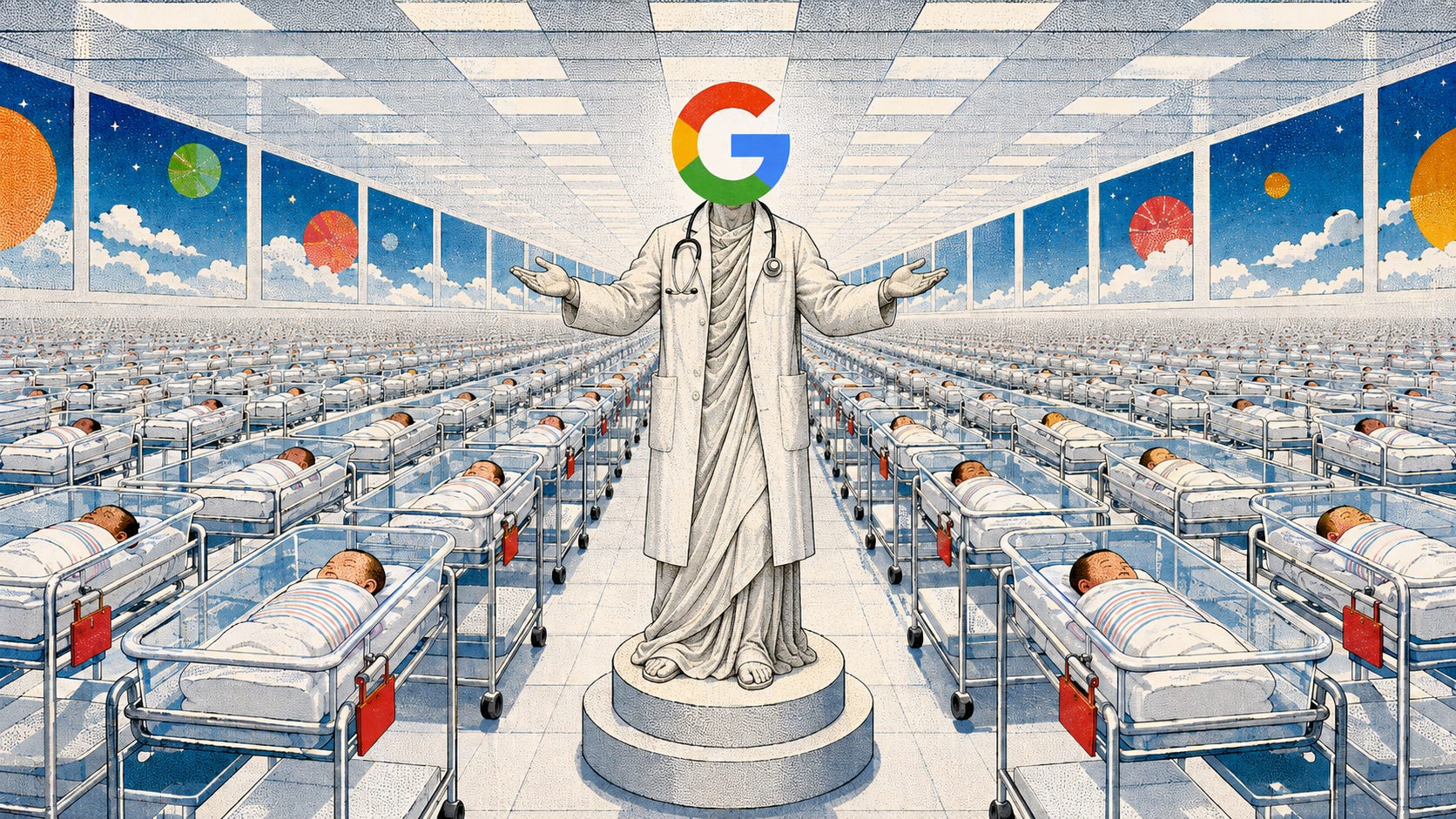
By close the market had taken roughly $160 billion off Alphabet. But this raises a strange question: what, exactly, did Google lose?
-Josh
🔑 Thanks to Ledger Agent Stack 🔒
👉 Agents propose. Humans approve. Your Ledger signer enforces.
Jeff Dean joined Google in 1999 as one of its first thirty employees. The entire company sat above what is now a T-Mobile store in Palo Alto. He and Sanjay became the most famous pair-programming duo in the field, and they wrote the foundational software that let Google scale from a search engine on cheap hardware to a global computing platform.
One paper they published in 2004 effectively launched the entire big-data industry. Dean later co-founded Google Brain as an internal AI research lab and championed the TPU: a custom chip purpose-built for AI workloads. He calculated that three minutes of daily voice search per Android user would force Google to roughly double its datacenter footprint. They designed a chip in fifteen months instead. That chip lineage now powers Gemini and is starting to ship to outside customers and compete with NVIDIA.
Demis Hassabis was a chess master at thirteen, the co-designer of Theme Park at seventeen, and the winner of the 2024 Nobel Prize in Chemistry for AlphaFold. He is now Chairman of Google DeepMind and Chief Scientist of Alphabet, freed to work his best lane at the company’s highest level. Koray Kavukcuoglu, DeepMind’s CTO for over a decade, takes over daily operations and owns Gemini 4.
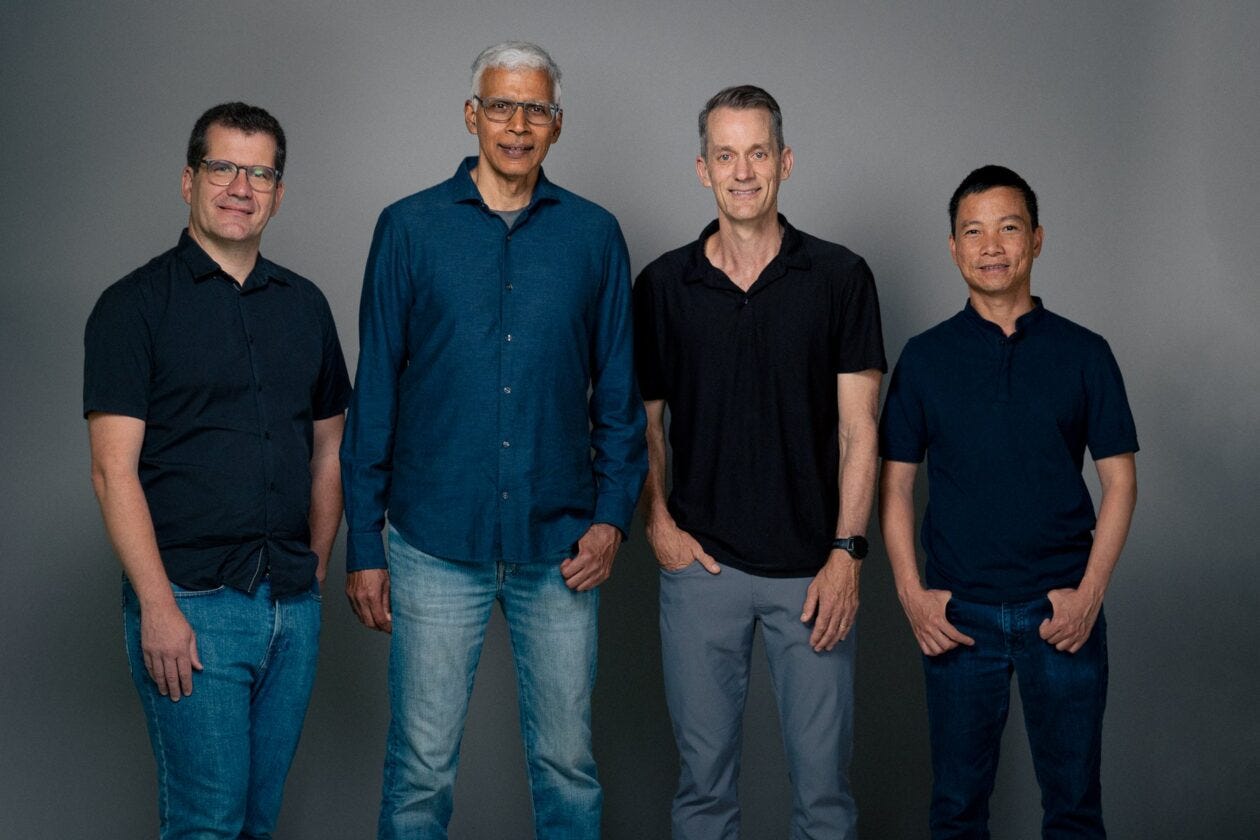
Leaving with Dean and Sanjay are Oriol Vinyals, a former top-ranked StarCraft player in Spain who built AlphaStar and co-led Gemini’s technical development, and Quoc Le, who grew up in a Vietnamese village without electricity and went on to co-found Google Brain. The four have worked together for as long as three decades. Their new company, Discovery Loop, is a public benefit corporation whose mission is to “automate the experimental loop”: propose a hypothesis, run the experiment, evaluate, iterate… thousands of times in parallel with an initial focus is automating ML research itself.
Here’s the kicker: Google is a founding investor and exclusive cloud provider.
In 2017 Google published “Attention Is All You Need,” the transformer paper that made modern AI possible. All eight authors eventually left.
Ex-Google talent seeded OpenAI, Anthropic, and more. The Fairchild Semiconductor comparison has been made for years: the parent that produces legendary defectors and watches them build trillions in value elsewhere.
This time Google put itself on the cap table. It paid $2.7 billion to license Character.AI and bring Noam Shazeer back as a Gemini co-lead. It holds roughly 14% of Anthropic, a stake valued at approximately $124 billion in the July SEC filing. And it is a founding investor in Discovery Loop, where every dollar of compute Dean’s company burns shows up as Google Cloud revenue. At least Google is charging its children rent.
Of course none of this comes free. Shazeer left again in June, this time for OpenAI. Nobel laureate John Jumper left for Anthropic the next day. Gemini 3.5 Pro was delayed in July for coding performance work.
Polymarket gives Google roughly a 7.6% chance of fielding the top-ranked AI model this year. On the leaderboards Google looks pretty cooked.
But underneath all of this, the business is approaching half a trillion dollars in annual revenue and still accelerating. Search grew in the AI Overviews era after three years of analyst predictions of cannibalization. Cloud is the fastest-growing segment at any hyperscaler, with over half a trillion in contracted backlog already signed.
Google owns the search distribution, the mobile operating system, the video platform, the cloud infrastructure, the custom silicon, and now a piece of every major company its best people have gone on to build.
Frontier-model bragging rights rotate every few months… but distribution, infrastructure, and equity stakes compound permanently. The org chart changed on Wednesday but the machine underneath it did not, and nothing in their earnings report signals slowing down anytime soon.
👉 Visit developers.ledger.com to find out more about Ledger’s Device management kit for AI Agents.
Thanks for joining us for our latest issue. Now go listen to our podcast :)
No posts
Comments
Nothing yet. Say the first thing.
Sign in to join the conversation.