
I was intrigued when my publicist told me an interviewer was interested in my humanitarian activities. Somewhat flippantly, I asked whether being an activist mother of a neurodivergent child would count? It turns out the answer is yes, but I admit the idea of speaking about my son, and my experience as his advocate and caregiver, within the context of making my music, was extremely unnerving. But, as I’ve said elsewhere, being somewhat nervous is often a signal to me that I’m moving in the right direction.
Here are few extracts from the Jejune interview (see the link below for the full article):
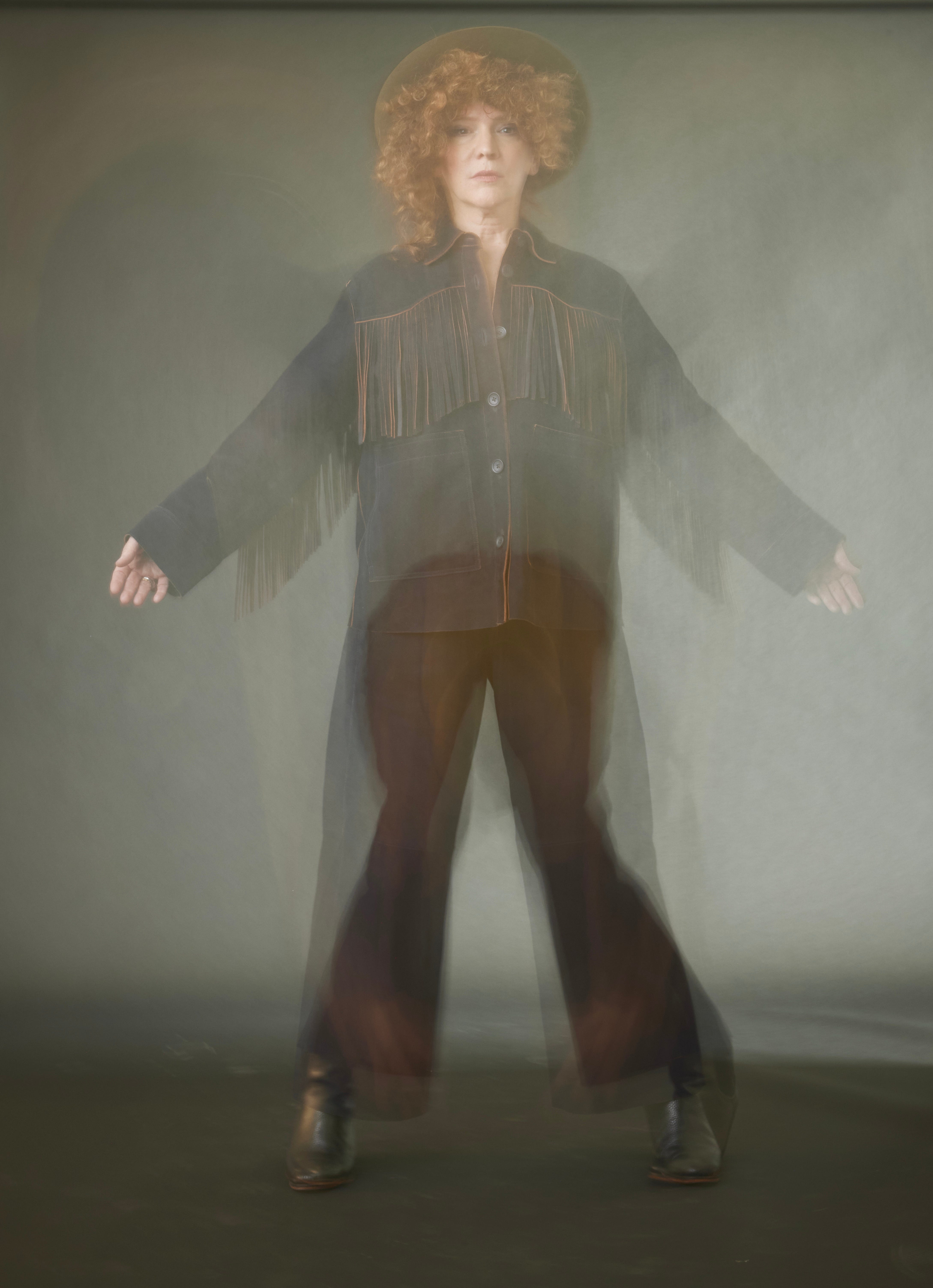
“Lily Vakili’s artistic journey is as multifaceted as the life she’s led—spanning law, dance, human rights work, and now, a deeply personal return to music under her own name. With the upcoming release of Oceans of Kansas, Vakili opens a new chapter that blends vulnerability with bold sonic experimentation. From navigating change to embracing her role as a mother of a neurodivergent child, her insights reveal a compelling artist grounded in truth and transformation. Read below to find out more about Lily’s evolution, her latest music, and the stories that shaped them.
What inspired you to get into music?
When I was a child, I was first inspired to make music because listening and dancing to music was such a central part of my family’s home life. My parents’ musical tastes were wonderfully eclectic: jazz, big band, salsa, bossa nova, Persian, classical. The influence of my older siblings was also profound, especially my eldest sister, who had an acoustic guitar and played the folk songs of Joan Baez. I made the decision to make music and songwriting a vocation much later in life, when, for so many personal reasons, I felt an intense need to express myself as, and make of myself, an artist.You’ve chosen to record under your own name again rather than the Vakili Band, signaling a new artistic area. What does using your own name mean to you this time around?
It means everything. It means I’m willing to accept my work as my own (no hiding!), and it also means I accept the different level of exposure that comes with it. It is proving to be a very distinct experience from Vakili Band; it is an incredibly provocative experience and one that I am still learning to navigate. I will always deeply love and appreciate the work, history, and camaraderie of Vakili Band, but all things considered, it was a good time to reclaim my full name.
You have spoken about this album as your most intimate, collaborative, and expansive work yet. What made now the right time to push into new artistic territory?
In one word: change, both personally and in the life circumstances of several band members. One member of the band, who I was close to and who felt it was time to step away, told me, “I know you’ll keep going, you won’t give up. That’s because you are an artist.” No one had said something like that to me before, and, coming from a person whom I had worked with so closely over some seven years, it was powerful. As difficult a time as it was to kind of start over (and it was), his words were deeply encouraging at a highly uncertain time for me artistically.Many of the lyrics seem to confront change, both longing for permanence and accepting impermanence. How do you walk that line emotionally as both a storyteller and a person?
My poem says it best for me: “Everything is fleeting, everything is here.” The fact is, in my life, I have either been the unwitting recipient of, or have sought, change more than permanence. In my own life, love has been the guide, and it is a way of orienting myself to the world that is constant, changing, and challenging. I don’t believe anyone, ever, said it was easy, but living (for oneself and, especially, for others) can be powerfully beautiful in an exponential way.You’ve spoken about Oceans of Kansas as embracing vulnerability, loss, and unearthing what’s hidden. How do those themes connect with the journey of raising a neurodivergent child in today’s world?
First, I would say that my son is a person and a man in his own right, who is living his life as best he is able, and he is doing an admirable job. I am forever grateful to have him in my life. As so many parents, family members, and caregivers know, raising and caring for a person who is neurodivergent, largely non-speaking, with significant medical vulnerabilities often feels like swimming (or barely staying afloat) in uncharted and dangerous waters. It can be isolating and stressful emotionally, physically, and psychologically. In my experience as a mother, embracing vulnerability and loss, and being conscious of how layered a life can become, is necessary not just for surviving, but for thriving as best one can and for welcoming joy wherever, whenever, and with whomever it arrives.
Over the years, you’ve been a dancer, choreographer, actor, lawyer, and human rights researcher. How have these identities inspired your musical one? Do they show up in your songwriting, or more in your performances?
I’m sure the years of dance and theatre have shaped my musical identity, but I’m equally certain that every other aspect of my life informs my creative work. Storytelling is what we do as a species - in myriad ways - how it’s told, who it’s told to, its purpose and effect vary, but always, there is the story.
Much of your work intersects with neurodivergence and disability awareness, from organizing community events to working on local policy. What are some of the biggest misconceptions about non speaking individuals you’ve encountered, and how do you hope your voice helps challenge?
The biggest misconception about non-speaking people that I have observed is that many people seem to believe that a non-speaking person cannot express themselves in a competent way. Many speaking people never directly address a non-speaking person; instead, they speak to the person accompanying the non-speaking person. This is very discouraging to both the person who is not being spoken to and the person who is being treated as the spokesperson. A school my son attended had its own motto, which was “Assume Competence.” I find it to be a helpful way to approach most people, no matter their circumstances. By assuming someone is competent, you give them the opportunity to express themselves in their own way, and it gives you the opportunity to listen and learn.
You produced I am Montclair, a documentary used as an educational tool for first responders. What inspired that project, and what was the most impactful moment you experienced while making or sharing?
The People with Disabilities Advisory Committee for my township, which I served on for a number of years, has the mandate to develop and maintain community awareness of people with disabilities. My fellow committee members and I worked together to develop the concept for the documentary, which was to center people living with disabilities as valued and visible members of the broader Montclair community. The making of the documentary was truly a community effort — it was directed by a neighbor (Nadine Licostie), filmed at various locations in Montclair, and starred a group of individuals who were willing to share their personal stories and experiences as a way of contributing positively to the culture of our town. I found the generosity and dedication of this group of people remarkable and profoundly hopeful.For parents or caregivers of disabled children who feel unseen or unsupported, what has sustained you, and what message would you offer them through your work or your life?
Reach out to others who may be on a similar path — find them at the doctor’s office, at your child’s school, in a parent group, in an advocacy group. They will sustain you, and you will sustain them. Be sure to share your hard-won experience and knowledge; it is a gift.It has been a crazy past few years, and we suspect at least four more. How have you been staying positive?
I am ever hopeful, if not always optimistic. I have many role models, including my son, who teach me how to stay focused, tranquil, and strong. That is, for me, the best way to pursue happiness, both personal and communal.What is your motto in life?
I have several. My lighthearted motto is one I overheard in a grocery store check-out line when a stoic-looking elderly woman in front of me turned to her complaining friend and said, “Save your tears, Doris, it only gets worse!”
Another is a line from a poem by Rumi (as translated by my father) that I believe applies to everyone: “You, yourself, are the Garden of Eden.”
To read the full article, follow this link: Jejune Magazine
No posts
Comments
Nothing yet. Say the first thing.
Sign in to join the conversation.