
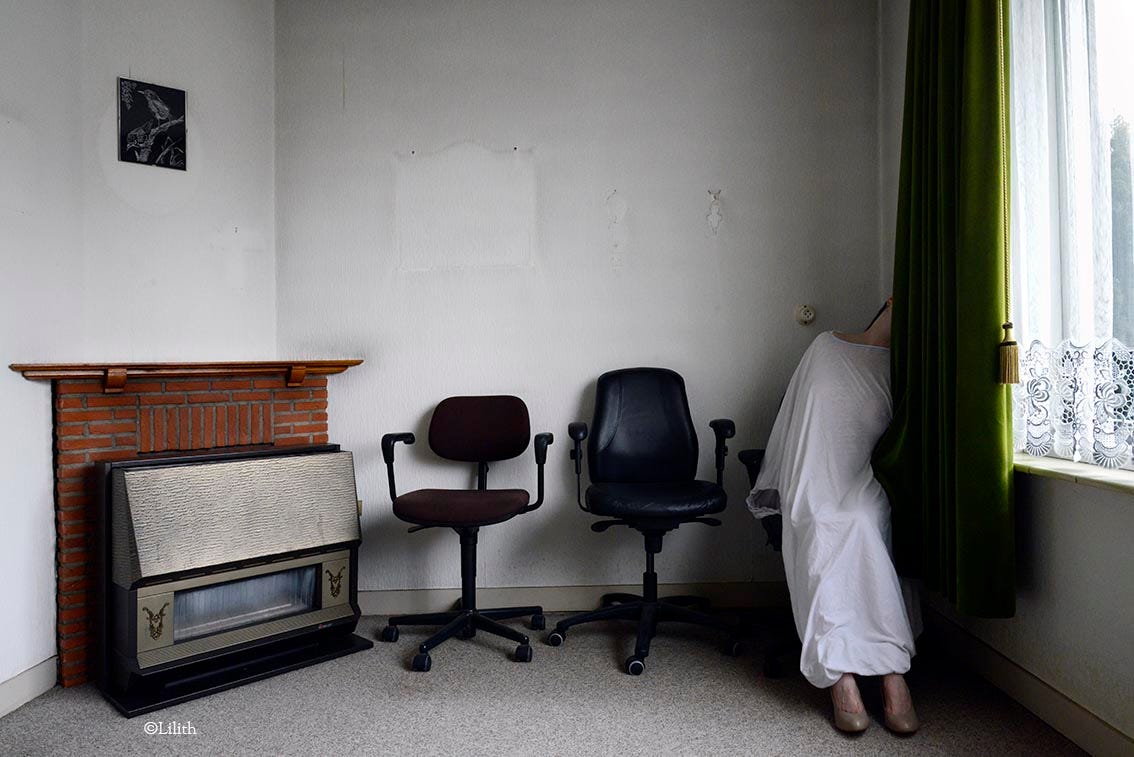
People often ask me why I make self-portraits.
The answer is simple: together, they form my diary.
Unlike a written journal, my self-portraits rarely document a single event. Instead, they collect fragments of a life. Emotions, memories, losses, encounters, questions, relationships, objects, identity, freedom, gender; all of these find their way into the images. Sometimes I make a self-portrait because I am trying to understand a feeling. Sometimes because I want to preserve something before it disappears.
Not everything I incorporate is emotional in the obvious sense. When someone gives me a meaningful gift, for example, it may eventually appear in a photograph. By doing so, I immortalize not only the object itself but also the gesture behind it.
Over the years, my self-portraits have become an archive of my life. Looking back through them, I can remember periods more vividly than through photographs taken by others. They contain traces of what occupied my mind, what mattered to me, and what I was trying to make sense of at that particular moment.
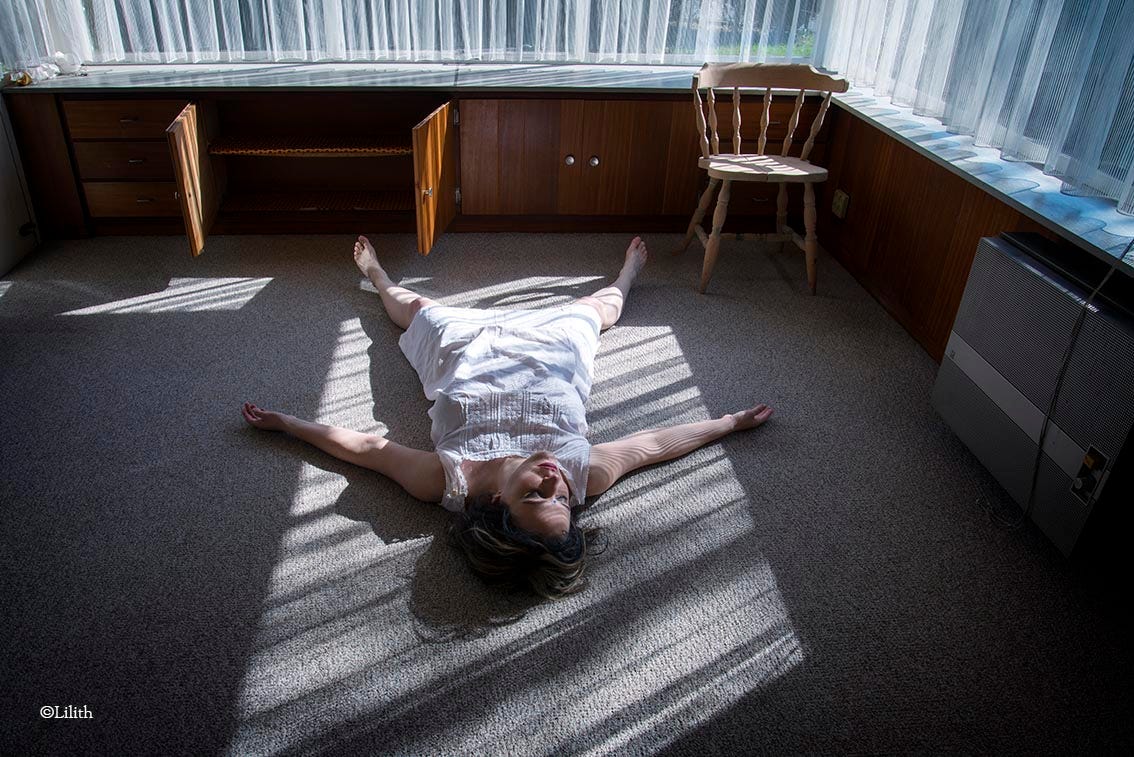
One chapter of this diary was created in my childhood home.
After my father moved into an apartment, the house was for sale. Most of the furniture had already been removed. Only a few pieces remained, scattered throughout the rooms. My mother had passed away many years earlier, and with my father gone, the house quickly stopped feeling like home. It became a place suspended between past and future; familiar, yet strangely empty.
At the time, I was working on a series called A House Is Not a Home. For this project, I photographed myself in other people’s -strangers’- houses. There was only one condition: the residents could not be present while I was photographing. I wanted to experience these spaces in solitude, without their owners shaping the atmosphere through their presence.
After the human body, a house is the most personal thing a person possesses. During this project, I experienced a sense of communication with the absent residents; they became invisibly visible in my self-portraits. It was then that I realized that a person is never truly free, because our surroundings are always influencing us. That realization hit me hard.
Including my childhood home in that series felt inevitable.
In a way, it had become a stranger’s house already. The memories were still there, but the life had gone. By photographing myself in those nearly empty rooms, I was not only contributing to the series; I was also saying goodbye.
It has been a long time since then, and the new owners have been renovating the house for years. It often looks messy when I drive past. But seeing it no longer makes me sad. My feelings remain preserved in the self-portraits I made there.
That is what self-portraiture often does for me. It helps me process, remember, celebrate, question, preserve and let go. Individually, the images sometimes may seem disconnected. Together, they tell the story of a life unfolding.
My diary simply happens to be written with a camera.
Below, I’m sharing exclusive photos from this experience that I only share with my paid subscribers. If you’d like to see them and support my work, you can unlock this post right here.
Comments
Nothing yet. Say the first thing.
Sign in to join the conversation.