
Two months after Larry died, Lunar New Year rolled around. That Lunar New Year, I was a cursed widow, briefly. Death is seen as a source of ‘bad luck’ for the Chinese, and many customs are put in place to ward off misfortune. These include avoiding attending funerals if you are ‘grey-haired’ (elderly) or pregnant, looking away when a hearse passes, picking up a red thread that is given to guests at the wake and then discarding it before returning home to keep evil spirits at bay. That year, as someone who was recently bereaved, I was not supposed to visit people’s homes or have people visit mine, lest I brought them ill fortune, as if death now lurked in my shadows and can be caught like a virus.
When I was pregnant with my first child, my mother and I had more than a few heated arguments over superstitions she believed a pregnant woman needs to observe. I had taken up sewing during that time to make toys for my unborn child, which greatly bothered my mother who believed using any sharp objects - a needle, scissor, or knife - would give my child a cleft lip or a missing body part. Our quarrels did little to bridge the gap between us; I stubbornly wielded reason and she clung to her fears. The superstitions gave her some perceived control over grim ‘what if’s, while I, unperturbed, went on sewing cloth rattles and balls, making baby mobiles, and cooking meals. My mother did her best to look away, but not before dispensing a grave warning, “You’ll regret it if anything goes wrong!” I didn’t heed her warning, not out of hubris that I thought there was no chance my baby could be born with missing body parts, but because even if she did come out of my womb with a cleft lip or nine fingers, I wouldn’t have blamed the sewing. I wouldn’t have wanted to blame anything.
In the aftermath of my husband’s death, I was therefore surprised to hear from my mother that she intended for me and the girls to do most of what we usually do every Lunar New Year, including visiting relatives’ homes. “You don’t need to give or get ang baos (red packets) or ji li hua (auspicious greetings),” she explained, “but you can still visit.” I hesitated, “Are you sure they don’t mind me visiting?” This time, the tables had turned. My mother, keeping her bereaved daughter and granddaughters close, was unafraid of ‘bad luck’. I had, on the other hand, become swallowed by shame when I casually asked someone close about their Lunar New Year plans and they averted my eyes and then lied. I saw myself through their furtive gaze and saw a black cloud of inauspiciousness hovering above me that they feared would find its way into their lives. Unlike sewing when I was pregnant, where I did not have to be answerable to anybody else for my baby’s condition, I was now somehow unwittingly responsible for any bad luck that may befall this family if I stepped into their home.
Being seen as cursed left me embittered. I tried talking myself out of how I felt. There are other cultures where widows are still persecuted for life to this day, while my cursedness, in comparison, was temporary and therefore didn’t warrant my emotional response. It would last only for the duration of the mourning period, which is either 49 days or 100 days, I rationalised. But rationality did not come as easily as pain did in my grieving state. I was swept up by a surging current filled with the rage endured by widows who have been ostracised or mistreated throughout time. I read about widows in India made to remove their jewellery and sindoor, or worse, rejected by their families and communities. In one article1 I read, a 30-year-old widow from Uttar Pradesh was quoted as saying, “My life is devastated. And all they care about is their merciless customs.” I felt her anguish like it coursed through my veins.
My pain manifested as anger, but even more so as shame. I thought perhaps that everyone would similarly shun me and my daughters that Lunar New Year. To avoid facing more subtle signs of social rejection, I urged my mother to check, “Maybe you should ask if they are really ok with me coming? Maybe they’re just paiseh (embarrassed) to say no? It’s ok if we don’t do any visiting this year.” Her resolve wobbled and she agreed to ask again, but the answer that came from our relatives was still, “Yes, come.”
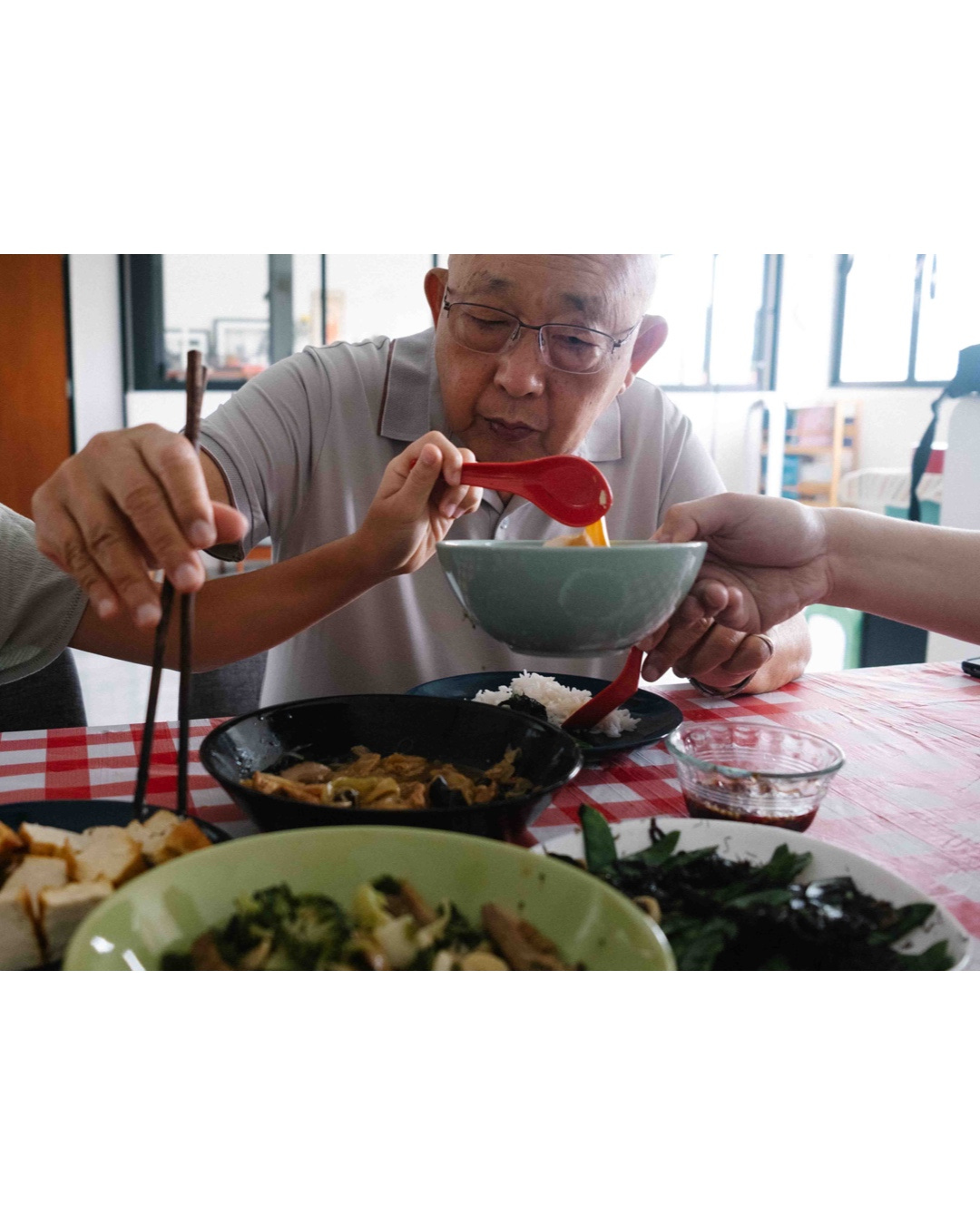
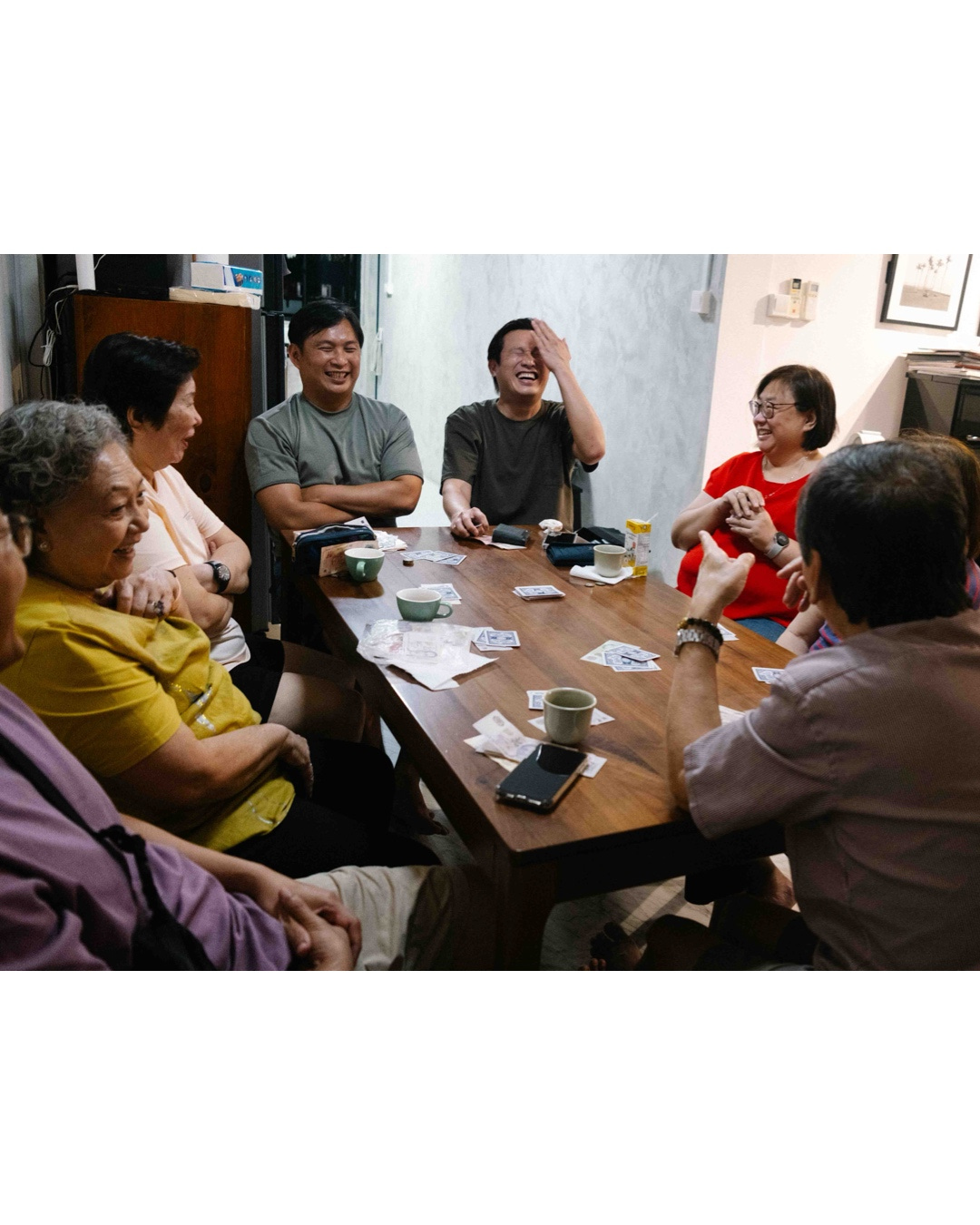
The first home we visited that year, was Dua Gu’s. Ever since both my maternal grandparents died, my mother’s side of the family has gathered there, the home of the eldest son of ten siblings. Entering Dua Gu’s flat and seeing my relatives’ faces felt familiar, and yet as soon as I caught myself reflexively reaching my hand out for handshakes to exchange new year greetings, I was reminded at once of my husband’s death and my ‘bad luck’. To keep my hands to myself, I wrapped them around my daughters’. I had barely taken a few steps into the house when Dua Yi spotted me from the kitchen and walked quickly over. “Li Ling,” her raspy voice was filled with warmth as she pulled me into her diminutive frame and wrapped her arms around me, “I’m so happy you’re here.” I felt my throat tighten around a lump as I held back tears, the river of rage that I had been swimming in threatening to overflow. “I told your mother that you must come, otherwise what are you going to do? Stay at home, for what?” Dua Yi, my mother’s oldest sister and sibling, squeezed my shoulders as she spoke, and I knew then that she understood. If anyone knew how much I needed to be held and cared for that Lunar New Year, it was Dua Yi, who has been part of the widow’s club for two decades.
In the almost three years that I’ve been inducted into the club, I’ve read books and written essays about my grief, and recently trained to be certified as a grief educator. I’ve come to understand grief a lot better and some of my favourite words about helping a grieving person are from the movie Lars And The Real Girl. In a scene where Lars was given a plate of food and invited to sit in his own living room with a group of knitting women, Lars asks, “Is there something that I should be doing right now?” To which he was told:
“No dear. You eat. We came over to sit. That’s what people do when tragedy strikes. They come over and sit.”
That Lunar New Year after my husband died, I may have been cursed to a handful of people, but the truth is I was mostly surrounded by family who sat with me in my home and in theirs. The Chinese come from a devoutly superstitious culture but where reason may fail to quell fears of ill fortune, love can.
https://www.landesa.org/rituals-of-marriage-create-untold-suffering-for-millions-of-widows-in-india/
No posts
Comments
Nothing yet. Say the first thing.
Sign in to join the conversation.